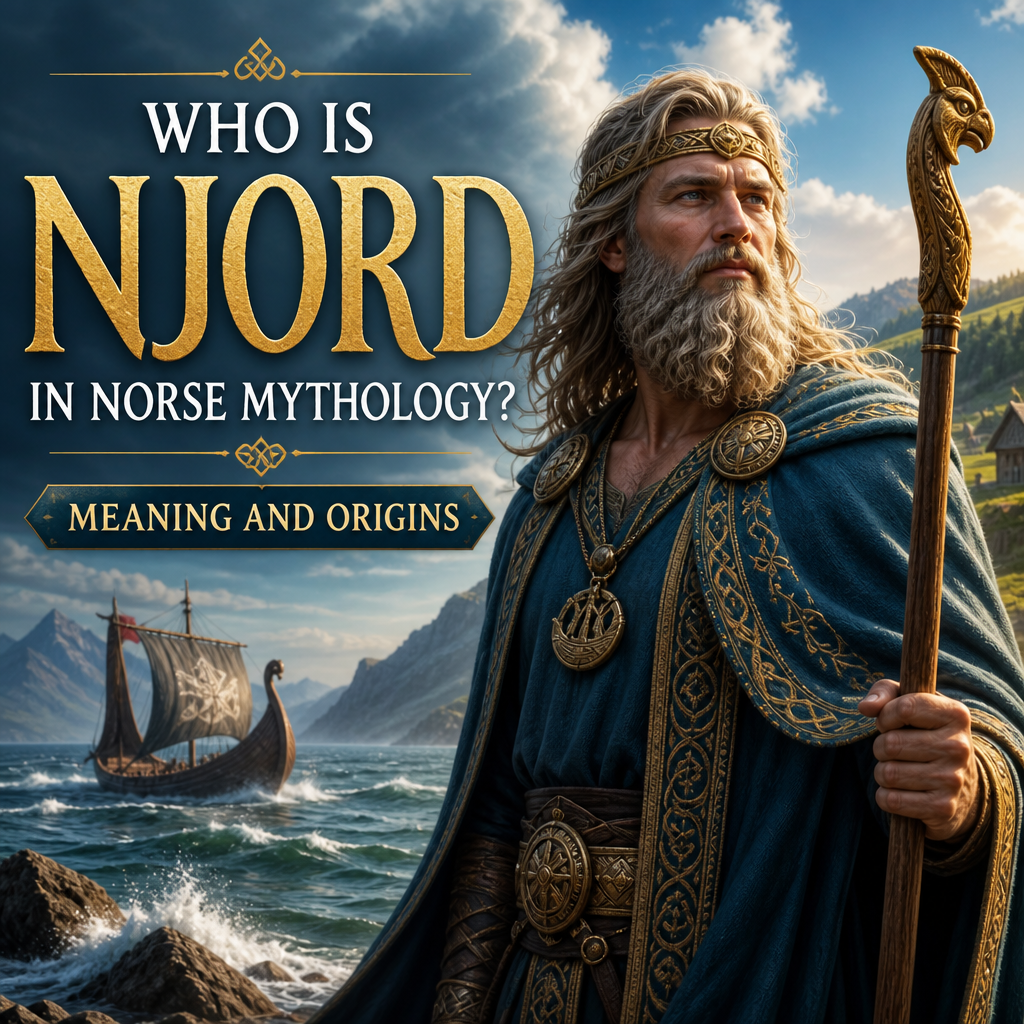
Who Is Njord in Norse Mythology?
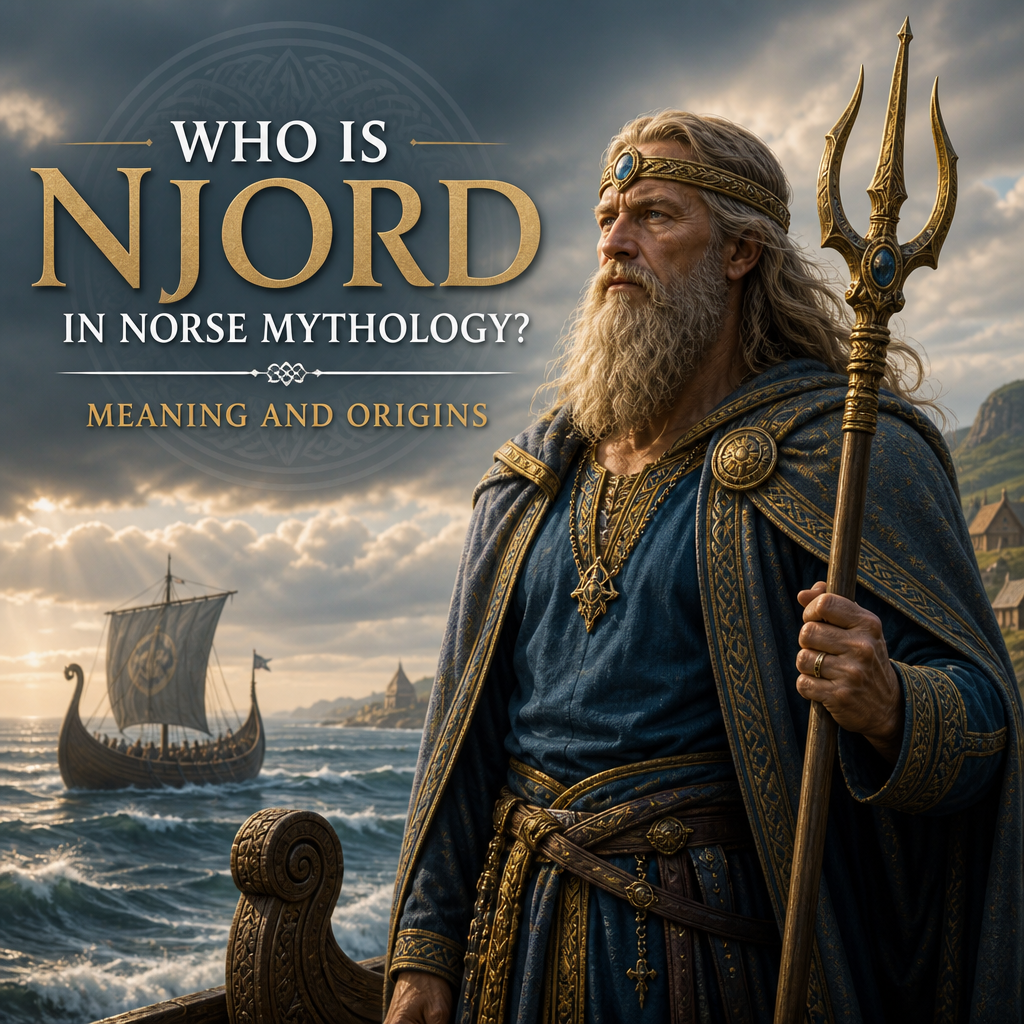
Njord is one of the most important gods in Norse mythology, closely associated with the sea, sailing, fishing, wealth, and fertile coastal lands. He is a member of the Vanir, a group of gods connected with prosperity, nature, and fertility. Although he may not be as widely known as Odin, Thor, or Loki, Njord plays a significant role in the mythological world of the Norse people.
To understand who Njord is in Norse mythology, it helps to look at his origins, his family, his powers, and the stories that surround him. He represents the life-giving and dangerous power of the ocean, as well as the wealth that comes from trade, ships, and harvests by the shore.
Njord as a Vanir God
In Norse mythology, the gods are generally divided into two main groups: the Aesir and the Vanir. The Aesir include gods such as Odin, Thor, Frigg, and Tyr. They are often linked with war, kingship, wisdom, and cosmic order.
The Vanir, on the other hand, are associated with fertility, abundance, magic, and natural cycles. Njord belongs to this group. Along with his children Freyr and Freyja, he is among the most famous Vanir deities.
According to myth, the Aesir and Vanir once fought a great war. After a long conflict, the two groups made peace and exchanged hostages to seal their agreement. Njord was sent to live among the Aesir, along with his children. Because of this, he became part of the wider community of gods in Asgard.
God of the Sea, Ships, and Wealth
Njord’s main domain is the sea. For the Norse, the ocean was both a path to prosperity and a source of danger. Vikings and coastal communities depended on ships for travel, trade, fishing, and raiding. A god who could calm waters and bring safe voyages would have been deeply important.
Njord was believed to have power over:
- Seas and winds
- Sailing and navigation
- Fishing and maritime wealth
- Coastal fertility
- Prosperity and abundance
People may have called upon Njord for safe journeys, successful fishing, and favorable winds. His connection to wealth likely comes from the riches gained through seafaring trade and from the bounty of the sea itself.
In the Prose Edda, written by the Icelandic scholar Snorri Sturluson, Njord is described as wealthy and powerful. He is said to live in a heavenly place called Nóatún, which means “ship-enclosure” or “shipyard.” This name further connects him to boats, harbors, and the maritime world.
Njord’s Family: Freyr and Freyja
Njord is the father of two of the most beloved gods in Norse mythology: Freyr and Freyja. Both are strongly linked to fertility, prosperity, beauty, and abundance.
Freyr is a god of fertility, peace, sunshine, and good harvests. He is often associated with kingship and prosperity. Freyja is a goddess of love, beauty, magic, war, and desire. She is one of the most complex and powerful figures in Norse myth.
Some sources suggest that Freyr and Freyja’s mother was Njord’s unnamed sister, reflecting a Vanir custom that differed from Aesir norms. However, this detail is not fully developed in the surviving myths. By the time Njord lives among the Aesir, such relationships are viewed as unusual by them.
Njord’s role as father of Freyr and Freyja reinforces his connection to fertility and abundance. Through his children, his influence extends beyond the sea into fields, love, magic, and rulership.
The Marriage of Njord and Skadi
One of the most famous stories about Njord involves his marriage to Skadi, a giantess associated with winter, mountains, skiing, and hunting.
Skadi came to Asgard seeking compensation after the gods killed her father, the giant Thjazi. As part of the settlement, she was allowed to choose a husband from among the gods—but she had to choose by looking only at their feet.
Skadi hoped to choose Baldr, the beautiful god, but instead she selected Njord, whose feet were exceptionally clean from the sea. Their marriage, however, was not a happy one.
Njord loved the coast, the sound of waves, and the cries of seabirds. Skadi preferred the cold mountains, the howling of wolves, and the snowy wilderness. They tried to compromise by spending time in each other’s homes, but neither could endure the other’s environment for long.
Njord disliked the mountains, while Skadi could not bear the noise of the shore. Eventually, they separated.
What the Story Means
The marriage of Njord and Skadi reflects a contrast between two powerful natural worlds:
- The sea and the mountains
- Warmth and cold
- Coastal life and wilderness
- Fertility and winter
Their failed union shows that even divine forces may not always harmonize. It also highlights how Norse mythology often personifies natural environments through gods, giants, and their relationships.
Njord’s Role in Norse Religion
Njord was likely an important god in actual Norse religious practice, especially among coastal communities. Since the sea was central to Scandinavian life, a deity connected with ships and safe travel would have mattered greatly.
Evidence from place names suggests that Njord may have been widely worshipped. Some Scandinavian locations preserve names that appear to be linked to him, indicating that sacred sites or communities may once have honored the god.
Unlike Thor, who was popular among many social classes, or Odin, who was associated with rulers, warriors, and poets, Njord may have been especially meaningful to sailors, fishermen, traders, and farmers living near the coast.
Njord After Ragnarok
Ragnarok is the great end-times event in Norse mythology, when many gods die and the world is destroyed and renewed. Njord’s fate during Ragnarok is not described in great detail in the surviving sources.
Some traditions suggest that after his time among the Aesir, Njord will return to the Vanir. This detail appears in the poem Vafþrúðnismál, where it is said that Njord will go back to the “wise Vanir” when the doom of the gods comes.
This makes Njord somewhat unusual. While many major gods have dramatic deaths during Ragnarok, Njord’s ending is quieter and more mysterious.
Why Njord Matters
Njord matters because he represents essential parts of Norse life: the sea, prosperity, movement, and survival. For a culture that depended so heavily on ships and coastal resources, he embodied both hope and security.
He is also important because he connects the Aesir and Vanir traditions. As a Vanir god living among the Aesir, Njord symbolizes peace between divine tribes and the blending of different sacred powers.
So, who is Njord in Norse mythology? He is the sea god of wealth, ships, wind, and coastal abundance; the father of Freyr and Freyja; the former husband of Skadi; and a central figure among the Vanir. Though often overshadowed by more famous gods, Njord remains one of the most meaningful deities in the Norse mythological world.

Orin Vale has spent the better part of two decades tracing the threads that connect the world’s oldest stories — from the halls of Asgard to the banks of the Nile, from Olympus to the jungles of the Maya. What began as a childhood fascination with flood myths and trickster gods grew into years of independent study across comparative mythology and ancient religion, always chasing the same question: what did these stories mean to the people who first told them? Orin writes for readers who want more than trivia — the ones looking for the beliefs, fears, and truths that myths were built to carry.