Who Is Surtr in Norse Mythology?
Surtr is one of the most powerful and fearsome figures in Norse mythology. Often described as a fire giant, he is best known for his role in Ragnarök, the great end-time battle that brings destruction to the gods and the world they protect. His name is commonly translated as “the Black One” or “the Swarthy One,” and he is strongly associated with fire, heat, and cosmic destruction.
Unlike many Norse gods and heroes, Surtr does not appear in a large number of stories. Yet his presence is unforgettable. He stands at the edge of the mythic world, guarding the fiery realm of Muspelheim and waiting for the moment when he will march against the gods with a flaming sword in his hand.
Surtr and the Realm of Muspelheim
To understand who Surtr is in Norse mythology, it helps to begin with Muspelheim. In Norse cosmology, Muspelheim is a primordial realm of fire. It exists opposite Niflheim, the icy world of mist and cold. According to myth, the meeting of heat from Muspelheim and frost from Niflheim helped create the first living beings.
Surtr is closely connected to Muspelheim. In some descriptions, he stands as its guardian, stationed at the border of this fiery land. He is not simply a monster or enemy figure; he represents one of the oldest forces in the Norse universe. His fire is creative in the beginning, but destructive at the end.
This dual nature makes Surtr especially important. Fire can give warmth and life, but it can also burn everything away. Surtr embodies the terrifying side of that power.
Surtr’s Appearance and Flaming Sword
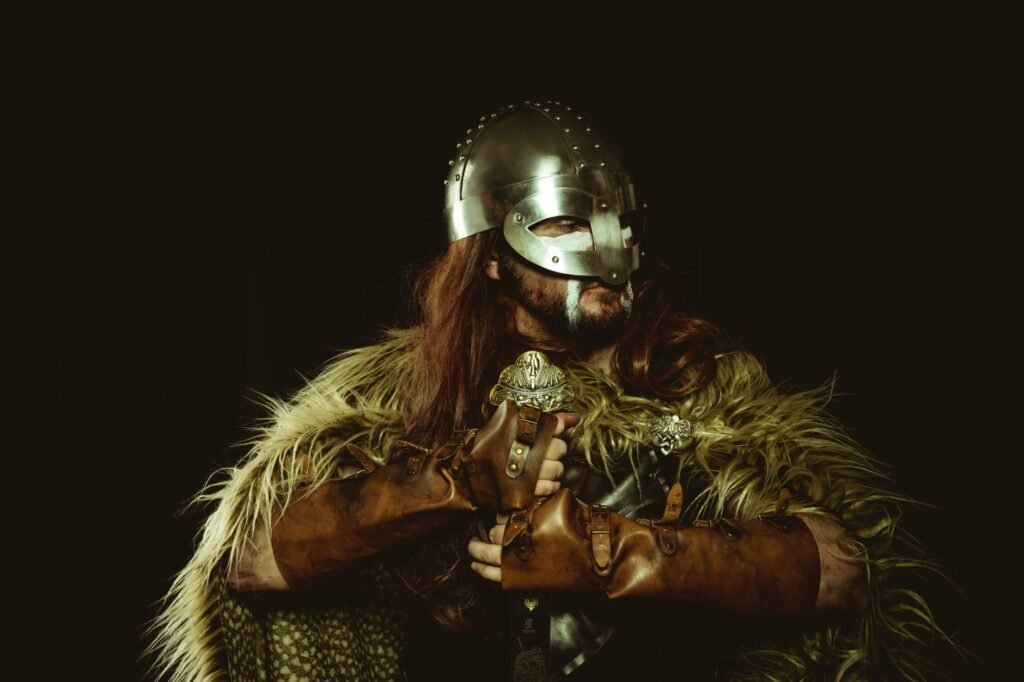
The most famous image of Surtr is that of a giant carrying a blazing sword. This weapon is sometimes described as shining brighter than the sun. In the poems of the Poetic Edda, Surtr’s sword is a symbol of unstoppable destruction.
His appearance is not described in great physical detail, but the impression is clear: Surtr is immense, dark, and surrounded by flame. He belongs to the jötnar, the giants of Norse mythology, who often stand in opposition to the gods of Asgard. However, the giants are not always simple villains. They are ancient beings linked to nature, chaos, and primal forces.
Surtr’s flaming sword is one of the most striking symbols in Norse myth. It suggests not just battle, but the final burning of the world itself.
Surtr’s Role in Ragnarök
Surtr is most famous for his role in Ragnarök. Ragnarök is the great final conflict in Norse mythology, when many gods die, the world is destroyed, and a new world eventually rises from the ruins.
During Ragnarök, Surtr comes from the south with the sons of Muspell. These fiery beings march across the broken world to join the battle against the gods. The sky splits open, the earth shakes, and the forces of chaos gather.
Surtr’s role is especially devastating. He fights against the god Freyr, one of the most important gods of fertility, peace, and prosperity. Freyr is at a disadvantage because he once gave away his magical sword. As a result, he faces Surtr without his greatest weapon.
Surtr defeats Freyr in battle. Afterward, he unleashes his fire upon the world.
The Burning of the World
One of Surtr’s defining acts is setting the world on fire. After the battles of Ragnarök, flames spread across the earth. The sun is darkened, stars vanish, and the world sinks into the sea.
This destruction is not random. In Norse mythology, it is part of a larger cycle. The world must end before it can begin again. Surtr’s fire clears away the old order, including the world of gods, giants, humans, and monsters.
Although Surtr appears as an enemy of the gods, his role is necessary within the mythic structure. He is the bringer of the final fire, the force that makes renewal possible.
Is Surtr Evil?
It is easy to view Surtr as evil because he destroys the world and kills one of the gods. However, Norse mythology does not always divide characters into simple categories of good and evil. Many figures are complex, and the giants often represent forces beyond human control rather than moral wickedness.
Surtr can be understood as a symbol of inevitable destruction. He is not motivated by ordinary cruelty in the surviving myths. Instead, he fulfills a cosmic role. Just as winter, death, and decay are part of life, Surtr’s fire is part of the universe’s cycle.
In this sense, Surtr is less like a villain and more like a force of nature. He is frightening because he cannot be stopped.
Surtr in the Poetic and Prose Edda
Most of what we know about Surtr comes from two major sources of Norse mythology:
- The Poetic Edda, a collection of Old Norse poems
- The Prose Edda, written by the Icelandic scholar Snorri Sturluson
In the Poetic Edda, Surtr appears in poems such as Völuspá, where a seeress describes the beginning and end of the world. He is shown advancing from the south with fire, bringing doom to the gods.
In the Prose Edda, Snorri gives more explanation about Surtr’s place in the cosmos and his role during Ragnarök. These sources help shape the modern understanding of Surtr as the fiery destroyer of the world.
Surtr’s Meaning and Symbolism
Surtr’s symbolism is powerful and layered. He represents:
- Destructive fire
- Cosmic endings
- Natural forces beyond control
- The fall of the old world
- Renewal through destruction
His story reflects an important theme in Norse mythology: nothing lasts forever, not even the gods. The Norse world is full of bravery in the face of fate. The gods know Ragnarök is coming, yet they still prepare to meet it.
Surtr’s presence reinforces this tragic and heroic worldview. He is the final flame that even the gods cannot escape.
Surtr in Modern Culture
Today, Surtr appears in books, games, comics, and films inspired by Norse mythology. Modern versions often portray him as a demon-like fire giant or a powerful enemy of the gods. While these portrayals can be entertaining, they sometimes simplify his mythological role.
In the original Norse sources, Surtr is more than a fiery monster. He is a primordial being tied to the structure of the universe itself. His importance lies not only in his strength, but in what he represents: the unavoidable end of one age and the beginning of another.
Why Surtr Matters
So, who is Surtr in Norse mythology? He is the fire giant of Muspelheim, the wielder of the flaming sword, and the destroyer who brings the world to an end at Ragnarök. He stands among the most dramatic figures in Norse myth because his arrival signals the collapse of everything the gods have built.
Yet Surtr’s destruction is not the final word. After Ragnarök, a new world rises from the sea, green and renewed. Life begins again.
Surtr matters because he reminds us that endings and beginnings are connected. In Norse mythology, even the fiercest fire can become part of a larger cycle of renewal.

Orin Vale has spent the better part of two decades tracing the threads that connect the world’s oldest stories — from the halls of Asgard to the banks of the Nile, from Olympus to the jungles of the Maya. What began as a childhood fascination with flood myths and trickster gods grew into years of independent study across comparative mythology and ancient religion, always chasing the same question: what did these stories mean to the people who first told them? Orin writes for readers who want more than trivia — the ones looking for the beliefs, fears, and truths that myths were built to carry.