Who Is Ymir in Norse Mythology?
In Norse mythology, Ymir is the first being and one of the most important figures in the creation story of the cosmos. If you have ever wondered who is Ymir in Norse mythology, the answer begins before gods, humans, earth, sky, or sea existed. Ymir was the primordial giant whose body became the material from which the world was made.
Ymir is not a god in the same sense as Odin, Thor, or Freyja. Instead, he belongs to the ancient race of giants known as the jötnar. He appears in early Norse sources such as the Poetic Edda and the Prose Edda, where his story explains how the universe came into being through both creation and violence.
The Beginning: Ginnungagap and the Birth of Ymir
Before the world existed, Norse mythology describes a vast emptiness called Ginnungagap. This yawning void lay between two opposite realms:
- Niflheim, the cold, misty world of ice and frost
- Muspelheim, the fiery realm of heat and flame
When the icy vapors of Niflheim met the sparks and warmth of Muspelheim in Ginnungagap, the melting frost formed drops of life. From these drops emerged Ymir, the first living being.
Ymir was also called Aurgelmir, a name sometimes interpreted as “the mud-screamer” or “the roaring one.” His birth was not the result of parents, but of elemental forces meeting in the emptiness before time.
Ymir as the First Giant
Ymir is considered the ancestor of the frost giants. While he slept, new beings came from his body. According to the myths, a male and female giant grew from under his arms, and another being emerged from his legs. These offspring became the beginning of the giant race.
This detail shows Ymir’s role as a source of life. He was not merely a creature living in the early universe; he was the origin point for an entire powerful and often dangerous race. The giants in Norse mythology are not always evil, but they often represent chaos, wild nature, and forces that stand outside the ordered world of the gods.
Audhumla: The Cosmic Cow
Ymir was not alone in the beginning. Another being appeared from the melting ice: Audhumla, the primeval cow. She nourished Ymir with her milk, while she herself fed by licking salty ice blocks.
As Audhumla licked the ice, she uncovered another figure: Buri, the first of the gods. Buri later became the grandfather of Odin. This part of the myth is important because it shows two ancient family lines beginning side by side: the giants descended from Ymir and the gods descended from Buri.
These two lineages would shape much of Norse mythology. The gods and giants are deeply connected, often related by blood, marriage, rivalry, and conflict.
Odin and His Brothers Kill Ymir
The most famous part of Ymir’s story is his death. Odin and his brothers, Vili and Vé, were descendants of Buri. They rose against Ymir and killed him.
Ymir’s blood poured out in such a flood that it drowned nearly all the giants. Only a small number survived, including the giant Bergelmir and his wife, who escaped and continued the giant race.
This violent act marks a turning point in the Norse creation myth. The death of Ymir was not simply murder; it was the beginning of the ordered world. From chaos came structure. From the body of the first giant, the gods shaped the cosmos.
The World Made from Ymir’s Body
After killing Ymir, Odin and his brothers used his body to create the world. This is one of the most vivid and symbolic parts of Norse mythology.
Ymir’s body became the universe:
- His flesh became the earth
- His blood became the seas and rivers
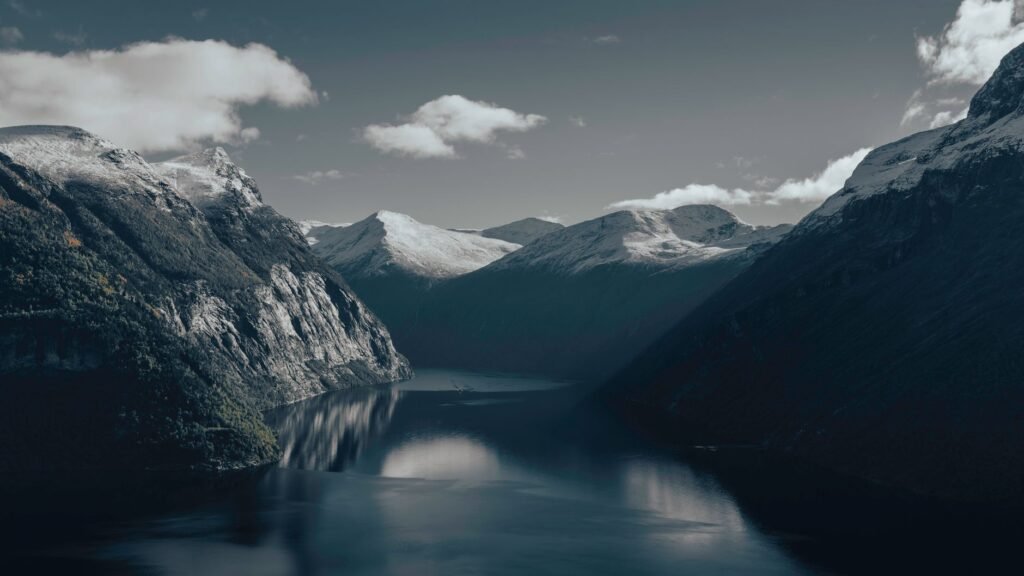
- His bones became the mountains
- His teeth and broken bones became rocks and stones
- His hair became trees and forests
- His skull became the sky
- His brain became the clouds
The gods placed Ymir’s skull above the earth and set four dwarves at its corners to hold it up. These dwarves were named North, South, East, and West, giving shape to the directions of the world.
This transformation shows how deeply Norse mythology connects life, death, and nature. The world is not created from nothing. It is made from the remains of a living being.
Ymir and the Creation of Midgard
One of the most important parts of creation was Midgard, the world of humans. Odin and his brothers made Midgard from Ymir’s body and protected it with a barrier created from his eyebrows.
This wall separated the human world from the giants, who lived in Jotunheim. Symbolically, Midgard represents order, civilization, and safety, while the giants’ realm represents the untamed forces beyond human control.
By using Ymir’s eyebrows as a protective boundary, the myth suggests that even the defense against chaos was built from chaos itself.
What Does Ymir Symbolize?
Ymir symbolizes the raw material of existence. He is ancient, powerful, and chaotic, but he is also necessary. Without Ymir, there would be no earth, sea, sky, mountains, forests, or clouds.
His story reflects several themes common in Norse mythology:
Creation Through Destruction
The world begins with death. Ymir’s body must be broken apart so that the cosmos can be formed. This idea may seem harsh, but it fits the Norse worldview, where life and death are closely linked.
Chaos and Order
Ymir represents the primal chaos that existed before the gods shaped the universe. Odin and his brothers bring order by transforming that chaos into a structured world.
The Connection Between Giants and Gods
Ymir’s descendants, the giants, remain important throughout Norse mythology. They challenge the gods, marry into divine families, and play major roles in stories about wisdom, fate, and Ragnarok.
Why Ymir Still Matters
Ymir remains one of the most fascinating figures in Norse mythology because his story explains the origin of everything. He is both a being and a world, both ancestor and sacrifice. His death makes life possible, and his body becomes the landscape of existence.
So, who is Ymir in Norse mythology? He is the first giant, the ancestor of the jötnar, and the primordial being whose body was used by Odin and his brothers to create the world. His myth stands at the very foundation of Norse cosmology, reminding us that in the old Norse imagination, creation was not peaceful or simple—it was powerful, mysterious, and born from the meeting of fire, ice, life, and death.

Orin Vale has spent the better part of two decades tracing the threads that connect the world’s oldest stories — from the halls of Asgard to the banks of the Nile, from Olympus to the jungles of the Maya. What began as a childhood fascination with flood myths and trickster gods grew into years of independent study across comparative mythology and ancient religion, always chasing the same question: what did these stories mean to the people who first told them? Orin writes for readers who want more than trivia — the ones looking for the beliefs, fears, and truths that myths were built to carry.