Spring has long been associated with renewal, growth, and the return of life after the cold and barren months of winter. In Greek mythology, these natural transformations were not viewed as random events but as the direct influence of divine beings whose actions shaped the world. Among them, one deity became inseparably linked to the changing of the seasons and the rebirth of nature: Persephone, the Greek goddess of spring. Her myth is one of the most influential stories in classical mythology, providing an explanation for the seasonal cycle while exploring themes of transformation, destiny, and the balance between life and death.
The question “Who is the Greek goddess of spring?” is answered through a myth that extends far beyond flowers and fertile fields. Persephone’s story connects the realms of the living and the dead, revealing how the ancient Greeks understood the relationship between nature, agriculture, and divine power. As the daughter of Demeter, the goddess of agriculture, and Zeus, king of the Olympian gods, Persephone occupies a central place within the Greek pantheon and plays a vital role in explaining why the Earth experiences periods of abundance and dormancy.
Unlike many mythological figures who represent a single concept, Persephone embodies duality. She is both the youthful goddess whose return signals the arrival of spring and the powerful Queen of the Underworld who rules alongside Hades. This unique position makes her one of the most complex and symbolically significant deities in Greek religion. Her annual journey between the world above and the realm below became a powerful metaphor for renewal, fertility, and the eternal rhythm of nature.
This article explores who Persephone is, why she became known as the Greek goddess of spring, how her myth shaped ancient beliefs about the seasons, and why her story continues to captivate historians, artists, writers, and mythology enthusiasts around the world.
Who Is the Greek Goddess of Spring?
The answer to “Who is the Greek goddess of spring?” is Persephone, one of the most revered and symbolically rich deities in Greek mythology. She is traditionally recognized as the divine figure whose return from the Underworld marks the arrival of spring, bringing warmth, blooming flowers, fertile fields, and renewed life to the natural world. While many gods influenced different aspects of nature, Persephone became the living embodiment of seasonal rebirth and the restoration of the Earth’s vitality after winter.
Persephone was born to Zeus, ruler of the Olympian gods, and Demeter, the goddess of agriculture, grain, and fertility. As a young goddess, she was often associated with meadows filled with wildflowers, untouched landscapes, and the innocence of youth. Her early life reflected the beauty and abundance of the natural world before her destiny changed forever through her encounter with Hades. This transformation would elevate her from a carefree maiden into one of the most powerful figures in Greek religion.
What distinguishes Persephone from many other Greek deities is her extraordinary dual role. She is celebrated both as the Greek goddess of spring and as the Queen of the Underworld, governing alongside Hades. Rather than representing contradictory identities, these two roles complement one another. Her existence demonstrates that life and death are not opposing forces but interconnected stages within the same natural cycle. The ancient Greeks viewed her annual return to Earth as proof that life always emerges again after periods of darkness.
Even today, Persephone remains one of the most recognizable figures in classical mythology. Her legend continues to inspire literature, academic research, visual arts, films, and modern retellings because it addresses universal themes such as change, resilience, identity, hope, and renewal. For anyone seeking to understand who is the Greek goddess of spring, Persephone stands as a timeless symbol of nature’s endless ability to regenerate and begin anew.
Why Is Persephone Associated with Spring?
Persephone’s connection to spring originates from one of the most influential stories in Greek mythology, a myth that sought to explain why nature follows a continuous cycle of growth, decline, and renewal. To the ancient Greeks, the changing seasons were not simply the result of natural processes but the visible expression of divine relationships. Every year, the arrival of spring signified Persephone’s return from the Underworld, restoring life to the Earth after the barren months of winter. This annual reunion with her mother, Demeter, became the foundation of her identity as the Greek goddess of spring.
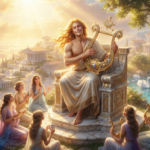
Before her abduction by Hades, Persephone was often depicted wandering through lush meadows, gathering flowers with nymphs beneath the bright skies of ancient Greece. She represented youth, innocence, fertility, and the promise of new life. Her presence reflected the vitality of nature itself, where fields flourished, forests thrived, and wildflowers covered the landscape. These early depictions reinforced her association with the fertile season long before she became Queen of the Underworld.
Everything changed when Hades carried Persephone into his underground kingdom. Demeter’s overwhelming grief caused the Earth to become barren, as crops failed, trees lost their leaves, and flowers ceased to bloom. Since Demeter governed agriculture and fertility, her sorrow directly affected every living plant. The Greeks understood this period as the origin of autumn and winter, when the land appeared lifeless and food became scarce. Persephone’s absence was therefore seen as the reason nature itself seemed to fall asleep.
When Persephone was finally allowed to return, the transformation of the landscape was immediate. Flowers blossomed, rivers flowed more freely, trees regained their leaves, and fields once again produced abundant harvests. This dramatic renewal made Persephone the enduring symbol of spring and rebirth. Rather than representing a single moment in time, she came to embody the recurring promise that life always returns, even after the harshest winter. Her annual journey between two worlds became one of the most enduring metaphors for renewal in all of classical mythology.
The Myth of Persephone and Hades
Among the countless stories preserved from ancient Greek mythology, few have had a greater cultural and religious influence than the myth of Persephone and Hades. More than a tale of gods and divine conflict, this narrative explains the origin of the seasons, the relationship between life and death, and humanity’s dependence on the natural world. It also establishes Persephone as both the Greek goddess of spring and the sovereign Queen of the Underworld, making her one of the most complex deities in the Greek pantheon.
The myth survives through several ancient literary sources, including the Homeric Hymn to Demeter, where it is presented as both a sacred story and an explanation for agricultural cycles. While different versions vary in their details, the central narrative remains remarkably consistent. Persephone is taken into the Underworld, Demeter mourns her disappearance, the Earth becomes barren, and eventually a divine agreement restores balance between the worlds above and below.
Beyond explaining seasonal change, the story reflects fundamental Greek beliefs about destiny, divine authority, family relationships, fertility, and the inevitability of transformation. Every major event within the myth contributes to Persephone’s evolution from an innocent daughter into one of the most powerful goddesses in Greek religion.
The following chapters explore the key moments of this legendary narrative and reveal why Persephone became forever associated with spring, renewal, and the eternal rhythm of nature.
The Abduction of Persephone
Persephone’s story begins on a peaceful day as she wandered across a flowering meadow, collecting blossoms with the Oceanids and other nymphs. Ancient poets describe fields filled with roses, violets, lilies, crocuses, and especially the extraordinary narcissus flower, whose beauty was unlike anything found among ordinary plants. Drawn toward this magnificent bloom, Persephone unknowingly stepped into the moment that would forever alter her destiny.
As she reached for the flower, the earth suddenly split apart. From the great chasm emerged Hades, ruler of the Underworld, driving a magnificent black chariot pulled by immortal horses. Acting with the approval of Zeus in many classical versions of the myth, Hades seized Persephone and carried her into his hidden kingdom beneath the earth before anyone could intervene. Her cries echoed across the mountains and seas, heard only by a few divine witnesses.
This dramatic abduction represents far more than a simple act of kidnapping within Greek mythology. Symbolically, it marks Persephone’s transition from innocence to maturity and from the carefree world of youth into one of responsibility, power, and transformation. Much like a seed disappearing beneath the soil before it can grow, Persephone descends into darkness before eventually returning to bring new life to the world.
Modern scholars often interpret this episode through multiple perspectives, including religious symbolism, agricultural cycles, and ancient marriage customs. Regardless of interpretation, the abduction serves as the catalyst for one of mythology’s greatest narratives and establishes the events that ultimately define Persephone as the Greek goddess of spring.
Demeter’s Grief
When Demeter realized that her daughter had disappeared, she began an exhaustive search across the world. Carrying blazing torches, she wandered through mountains, forests, valleys, islands, and cities, questioning gods, nymphs, and mortals alike. For nine days and nights she neither rested nor accepted food or drink, driven entirely by the desperate hope of finding Persephone.
Eventually, the truth emerged: Persephone had been taken into the Underworld by Hades. Consumed by grief and anger, Demeter withdrew from Mount Olympus and abandoned her divine responsibilities. Because she governed agriculture, grain, fertility, and the growth of all vegetation, her sorrow immediately affected the Earth. Crops withered before they could mature, fruit trees stopped bearing fruit, flowers disappeared, and fertile fields became dry and lifeless.
The consequences reached far beyond nature itself. Humanity faced widespread famine, threatening not only civilization but also the relationship between mortals and the gods. Without harvests, there could be no sacrifices or offerings, disrupting the sacred bond that sustained Greek religious life. Even Zeus recognized that the balance of the cosmos had been broken.
Demeter’s grief illustrates one of the central ideas of Greek mythology: the natural world reflects the emotional and divine order established by the gods. Winter is therefore not portrayed merely as a climatic season but as the visible expression of a mother’s profound sorrow, waiting patiently for the joyful return of her daughter.
The Pomegranate Seeds
After witnessing the suffering of both humanity and the natural world, Zeus finally intervened to restore balance among the gods. He ordered Hermes, the swift messenger of Olympus, to descend into the Underworld and negotiate Persephone’s release. Hades agreed to let her return to the world above, but before she departed, he offered her a ripe pomegranate. Unaware of—or in some ancient accounts fully aware of—the consequences, Persephone ate several of its seeds. That seemingly simple act would forever bind her to the Underworld and shape one of the most enduring myths in Greek mythology.
In ancient Greek belief, consuming food from the Underworld created an unbreakable spiritual connection to that realm. Because Persephone had eaten the pomegranate seeds, she could no longer leave permanently. The fruit itself carried profound symbolic meaning throughout the Mediterranean world. With its countless crimson seeds hidden beneath a single rind, the pomegranate represented fertility, abundance, marriage, life, blood, and continuity. Within Persephone’s myth, however, it also became a symbol of destiny and the irreversible consequences of choice.
To resolve the conflict between Demeter and Hades, Zeus established a compromise that would preserve the balance of the cosmos. Persephone would spend part of each year with her mother on Earth and the remaining months beside Hades as Queen of the Underworld. Different ancient sources disagree on the exact division of time, with some describing one-third of the year in the Underworld and others suggesting half. Regardless of the variation, the essential meaning remained the same: Persephone would forever belong to both worlds.
The pomegranate seeds transformed Persephone’s identity. She was no longer only the youthful daughter of Demeter but also an independent queen with authority over the realm of the dead. This dual existence distinguishes her from every other Olympian deity. Rather than symbolizing a permanent separation between life and death, Persephone became the bridge connecting them. Her story teaches that endings often become the beginning of something new, reinforcing her role as the Greek goddess of spring, whose return each year represents hope emerging after a period of darkness.
The Birth of the Seasons
With Zeus’s judgment established, harmony gradually returned to the universe. Persephone’s annual journey between the Underworld and the surface of the Earth created a divine rhythm that explained the changing seasons. Whenever she ascended from Hades’ kingdom to reunite with Demeter, the goddess of agriculture rejoiced, and her happiness restored fertility to the land. Flowers bloomed across hillsides, fruit trees blossomed, rivers flowed with renewed vigor, and fields once again became fertile. These months came to be recognized as spring and summer, seasons defined by growth, abundance, and prosperity.
When the time arrived for Persephone to return to the Underworld, Demeter’s grief resurfaced. The warmth faded from the landscape, crops ceased growing, leaves turned golden and brown before falling from the trees, and nature gradually entered a period of rest. This divine sorrow gave rise to autumn and winter, seasons during which the Earth appeared dormant while awaiting Persephone’s eventual return. Through this elegant cycle, the Greeks explained the predictable transformation of the natural world without separating mythology from everyday agricultural life.
The myth also reflects the agricultural realities of the ancient Mediterranean. Farmers observed that the land naturally alternated between periods of productivity and dormancy, and Persephone’s story provided a sacred explanation for those recurring changes. Every planting season carried the hope of her return, while every harvest celebrated the blessings associated with her presence. In this way, mythology and agriculture became inseparable, strengthening Persephone’s importance within Greek religion.
More than a story about weather, the birth of the seasons expresses a universal truth about existence itself. Life unfolds through cycles of beginnings and endings, growth and decline, joy and sorrow. Persephone’s annual return reminds humanity that renewal is always possible, even after the darkest periods. This timeless symbolism explains why she continues to be recognized as the Greek goddess of spring, representing not only the rebirth of nature but also resilience, transformation, and the enduring promise of new beginnings.
What Does Persephone Symbolize?
Persephone is one of the most symbolically layered figures in Greek mythology, representing concepts that extend far beyond the arrival of spring. While she is widely recognized as the Greek goddess of spring, her mythology encompasses renewal, fertility, transformation, balance, and the eternal cycle of life and death. Unlike many deities whose influence is confined to a single domain, Persephone embodies the idea that opposing forces can coexist in harmony. Her annual movement between two worlds reflects the continuous rhythm that governs both nature and human existence.
One of Persephone’s strongest symbolic associations is renewal. Each year, her emergence from the Underworld marks the end of winter and the beginning of a new cycle of life. Flowers bloom, crops begin to grow, and landscapes once stripped of color regain their vitality. This recurring transformation made Persephone a powerful emblem of hope, reminding the ancient Greeks that periods of hardship are temporary and that life inevitably returns after seasons of apparent loss. In modern interpretations, her story continues to symbolize emotional healing, personal growth, and the ability to begin again after adversity.
Persephone also represents transformation through experience. At the beginning of her myth, she appears as a youthful goddess closely associated with innocence and untouched nature. By the end of the narrative, she has become the respected Queen of the Underworld, ruling beside Hades while maintaining her role as the bringer of spring. This evolution illustrates one of the central themes of Greek mythology: true wisdom is often gained through challenge rather than comfort. Her journey demonstrates that identity is not fixed but develops through change, responsibility, and resilience.
Perhaps the most profound aspect of Persephone’s symbolism is duality. She belongs equally to the world of light and to the realm of shadows, serving as a bridge between life and death, growth and decline, beginnings and endings. Rather than presenting these ideas as opposites, Greek mythology portrays them as complementary elements within the natural order. Without winter there can be no spring, and without endings there can be no renewal. Through Persephone, the Greeks expressed a timeless philosophy that continues to resonate today: every conclusion carries within it the possibility of a new beginning.
Persephone’s Family Tree
Understanding Persephone’s family lineage provides valuable insight into her extraordinary status within Greek mythology. She was born into one of the most powerful divine families of the Greek pantheon, connecting her to gods who governed the heavens, the Earth, agriculture, and the Underworld. These relationships explain why her mythology reaches far beyond the changing of the seasons, influencing stories about creation, fertility, kingship, and the afterlife.
Persephone is the daughter of Zeus, the supreme ruler of Mount Olympus, and Demeter, the goddess of agriculture, grain, fertility, and the harvest. Through Zeus, she inherited a place among the Olympian gods, while Demeter’s influence closely tied her to the natural world and the prosperity of humankind. This unique heritage established Persephone as a bridge between divine authority and the rhythms of nature long before she became associated with the Underworld.
Her marriage to Hades, the god who ruled the realm of the dead, transformed her role within Greek religion. Although often remembered for her abduction, Persephone eventually became the respected Queen of the Underworld, sharing responsibility for one of the most important domains in the Greek cosmos. Ancient texts frequently portray her not as a passive figure but as a sovereign goddess whose decisions carried authority over both mortals and spirits. This evolution highlights her transition from Demeter’s daughter to an independent and influential deity.
Other gods also play important roles in Persephone’s mythology. Hermes, the messenger of the gods, serves as the divine guide who escorts her between the Underworld and the surface world, ensuring that Zeus’s decree is fulfilled each year. Hecate, the goddess associated with crossroads, magic, and liminal spaces, aids Demeter during the search for Persephone and later becomes one of Persephone’s trusted companions. Together, these divine relationships reinforce Persephone’s position as a central figure within the interconnected world of Greek mythology.
| Character | Relationship to Persephone |
|---|---|
| Zeus | Father and king of the Olympian gods |
| Demeter | Mother and goddess of agriculture, fertility, and the harvest |
| Hades | Husband and ruler of the Underworld |
| Hermes | Messenger who escorts Persephone between worlds |
| Hecate | Divine ally and companion in several versions of the myth |
Persephone in Ancient Greek Religion
Persephone was far more than a literary character in ancient Greece. She was a deeply revered goddess whose worship formed an essential part of Greek religious life. Farmers, priests, rulers, and ordinary citizens recognized her as a divine force responsible for the renewal of nature and the continuation of agricultural prosperity. Her annual return from the Underworld symbolized the rebirth of the Earth itself, making her one of the most important deities associated with fertility, harvests, and the seasonal cycle.
One of the most significant religious traditions connected to Persephone was the Eleusinian Mysteries, sacred initiation ceremonies celebrated in the city of Eleusis, near Athens. Dedicated primarily to Demeter and Persephone, these mysteries were among the most respected religious rites in the ancient Mediterranean. Participants traveled from across the Greek world to take part in ceremonies that promised spiritual enlightenment and a deeper understanding of life, death, and rebirth. Although the rituals were kept secret, ancient authors consistently describe them as transformative experiences.
The mythology of Persephone gave profound religious meaning to the agricultural calendar. Every planting season reflected the hope of her return, while every successful harvest was viewed as evidence of divine favor. Festivals honoring Demeter and Persephone celebrated not only the fertility of the land but also humanity’s dependence on the natural cycles governed by the gods. In this context, Persephone became both a protector of crops and a symbol of life’s continual renewal.
Persephone’s influence extended beyond agriculture into beliefs about the afterlife. As Queen of the Underworld, she presided over the realm where souls journeyed after death, yet her annual return to Earth reminded worshippers that death was not necessarily the end of existence. This dual role inspired philosophical reflection on mortality, transformation, and hope, contributing to her enduring significance within Greek religion. Few deities embodied both the mysteries of life and the inevitability of death as completely as Persephone.
Is Persephone the Only Greek Goddess of Spring?
Although Persephone is universally recognized as the Greek goddess of spring, she was not the only deity connected to vegetation, fertility, and the renewal of nature. Greek mythology often assigned overlapping responsibilities to multiple gods and goddesses, reflecting the complexity of the natural world. Rather than limiting a single deity to one exclusive domain, the Greeks viewed divine powers as interconnected, with different gods influencing various aspects of the same phenomenon.
The goddess most closely associated with Persephone is Demeter, her mother. While Persephone symbolizes the return of spring itself, Demeter governs agriculture, cultivated land, grain, and the fertility that sustains human civilization. The changing seasons occur because of Demeter’s emotional response to Persephone’s yearly departure and return. Together, mother and daughter represent two complementary aspects of nature: Persephone embodies renewal, while Demeter ensures that this renewed life becomes abundant harvests and successful crops.
Another important group of deities is the Horae, also known as the Hours or the Seasons. These goddesses personified the orderly progression of time and the natural rhythm of the year. Among them, Thallo was particularly associated with blooming vegetation, fresh growth, and the flourishing of plants during spring. Unlike Persephone, who serves as the mythological explanation for seasonal change, Thallo represents the flourishing condition of nature once spring has already arrived.
Understanding these distinctions helps answer the question more accurately. If someone asks, “Who is the Greek goddess of spring?”, Persephone remains the principal and most widely accepted answer. However, appreciating the roles of Demeter and the Horae provides a richer understanding of how the ancient Greeks interpreted the natural world. Together, these deities reveal a sophisticated mythology in which fertility, growth, agriculture, and seasonal renewal are shared responsibilities rather than isolated divine functions.
Persephone in Modern Culture
Despite originating more than two thousand years ago, Persephone continues to captivate audiences around the world. Her story has transcended ancient religion to become one of the most frequently reinterpreted myths in literature, cinema, television, visual arts, music, and digital media. The enduring appeal of the Greek goddess of spring lies not only in the beauty of her legend but also in the universal themes of transformation, identity, resilience, and renewal that continue to resonate with modern audiences.
In contemporary literature, Persephone is often portrayed as a complex protagonist whose journey explores personal growth and self-discovery. Many modern adaptations move beyond the traditional narrative of abduction, presenting her as a woman who gradually embraces her own authority and discovers strength through adversity. These interpretations reflect evolving perspectives on agency, independence, and emotional resilience while preserving the essential symbolism of her myth.
The influence of Persephone also extends into popular culture through films, television series, graphic novels, and video games. Artists frequently depict her wearing flowing garments adorned with flowers, carrying pomegranates, or seated upon a throne beside Hades. These visual elements have become iconic symbols instantly associated with her mythology. Even audiences unfamiliar with classical literature often recognize the imagery of blooming flowers contrasted against the mysterious landscape of the Underworld.
Academic interest in Persephone has remained equally strong. Historians, archaeologists, classicists, and psychologists continue to examine her mythology from diverse perspectives, including religion, anthropology, literature, and depth psychology. Her story has inspired countless scholarly discussions about seasonal rituals, female initiation, agricultural symbolism, and the human understanding of life and death. This remarkable cultural longevity demonstrates that Persephone is far more than an ancient deity—she remains one of the most influential mythological figures in Western civilization.
Lessons from the Greek Goddess of Spring
The myth of Persephone has endured for thousands of years because it offers lessons that remain relevant far beyond the religious beliefs of ancient Greece. At first glance, her story appears to explain the changing of the seasons, but beneath its narrative lies a profound reflection on transformation, resilience, and the natural cycles that shape every aspect of existence. As the Greek goddess of spring, Persephone reminds us that renewal is not an isolated event but an ongoing process that follows periods of challenge, uncertainty, and change.
One of the most significant lessons from Persephone’s myth is that growth often emerges through adversity. Before becoming Queen of the Underworld, Persephone was portrayed as a young goddess closely associated with innocence and untouched nature. Her journey into the realm of Hades transformed her forever, forcing her to adapt to an unfamiliar world and embrace new responsibilities. Rather than remaining defined by her loss, she evolved into a respected ruler capable of moving confidently between two vastly different realms. Her transformation illustrates that difficult experiences, while painful, can become opportunities for wisdom, maturity, and personal strength.
Another enduring message concerns the importance of accepting life’s natural cycles. Modern society often views change as something to resist, yet Greek mythology presents it as an essential part of existence. Just as winter inevitably gives way to spring, periods of hardship are followed by renewal, and moments of abundance eventually transition into quieter seasons of reflection. Persephone’s annual return teaches that no condition is permanent. Joy and sorrow, success and failure, beginnings and endings all exist within a continuous rhythm that shapes both nature and human experience.
Persephone also symbolizes the value of balance. Unlike many mythological figures, she belongs equally to two contrasting worlds. She is the goddess of blooming flowers and fertile landscapes while simultaneously reigning over the mysterious realm of the dead. This dual identity reflects the Greek understanding that opposing forces are not enemies but complementary elements of a greater whole. Life gains meaning because it is finite, and renewal becomes possible because periods of rest and decline prepare the way for future growth.
Finally, Persephone’s story encourages a deeper appreciation for hope and resilience. Every year, her return reassures both gods and mortals that life will flourish again despite the harshness of winter. This symbolism continues to resonate today because it reflects a universal human experience: even after loss, uncertainty, or profound change, new opportunities can emerge. For this reason, Persephone remains not only the Greek goddess of spring but also one of mythology’s most enduring symbols of renewal, perseverance, and the promise that every ending carries the potential for a new beginning.
Frequently Asked Questions
Is Persephone the Greek goddess of spring?
Yes. Persephone is traditionally recognized as the Greek goddess of spring because her annual return from the Underworld signals the rebirth of nature. According to Greek mythology, her reunion with Demeter restores fertility to the Earth, causing flowers to bloom, crops to grow, and landscapes to flourish after the dormancy of winter. This recurring cycle made Persephone the enduring symbol of seasonal renewal and one of the most important deities associated with nature.
Why does Persephone spend part of the year in the Underworld?
Persephone spends part of each year in the Underworld because she consumed pomegranate seeds while in Hades’ kingdom. In Greek mythology, eating food from the Underworld created an unbreakable bond with that realm. To resolve the conflict between Demeter and Hades, Zeus decreed that Persephone would divide her time between the two worlds. Her departure explains the arrival of autumn and winter, while her return marks the beginning of spring and summer.
Who are Persephone’s parents?
Persephone is the daughter of Zeus, the king of the Olympian gods, and Demeter, the goddess of agriculture, grain, fertility, and the harvest. Through Zeus, she belongs to the ruling family of Mount Olympus, while Demeter’s influence closely connects her with the natural world and the seasonal cycle. This powerful lineage establishes Persephone as one of the most significant deities in Greek mythology.
Was Persephone always the goddess of spring?
No. Although Persephone is best known today as the Greek goddess of spring, her mythology portrays a remarkable transformation. She begins as a youthful goddess associated with flowers, innocence, and fertile landscapes but later becomes the Queen of the Underworld after marrying Hades. Her dual role is one of her defining characteristics, allowing her to govern both the renewal of life and the mysterious realm of the dead.
Is Demeter also a goddess of spring?
Demeter is primarily the goddess of agriculture, grain, fertility, and the harvest, rather than the goddess of spring itself. While her emotions directly influence the changing seasons, Persephone specifically represents the return of spring through her annual emergence from the Underworld. The two goddesses complement one another: Demeter ensures the fertility of the land, while Persephone symbolizes the seasonal rebirth that allows life to flourish once again.
Conclusion
The answer to the question “Who is the Greek goddess of spring?” is unmistakably Persephone, yet her significance extends far beyond her association with blooming flowers and warmer weather. Within Greek mythology, she embodies one of the most profound natural and spiritual cycles ever imagined, connecting life with death, growth with decline, and hope with transformation. Her annual journey between the Earth and the Underworld became the ancient Greeks’ explanation for the changing seasons while also expressing timeless truths about renewal and resilience.
As the daughter of Demeter and Zeus, and the wife of Hades, Persephone occupies a unique place within the Greek pantheon. She is simultaneously an Olympian goddess and the Queen of the Underworld, bridging two seemingly opposite realms with remarkable balance. This dual identity distinguishes her from nearly every other deity in classical mythology and explains why her story has remained influential for more than two millennia.
Persephone’s legend also reveals the extraordinary sophistication of ancient Greek thought. Rather than viewing winter as an ending, the Greeks understood it as a necessary stage within a larger cycle that ultimately leads to new life. Every spring served as a reminder that renewal follows dormancy, abundance follows scarcity, and hope can emerge even after profound loss. These enduring themes continue to inspire literature, philosophy, psychology, religious studies, and countless modern reinterpretations of classical myths.
Whether admired as the Greek goddess of spring, the sovereign Queen of the Underworld, or a universal symbol of transformation, Persephone remains one of the most compelling figures in world mythology. Her story continues to remind us that change is an essential part of existence and that every ending, no matter how difficult, holds the promise of a new beginning.

Orin Vale has spent the better part of two decades tracing the threads that connect the world’s oldest stories — from the halls of Asgard to the banks of the Nile, from Olympus to the jungles of the Maya. What began as a childhood fascination with flood myths and trickster gods grew into years of independent study across comparative mythology and ancient religion, always chasing the same question: what did these stories mean to the people who first told them? Orin writes for readers who want more than trivia — the ones looking for the beliefs, fears, and truths that myths were built to carry.