Why Is Dionysus Sometimes Left Out of the Twelve Olympians?
The Greek gods are often introduced as the “Twelve Olympians,” a powerful group of deities who ruled from Mount Olympus. Names like Zeus, Hera, Athena, Apollo, and Poseidon usually appear in this list without question. But one god is more complicated: Dionysus.
So, why is Dionysus sometimes left out of the Twelve Olympians? The answer lies in shifting traditions, regional beliefs, and the unusual nature of Dionysus himself. Unlike many Olympian gods, Dionysus had a complex identity that made him both central and marginal in Greek religion.
Who Was Dionysus?
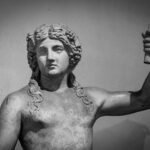
Dionysus was the Greek god of wine, fertility, theater, ecstasy, madness, and religious transformation. He was associated with vineyards, celebration, music, and ritual frenzy. His followers often worshipped him through ecstatic dances, dramatic performances, and festivals that temporarily overturned normal social rules.
He was the son of Zeus and Semele, a mortal woman. This made Dionysus unusual among the Olympians because his mother was not a goddess. According to myth, Semele died before giving birth after seeing Zeus in his full divine glory. Zeus saved the unborn Dionysus and sewed him into his thigh until he was ready to be born.
Because of this strange second birth, Dionysus was sometimes called “twice-born.” His mythology emphasizes crossing boundaries: mortal and divine, order and chaos, joy and madness, life and death.
The Twelve Olympians Were Not Always Fixed
One key reason Dionysus is sometimes left out is that the list of the Twelve Olympians was not completely fixed in ancient Greece. Modern readers often expect one official version, but Greek mythology was never organized like a single rulebook.
Different cities, poets, and traditions had their own versions of myths and divine hierarchies. The number twelve was important, but the membership could vary.
The most common list of the Twelve Olympians includes:
- Zeus
- Hera
- Poseidon
- Demeter
- Athena
- Apollo
- Artemis
- Ares
- Aphrodite
- Hephaestus
- Hermes
- Hestia or Dionysus
That final position is where the confusion often appears. In many versions, Hestia is included instead of Dionysus. In others, Dionysus replaces Hestia.
Hestia and Dionysus: The Changing Twelfth Seat
The most common explanation is that Dionysus became one of the Twelve Olympians after Hestia gave up her seat. Hestia was the goddess of the hearth, home, and domestic stability. She was gentle, modest, and central to household worship.
In later tradition, Hestia willingly stepped aside to avoid conflict among the gods, allowing Dionysus to join the Olympian council. This story reflects the contrast between the two deities. Hestia represents stillness, family, and order. Dionysus represents movement, revelry, transformation, and disruption.
Because both gods were important, ancient sources and later retellings sometimes chose one over the other. This is why Dionysus appears in some lists but not in others.
Dionysus Had a Different Kind of Worship
Dionysus was not simply another god sitting calmly on Olympus. His worship was intense, emotional, and sometimes unsettling to traditional order. His festivals could involve masks, wine, dancing, processions, and dramatic performances.
He was also deeply connected with outsiders. Myths often show him arriving from distant lands or being resisted by kings who refuse to recognize his divinity. Those who deny him usually suffer terrible consequences, as in the story of Pentheus in The Bacchae by Euripides.
This outsider quality may explain why Dionysus sometimes seems separate from the more established Olympian gods. Even when he is included among them, he remains a god of the margins: forests, mountains, theaters, vineyards, and ecstatic rituals.
His Late Arrival in Mythic Tradition
Dionysus is often portrayed as a god who arrives later than the others. Many myths tell of his travels, his struggle to be accepted, and his eventual recognition as a true god. This “late arrival” theme may have influenced why some lists did not originally include him among the Twelve Olympians.
However, this does not mean Dionysus was unimportant. In fact, he became one of the most widely worshipped gods in the Greek world. His festivals were major public events, especially in Athens, where the City Dionysia gave rise to some of the greatest works of Greek tragedy and comedy.
Dionysus may have been left out of certain Olympian lists, but his religious and cultural significance was enormous.
The Role of Regional Differences
Ancient Greece was not one unified nation with a single religious authority. It was made up of many city-states, islands, and regions, each with its own cult practices and local traditions.
In some places, Hestia may have held a stronger place in the divine order. In others, Dionysus was more prominent. This helps explain why the list of Olympians could change depending on the source.
Mythology developed through storytelling, ritual, poetry, drama, and local worship. As a result, variation was normal. Dionysus being included or excluded is not a mistake; it is a reflection of how flexible Greek mythology was.
Dionysus and the Nature of Olympus
The question also reveals something important about Mount Olympus itself. The Olympians are often imagined as a neat group of twelve gods ruling from a divine palace. But Greek religion was more fluid than that.
Some gods were “Olympian” in one context and not in another. Other important deities, such as Hades and Persephone, were often excluded from the Twelve even though they were extremely powerful. Hades, for example, was not usually counted because he ruled the underworld rather than living on Olympus.
Dionysus fits awkwardly because he belongs everywhere and nowhere. He is divine, but born from a mortal mother. He is joyful, but also dangerous. He brings civilization through wine and theater, yet he also dissolves boundaries and social control.
Why Dionysus Is Sometimes Left Out
Dionysus is sometimes left out of the Twelve Olympians because there was no single official list in ancient Greek tradition. In many versions, Hestia occupies the twelfth seat instead. Dionysus was also seen as a late-arriving, boundary-crossing god whose worship differed from the more orderly image of Olympus.
Still, his exclusion from some lists does not make him less important. Dionysus was one of the most powerful and fascinating gods in Greek mythology. Whether counted among the Twelve Olympians or standing slightly apart from them, he embodied forces the Greeks considered essential: joy, terror, creativity, madness, and transformation.

Orin Vale has spent the better part of two decades tracing the threads that connect the world’s oldest stories — from the halls of Asgard to the banks of the Nile, from Olympus to the jungles of the Maya. What began as a childhood fascination with flood myths and trickster gods grew into years of independent study across comparative mythology and ancient religion, always chasing the same question: what did these stories mean to the people who first told them? Orin writes for readers who want more than trivia — the ones looking for the beliefs, fears, and truths that myths were built to carry.