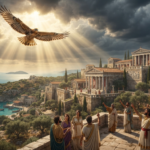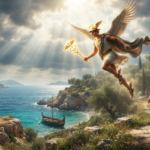
Penelopeia occupies a genuinely distinctive place within Greek mythology, her identity permanently complicated by centuries of confusion with a considerably more famous namesake. Anyone asking who is the nymph Penelopeia in Greek mythology should understand immediately that this figure is not Penelope, the celebrated wife of Odysseus from Homer’s Odyssey, but rather an entirely separate Arcadian nymph whose own mythology centers on her role as mother to the god Pan.
This shared name created genuine confusion even among ancient Greek writers themselves, who sometimes struggled to distinguish between these two figures, occasionally constructing elaborate and increasingly scandalous stories specifically attempting to explain how Odysseus’s famously faithful wife might have ended up in Arcadia giving birth to a goat-legged deity. This confusion makes Penelopeia a genuinely fascinating case study in how similarly named mythological figures could become entangled across different regional traditions.
Penelopeia’s own, more consistently documented mythology positions her as an Epimelid nymph specifically associated with Mount Cyllene in Arcadia, whose union with the god Hermes produced Pan, one of Greek mythology’s most visually distinctive and immediately recognizable deities. This connection ties Penelopeia directly into the broader mythology surrounding Pan’s own remarkable, startling birth.
What follows examines Penelopeia’s identity as an Epimelid nymph of Mount Cyllene, the specific circumstances surrounding Pan’s birth through her union with Hermes, the debated meaning behind her name, the genuine ancient confusion between Penelopeia and Odysseus’s famous wife, and how later poets like Nonnus specifically worked to distinguish between these two similarly named figures.
Penelopeia, Epimelid Nymph of Mount Cyllene
Penelopeia belongs to a specific category of Greek nymphs known as Epimelids, spirits particularly associated with protecting apple orchards and highland pastures, connecting her directly to the practical, pastoral concerns of rural Arcadian communities dependent on successful agriculture and animal husbandry. This classification positioned her among nymphs whose significance centered on tangible, everyday concerns rather than more abstract cosmic domains.
Ancient sources identify Penelopeia’s father as Dryops, whose name translates roughly to “Oak-Face,” a figure likely representing a local mountain deity closely associated with the specific geography of Mount Cyllene itself. This parentage connected Penelopeia directly to the particular landscape she inhabited, reinforcing the close relationship between nymph and physical location common throughout Greek mythological tradition.
Mount Cyllene itself held genuine mythological significance within broader Greek tradition, since this specific location also served as an important site connected to Hermes’s own mythology, making it a fitting setting for the significant union that would soon unfold between this local nymph and the visiting god. This geographic connection between deity and nymph reinforces the genuinely localized, rustic character defining Penelopeia’s entire mythological identity.
Understanding this foundational identity provides essential context for who is the nymph Penelopeia in Greek mythology, establishing her firmly within a specific, localized Arcadian tradition centered on Mount Cyllene before examining the significant union that would eventually connect her to one of Greek mythology’s most distinctive deities.
The Birth of Pan: Hermes’s Rustic Courtship
According to the Homeric Hymn to Pan, one of the primary ancient sources documenting this myth, Hermes arrived in Arcadia and took up residence specifically on Mount Cyllene, where he unusually served as a shepherd tending curly-fleeced sheep in service to a mortal man, despite his own genuine divine status. This humble, pastoral role set the stage for his eventual encounter with Dryops’s daughter.
While serving in this shepherding capacity, Hermes developed a powerful, consuming desire specifically for the rich-tressed daughter of Dryops, a longing intense enough that the god pursued and ultimately achieved marriage with this local nymph despite the considerable difference in their respective divine and semi-divine status. This union represented a genuine merging of Hermes’s own significant divine authority with Penelopeia’s more localized, rustic Arcadian identity.
The resulting child proved genuinely startling in appearance, born with goat’s feet, two prominent horns, and an unusual, noisy, laughing demeanor that immediately distinguished him from any typical mortal or divine offspring his mother might have anticipated. This dramatic, unexpected appearance so alarmed the nurse initially responsible for the newborn that she reportedly fled in genuine fear upon first witnessing his uncouth, hybrid form.
Rather than sharing this fearful reaction, Hermes himself received his unusual son with genuine delight, personally taking the child to Olympus specifically to share this remarkable new addition with the broader community of gods, who apparently welcomed Pan’s distinctive appearance with considerably more enthusiasm than his own initial mortal caretaker had shown. This dramatic birth sequence provides the clearest and most historically significant answer to who is the nymph Penelopeia in Greek mythology, confirming her essential role as the specific Arcadian nymph whose union with Hermes directly produced this genuinely distinctive Greek deity.
What Does the Name Penelopeia Mean?
The etymology behind Penelopeia’s name remains genuinely debated among scholars examining ancient Greek sources, with two primary interpretations offering meaningfully different insights into her broader mythological character and significance. One proposed derivation connects her name to the Greek words pene and lopas, suggesting a translation related to “needle and thread,” potentially connecting her to textile or weaving associations common among certain other nymph traditions.
An alternative and arguably more contextually fitting interpretation connects her name instead to terminology meaning “to peel away all,” a meaning that could plausibly reference the specific practice of shearing sheep or skinning animals, activities directly relevant to pastoral and hunting communities throughout ancient Arcadia. This particular etymological reading would align meaningfully with her eventual role as mother to Pan, himself closely associated with both hunting and the herding of flocks.
This second interpretation carries genuine appeal specifically because it connects so directly to Pan’s own established mythological domains, suggesting that Penelopeia’s very name may have anticipated or reflected the particular type of deity she would eventually bring into the world through her union with Hermes. This thematic consistency between mother’s name and son’s eventual domain reflects patterns occasionally found elsewhere throughout Greek mythological naming conventions.
This etymological uncertainty adds genuine scholarly depth to who is the nymph Penelopeia in Greek mythology, revealing that even her fundamental name carries interpretive complexity worth careful consideration, particularly given how meaningfully either proposed meaning might connect to her broader mythological role as mother to a deity so closely associated with pastoral and hunting traditions throughout ancient Arcadia.
The Great Confusion: Penelopeia vs. Penelope, Wife of Odysseus
The shared name between this Arcadian nymph and Odysseus’s celebrated wife created genuine, lasting confusion throughout ancient Greek mythological tradition, with various writers constructing increasingly elaborate explanations attempting to reconcile these two seemingly distinct figures into a single, unified narrative. This confusion reflects how significantly shared names could complicate mythological tradition even among sophisticated ancient audiences.
Some ancient sources specifically claimed that Penelope, the famously faithful wife celebrated throughout Homer’s Odyssey, had actually been seduced by Antinous, one of her many suitors during Odysseus’s prolonged absence, resulting in Odysseus eventually banishing her back to her father Icarius following his own return home. According to this particular tradition, Penelope subsequently traveled to Mantinea in Arcadia, where she then bore Pan to Hermes, directly conflating her story with Penelopeia’s own more localized mythology.
An even more extreme version of this confused tradition abandoned Hermes’s paternity entirely, instead claiming that Penelope had slept with all one hundred and eight of her suitors during Odysseus’s absence, with Pan’s very name, derived from the Greek word meaning “all,” serving as etymological evidence supporting this scandalous interpretation. This particular version represents a genuinely striking example of folk etymology directly shaping mythological narrative development.
The ancient travel writer Pausanias further documented a local Mantinean tradition specifically identifying a grave site attributed to Penelope within this Arcadian region, with local residents claiming that Odysseus had indeed banished her for infidelity following his return, reinforcing this persistent confusion through actual physical monuments and local oral tradition. This widespread confusion provides crucial context for who is the nymph Penelopeia in Greek mythology, demonstrating how thoroughly her more localized identity became entangled with her far more famous namesake throughout various strands of ancient Greek storytelling.
Nonnus and the Deliberate Distinction
Writing considerably later than many of the sources perpetuating this confusion, the fifth-century poet Nonnus made a genuinely deliberate effort within his epic Dionysiaca to clearly distinguish between these two similarly named figures, explicitly identifying Pan’s mother as “Penelope of Mantineia,” a specifically local Arcadian nymph rather than Homer’s celebrated Ithacan queen. This careful distinction represents one of the clearest ancient attempts to resolve the confusion surrounding these two figures.
Nonnus additionally provided further mythological detail beyond simply clarifying Penelopeia’s separate identity, specifically naming her son as Nomios, meaning “Shepherd,” identifying him as one of twin Pan-figures born during this particular period, alongside a separate figure named Agreus, who was instead born to a different nymph named Sose. This additional genealogical detail suggests later Greek tradition sometimes multiplied Pan-like figures rather than maintaining strict consistency regarding a single, unified deity.
This deliberate scholarly and poetic effort to separate Penelopeia from her famous namesake demonstrates that at least some ancient writers recognized and actively worked to correct the broader confusion that had developed across earlier mythological tradition, even if this clarifying effort came relatively late compared to the earlier sources that had already established and perpetuated the conflation between these two figures.
This later clarification provides an important final dimension to who is the nymph Penelopeia in Greek mythology, confirming that despite centuries of genuine ancient confusion, later writers like Nonnus specifically recognized the need to preserve Penelopeia’s own distinct identity as the Arcadian nymph whose union with Hermes produced Pan, separate entirely from Homer’s celebrated, faithful queen of Ithaca.
Frequently Asked Questions
Is Penelopeia the same as Odysseus’s wife Penelope?
No, though ancient sources frequently confused the two figures, constructing elaborate stories attempting to explain how Odysseus’s wife might have given birth to Pan in Arcadia.
Who was Penelopeia’s son?
Penelopeia’s son was Pan, the goat-legged god of shepherds and wild places, born through her union with the god Hermes on Mount Cyllene.
What does Penelopeia’s name mean?
The meaning remains debated, with scholars proposing either “needle and thread” or a term related to shearing or skinning, the latter fitting her role as Pan’s mother.
Conclusion
Penelopeia stands as a genuinely distinct figure within Greek mythology, her identity as the Arcadian Epimelid nymph who bore Pan to Hermes deserving recognition separate from centuries of ancient confusion connecting her to Homer’s far more celebrated Penelope. From her rustic origins on Mount Cyllene to later writers like Nonnus specifically working to clarify her separate identity, Penelopeia’s mythology reveals how shared names could create lasting complexity within Greek storytelling, even while her own genuine significance as mother to one of mythology’s most distinctive gods remains firmly established.

Orin Vale has spent the better part of two decades tracing the threads that connect the world’s oldest stories — from the halls of Asgard to the banks of the Nile, from Olympus to the jungles of the Maya. What began as a childhood fascination with flood myths and trickster gods grew into years of independent study across comparative mythology and ancient religion, always chasing the same question: what did these stories mean to the people who first told them? Orin writes for readers who want more than trivia — the ones looking for the beliefs, fears, and truths that myths were built to carry.