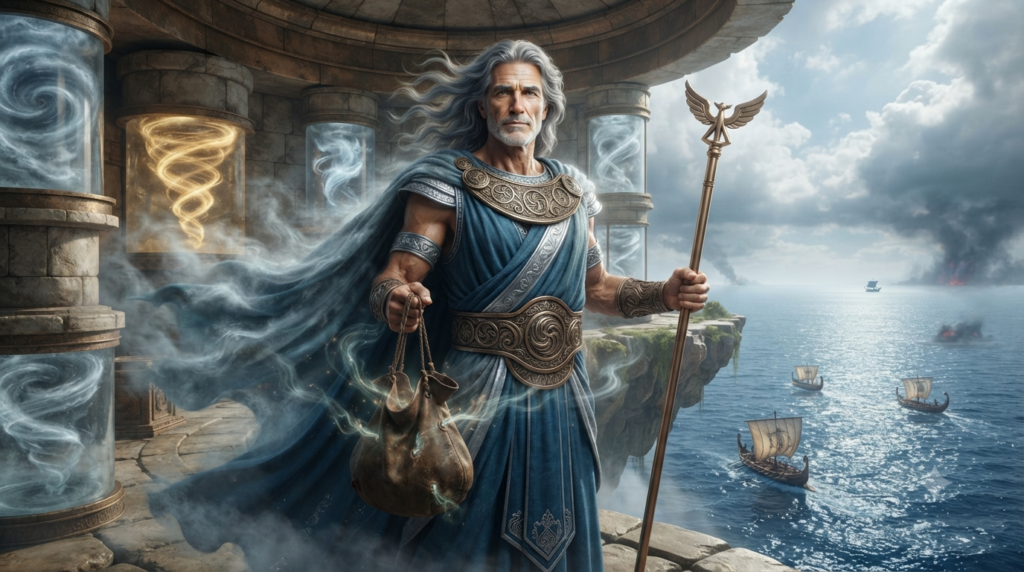
Aeolus occupies a genuinely distinctive place within Greek mythology as the divine keeper of the winds, a figure whose remarkable authority over these powerful atmospheric forces made him an essential character within one of Homer’s most memorable episodes throughout the Odyssey. Anyone asking who is Aeolus in Greek mythology should understand from the outset that this name actually refers to more than one significant figure within ancient Greek tradition, requiring careful attention to distinguish between them.
This particular Aeolus, sometimes identified as the son of Hippotes, received his remarkable authority directly from Zeus himself, who specifically entrusted him with the responsibility of controlling and containing the powerful winds capable of either aiding or devastating mortal sailors throughout the ancient Mediterranean world. This divine appointment positioned Aeolus as a genuinely significant figure whose cooperation could mean the difference between safe passage and catastrophic disaster for any traveler crossing the sea.
Beyond this wind-keeping Aeolus, ancient Greek mythology also preserves an entirely separate figure bearing this same name, a mortal king whose own significance rests on his role as ancestor of the Aeolian Greeks, one of the major tribal and dialect groups comprising the broader ancient Greek world. This genuine ancient confusion between these two figures makes understanding who is Aeolus in Greek mythology a genuinely worthwhile exercise in careful mythological distinction.
What follows examines Aeolus’s divine appointment as keeper of the winds, the meaning behind his distinctive epithet Hippotades, his pivotal role assisting Odysseus during his journey home, the genuine scholarly confusion surrounding his exact parentage, and the separate mortal figure who shares his name as ancestor of the Aeolian Greek people.
Aeolus, Appointed Keeper of the Winds by Zeus
Aeolus received his significant authority directly from Zeus, who specifically appointed him to serve as guardian and controller of the Anemoi, the personified winds capable of either gently guiding ships toward safe harbor or violently destroying vessels caught within their devastating power. This divine appointment positioned Aeolus as an essential intermediary figure, responsible for managing forces that directly affected the fortunes of mortal sailors throughout the ancient world.
Aeolus made his home on Aeolia, a remarkable floating island surrounded by unbreakable walls constructed from gleaming bronze, a fitting residence for a figure entrusted with containing forces as genuinely powerful and potentially destructive as the winds themselves. This distinctive setting reinforced Aeolus’s unique position within Greek mythology, existing in a space genuinely separate from ordinary mortal geography.
Within this remarkable island home, Aeolus maintained a notably harmonious household alongside his wife and twelve children, evenly divided between six sons and six daughters, who lived together in genuine contentment despite the unusual circumstance of these siblings marrying one another. Homer specifically describes this household as existing in a state of continuous celebration and feasting, reflecting the genuine abundance and peace characterizing Aeolus’s isolated island kingdom.
This foundational role and setting provide essential context for who is Aeolus in Greek mythology, establishing him as a divinely appointed guardian whose remarkable authority over the winds and unusual island household distinguished him significantly from more conventional mortal kings or straightforward Olympian deities within the broader Greek mythological landscape.
The Epithet Hippotades: “Reiner of the Horses”
Ancient Greek tradition frequently referred to Aeolus through the specific epithet Hippotades, a title carrying genuine significance when properly understood within the broader context of how ancient Greeks conceptualized the winds themselves. This particular name combines the Greek words for “horse” and a term related to reining or controlling, together suggesting someone specifically capable of managing horse-like forces.
This epithet makes genuine sense once understood alongside ancient Greek beliefs regarding the winds’ own fundamental nature, since these atmospheric forces were frequently conceived and depicted as horse-shaped spirits or deities, their swift, powerful movement across the sky naturally evoking comparison to galloping horses racing across open terrain. This conceptual framework positioned Aeolus’s role as winds’ keeper in direct parallel to a skilled horseman managing powerful, potentially unruly steeds.
This epithet reinforces Aeolus’s essential function within Greek mythology, since successfully “reining in” horse-like winds required genuine skill and authority, qualities Zeus specifically recognized when originally appointing Aeolus to this significant responsibility. The title itself therefore carries meaningful descriptive weight beyond simply identifying Aeolus by an alternative name.
Understanding this specific epithet adds valuable depth to who is Aeolus in Greek mythology, revealing how ancient Greek language and mythological conception worked together to characterize his particular divine responsibility through this vivid, horse-based metaphor for controlling forces as genuinely powerful and potentially unpredictable as the winds themselves.
Aeolus and Odysseus: The Bag of Winds
Aeolus’s most significant and enduring mythological appearance occurs within Homer’s Odyssey, specifically during Odysseus’s extended journey home following the Trojan War, when the hero and his crew arrived at Aeolia seeking assistance during their difficult voyage. Aeolus welcomed these weary travelers with genuine hospitality, hosting them for an entire month while listening with interest to their accounts of the recently concluded Trojan War.
As Odysseus prepared to continue his journey, Aeolus provided a remarkable and genuinely generous gift specifically designed to ensure safe passage home: a leather bag containing all the contrary winds capable of blowing Odysseus’s ships off course, carefully excluding only the gentle west wind, Zephyrus, which would steadily guide the fleet directly toward Ithaca. This thoughtful gift represented genuine divine favor, offering Odysseus a considerable advantage during this dangerous voyage.
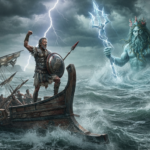
The journey initially proceeded successfully under this favorable wind, bringing Odysseus’s ships within actual sight of Ithaca’s shores after years of difficult travel. However, disaster struck when Odysseus’s own curious and increasingly suspicious crew, believing the mysterious bag might contain hidden treasure rather than dangerous winds, opened it while their captain slept, unleashing the contained storms that violently drove the entire fleet back to Aeolia rather than allowing them to complete their journey home.
When Odysseus returned to Aeolia seeking assistance a second time, Aeolus firmly refused any further help, declaring that Odysseus’s misfortune clearly indicated the gods themselves had turned against him, placing his continued suffering beyond any assistance Aeolus himself could reasonably provide. This pivotal episode provides the clearest and most historically significant answer to who is Aeolus in Greek mythology, establishing him as a figure representing both genuine divine benevolence and its meaningful limits when confronting fate’s own persistent opposition.
Who Was Aeolus’s Father? A Genealogical Puzzle
Ancient sources present genuinely conflicting accounts regarding Aeolus’s specific parentage, reflecting broader patterns of inconsistency common throughout Greek mythological tradition when multiple writers addressed the same significant figure across different works and time periods. Homer himself specifically identifies Aeolus as the son of Hippotes, establishing this as the most historically foundational account of his origin.
Later writers, however, including Diodorus Siculus and the Roman mythographer Hyginus, complicated this straightforward genealogy by connecting Aeolus more directly to Aeolus, son of Hellen, the separate mortal ancestor of the Aeolian Greeks discussed in greater detail below. Diodorus specifically constructed an elaborate genealogical explanation attempting to reconcile these seemingly distinct figures, describing a lineage in which Hippotes himself descended from the Hellen-connected Aeolus through several intervening generations.
An additional tradition further complicates this picture by identifying Poseidon himself as Aeolus’s father, a genealogical connection that would directly tie the wind-keeper’s authority to one of the Olympian gods most closely associated with controlling powerful natural forces across both sea and sky. This particular version reinforces Aeolus’s own significant command over similarly dramatic and potentially destructive natural phenomena.
This genuine scholarly uncertainty adds important complexity to who is Aeolus in Greek mythology, confirming that even ancient Greek writers themselves struggled to establish definitive consensus regarding his exact parentage, ultimately preserving multiple, sometimes contradictory traditions rather than settling on any single, universally accepted genealogical account.
A Different Aeolus: Ancestor of the Aeolian Greeks
Beyond the wind-keeping Aeolus discussed throughout most of this article, ancient Greek mythology preserves an entirely separate and genuinely significant figure sharing this same name, specifically identified as the son of Hellen and grandson of Deucalion and Pyrrha, the legendary survivors of Greek mythology’s great primordial flood. This particular Aeolus held considerable importance as the eponymous ancestor specifically credited with founding the Aeolian branch of the broader Greek people.
This mortal Aeolus ruled over Thessaly, establishing himself as a significant royal figure whose own extensive family produced numerous notable mythological descendants central to various significant Greek stories. Among his many children, this Aeolus fathered Sisyphus, later famous for his eternal punishment in the underworld, and Athamas, whose own subsequent marriage to the cloud nymph Nephele and their children Phrixus and Helle directly connects to the foundational mythology surrounding the later quest for the Golden Fleece.
Additional notable children attributed to this Aeolus include Cretheus, Salmoneus, and Canace, each contributing their own significant threads to the broader tapestry of Greek heroic and mythological tradition. This extensive genealogical significance positioned the Hellen-descended Aeolus as a genuinely important figure within Greek mythology’s broader explanation of its own peoples’ origins, entirely separate from his namesake’s more specific role governing the winds.
Acknowledging this distinct figure completes a full and accurate answer to who is Aeolus in Greek mythology, confirming that while ancient sources sometimes blurred the distinction between these two significant figures, they represent genuinely separate mythological traditions: one a divine keeper of powerful atmospheric forces, and the other a foundational mortal ancestor explaining the origins of an entire branch of the ancient Greek people.
Frequently Asked Questions
Is Aeolus a god or a mortal?
Ancient sources present Aeolus with some ambiguity; Homer describes him as a mortal king favored by Zeus, though he is frequently treated as a minor divine figure given his significant authority over the winds.
Who gave Odysseus the bag of winds?
Aeolus, the divine keeper of the winds, gave Odysseus the leather bag containing contrary winds during his visit to the floating island of Aeolia.
Is Aeolus the same as the ancestor of the Aeolian Greeks?
No, though ancient sources sometimes confused the two figures; the wind-keeper and the Aeolian ancestor represent genuinely distinct mythological traditions.
Conclusion
Aeolus, keeper of the winds, stands as a genuinely significant figure within Greek mythology, his pivotal assistance to Odysseus illustrating both the genuine value of divine favor and its meaningful limits once fate itself seems determined to work against a mortal hero. Whether considering his remarkable island household, his distinctive epithet Hippotades, or the genuine ancient confusion surrounding his connection to the separate Aeolus who fathered the Aeolian Greeks, this complex mythological figure reveals how thoroughly ancient Greek tradition wove together questions of divine authority, natural power, and genealogical origin within a single, evocative name.

Orin Vale has spent the better part of two decades tracing the threads that connect the world’s oldest stories — from the halls of Asgard to the banks of the Nile, from Olympus to the jungles of the Maya. What began as a childhood fascination with flood myths and trickster gods grew into years of independent study across comparative mythology and ancient religion, always chasing the same question: what did these stories mean to the people who first told them? Orin writes for readers who want more than trivia — the ones looking for the beliefs, fears, and truths that myths were built to carry.