Who Are the Gatekeepers of the Duat in Egyptian Mythology?
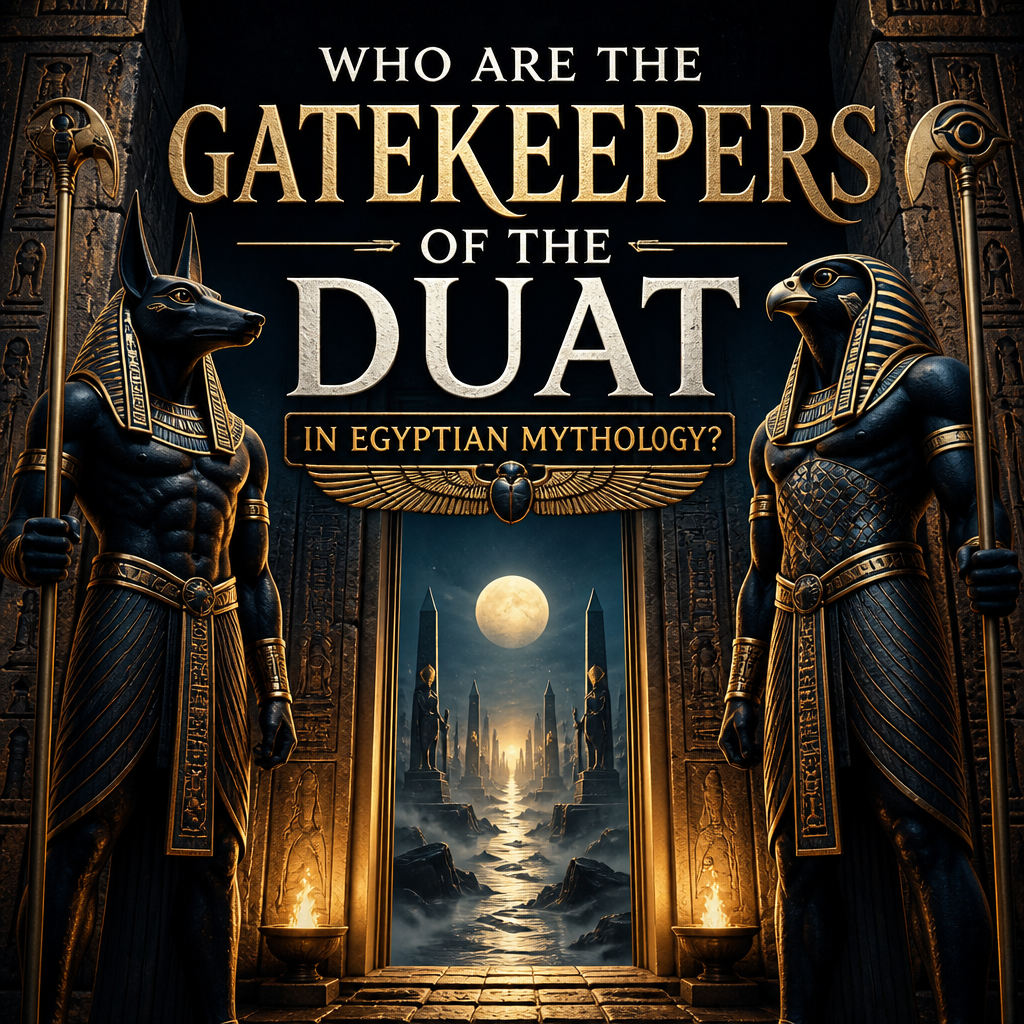
In ancient Egyptian belief, the Duat was the mysterious realm of the dead: a vast, sacred underworld through which the sun god Ra traveled each night and through which human souls journeyed after death. It was not simply a place of darkness or punishment. The Duat was a spiritual landscape filled with caverns, rivers, fields, divine beings, dangers, and tests.
Among the most important figures in this hidden world were the gatekeepers of the Duat. These beings guarded the portals, doors, and regions that separated one part of the underworld from another. To pass them, the deceased needed knowledge, purity, and the correct magical words.
The Duat: Egypt’s Underworld Realm
The Duat was central to Egyptian ideas about death and rebirth. Ancient Egyptians believed that after death, the soul did not automatically enter a peaceful afterlife. Instead, it had to travel through the Duat and face a series of challenges.
This journey reflected the nightly voyage of Ra, the sun god. Each evening, Ra entered the western horizon and traveled through the Duat in his solar barque. During the night, he passed through twelve regions or “hours,” facing threats such as the chaos serpent Apophis. At dawn, Ra emerged renewed in the east, bringing light back to the world.
For the human dead, the journey through the Duat was also about transformation. The soul hoped to reach the Field of Reeds, an ideal afterlife resembling a perfected version of Egypt. But before that could happen, it had to pass divine guardians and ultimately face judgment.
What Did the Gatekeepers of the Duat Do?
The gatekeepers of the Duat served as guardians of sacred boundaries. They controlled access to different regions of the underworld and protected divine spaces from the unworthy.
Their role was both protective and spiritual. They did not merely block the way; they tested whether a soul possessed the knowledge and moral purity needed to continue.
The deceased often had to know:
- The name of the gatekeeper
- The name of the gate itself
- The correct spell or declaration
- The divine power associated with that region
In Egyptian religion, names had magical power. To know the true name of a being was to have a form of authority over it. This is why funerary texts carefully listed the names of guardians and the words needed to pass them.
Gatekeepers in the Book of the Dead
One of the most important sources for understanding the gatekeepers of the Duat is the Book of the Dead, a collection of funerary spells designed to help the deceased navigate the afterlife.
These spells were written on papyrus, tomb walls, coffins, and amulets. They acted as a guidebook and magical protection for the soul.
In some chapters, the deceased approaches gates guarded by fearsome beings. These guardians are often described with strange and terrifying forms, combining human and animal features. Their appearances emphasized their supernatural power.
A soul might encounter guardians with names such as “He Who Lives on Snakes” or “Flame-Faced One.” These names were not casual descriptions. They expressed the dangerous and sacred nature of the beings who guarded the underworld.
The Twelve Gates of the Duat
In some Egyptian funerary traditions, especially those connected with royal tombs, the Duat was divided into twelve sections corresponding to the twelve hours of night. Each section had its own gate, guardians, and divine beings.
The Book of Gates, a major ancient Egyptian funerary text, describes Ra’s nightly journey through these twelve gates. Each gate is guarded by deities who control passage into the next region.
These gates were not only physical barriers but cosmic thresholds. Passing through them represented movement through stages of death, renewal, and rebirth.
The guardians of these gates often included:
- Serpent deities
- Fire-breathing beings
- Divine doorkeepers
- Knife-wielding protectors
- Gods and goddesses associated with judgment or protection
Their frightening qualities were not simply meant to terrify. They protected cosmic order, known as Ma’at, from chaos and impurity.
Serpent Guardians and Protective Deities
Serpents played a major role in the imagery of the Duat. Some serpents were dangerous enemies, like Apophis, who tried to destroy Ra each night. Others were protective guardians who defended gates and divine spaces.
This dual nature reflects a common feature of Egyptian mythology: powerful beings could be both threatening and protective depending on the context.
Gatekeepers of the Duat were often linked with fire, knives, and serpents. These symbols represented destruction of evil and protection of sacred order. A righteous soul, armed with the proper knowledge, could pass safely. A hostile or impure being could be destroyed.
The Role of Anubis and Osiris
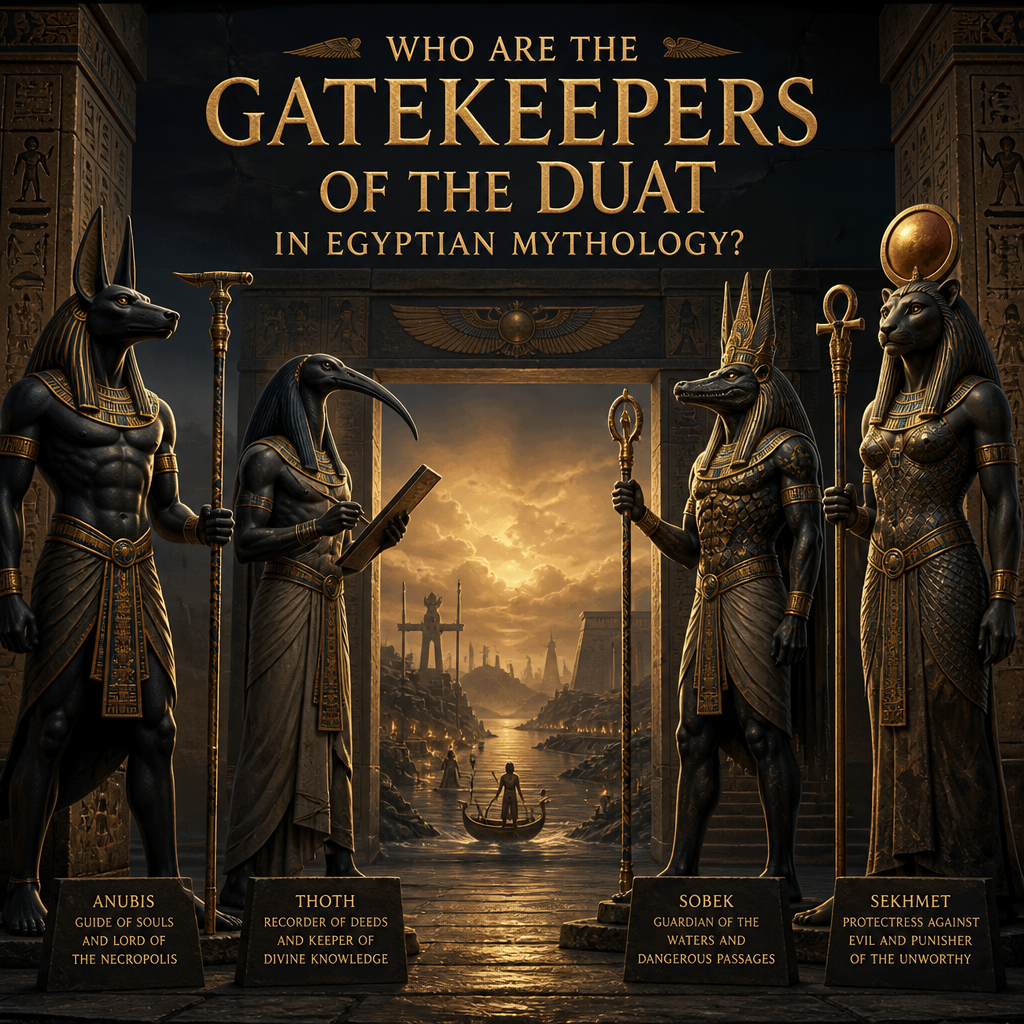
Although the specific gatekeepers of the Duat were often lesser-known deities or supernatural guardians, major gods also played crucial roles in the journey of the dead.
Anubis
Anubis, the jackal-headed god, was closely associated with mummification, tombs, and the protection of the dead. He guided souls and helped oversee the weighing of the heart. While not usually described simply as a gatekeeper, Anubis functioned as a guardian and guide through the dangerous transition from life to the afterlife.
Osiris
Osiris was the lord of the underworld and judge of the dead. The goal of the deceased was often to be justified before Osiris and join the blessed dead under his rule. The gatekeepers of the Duat served within this larger divine order, ensuring that only those who were prepared and worthy could advance.
Why Were the Gatekeepers So Important?
The gatekeepers of the Duat reveal how ancient Egyptians understood the afterlife. Death was not seen as an ending, but as a journey requiring preparation. Morality mattered, but so did sacred knowledge.
This is why tombs were filled with spells, images, and ritual texts. These were not decorations alone. They were tools meant to help the dead survive and succeed in the next world.
The gatekeepers also show the Egyptian concern with boundaries: between life and death, order and chaos, ignorance and wisdom. To pass a gate in the Duat was to move closer to spiritual renewal.
Final Thoughts
The gatekeepers of the Duat in Egyptian mythology were powerful divine guardians who protected the underworld’s gates, passages, and sacred regions. They tested the dead, guarded cosmic order, and ensured that only the worthy and properly prepared could continue their journey.
Found in texts such as the Book of the Dead and the Book of Gates, these mysterious beings remind us that the Egyptian afterlife was a complex spiritual path. To enter the realm of rebirth, the soul needed more than courage. It needed purity, knowledge, and the power of sacred words.

Orin Vale has spent the better part of two decades tracing the threads that connect the world’s oldest stories — from the halls of Asgard to the banks of the Nile, from Olympus to the jungles of the Maya. What began as a childhood fascination with flood myths and trickster gods grew into years of independent study across comparative mythology and ancient religion, always chasing the same question: what did these stories mean to the people who first told them? Orin writes for readers who want more than trivia — the ones looking for the beliefs, fears, and truths that myths were built to carry.