Who Is Apis, the Sacred Bull in Egyptian Mythology?
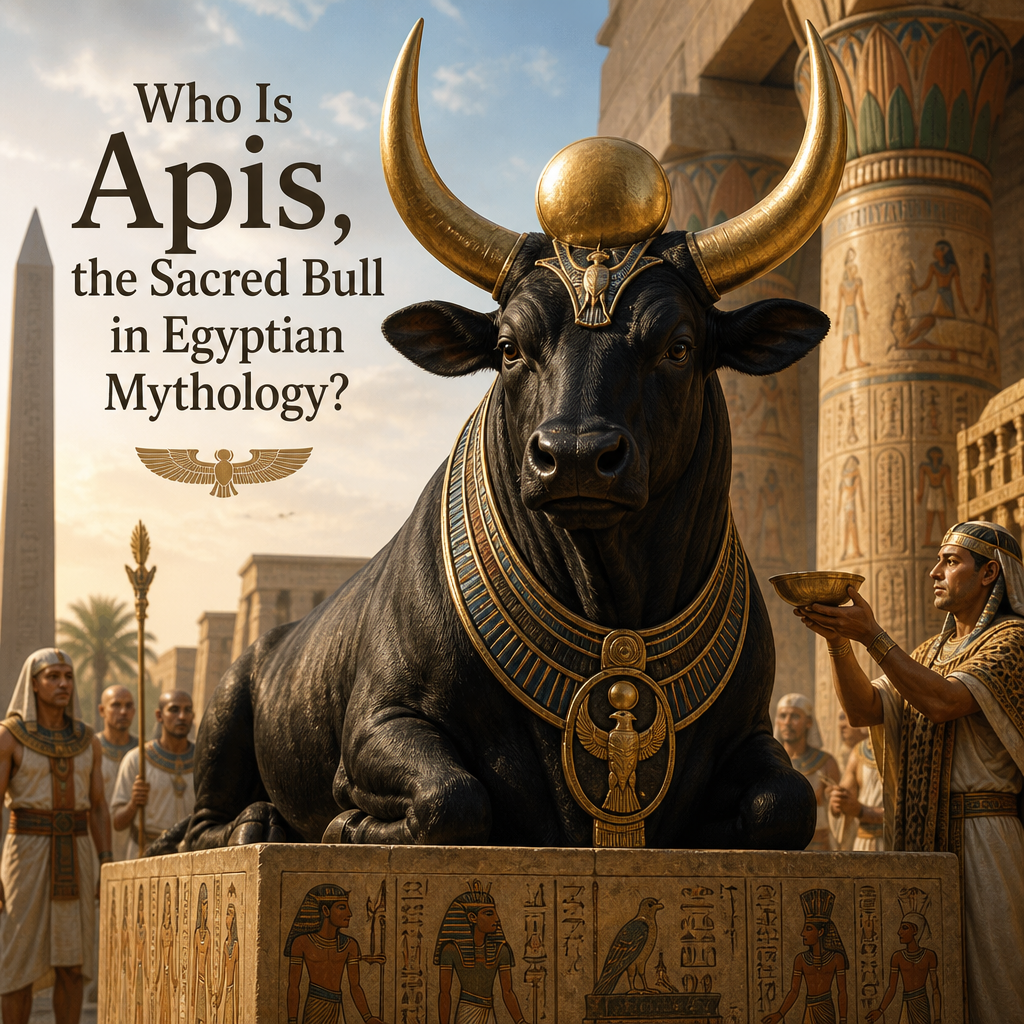
Apis, the sacred bull in Egyptian mythology, was one of the most important animal deities of ancient Egypt. Worshipped primarily in Memphis, Apis was not viewed as an ordinary bull but as a living manifestation of divine power on earth. He represented strength, fertility, kingship, and the close connection between humans, animals, and the gods.
For the ancient Egyptians, animals could embody sacred forces. The Apis bull was believed to carry the spirit of powerful gods and serve as a visible sign of their presence. His cult lasted for thousands of years and became one of the most enduring religious traditions in Egypt.
The Origins of Apis Worship
The worship of Apis dates back to the earliest periods of ancient Egyptian history. Evidence suggests that Apis was venerated as early as the First Dynasty, making him one of Egypt’s oldest known sacred animals.
Apis was closely connected with the city of Memphis, a major religious and political center. Memphis was also associated with Ptah, the creator god and patron of craftsmen. Over time, Apis became linked with Ptah and was seen as Ptah’s earthly representative.
This connection gave Apis a special role. He was not simply a symbol of divine energy; he was treated as a living god. Priests cared for him in a temple, observed his behavior, and interpreted his actions as signs from the divine world.
How Was the Apis Bull Identified?
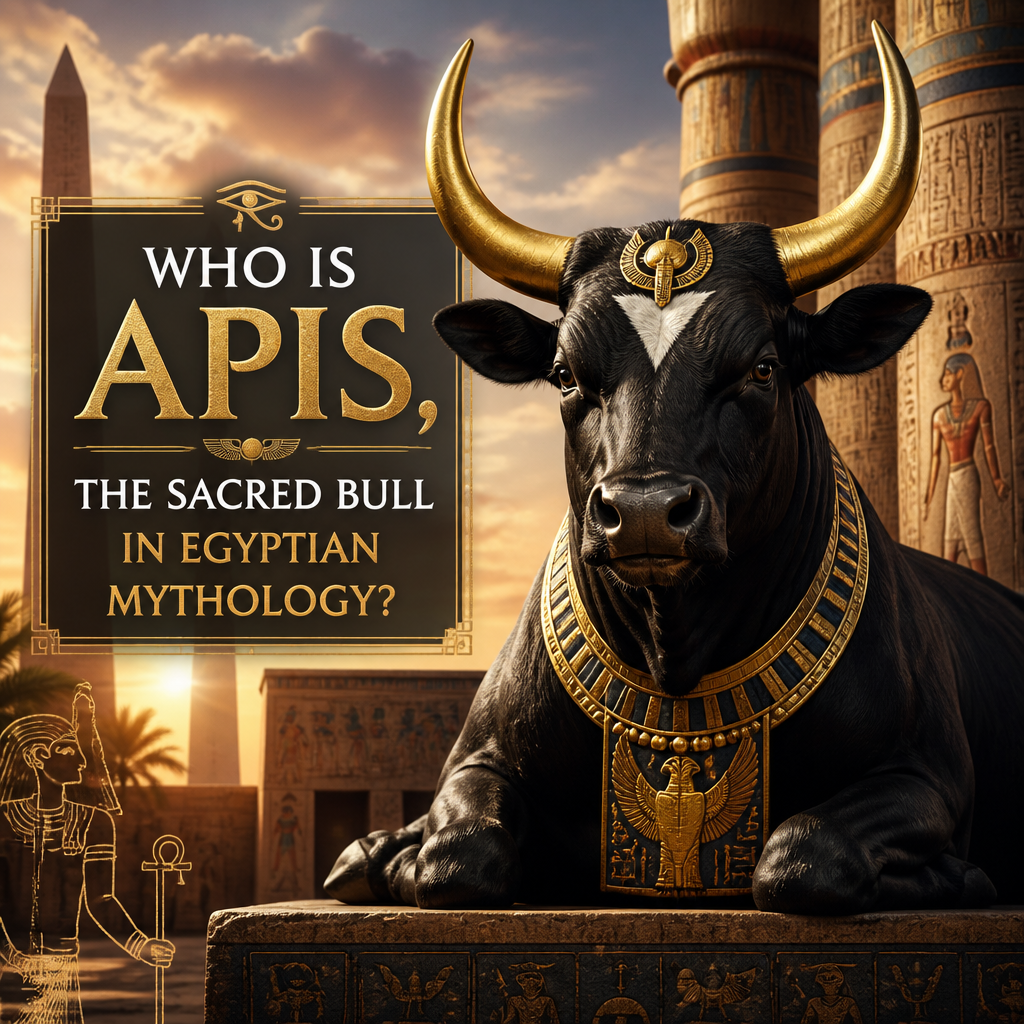
Not every bull could be Apis. According to Egyptian tradition, the true Apis bull had to be recognized by specific sacred markings. Priests searched carefully for a young bull that matched these signs.
Commonly described features included:
- A black body
- A white triangular mark on the forehead
- Special markings on the back or side
- A mark resembling wings or a scarab
- A distinctive shape under the tongue
These markings were understood as proof that the bull had been chosen by the gods. Once identified, the animal was brought to Memphis and installed as the living Apis.
The selection process was highly important because Egyptians believed the Apis bull was born through divine intervention. His mother was also honored and sometimes treated as sacred because she had given birth to a godly being.
Apis and the God Ptah
In Memphis, Apis was most strongly associated with Ptah. Ptah was a creator god who formed the world through thought and speech. He was also linked with artisans, architects, and the shaping of order from chaos.
Apis functioned as the earthly presence of Ptah. Through him, worshippers could approach the divine in a direct and physical way. The bull’s movements, appetite, and behavior were watched closely by priests, who believed they could reveal the will of Ptah.
This relationship made Apis especially important in rituals connected with prosperity, fertility, and royal authority. As a strong and fertile animal, the bull naturally symbolized power and abundance.
Apis, Kingship, and Fertility
Apis was deeply connected to Egyptian ideas of kingship. Pharaohs were often associated with bulls because bulls represented strength, virility, and dominance. The Apis bull reflected these qualities and helped reinforce the divine nature of the king.
In some ceremonies, Apis may have played a role in confirming royal power. His presence linked the pharaoh with the gods and with the forces of life and renewal.
Fertility was another major part of Apis worship. Bulls were powerful symbols of reproduction and agricultural prosperity. Since Egypt depended on farming and the annual flooding of the Nile, fertility was central to survival. Apis represented the life-giving energy that sustained people, animals, and crops.
Death and the Afterlife of Apis
The death of an Apis bull was a major religious event. Because he was considered a living god, his passing was treated with great seriousness. The entire community could mourn, and elaborate burial rituals were performed.
After death, Apis became associated with Osiris, the god of the afterlife. In this form, he was known as Osorapis, a combination of Osiris and Apis. This reflected the Egyptian belief that divine life continued after death.
The dead Apis bulls were mummified and buried with great care. Their burial place was the Serapeum at Saqqara, a vast underground complex near Memphis. Huge stone sarcophagi were used to hold the mummified bulls, showing the immense respect given to them.
These burials were not simple animal graves. They were royal-style tombs for sacred beings. The rituals surrounding Apis demonstrate how seriously Egyptians took the relationship between death, rebirth, and divine power.
The Rise of Serapis
During the later periods of Egyptian history, especially under the Ptolemies, the figure of Apis became connected with a new god called Serapis. Serapis combined aspects of Osiris and Apis with elements of Greek religious thought.
This new deity helped unite Egyptian and Greek populations after Alexander the Great’s conquest of Egypt. Serapis became popular not only in Egypt but also across parts of the Mediterranean world.
Although Serapis developed later, his roots were tied to the ancient worship of Apis. This shows how flexible and influential the Apis tradition was over time.
Why Was Apis So Important?
Apis was important because he brought together several key Egyptian beliefs:
- The divine could appear in physical form
- Animals could serve as sacred vessels
- Kingship was connected to supernatural power
- Fertility and life were gifts of the gods
- Death was part of a cycle of renewal
Unlike distant gods represented only in statues or temple images, Apis was alive. People could see him, honor him, and witness his presence. This made him one of the most accessible and powerful divine figures in Egyptian religion.
The Legacy of the Sacred Bull
Apis, the sacred bull in Egyptian mythology, remains a striking example of how ancient Egyptians understood the divine world. To them, the gods were not separate from nature. They could be present in the sun, the Nile, the desert, the stars, and even in a living bull.
The Apis cult reveals a culture that saw animals as meaningful participants in the sacred order of the universe. Through Apis, Egyptians celebrated strength, fertility, kingship, death, and rebirth.
Today, the image of the sacred bull continues to fascinate historians, archaeologists, and mythology enthusiasts. Apis stands as one of ancient Egypt’s most powerful symbols of divine life made visible on earth.

Orin Vale has spent the better part of two decades tracing the threads that connect the world’s oldest stories — from the halls of Asgard to the banks of the Nile, from Olympus to the jungles of the Maya. What began as a childhood fascination with flood myths and trickster gods grew into years of independent study across comparative mythology and ancient religion, always chasing the same question: what did these stories mean to the people who first told them? Orin writes for readers who want more than trivia — the ones looking for the beliefs, fears, and truths that myths were built to carry.