Ancient Egypt
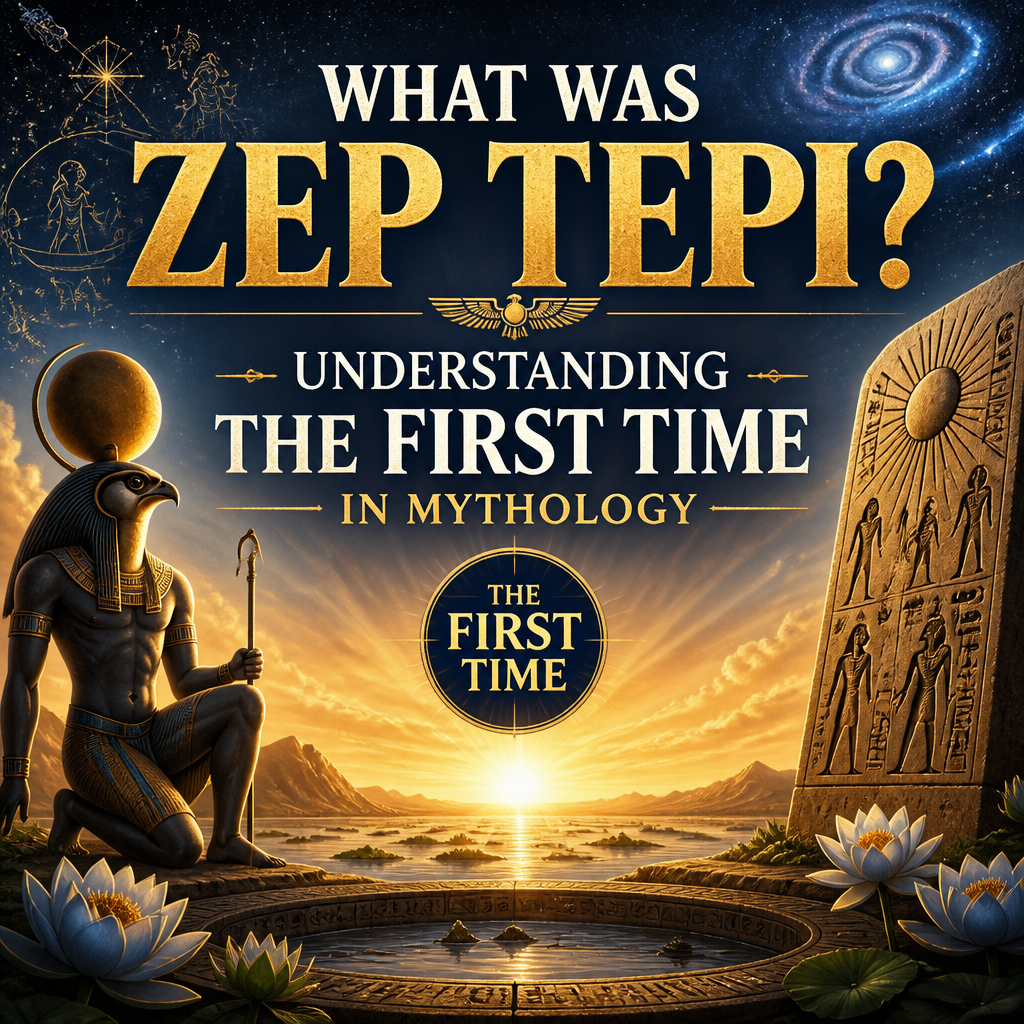
What Was Zep Tepi? Understanding The First Time in Mythology
Zep Tepi, meaning “the first time,” reveals how ancient Egyptians imagined creation as the moment divine order rose from chaos. This sacred beginning shaped their myths, rituals, kingship, and understanding of the universe.
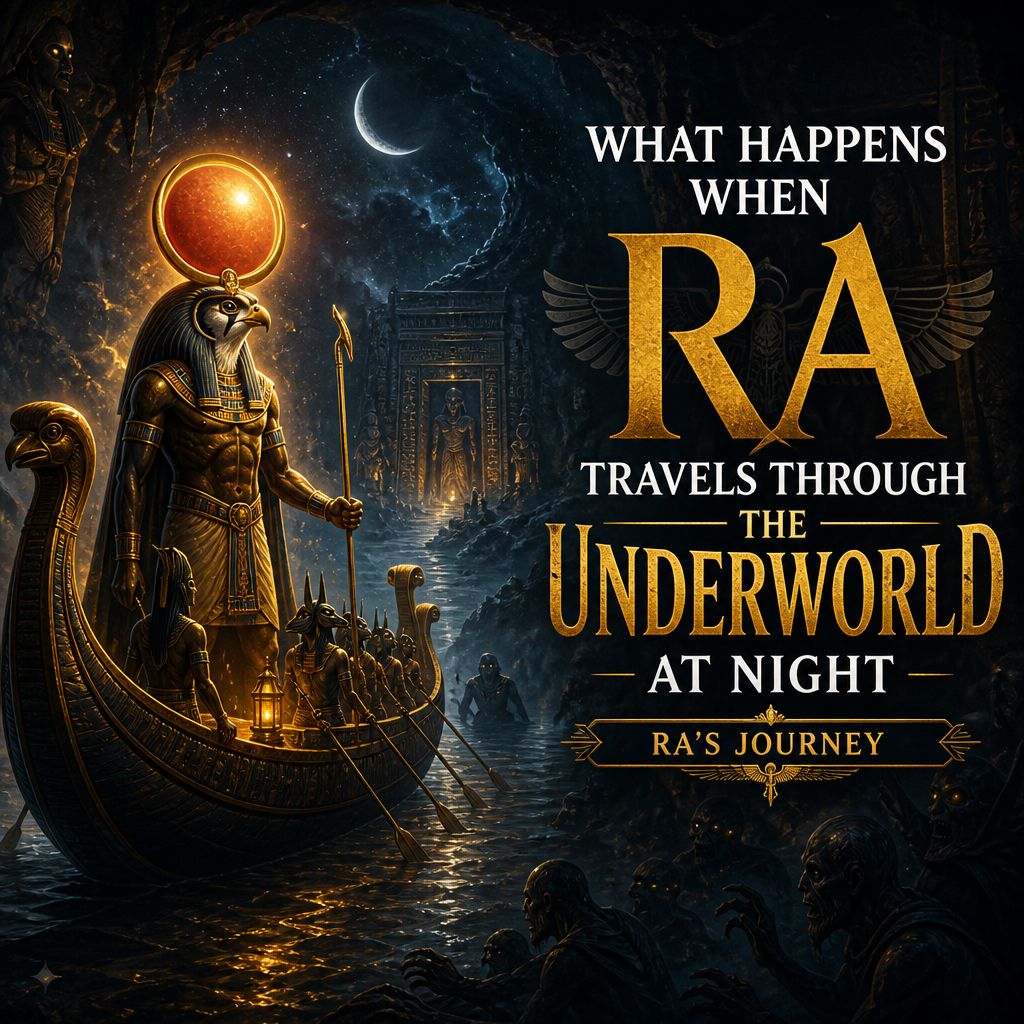
What Happens When Ra Travels Through the Underworld at Night
Ra’s journey through the underworld reveals how ancient Egyptians understood night as a time of danger, renewal, and hope. Each sunset began a sacred voyage through the Duat, ending with Ra’s triumphant rebirth at dawn.
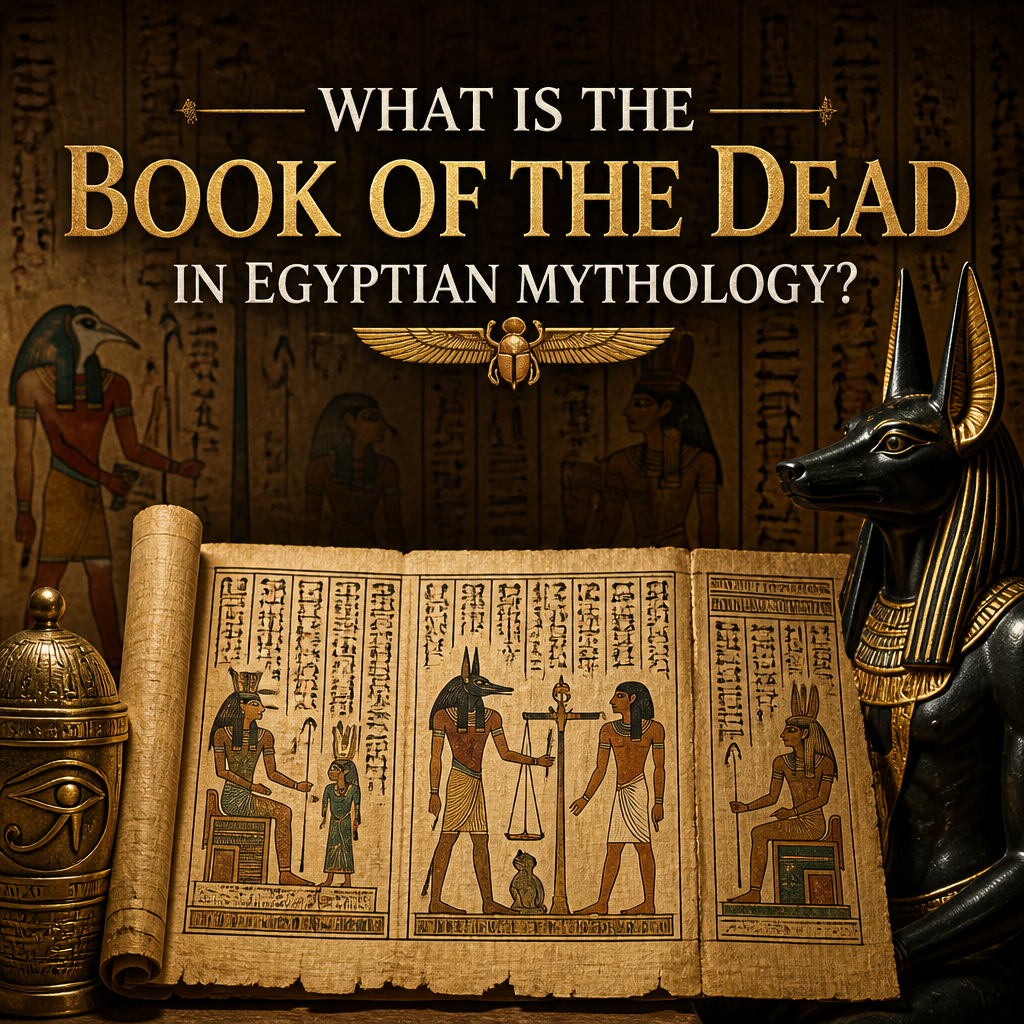
What Is the Book of the Dead in Egyptian Mythology?
The Book of the Dead was an ancient Egyptian guide to the afterlife, filled with spells and prayers to help the soul face challenges and reach eternal peace. Far from being a dark or scary text, it reflected Egypt’s hopeful belief in rebirth and life beyond death.
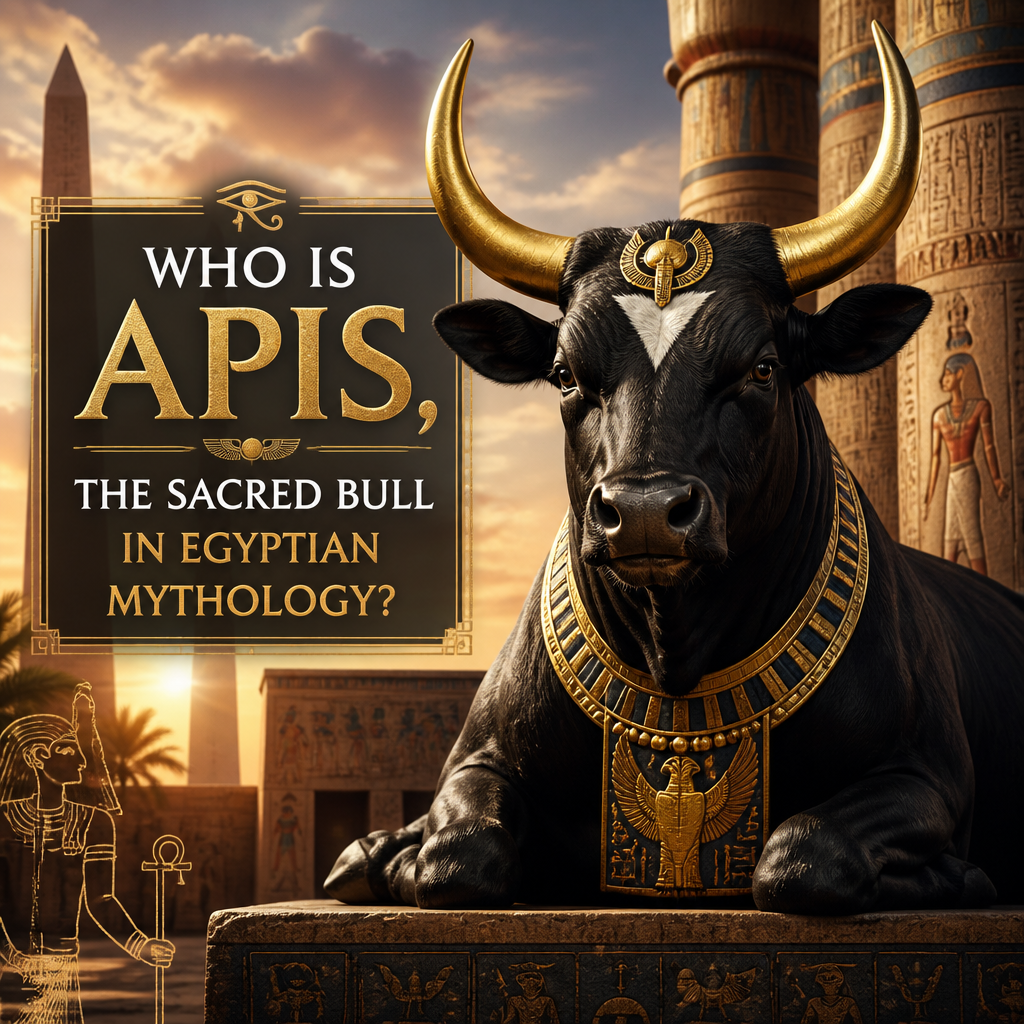
Who Is Apis, the Sacred Bull in Egyptian Mythology?
The Apis bull was a sacred animal deity in ancient Egypt, honored as a living symbol of divine strength, fertility, and kingship. Worshipped especially in Memphis, he connected the human world with the powerful presence of the gods.
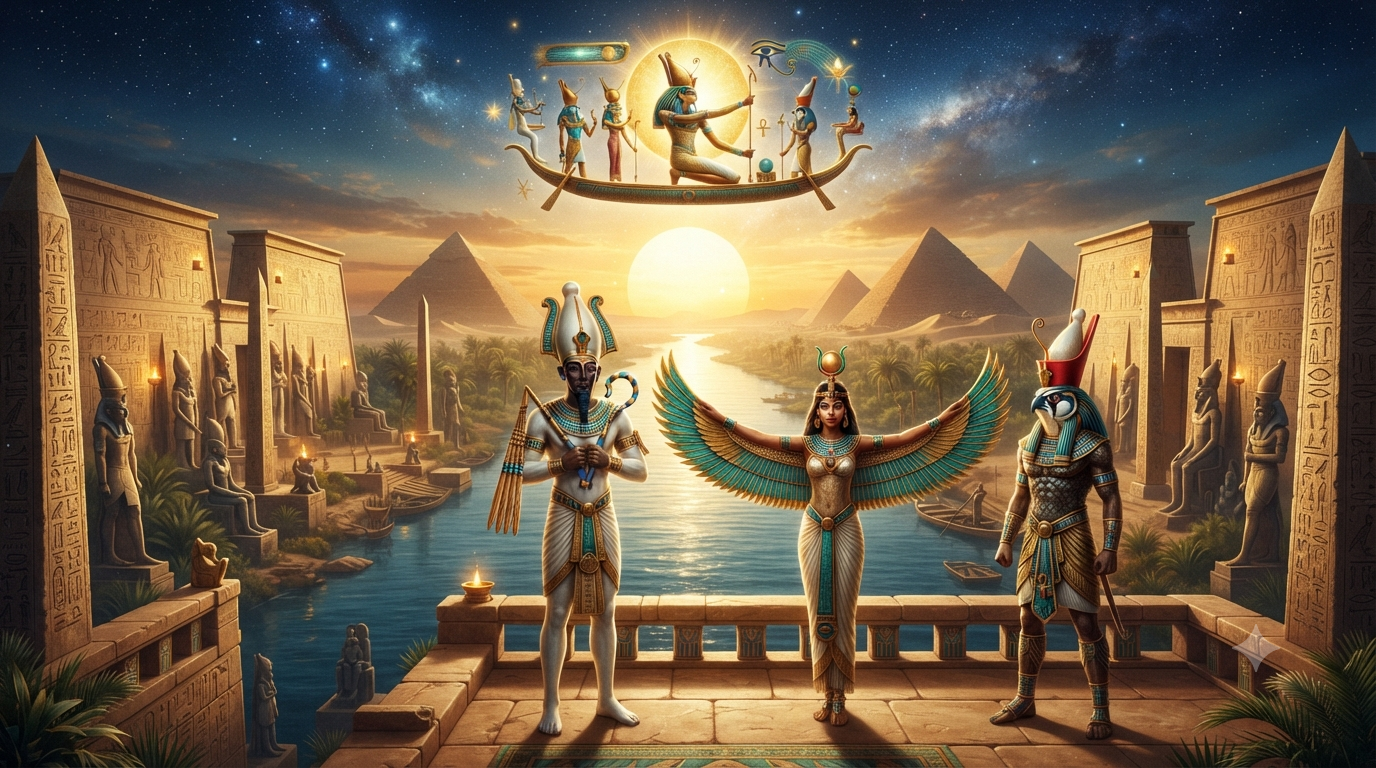
Egyptian Myths and Legends: The Complete Guide to Ancient Egypt’s Sacred Stories
Egyptian mythology is not only a collection of gods and symbols; it is, at its core, a body of stories ...
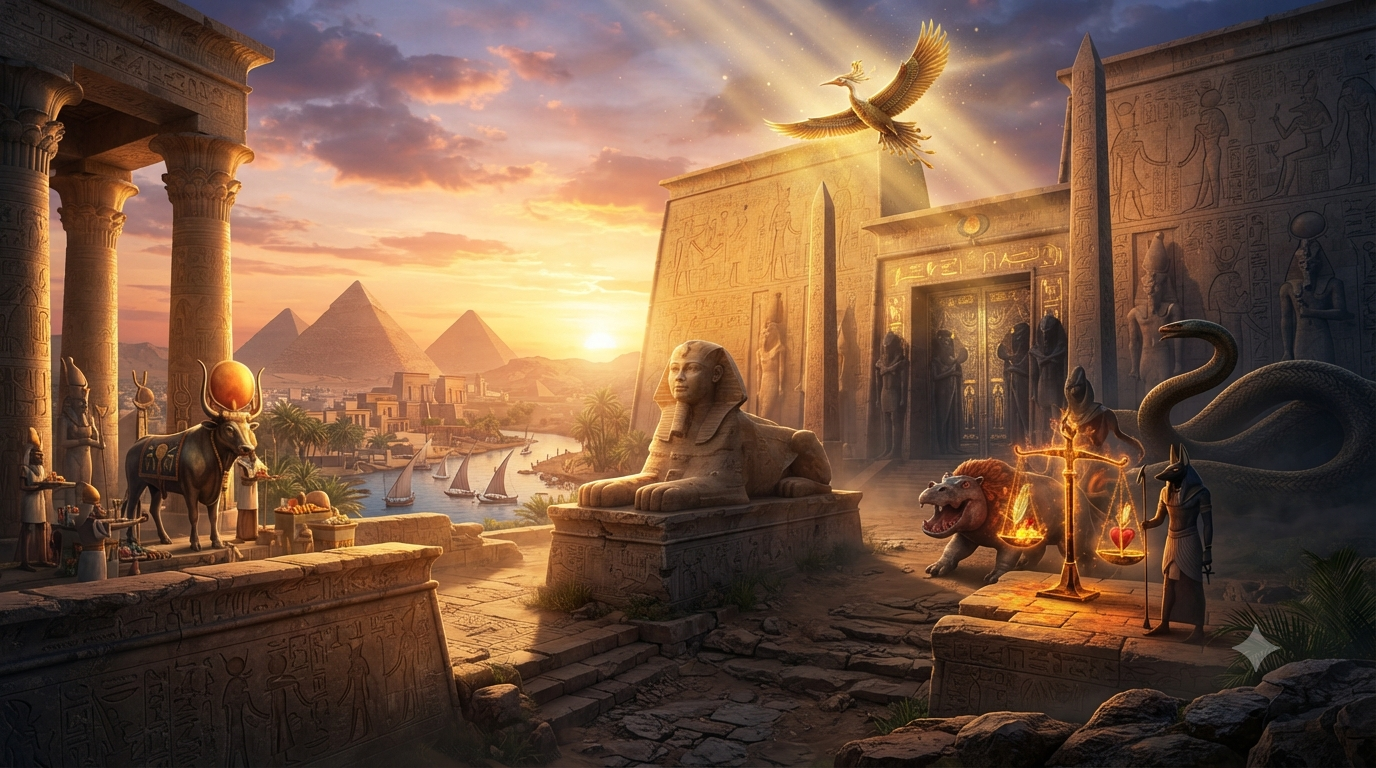
Egyptian Creatures and Monsters: The Complete Guide to Ancient Egypt’s Mythical Beasts and Sacred Animals
Egyptian mythology populated the space between gods and mortals with a distinct cast of creatures: monstrous guardians who judged and ...
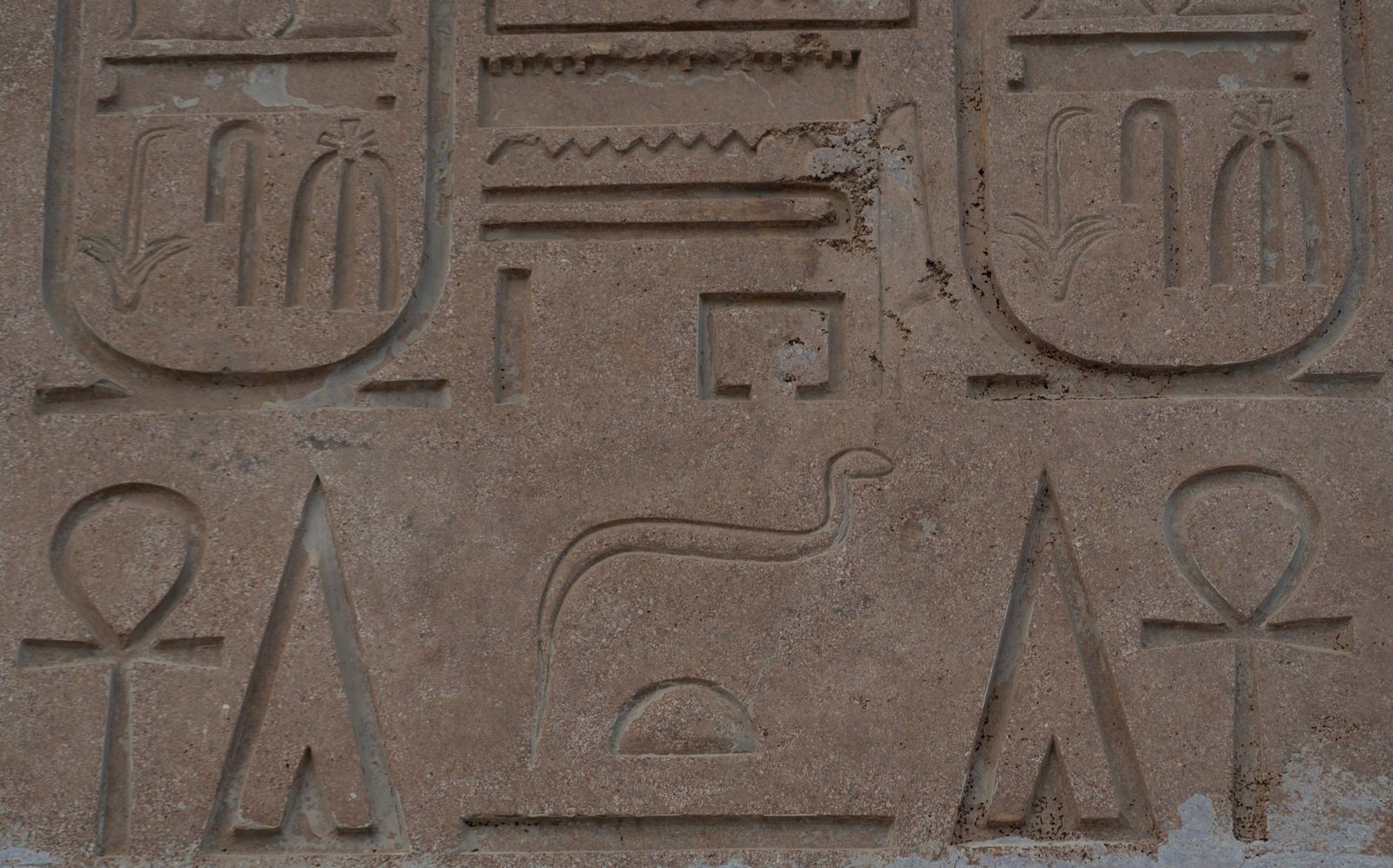
What Does the Ankh Mean in Egyptian Mythology?
The **ankh** is one of ancient Egypt’s most enduring symbols, and in Egyptian mythology it represents life, divine power, and the promise of existence beyond death. This article explores its religious meaning, its use in temple and tomb imagery, and the ways the “key of life” came to embody rebirth, authority, and immortality.
Eye of Horus in Egyptian Mythology: Meaning and Origins
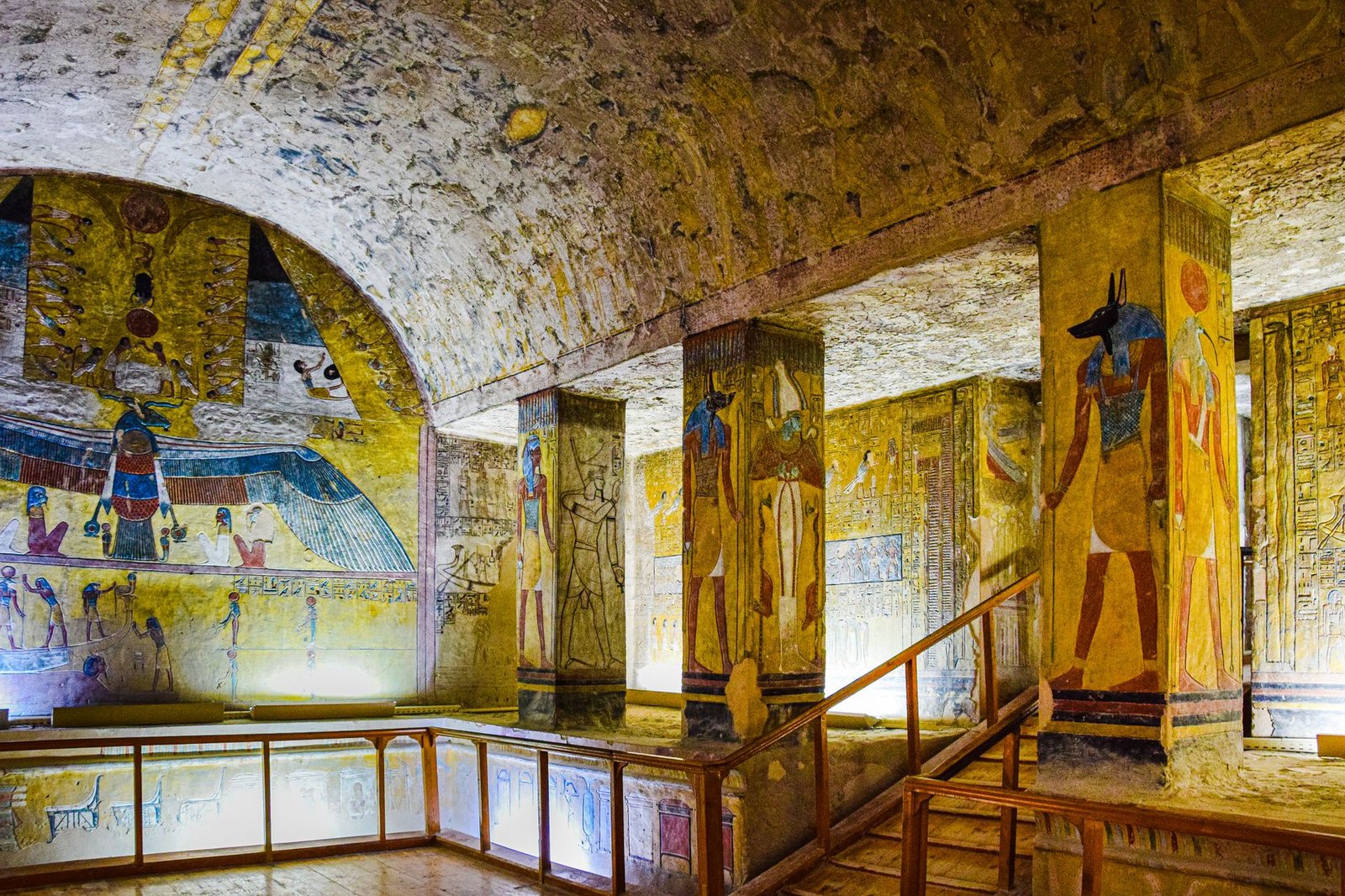
The Eye of Horus in Egyptian mythology is a powerful symbol of healing, protection, royal authority, and restored wholeness, rooted in the story of Horus’s injured eye and its divine repair. Its long history in amulets, funerary art, and temple imagery reveals how a single emblem came to embody both personal wellbeing and cosmic order.
What Is the Eye of Ra in Egyptian Mythology?
The Eye of Ra in Egyptian mythology is a powerful divine force linked to the sun god Ra, embodying protection, kingship, and the ability to punish disorder. Emerging in many forms and often associated with goddesses such as Sekhmet and Hathor, it reveals how the Egyptians understood both cosmic balance and the dangerous power behind creation.
Eye of Horus vs. Eye of Ra: Key Differences Explained
The difference between the Eye of Horus and the Eye of Ra lies in their divine associations: one symbolizes Horus’s restored, protective power, while the other embodies Ra’s solar force and often its destructive aspect. Exploring their origins, meanings, and uses in ancient Egyptian belief reveals why these two sacred eyes are related, yet never interchangeable.