Why Were Baboons Sacred in Egyptian Mythology?
Ancient Egypt was a civilization deeply connected to the natural world. Animals were not seen simply as creatures of the landscape; they were often viewed as living symbols of divine power, cosmic order, and spiritual truth. Among the many animals honored in Egyptian religion, baboons held a particularly fascinating place.
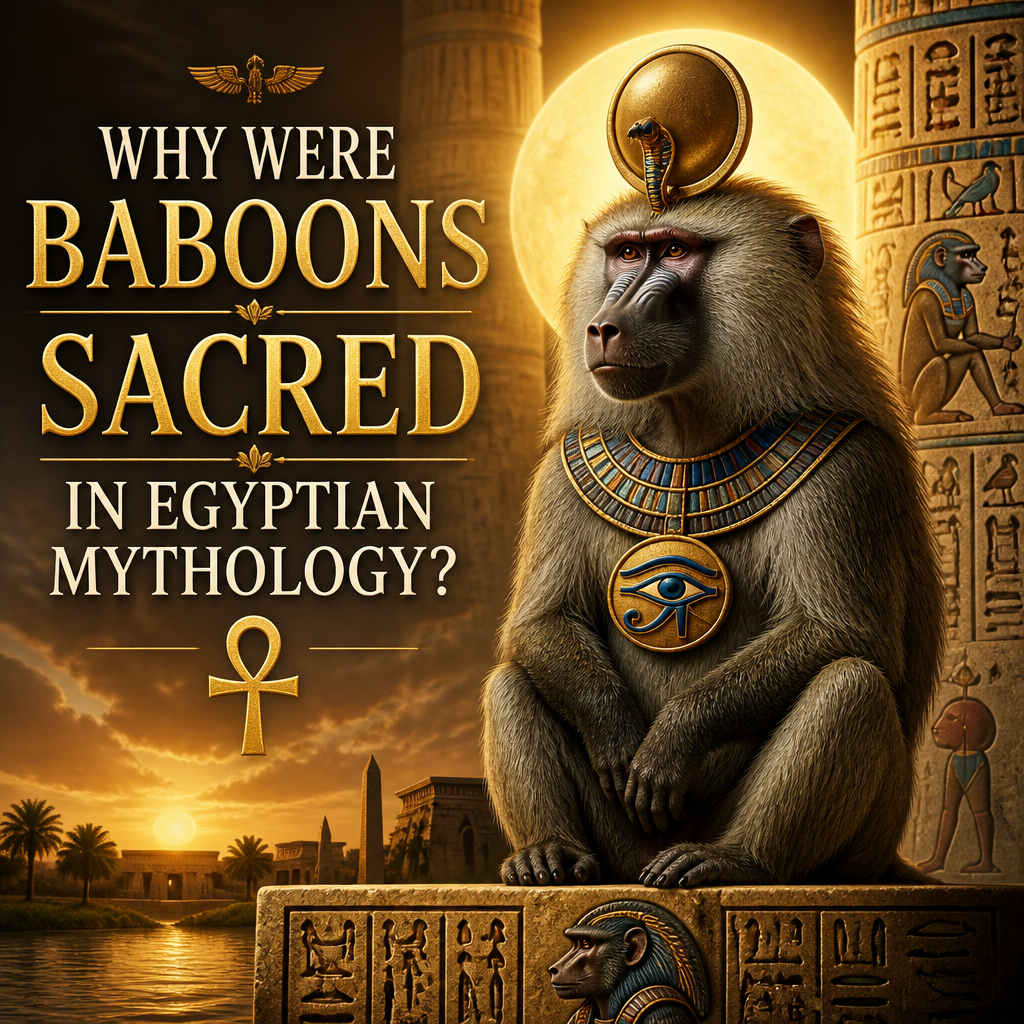
So, why were baboons sacred in Egyptian mythology? The answer lies in their association with wisdom, the moon, the sun, judgment, and one of Egypt’s most important gods: Thoth.
Baboons and the God Thoth
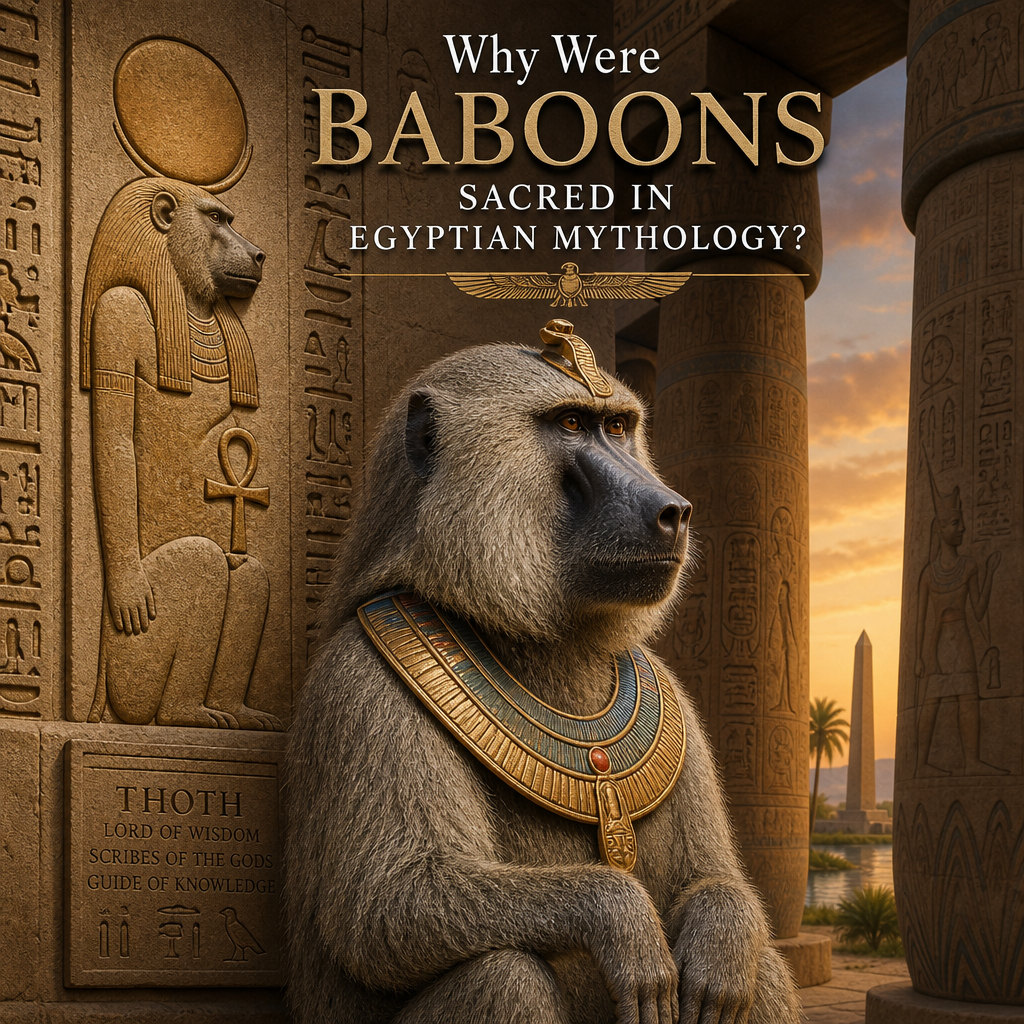
One of the main reasons baboons were sacred in Egyptian mythology was their close connection to Thoth, the god of wisdom, writing, knowledge, measurement, and the moon. Thoth was more commonly shown as a man with the head of an ibis, but he was also frequently represented as a baboon.
To the ancient Egyptians, Thoth was the divine scribe of the gods. He recorded the outcomes of judgment, maintained the order of the universe, and was believed to have invented writing. Because baboons were linked to Thoth, they became symbols of intelligence, learning, and sacred knowledge.
In temple art, baboons often appear seated in a respectful posture, sometimes with their paws raised. These images were not random animal portraits; they represented a divine form of Thoth and the wisdom he embodied.
Their Connection to the Moon
Thoth was also a lunar god, and baboons were strongly associated with the moon in Egyptian belief. The moon played an important role in ancient Egyptian timekeeping, religious rituals, and agricultural cycles.
Baboons are known for their loud calls at dawn and at other times of day. Ancient Egyptians may have observed these behaviors and interpreted them as ritual gestures toward celestial bodies. Since Thoth governed the moon and regulated time, the baboon became a natural symbol of lunar order.
This connection made baboons more than sacred animals; they were linked to the rhythm of the cosmos. Their image suggested harmony between earthly life and the heavens.
Baboons as Worshippers of the Sun
Although baboons were connected to the moon through Thoth, they were also associated with the sun. Egyptian artists often depicted baboons raising their arms toward the rising sun. This posture was interpreted as an act of praise or worship.
In Egyptian mythology, the daily rising of the sun was one of the most important events in the universe. The sun god Ra traveled across the sky each day and through the underworld each night, ensuring the continuation of life and order. Baboons, shown greeting the sunrise, became symbols of devotion to Ra and the renewal of creation.
Their behavior at dawn may have inspired this belief. When baboons vocalize in the morning, it could have seemed to ancient observers as though they were welcoming the sun. This made them powerful images of solar worship.
Sacred Baboons in Temples
Baboons were sometimes kept in temple settings, especially in places where Thoth was worshipped. These animals were treated with religious significance, and some were even mummified after death.
The city of Hermopolis, an important center of Thoth worship, was especially connected to sacred animals representing the god. Archaeologists have found mummified baboons in Egypt, showing that they were not merely symbolic in art but were physically honored in religious practice.
Mummification was not done casually. It reflected the belief that the animal had a sacred role and could carry divine meaning into the afterlife. A mummified baboon might serve as an offering, a sacred representation of Thoth, or a spiritual intermediary.
Baboons and the Judgment of the Dead
Another reason baboons were sacred in Egyptian mythology comes from their connection to the afterlife. In the famous judgment scene from the Egyptian Book of the Dead, the heart of the deceased was weighed against the feather of Ma’at, the goddess of truth and cosmic balance.
Thoth recorded the result of this judgment, determining whether the soul was worthy of entering the afterlife. Since baboons represented Thoth, they were sometimes included in funerary imagery as witnesses or participants in this sacred process.
This gave baboons a serious spiritual role. They were not only symbols of knowledge but also of truth, justice, and divine recordkeeping.
What Baboons Symbolized in Ancient Egypt
Baboons carried several layers of meaning in Egyptian mythology. Their sacred status came from a combination of natural behavior, religious symbolism, and divine association.
They commonly represented:
- Wisdom and intelligence, through their link to Thoth
- Writing and recordkeeping, as symbols of the divine scribe
- The moon and time, connected to lunar cycles
- Sun worship, especially at dawn
- Judgment and truth, through their role in afterlife beliefs
- Cosmic order, one of the central values of Egyptian religion
This rich symbolism helps explain why baboons appeared in temples, tombs, statues, amulets, and religious texts.
Why This Animal Stood Out
To modern readers, the sacred status of baboons may seem surprising. But to the ancient Egyptians, animals were often honored because their behavior revealed something mysterious or powerful about the universe.
The baboon’s dawn calls, expressive posture, social intelligence, and striking appearance all made it an ideal religious symbol. Egyptians did not worship baboons simply as animals; they honored what baboons represented. Through them, people could understand divine wisdom, celestial cycles, and the sacred balance of creation.
Conclusion
Baboons were sacred in Egyptian mythology because they embodied some of the most important ideas in ancient Egyptian religion. They were associated with Thoth, the god of wisdom and writing, and were connected to both the moon and the sun. They also played a role in beliefs about judgment, truth, and the afterlife.
In Egyptian thought, the baboon was far more than a wild animal. It was a symbol of sacred knowledge, cosmic rhythm, and divine order. That is why baboons earned such an honored place in the mythology, art, and religious life of ancient Egypt.

Orin Vale has spent the better part of two decades tracing the threads that connect the world’s oldest stories — from the halls of Asgard to the banks of the Nile, from Olympus to the jungles of the Maya. What began as a childhood fascination with flood myths and trickster gods grew into years of independent study across comparative mythology and ancient religion, always chasing the same question: what did these stories mean to the people who first told them? Orin writes for readers who want more than trivia — the ones looking for the beliefs, fears, and truths that myths were built to carry.