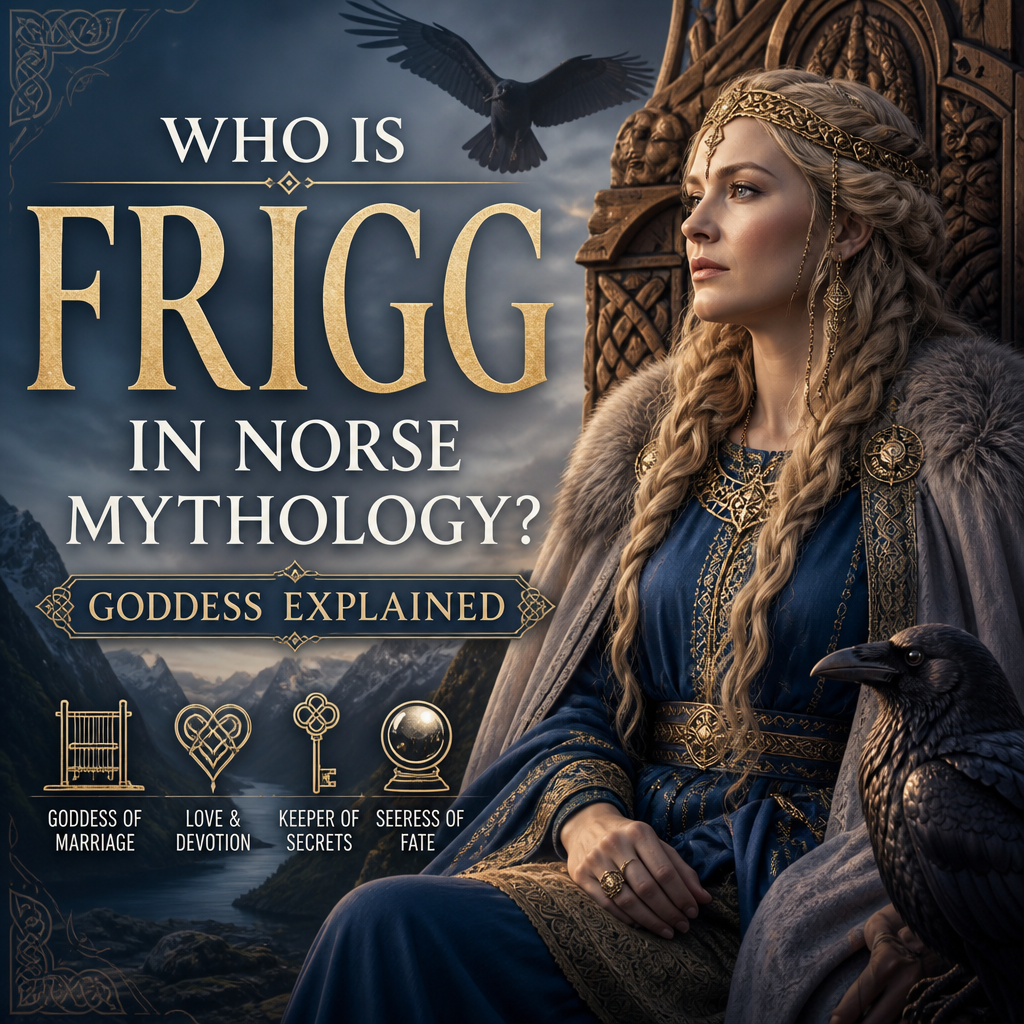
Who Is Frigg in Norse Mythology?
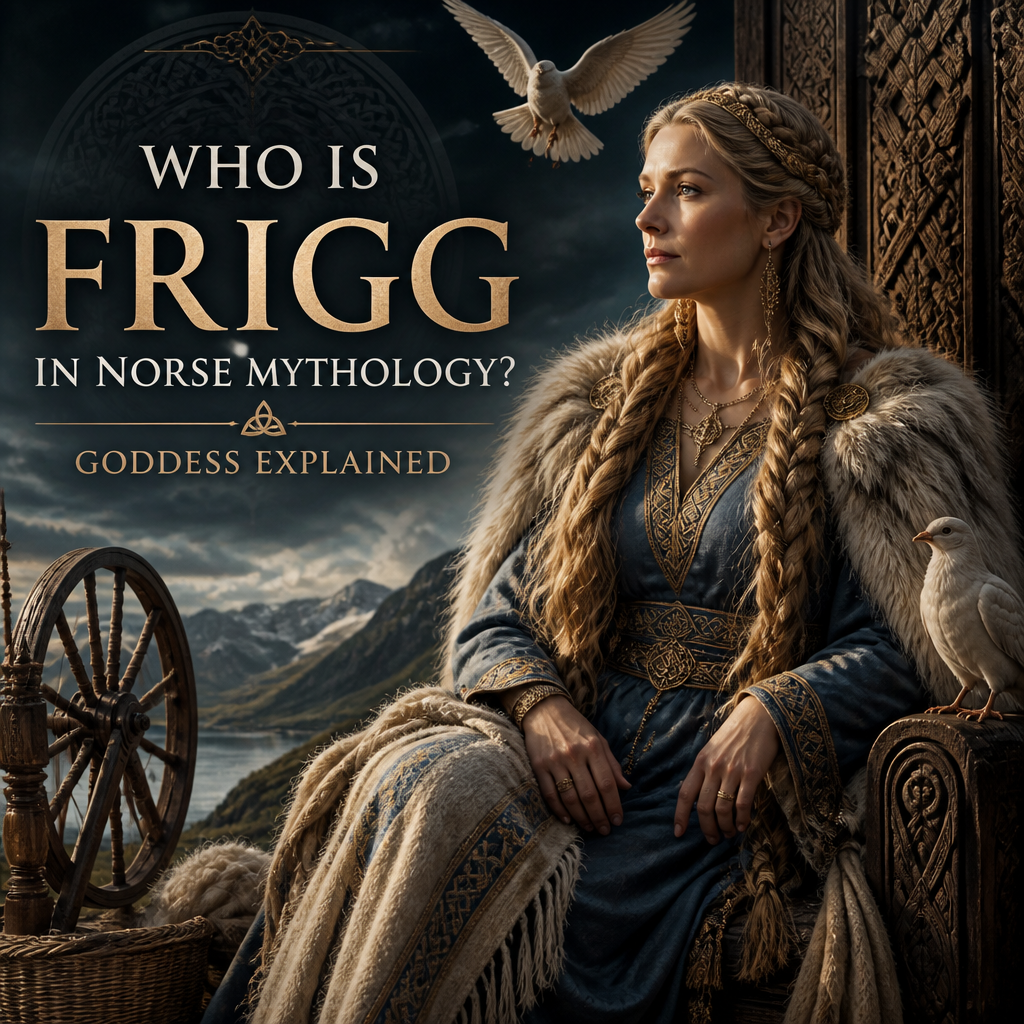
Frigg is one of the most important goddesses in Norse mythology. She is the wife of Odin, the All-Father, and is often described as the queen of the gods. Associated with marriage, motherhood, prophecy, and the household, Frigg holds a powerful place in the myths of the Æsir, the main tribe of Norse gods.
Although she appears less often in surviving Norse stories than figures like Odin, Thor, or Loki, Frigg’s role is deeply meaningful. She is a goddess of wisdom, love, fate, and protection, and her most famous myth centers on the tragic death of her son Baldr.
Frigg as the Queen of the Æsir
Frigg is usually portrayed as Odin’s wife and the mother of Baldr, one of the most beloved gods. As queen of Asgard, the realm of the Æsir, she has high status among the gods. Her hall is called Fensalir, meaning “fen halls” or “marsh halls,” though little is explained about it in the surviving sources.
Her position beside Odin makes her one of the most powerful divine figures in Norse belief. While Odin is associated with war, kingship, wisdom, and the search for hidden knowledge, Frigg is more closely tied to family, foresight, and the sacred bonds of the home.
This does not make her a passive figure. Frigg possesses knowledge of fate, and in some traditions, she knows the future. However, she is also said to keep silent about what she knows. This gives her an air of mystery and quiet authority.
What Is Frigg the Goddess Of?
Frigg is connected with several important aspects of life and society. In Norse mythology, she is often associated with:
- Marriage and partnership
- Motherhood and childbirth
- Domestic life and the household
- Prophecy and foresight
- Fate and destiny
- Protection of loved ones
Because of these associations, Frigg represents both the emotional and spiritual center of the family. She is not simply a goddess of the home in a small or limited sense. In ancient societies, the household was a place of survival, lineage, inheritance, and sacred duty. Frigg’s influence over these areas would have made her highly significant.
Frigg and the Death of Baldr
The most famous story involving Frigg is the death of Baldr. Baldr was known for his beauty, goodness, and purity. He began to have troubling dreams that seemed to foretell his death. Disturbed by these visions, Frigg took action to protect him.
She traveled through the world and made every thing promise not to harm Baldr. Fire, water, metal, stone, animals, trees, diseases, and many other forces agreed to leave him unharmed. After this, the gods amused themselves by throwing objects at Baldr, since nothing could injure him.
However, Frigg had overlooked one small plant: mistletoe. She considered it too young or harmless to demand an oath from it.
Loki, the trickster god, discovered this weakness. He made a weapon from mistletoe and tricked the blind god Höðr into throwing it at Baldr. The mistletoe struck Baldr and killed him, bringing grief to the gods and especially to Frigg.
This myth reveals several important things about Frigg. She is a devoted mother who uses her power to protect her child. Yet even her foresight and influence cannot completely escape fate. The death of Baldr becomes one of the great tragedies of Norse mythology and is closely tied to the events leading to Ragnarök, the doom of the gods.
Frigg and Fate
One of Frigg’s most fascinating qualities is her relationship with fate. Like Odin, she seems to possess deep knowledge. Some sources suggest she knows what will happen, but she does not speak of it openly.
This silence is important. In Norse mythology, fate is often seen as unavoidable. Even the gods cannot fully escape it. Frigg may understand destiny, but understanding does not always mean the power to change it.
Her attempt to save Baldr shows this tension clearly. She does everything she can to prevent disaster, but fate still finds a way. This makes Frigg a deeply human figure in some ways: powerful, wise, loving, and yet unable to protect her family from every sorrow.
Is Frigg the Same as Freyja?
Frigg is sometimes confused with Freyja, another major goddess in Norse mythology. The two share some similarities, and scholars have long debated whether they may have developed from a common earlier goddess.
Both Frigg and Freyja are associated with love, fertility, and magic. Both are powerful female figures with strong connections to fate and the supernatural. Their names may also have related meanings connected to “lady” or “beloved woman.”
However, in the surviving myths, they are distinct goddesses. Frigg is Odin’s wife and queen of Asgard, while Freyja belongs to the Vanir, another tribe of gods. Freyja is more strongly linked to beauty, desire, seiðr magic, and the afterlife of warriors, while Frigg is more strongly associated with marriage, motherhood, and the royal household.
Frigg’s Symbols and Associations
The surviving Norse sources do not provide a fixed list of symbols for Frigg in the way later traditions sometimes do. Still, she is commonly linked with images and themes such as:
- The spinning of thread, connected to fate and domestic work
- Keys, representing household authority
- The distaff or spindle, associated with women’s work and destiny
- Motherly protection
- The mistletoe, because of the Baldr myth
In modern interpretations, Frigg is often seen as a goddess of wisdom, emotional strength, and quiet power. She does not need to dominate every story to be one of the most meaningful figures in the Norse divine world.
Why Frigg Matters
So, who is Frigg in Norse mythology? She is the queen of the Æsir, the wife of Odin, the mother of Baldr, and a goddess of marriage, motherhood, foresight, and fate. Her myths show the strength of love, the burden of knowledge, and the limits even gods face before destiny.
Frigg’s importance lies not only in her royal status but in her emotional depth. She represents the protective power of a mother, the wisdom of a seer, and the sorrow of one who understands that not everything can be prevented.
In the world of Norse mythology, where even the gods are bound by fate, Frigg stands as one of its most quietly powerful and tragic figures.

Orin Vale has spent the better part of two decades tracing the threads that connect the world’s oldest stories — from the halls of Asgard to the banks of the Nile, from Olympus to the jungles of the Maya. What began as a childhood fascination with flood myths and trickster gods grew into years of independent study across comparative mythology and ancient religion, always chasing the same question: what did these stories mean to the people who first told them? Orin writes for readers who want more than trivia — the ones looking for the beliefs, fears, and truths that myths were built to carry.