Who Is Baldr in Norse Mythology?
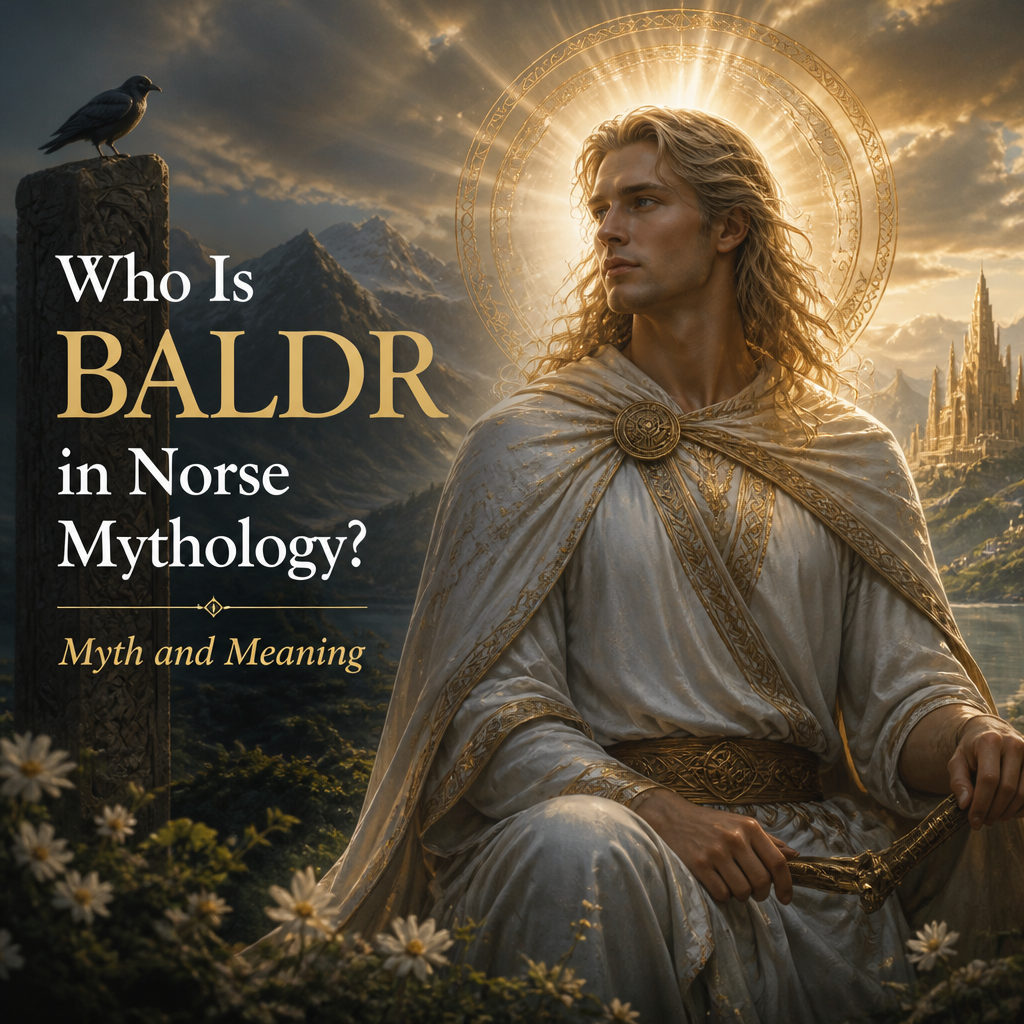
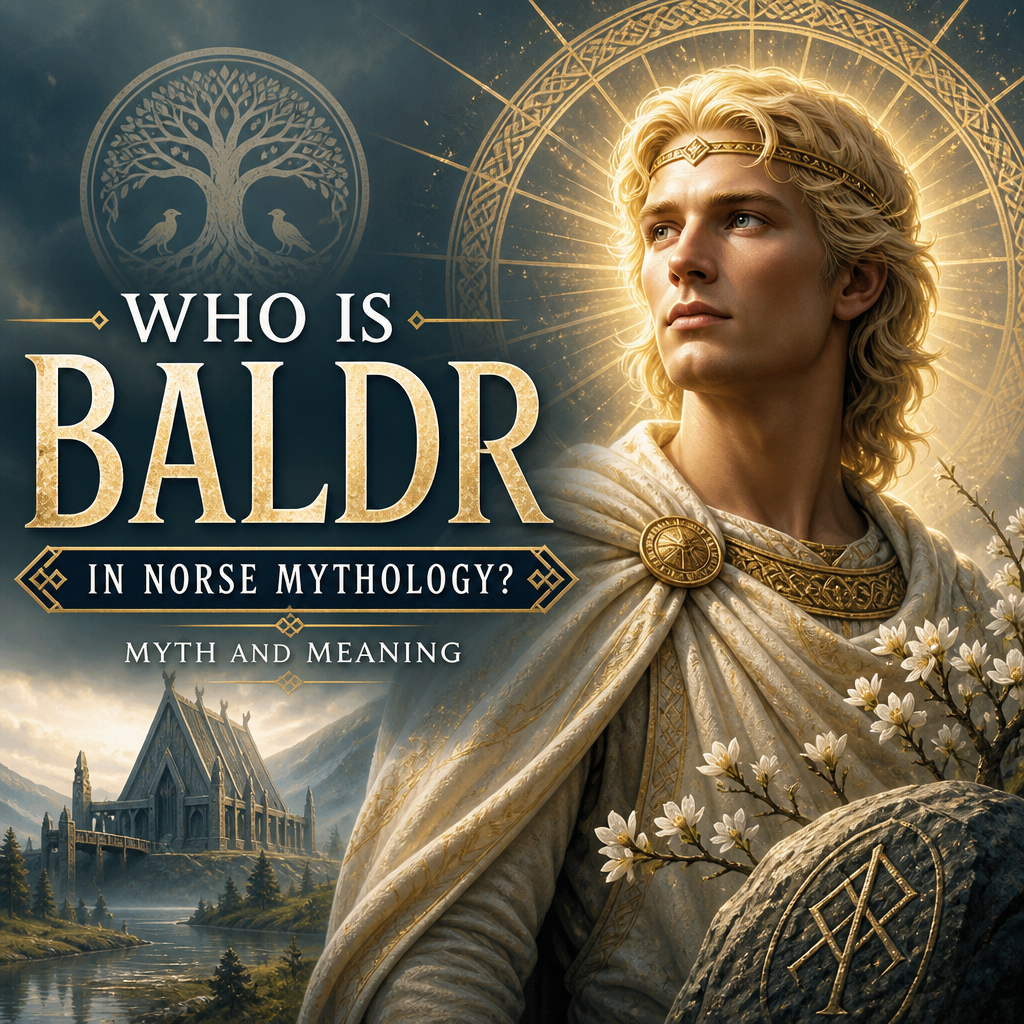
Baldr, sometimes spelled Balder or Baldur, is one of the most beloved and tragic figures in Norse mythology. Known for his beauty, gentleness, wisdom, and radiant goodness, Baldr is a god associated with light, purity, joy, and peace. His story is among the most famous in the Norse mythological tradition, not only because of who he is, but because his death marks a major turning point in the fate of the gods.
To understand who Baldr is in Norse mythology, it helps to look at his family, his qualities, the prophecy surrounding his death, and the role he plays in the events leading toward Ragnarök.
Baldr’s Family and Place Among the Gods
Baldr is a member of the Æsir, the principal family of gods in Norse mythology. He is the son of Odin, the All-Father and chief of the gods, and Frigg, the powerful goddess associated with motherhood, foresight, and protection.
Baldr’s wife is Nanna, and together they have a son named Forseti, a god connected with justice and reconciliation. Baldr lives in a splendid hall called Breidablik, often described as a place of great beauty where nothing impure can exist.
His divine family places him at the heart of Asgard, the realm of the gods. Yet Baldr stands apart from many other Norse deities. While gods like Thor are remembered for strength and battle, and Loki for cunning and mischief, Baldr is remembered for goodness, brightness, and innocence.
What Is Baldr Known For?
Baldr is most often described as beautiful, fair, and wise. In many accounts, he is so bright that light seems to shine from him. His character reflects harmony and kindness, making him loved by nearly all beings.
Some of Baldr’s most important traits include:
- Beauty: He is often portrayed as the fairest of the gods.
- Purity: His hall, Breidablik, is said to be free from impurity.
- Wisdom: Baldr is respected among the gods for his insight.
- Kindness: He is beloved because of his gentle and noble nature.
- Light: Though not simply a “sun god,” he is strongly linked with radiance and brightness.
Because of these qualities, Baldr represents an ideal that is rare in Norse mythology. The Norse gods are powerful, but they are also flawed. Baldr’s near-perfect goodness makes his fate even more sorrowful.
Baldr’s Dreams of Death
The most famous part of Baldr’s myth begins with troubling dreams. Baldr starts having visions that seem to foretell his own death. These dreams deeply disturb the gods, especially Odin and Frigg.
Odin, seeking knowledge, rides to the underworld to consult a dead seeress. There, he learns that a place has already been prepared for Baldr among the dead. This confirms the gods’ fear: Baldr is doomed to die.
Frigg, desperate to protect her son, travels through the worlds and asks every living and nonliving thing to swear an oath not to harm him. Fire, water, metals, stones, animals, diseases, and many other forces all promise not to injure Baldr.
After this, the gods believe Baldr is safe.
The Trick That Kills Baldr
Once Baldr becomes invulnerable to almost everything, the gods turn the situation into a game. They throw weapons, stones, and other objects at him, laughing as each one harmlessly bounces away.
But Loki, the trickster god, notices something unusual. Disguising himself, he speaks with Frigg and learns that she did not ask one small plant to swear the oath: mistletoe. She considered it too young and harmless to be a threat.
Loki takes the mistletoe and fashions it into a weapon. Then he approaches Höðr, Baldr’s blind brother. Since Höðr cannot see, Loki guides his hand and encourages him to join the game.
Höðr throws the mistletoe at Baldr. Unlike every other object, it strikes him and kills him.
This moment is one of the most heartbreaking in Norse mythology. The shining, beloved god falls dead, and the joy of Asgard turns to grief.
Baldr’s Funeral
Baldr’s funeral is a grand and sorrowful event. His body is placed on his ship, Hringhorni, which is said to be the greatest of all ships. The gods attempt to launch it as his funeral pyre, but it is so massive that they need help from a giantess named Hyrrokkin.
Baldr’s wife, Nanna, dies of grief and is placed on the ship beside him. His horse and treasures are also included. The ship is then set aflame, sending Baldr to the realm of the dead.
Odin places a magical ring, Draupnir, on the funeral pyre. This ring later becomes part of the continued story of Baldr in the underworld.
The Attempt to Bring Baldr Back
After Baldr’s death, the gods are not ready to accept his loss. Hermóðr, another son of Odin, rides to Hel, the realm of the dead, to ask for Baldr’s return.
Hel, the ruler of the underworld, agrees to release Baldr on one condition: every being in the world must weep for him. The gods send messengers everywhere, and nearly all things mourn Baldr.
However, one giantess refuses to weep. Many versions suggest this figure is Loki in disguise. Because of this refusal, Baldr must remain in Hel.
The failed attempt to bring him back deepens the tragedy and reinforces the sense that fate cannot be avoided.
Baldr and Ragnarök
Baldr’s death is not just a personal tragedy for the gods. It is one of the first great signs of Ragnarök, the doom of the gods and the destruction of the old world.
In Norse mythology, Ragnarök is a cosmic battle in which many gods, giants, monsters, and beings perish. The death of Baldr signals that the world is beginning to unravel. If the most innocent and beloved god can be killed, then even Asgard is not safe from fate.
Yet Baldr’s story also contains hope. After Ragnarök, when the world is renewed, Baldr is foretold to return from the dead. He and Höðr will live in the new world, suggesting reconciliation, rebirth, and a brighter age after destruction.
Why Baldr Matters in Norse Mythology
Baldr matters because he represents both beauty and loss. His story shows some of the deepest themes in Norse mythology: fate, grief, loyalty, betrayal, and renewal.
He is not famous for battles or heroic quests. Instead, Baldr’s power lies in what he symbolizes. He is the bright god whose death darkens the world. He is the beloved son whom even divine protection cannot save. He is also a sign that after catastrophe, life may begin again.
So, who is Baldr in Norse mythology? He is the shining son of Odin and Frigg, the fairest of the gods, and one of the most tragic figures in the Norse tradition. His death marks the beginning of the end, but his return after Ragnarök offers a powerful image of hope beyond ruin.

Orin Vale has spent the better part of two decades tracing the threads that connect the world’s oldest stories — from the halls of Asgard to the banks of the Nile, from Olympus to the jungles of the Maya. What began as a childhood fascination with flood myths and trickster gods grew into years of independent study across comparative mythology and ancient religion, always chasing the same question: what did these stories mean to the people who first told them? Orin writes for readers who want more than trivia — the ones looking for the beliefs, fears, and truths that myths were built to carry.