Who Is Fulla in Norse Mythology?
Fulla is a lesser-known but fascinating goddess in Norse mythology. While she does not appear as often as major figures like Odin, Thor, Loki, or Freyja, she holds an important place in the divine world of the Æsir. Fulla is closely connected with Frigg, the queen of the gods, and is often described as her trusted attendant, confidante, and companion.
To understand who Fulla is in Norse mythology, it helps to look at her role in the surviving sources, her symbols, and what she may have represented to the people who told these stories.
Fulla’s Role Among the Norse Gods
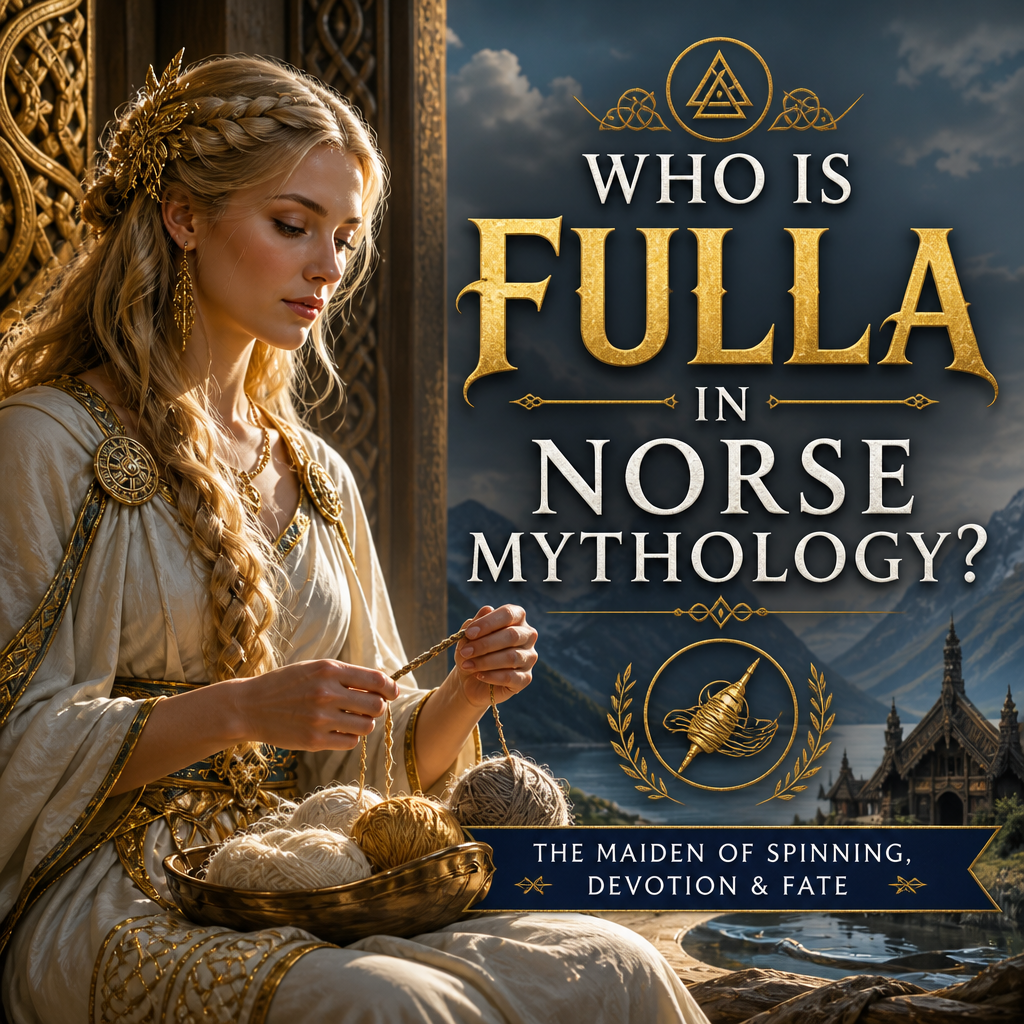
Fulla is mainly known from the Prose Edda, written by the Icelandic scholar Snorri Sturluson in the 13th century. She is listed among the goddesses of the Æsir and is described as a maiden who wears her hair loose and has a golden band around her head.
Her most important role is as a servant and companion of Frigg. However, the word “servant” may not fully capture her status. Fulla appears to be highly trusted by Frigg, suggesting that she is more than a simple attendant. She takes care of Frigg’s personal belongings, especially her shoes, and is entrusted with Frigg’s secrets.
This close relationship makes Fulla part of the inner circle of Asgard, the realm of the gods.
Fulla and Frigg
Fulla’s connection with Frigg is the most important part of her identity. Frigg is Odin’s wife and one of the most powerful goddesses in Norse mythology. She is associated with marriage, motherhood, prophecy, household order, and queenship.
Fulla serves Frigg in a personal and intimate way. According to Snorri, Fulla carries Frigg’s ash box, looks after her footwear, and shares in her secret counsels. These details may seem small, but in mythology they often carry deeper meaning.
What Does Fulla’s Service Mean?
Fulla’s duties suggest trust, loyalty, and closeness. In a royal household, caring for a queen’s personal items would be a position of honor. Fulla’s access to Frigg’s secrets also shows that she is not merely a background figure.
She may represent:
- Faithful service
- Female companionship
- Trust and secrecy
- Household order
- Personal loyalty
In this way, Fulla reflects the social importance of trusted attendants in ancient aristocratic households.
Fulla in the Story of Baldr
One of Fulla’s most notable appearances is connected to the death of Baldr, one of the most beloved gods. Baldr, the son of Odin and Frigg, is killed through Loki’s trickery. His death is one of the most tragic events in Norse mythology and is seen as a step toward Ragnarök, the doom of the gods.
After Baldr dies, the gods send Hermóðr to Hel, the realm of the dead, to try to bring him back. While in Hel, Hermóðr meets Baldr and Baldr’s wife, Nanna. They send gifts back to the gods in Asgard.
Nanna sends a linen robe and other gifts to Frigg. She also sends a gold ring to Fulla.
This moment is small but meaningful. The fact that Fulla receives a gift from the underworld shows that she has a recognized place among the divine household. She is close enough to Frigg and the family of Baldr to be remembered even in this sorrowful scene.
The Meaning of Fulla’s Name
The name Fulla is usually interpreted as meaning “full” or “bountiful.” This has led some scholars to connect her with abundance, fullness, or fertility. However, because the surviving myths give us only limited information, her exact symbolic meaning remains uncertain.
Her name may suggest ideas such as:
- Plenty
- Completeness
- Prosperity
- Nourishment
- Abundance within the household
These meanings would fit well with her role near Frigg, a goddess associated with the home, family, and social order.
Fulla’s Appearance and Symbols
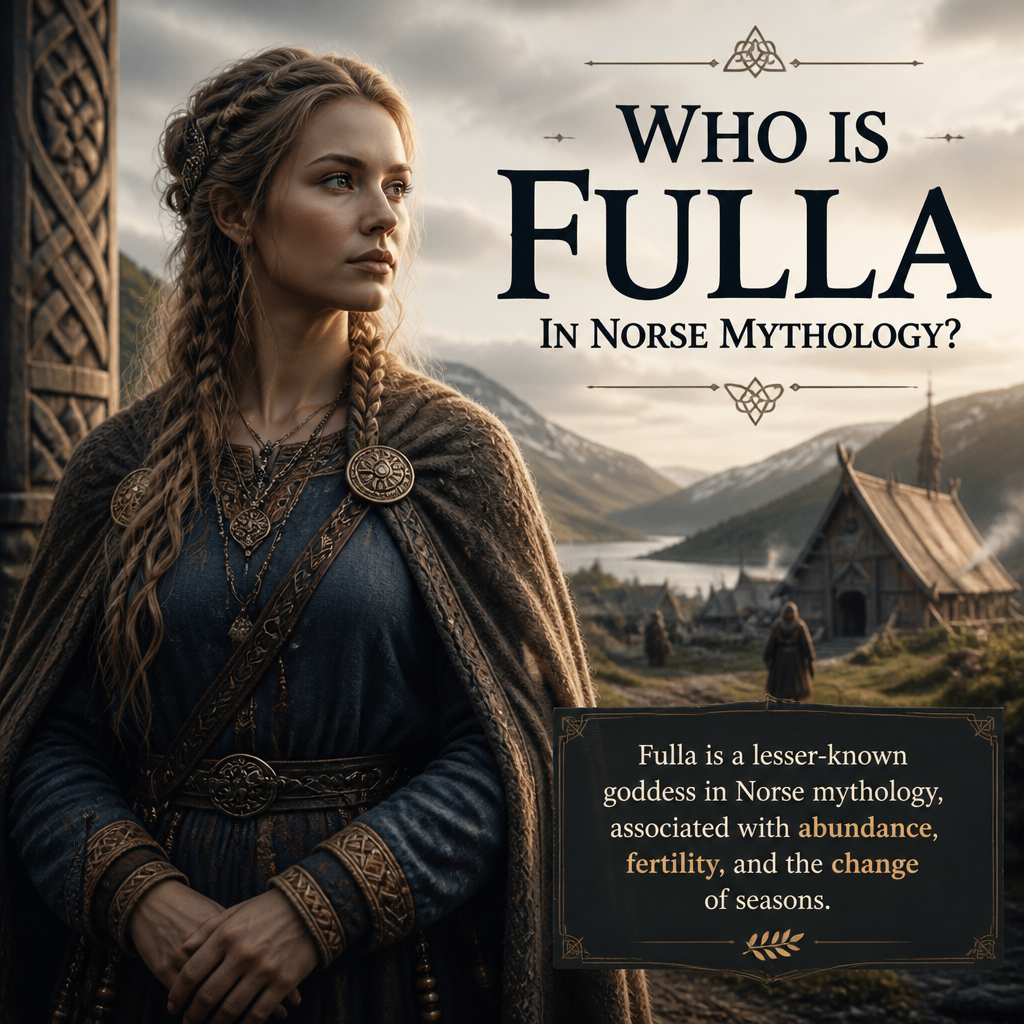
Fulla is described as a maiden with flowing hair and a golden band around her head. This image is simple but distinctive.
Loose Hair
In many cultures, long or loose hair can symbolize youth, maidenhood, beauty, or sacred status. Fulla’s loose hair may identify her as unmarried or as a youthful goddess.
The Golden Band
The golden band around her head may represent honor, status, or divine beauty. Gold is often associated with the gods in Norse mythology. It suggests wealth, brightness, and sacred power.
Frigg’s Ash Box and Shoes
Fulla’s association with Frigg’s ash box and shoes is unusual. The ash box may have held precious items or personal treasures. Shoes, in myth and ritual, can symbolize movement, travel, service, or status.
Because Fulla cares for these items, she appears as a guardian of Frigg’s private world.
Is Fulla a Major Goddess?
Fulla is not considered one of the major Norse goddesses, at least based on the surviving sources. She does not have many myths of her own, and there is no strong evidence of widespread worship dedicated specifically to her.
However, this does not mean she was unimportant. Many Norse deities are only briefly mentioned in the sources, yet they may have played meaningful roles in older traditions that are now lost.
Fulla may have been more important in oral tradition than the written texts suggest. Since much of Norse mythology was recorded after the Viking Age, many stories and details did not survive.
Fulla and Other Attendant Goddesses
Fulla is sometimes compared to other lesser-known goddesses who serve or accompany more prominent deities. Norse mythology includes several divine women whose roles are specific but not fully explained, such as Gná, Hlín, and Lofn.
These goddesses may represent particular aspects of Frigg’s power or household. Some scholars have even suggested that figures like Fulla could be hypostases, or personified aspects, of Frigg herself.
In this interpretation, Fulla might not be entirely separate from Frigg but could embody one part of Frigg’s divine nature, such as abundance, loyalty, or private counsel.
Why Fulla Matters
Fulla matters because she gives us a glimpse into the quieter side of Norse mythology. Not every divine figure is a warrior, ruler, or trickster. Some gods and goddesses represent trust, service, secrecy, and the bonds within a household.
Her role also reminds us that Norse mythology was not only about battle and fate. It also reflected social relationships, personal loyalty, and the importance of trusted companions.
Conclusion
So, who is Fulla in Norse mythology? Fulla is a goddess of the Æsir known primarily as Frigg’s trusted attendant and confidante. She cares for Frigg’s belongings, shares her secrets, and appears in the myth of Baldr’s death when she receives a gift from Nanna in Hel.
Although Fulla is a minor figure in the surviving myths, her presence is meaningful. She represents loyalty, intimacy, abundance, and the hidden strength of service within the divine household. Through Fulla, we see that even the quieter figures of Norse mythology can reveal important truths about the world of the gods.

Orin Vale has spent the better part of two decades tracing the threads that connect the world’s oldest stories — from the halls of Asgard to the banks of the Nile, from Olympus to the jungles of the Maya. What began as a childhood fascination with flood myths and trickster gods grew into years of independent study across comparative mythology and ancient religion, always chasing the same question: what did these stories mean to the people who first told them? Orin writes for readers who want more than trivia — the ones looking for the beliefs, fears, and truths that myths were built to carry.