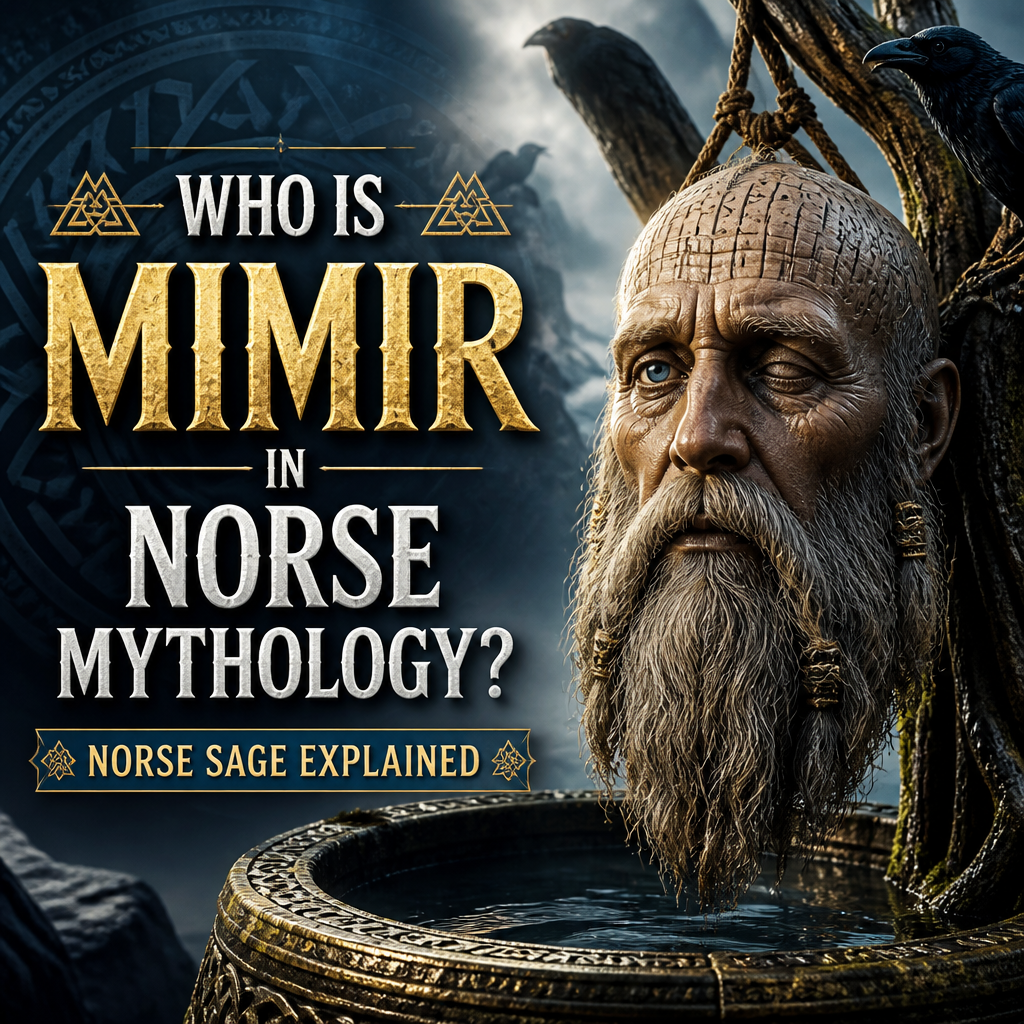
Who Is Mimir in Norse Mythology?
In Norse mythology, Mimir is one of the most mysterious and important figures associated with wisdom, memory, and hidden knowledge. Though he does not appear as often as gods like Odin, Thor, or Loki, his role is deeply significant. Mimir is best known as the guardian of a sacred well beneath the roots of Yggdrasil, the World Tree, where he preserves knowledge that even the gods must sacrifice to obtain.
To understand who Mimir is in Norse mythology, it helps to look at his connection to wisdom, Odin’s sacrifice, and the strange fate of his severed head.
Mimir as a Being of Wisdom
Mimir is often described as an exceptionally wise being, though the surviving Norse sources do not always clearly define whether he is a god, a giant, or another ancient supernatural figure. His name is commonly linked to memory and thought, suggesting that he represents deep understanding, ancestral knowledge, and the ability to see beyond ordinary perception.
In the mythological world of the Norse, wisdom is not simply intelligence. It is something powerful, dangerous, and costly. The wisest beings understand fate, the past, the future, and the hidden workings of the cosmos. Mimir belongs to this rare group of figures who possess knowledge that even the gods cannot easily access.
Mimir’s Well Beneath Yggdrasil
Mimir is most famous for guarding Mímisbrunnr, or Mimir’s Well. This well lies beneath one of the roots of Yggdrasil, the great ash tree that connects the Nine Worlds of Norse mythology.
Yggdrasil is the center of the cosmos, and its roots reach into powerful, sacred places. Mimir’s Well is one such location. Its waters contain great wisdom and understanding, making it a source of knowledge sought by the highest gods.
Why the Well Matters
Mimir’s Well is not an ordinary spring. It symbolizes the idea that wisdom comes from depth, sacrifice, and connection to ancient forces. The knowledge held there is not freely given. Anyone who wishes to drink from the well must pay a heavy price.
This theme appears throughout Norse mythology. Knowledge is valuable precisely because it is difficult to obtain. The gods do not gain wisdom through comfort, but through loss, struggle, and exchange.
Odin’s Sacrifice for Wisdom
One of the most famous stories involving Mimir concerns Odin, the chief of the gods. Odin is a god of war, poetry, magic, death, and wisdom. Unlike many powerful rulers, he is not satisfied with strength alone. He constantly seeks knowledge, even when it demands pain or sacrifice.
According to the myth, Odin traveled to Mimir’s Well and asked for a drink from its waters. Mimir agreed, but only if Odin gave something of immense value in return. The price was one of Odin’s eyes.
Odin accepted the bargain. He removed his eye and placed it in the well, gaining access to its wisdom. This is why Odin is often depicted as one-eyed.
The Meaning of Odin’s Lost Eye
Odin’s sacrifice is one of the clearest examples of Norse mythology’s view of wisdom. True knowledge requires giving up something precious. In losing one eye, Odin gives up part of his physical sight in exchange for deeper spiritual and cosmic insight.
The story also shows Mimir’s authority. Even Odin, the All-Father, must submit to the conditions set by Mimir. This suggests that Mimir’s wisdom is older or deeper than the power of kingship among the gods.
Mimir and the War Between the Aesir and Vanir
Mimir also appears in the story of the war between the Aesir and the Vanir, two groups of gods in Norse mythology. The Aesir include gods such as Odin, Thor, and Frigg, while the Vanir are associated with fertility, prosperity, magic, and nature.
After a long conflict, the two sides made peace and exchanged hostages to secure their agreement. The Aesir sent Mimir and the god Hoenir to the Vanir. Hoenir was impressive in appearance and seemed suited for leadership, but he relied heavily on Mimir’s advice.
When Mimir was not present, Hoenir struggled to make decisions. The Vanir realized that they had been deceived or given an unequal exchange. In anger, they killed Mimir and sent his severed head back to Odin.
The Severed Head of Mimir
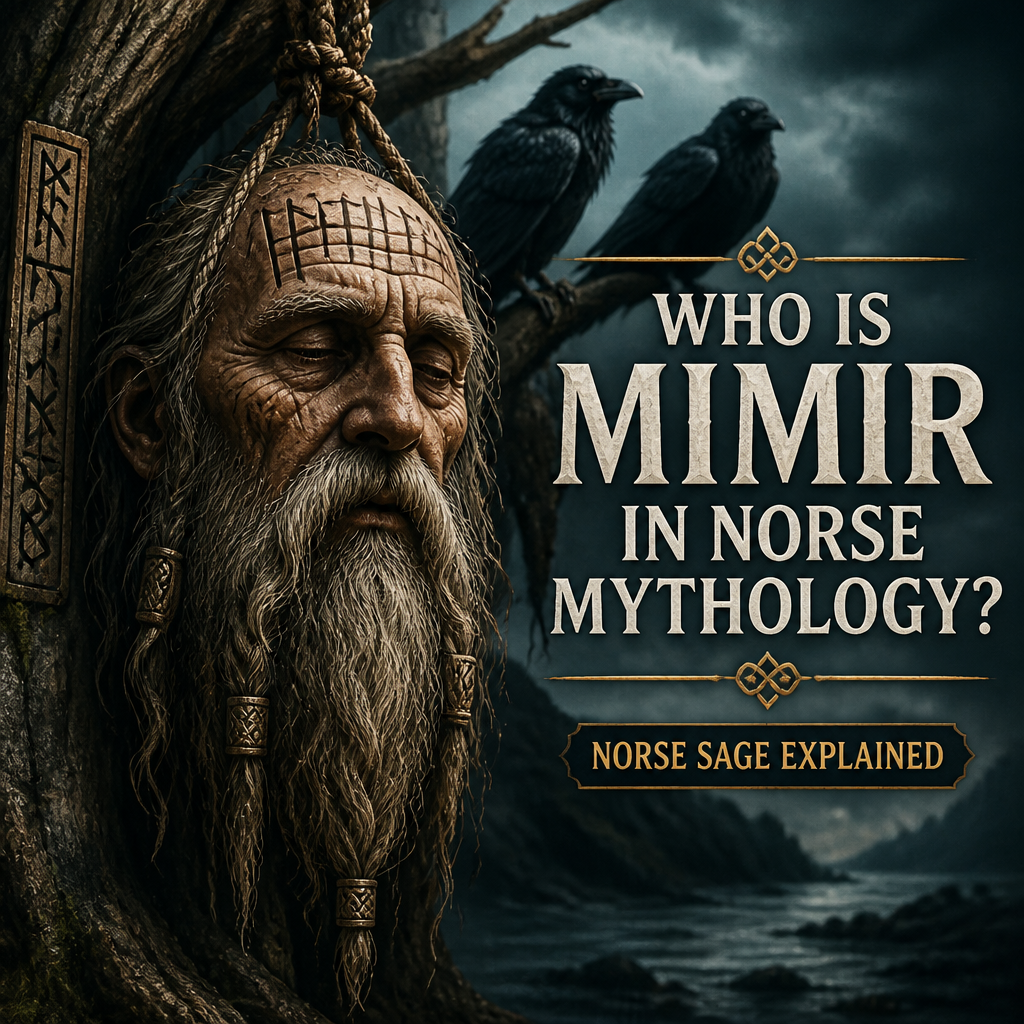
Mimir’s death did not end his role in the myths. Odin preserved Mimir’s head using herbs and magic, preventing it from decaying. He then enchanted it so that it could speak.
From that point on, Mimir’s head continued to give Odin counsel. This image is one of the most striking in Norse mythology: the preserved head of a wise being, speaking secrets and guidance to the ruler of the gods.
What Mimir’s Head Represents
The severed head of Mimir reinforces his association with wisdom beyond ordinary life and death. Even without a body, Mimir remains a source of knowledge. His mind, memory, and insight survive physical destruction.
This also connects with the Norse fascination with prophecy and fate. Wisdom is not always comforting. Mimir’s knowledge may include truths about Ragnarök, the doom of the gods, and the unavoidable end of the current world order.
Is Mimir a God or a Giant?
One question often asked is whether Mimir is a god or a giant. The answer is not completely clear. Norse mythology often blurs the boundaries between divine and giant beings. Many gods have giant ancestry, and many giants possess ancient wisdom.
Mimir is sometimes associated with the gods because he serves among them and advises Odin. However, his deep connection to primordial wisdom and sacred waters may suggest that he belongs to an older class of beings, closer to giants or cosmic guardians.
Rather than focusing only on classification, it may be more useful to see Mimir as a figure of ancient knowledge. He stands at the edge of divine power, cosmic memory, and the mysteries hidden beneath the World Tree.
Why Mimir Is Important in Norse Mythology
Mimir’s importance comes from what he represents. He is not a warrior like Thor or a trickster like Loki. Instead, he embodies the wisdom that lies beneath the surface of things.
Mimir is important because he represents:
- Ancient knowledge beyond ordinary understanding
- Memory and counsel that guide even the gods
- Sacrifice as the price of wisdom
- The deep mysteries of Yggdrasil and the cosmos
- Insight that survives death and destruction
Through Mimir, Norse mythology teaches that wisdom is not casual or easy. It is something guarded, earned, and sometimes paid for with suffering.
Final Thoughts on Mimir
So, who is Mimir in Norse mythology? He is the wise guardian of Mimir’s Well, the being from whom Odin gained wisdom at the cost of an eye, and the severed head that continued to advise the gods after death. His myths are few but powerful, filled with symbolism about sacrifice, memory, and the hidden knowledge that shapes the fate of the world.
Mimir remains one of the most fascinating figures in Norse myth because he shows that wisdom is not simply knowing more than others. It is the ability to understand the deep patterns of existence, even when that understanding comes at a terrible price.

Orin Vale has spent the better part of two decades tracing the threads that connect the world’s oldest stories — from the halls of Asgard to the banks of the Nile, from Olympus to the jungles of the Maya. What began as a childhood fascination with flood myths and trickster gods grew into years of independent study across comparative mythology and ancient religion, always chasing the same question: what did these stories mean to the people who first told them? Orin writes for readers who want more than trivia — the ones looking for the beliefs, fears, and truths that myths were built to carry.