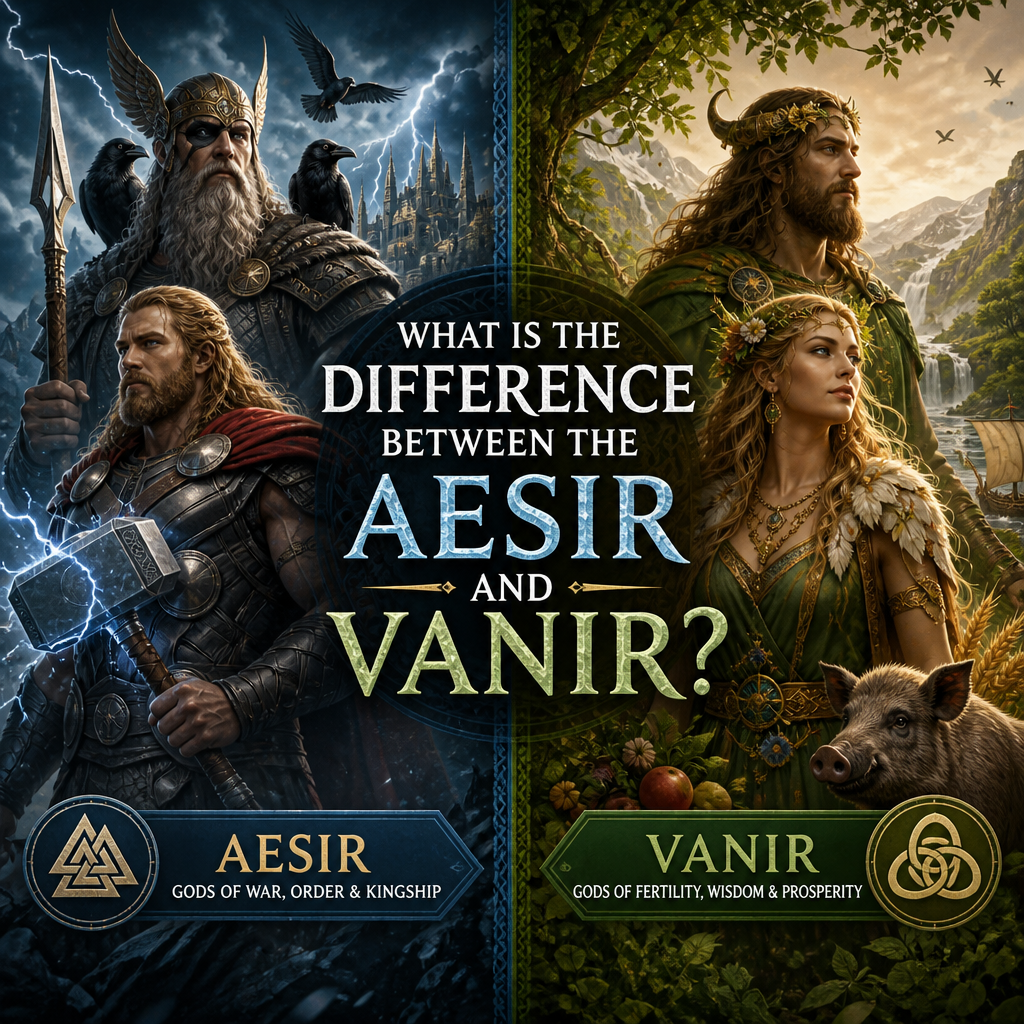
What Is the Difference Between the Aesir and the Vanir?
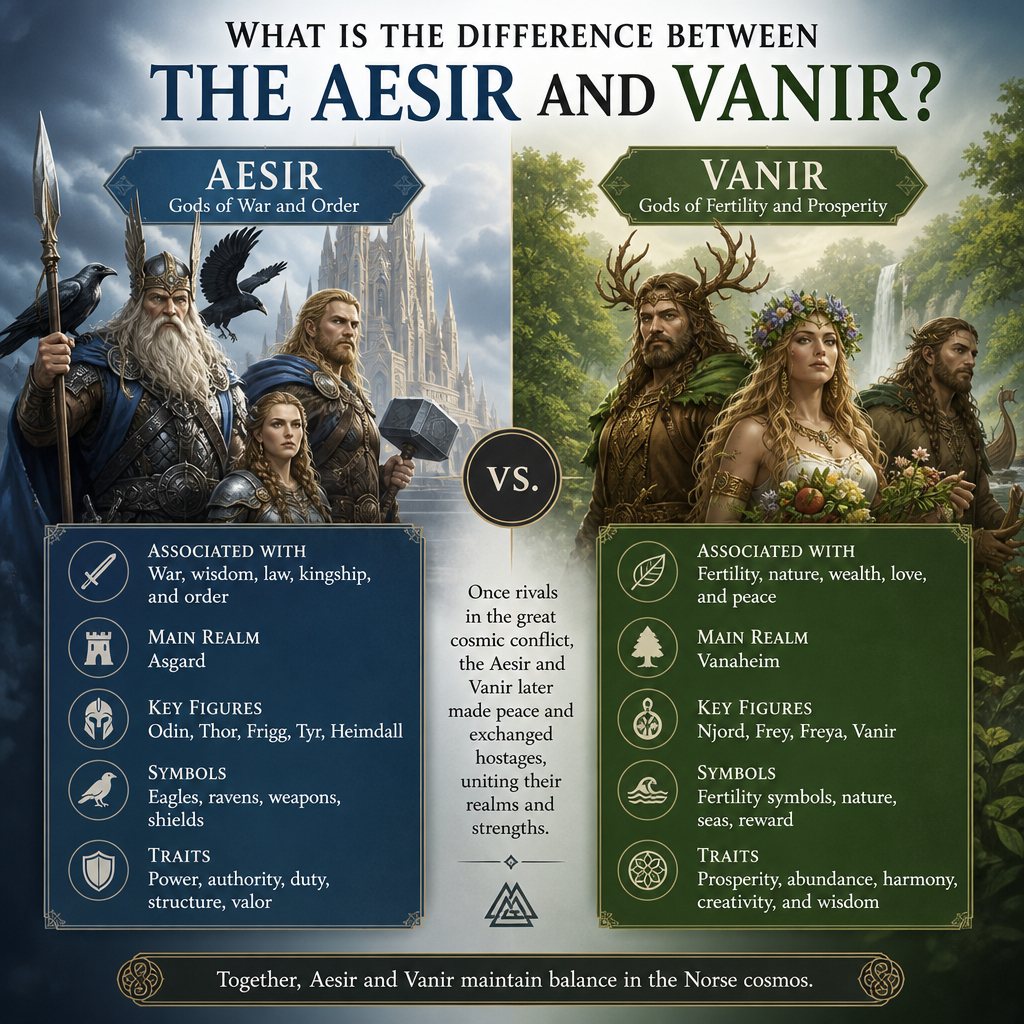
Norse mythology is full of powerful gods, dramatic battles, and complex family lines. One of the most important distinctions in these stories is the difference between the Aesir and the Vanir, the two major tribes of gods in the Norse cosmos.
At first glance, both groups may simply seem like “Norse gods.” However, they represent different powers, values, and mythological roles. Understanding the difference between the Aesir and the Vanir helps explain many of the central myths, including the great war between the divine tribes and the later peace that united them.
Who Are the Aesir?
The Aesir are the more famous of the two divine families. They are closely associated with power, kingship, war, law, wisdom, and cosmic order. Their home is Asgard, one of the Nine Worlds in Norse mythology.
The Aesir are often portrayed as rulers and warriors. They defend the world of gods and humans against giants, monsters, and chaotic forces. Many of the best-known Norse gods belong to this group.
Major Aesir Gods
Some of the most important Aesir include:
- Odin – the All-Father, god of wisdom, war, poetry, magic, and death
- Thor – god of thunder, strength, protection, and storms
- Frigg – queen of Asgard, associated with marriage, motherhood, and foresight
- Tyr – god of law, justice, courage, and heroic sacrifice
- Balder – god of beauty, light, purity, and peace
- Heimdall – guardian of the Bifrost bridge and watchman of the gods
The Aesir are not perfect beings. They can be proud, secretive, and impulsive. Yet they are often shown as the guardians of order in a dangerous universe.
Who Are the Vanir?
The Vanir are the second major tribe of Norse gods. They are most often connected with fertility, prosperity, nature, magic, and the cycles of life. Their home is usually called Vanaheim, another of the Nine Worlds.
Compared to the Aesir, the Vanir appear more closely tied to the earth, abundance, and the natural world. They are linked with wealth, harvests, seafaring, sexuality, and certain forms of magic, especially seidr, a type of Norse sorcery and prophecy.
Major Vanir Gods
The best-known Vanir include:
- Njord – god of the sea, ships, wind, wealth, and coastal prosperity
- Freyr – god of fertility, peace, sunshine, harvests, and kingship
- Freyja – goddess of love, beauty, fertility, war, magic, and death
Freyja is especially important because she is closely associated with seidr. According to some traditions, she teaches this magical art to Odin, showing that the Vanir possess knowledge and powers that even the Aesir desire.
The Main Difference Between the Aesir and the Vanir
The simplest answer to “what is the difference between the Aesir and the Vanir” is that they are two different families of gods with different areas of influence.
The Aesir are generally linked to:
- War and battle
- Sovereignty and rulership
- Law and social order
- Wisdom and strategy
- Protection against chaos
The Vanir are generally linked to:
- Fertility and reproduction
- Wealth and prosperity
- Nature and agriculture
- Magic and prophecy
- Peace, pleasure, and abundance
This does not mean the groups are completely separate in function. For example, Freyja is a Vanir goddess but also has strong connections to war and death. Odin is an Aesir god but is deeply involved in magic. The categories overlap, but the overall emphasis is different.
The Aesir-Vanir War
One of the most important myths about these two groups is the Aesir-Vanir War. The exact cause of the war is not completely clear, but it seems to involve conflict over power, magic, and honor.
In one version, the Vanir send a mysterious figure named Gullveig to the Aesir. She is associated with gold and magic. The Aesir try to kill her by burning her, but she survives. This event may symbolize greed, corruption, or the fear of Vanir magic.
The war that follows is fierce, but neither side can fully defeat the other. Eventually, the Aesir and Vanir make peace. To seal the agreement, they exchange hostages.
The Peace Treaty and Exchange of Gods
After the war, several Vanir gods go to live among the Aesir. Njord, Freyr, and Freyja become part of the divine community in Asgard. This is why they are often counted among the Aesir in later stories, even though they are originally Vanir.
The Aesir also send figures to the Vanir, including Hoenir and Mimir in some accounts. The exchange is not entirely smooth, and later myths suggest continued tension and mistrust.
Still, the peace between the Aesir and Vanir is important. It brings together different divine powers: the order and authority of the Aesir with the fertility and magical knowledge of the Vanir.
Why Are There Two Tribes of Norse Gods?
Scholars have suggested different explanations for the two divine tribes. Some believe the Aesir and Vanir may reflect older religious traditions that were blended together over time. The Vanir may preserve traces of fertility cults or nature-based worship, while the Aesir may represent gods of rulers, warriors, and social order.
Another interpretation is symbolic. The two groups may represent different forces that human society needs to survive:
- Strength and law
- Fertility and abundance
- War and peace
- Wisdom and magic
- Structure and nature
In this view, the peace between the Aesir and Vanir shows that a balanced world requires both order and growth.
Are the Vanir Less Important Than the Aesir?
The Vanir are sometimes less visible than the Aesir, but they are not less important. In fact, some of the most beloved Norse deities are Vanir. Freyr and Freyja were widely associated with prosperity, fertility, and daily life, which would have mattered deeply to ordinary people.
The Aesir may dominate many of the surviving myths because those stories focus heavily on Odin, Thor, and the fate of Asgard. But the Vanir represent essential powers without which life cannot continue: food, wealth, love, magic, and renewal.
Final Thoughts
The difference between the Aesir and the Vanir lies mainly in their roles, values, and mythological associations. The Aesir are gods of war, rule, law, and cosmic order, while the Vanir are gods of fertility, prosperity, nature, and magic.
Yet Norse mythology does not keep them completely separate. After their great war, the two tribes make peace and exchange members, creating a richer and more unified divine world. Together, the Aesir and Vanir show that Norse religion valued both strength and abundance, both battle and harvest, both order and mystery.

Orin Vale has spent the better part of two decades tracing the threads that connect the world’s oldest stories — from the halls of Asgard to the banks of the Nile, from Olympus to the jungles of the Maya. What began as a childhood fascination with flood myths and trickster gods grew into years of independent study across comparative mythology and ancient religion, always chasing the same question: what did these stories mean to the people who first told them? Orin writes for readers who want more than trivia — the ones looking for the beliefs, fears, and truths that myths were built to carry.