Fasces
Introduction
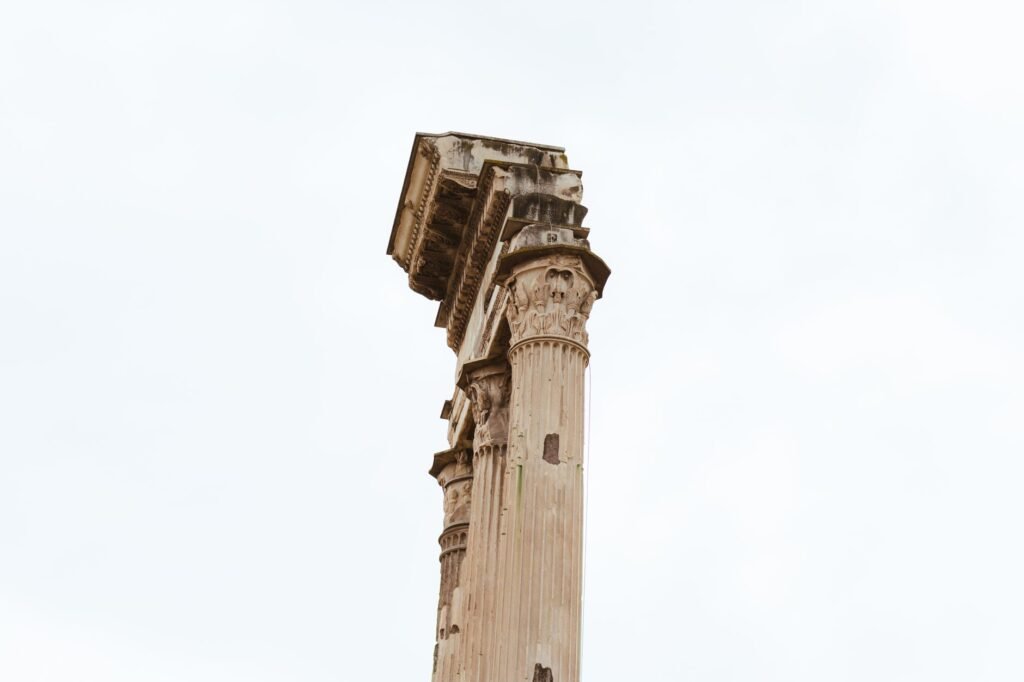
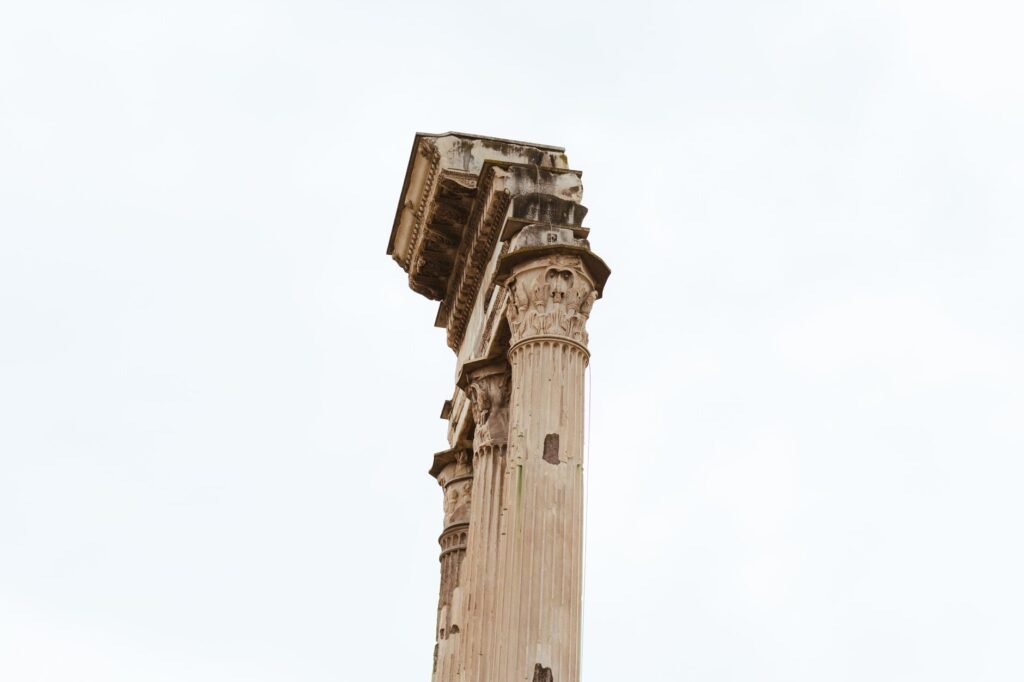
The fasces is an ancient Roman symbol consisting of a bundle of wooden rods, often bound together around an axe. In antiquity, it represented authority, judicial power, and the coercive power of the state. It was carried by attendants known as lictors before high magistrates, and its image became one of the most recognizable emblems of Roman public life.
Although originally rooted in Roman civic and legal practice, the fasces later acquired a long and complicated afterlife. It was adopted in neoclassical art, used in modern state iconography, and controversially appropriated by fascist movements in the twentieth century. As a result, the fasces is both a historical object and a powerful political symbol whose meaning has changed across time.
Origin and Meaning
The word fasces is the plural form of the Latin fascis, meaning a bundle or packet. In Roman usage, the term referred to the bundled rods themselves, with or without the axe. The etymology is straightforward and reflects the object’s material form.
The symbol likely developed from a practical implement of coercion. The rods could represent the authority to punish, while the axe signified the power to execute, especially in contexts where magistrates held imperium, or supreme executive command. Ancient explanations vary in emphasis, but the bundle clearly communicated the idea that authority was strengthened through unity.
Historical Context
The fasces belongs to the political and legal culture of ancient Rome, especially the Republican period. It was not a mythological object in the strict sense, but a public insignia deeply embedded in Roman civic religion and state ceremony.
Roman political setting
In the Roman Republic, magistrates such as consuls, praetors, and dictators were accompanied by lictors carrying fasces. The number of lictors indicated rank. The symbol announced a magistrate’s coercive jurisdiction and the state’s right to enforce order.
Religious and ceremonial context
Roman public authority was not purely secular. Magistracies, omens, and ritual observance were intertwined. The fasces therefore functioned not only as a sign of command but also as part of a wider ceremonial language of state power. Its display in processions and public appearances reinforced the visible hierarchy of Roman rule.
Social meaning
The fasces also communicated the Roman idea that lawful authority was legitimate when exercised through office, tradition, and public mandate. At the same time, the axe reminded observers that this authority could be severe. The symbol thus joined order and punishment, unity and force.
Main Characteristics
The fasces had a distinctive physical appearance and a stable symbolic logic.
Form and construction
A typical fasces consisted of:
- a bundle of rods, usually wooden
- bindings or straps holding the rods together
- sometimes an axe blade
- in some depictions, the axe head projecting from the bundle
The rods were usually imagined as elm or birch in later descriptions, though ancient sources do not always specify the wood. The exact form could vary by period, artist, and ritual context.
Symbolic logic
The bundle conveyed several related ideas:
- Unity through strength: a single rod breaks more easily than many rods bound together
- Public authority: the magistrate acts on behalf of the Roman state
- Coercive power: the rods could symbolize corporal punishment
- Capital power: the axe symbolized the right to inflict death
Visual recognition
Because of its simplicity, the fasces was easily recognizable in sculpture, coins, seals, reliefs, and later civic emblems. Its clear silhouette made it durable as a political icon.
Family and Genealogy
As a symbol, the fasces does not have a genealogy in the mythic sense. It is not a divine being and has no parents, spouse, or children. However, it is closely related to other Roman symbols of office and authority.
Associated official insignia
The fasces belongs to a broader family of Roman regalia and civic markers, including:
- the toga praetexta, worn by magistrates
- the sella curulis, or curule chair
- the lictors, who carried the fasces
- the laurel wreath, associated with triumph and honor
- the scourge, sometimes conceptually linked to punishment, though not itself part of the standard fasces
These symbols together marked the presence of office and imperium.
Symbols
The fasces itself is a symbol, but its component parts also carried meaning.
| Element | Meaning | Notes |
|---|---|---|
| Bundle of rods | Unity, strength, discipline | A group is stronger than a single element |
| Axe | Execution, coercive jurisdiction | Especially associated with imperium |
| Binding | Cohesion, lawful order | Suggests authority organized by law |
| Lictor | Public representation of office | The bearer displayed the magistrate’s power |
Interpretive significance
The most famous interpretation is that the bundle of rods represents strength through unity. This reading became especially influential in later political thought, even though the ancient Roman meaning was more specific: it pointed to the magistrate’s power to punish and command.
Sacred Animals
No sacred animals are inherently tied to the fasces itself. It is not a deity, cult object, or mythic being with a zoological association.
However, in Roman iconography and later artistic traditions, the fasces could appear alongside animals associated with state power or victory, such as:
- eagles, especially in imperial symbolism
- lions, in later allegorical contexts
- wolves, when used in broader Roman foundational imagery
These associations are contextual rather than intrinsic.
Sacred Plants
Likewise, the fasces has no canonical sacred plant. It is made from rods and, in some depictions, includes an axe. Still, Roman political symbols sometimes appeared alongside botanical emblems such as laurel, oak, or palm, depending on the setting.
Related plant symbolism in Rome
- Laurel: victory, triumph, divine favor
- Oak: civic honor and endurance
- Olive: peace and reconciliation
These are not part of the fasces itself, but they often share the visual language of Roman authority.
Sacred Places
The fasces was not tied to a single temple or sanctuary. Its “places” were the spaces of Roman public life.
Key settings
- The Forum Romanum: the center of political and judicial activity
- Curiae and basilicas: places of civic administration and law
- Processional routes: where magistrates appeared in public ceremony
- Triumphal contexts: where state power was dramatically displayed
Later civic spaces
In later Europe and the United States, fasces imagery appeared in courthouses, government buildings, memorials, and neoclassical monuments. Its placement in such spaces emphasized legality, republican order, and state continuity.
Powers and Attributes
The fasces symbolized the powers attached to Roman magistracy, especially imperium.
Core attributes
- Authority: the visible sign of office
- Jurisdiction: the right to act within legal limits
- Punishment: the ability to enforce law
- Execution: in some contexts, the right to impose capital punishment
- Public legitimacy: authority recognized by the Roman state
What it did not mean
The fasces was not a symbol of divine omnipotence or magical force. It was a civic emblem, not a supernatural power. Its authority derived from the Roman constitutional order, military power, and social convention.
Main Myths
Because the fasces is not a mythological figure, it does not have myths in the same way as Zeus or Athena. Nevertheless, it appears within Roman historical legends and foundation narratives.
Early Roman and legendary associations
Ancient Roman tradition connected the fasces with early kingship and later republican offices. Some literary accounts suggest that the symbol was already used under the kings and then continued under the Republic, though details differ by source.
A famous Roman tradition, preserved in literary sources, held that the fasces may have been associated with Etruscan influence on Roman kingship. This idea reflects the broader ancient belief that many Roman symbols of office had Etruscan roots.
Symbolic legend of unity
The rod bundle itself gave rise to a later interpretive “myth” or moral lesson: single rods break easily, but a bundle resists fracture. While this is not a classical myth, it became a durable emblem of political unity, civic discipline, and collective strength.
Relationship with Other Mythological Figures
The fasces has no direct relationships with gods, heroes, or monsters. Its connections are instead with Roman offices, institutions, and the persons who embodied state power.
Associated offices and figures
- Consuls: the highest annually elected magistrates in the Republic
- Praetors: judges and commanders with imperium
- Dictators: emergency magistrates with expanded authority
- Lictors: attendants who physically carried the fasces
- Triumphant generals: in ceremonial contexts, also linked to symbols of power
Broader symbolic relationships
The fasces often stood in contrast to or alongside symbols of:
- libertas: civic freedom under law
- pax: peace maintained by order
- auctoritas: recognized authority
- imperium: command
This relationship reflects a central Roman political idea: freedom was preserved not by the absence of power, but by properly ordered power.
Worship and Cult
The fasces was not an object of worship in the religious sense. There was no dedicated cult, priesthood, or festival specifically centered on it as a sacred entity.
Public ritual use
It did, however, appear in ritualized state practice:
- carried by lictors in official processions
- displayed when magistrates entered public space
- associated with judicial acts and punishments
- used during formal ceremonies reflecting office and rank
Possible religious dimension
Because Roman civic life was saturated with religious ritual, the fasces existed within a sacred-political atmosphere. Yet it remained a symbol of office rather than a cult object.
Ancient Sources
The fasces is discussed across a range of Roman literary and historical sources, though often incidentally rather than in a dedicated treatise.
Important classical authors
| Author | Contribution |
|---|---|
| Livy | Describes Roman magistracies and early traditions of state power |
| Cicero | Refers to fasces in discussions of office, law, and the Republic |
| Dionysius of Halicarnassus | Offers antiquarian accounts of early Roman institutions |
| Plutarch | Mentions Roman offices and ceremonial insignia in biographies |
| Varro | Provides antiquarian context for Roman customs and terminology |
| Tacitus | Uses fasces imagery in imperial political narrative |
| Suetonius | Describes imperial and ceremonial symbolism |
Important cautions
Ancient sources do not always agree on exact origins, early usage, or symbolic interpretation. Modern scholars therefore treat some claims about the fasces cautiously, especially when later Roman explanations project Republican or Imperial meanings back into the earliest period.
Roman Equivalent
The fasces itself is the Roman symbol. If a “Roman equivalent” is sought in the sense of comparable insignia, several emblems served parallel functions.
Comparable Roman symbols of authority
- the curule chair: high office and jurisdiction
- the toga praetexta: magistracy and elite status
- the laureled commander: military victory and honor
- the imperial eagle: martial and imperial identity in the Roman army and later empire
The fasces remained one of the most specific and enduring symbols of Roman magistracy, especially in the Republic. Under the Empire, its display continued but became integrated into broader imperial imagery.
Influence on Modern Culture
The fasces has had an unusually visible modern legacy.
Neoclassicism and civic art
From the eighteenth century onward, the fasces was revived in neoclassical art and architecture as an emblem of republican virtue, law, and civic cohesion. It appeared in:
- government seals
- courthouse decoration
- memorial sculpture
- architectural reliefs
- parliamentary symbolism
Its classical form made it attractive to states seeking to identify with Roman republican ideals.
Political appropriation
In the twentieth century, the symbol became strongly associated with Italian Fascism, whose name derives from fasces. Benito Mussolini’s movement used the symbol to evoke discipline, collective identity, and state power. As a result, the fasces acquired a highly charged political resonance in many countries.
This association should not obscure the fact that the symbol predates fascism by more than two millennia. Nevertheless, modern audiences often encounter it through the lens of fascist politics, which has complicated its use in public art and official insignia.
Contemporary use
Today the fasces still appears in some:
- legal and legislative emblems
- historical monuments
- educational contexts
- archival and museum reproductions of classical art
In some settings it is retained as a neutral classical reference; in others, it is avoided because of its fascist associations.
Curiosities
- The fasces is one of the few ancient symbols whose shape itself conveys its meaning so directly.
- In Roman public life, the number of lictors accompanying a magistrate could signal rank and authority.
- The axe within the bundle was sometimes omitted, especially within the city of Rome, reflecting legal restrictions or ceremonial conventions described in Roman tradition.
- The symbol’s later slogan-like interpretation, “strength in unity,” became more famous than its original Roman legal meaning.
- The modern word fascism ultimately shares a linguistic root with fasces, though the historical connection is political and symbolic rather than a claim that ancient Rome anticipated modern ideology.
- The fasces appears in the iconography of several modern states and institutions, sometimes without public awareness of its Roman origin.
Frequently Asked Questions
What is a fasces?
A fasces is an ancient Roman symbol made of a bundle of rods, usually with an axe. It represented public authority, legal power, and the state’s right to punish.
Who carried the fasces in ancient Rome?
The fasces were carried by lictors, attendants who accompanied high magistrates such as consuls and praetors.
What did the rods and axe mean?
The rods symbolized coercive power and unity, while the axe represented the magistrate’s authority to execute punishment, especially in contexts of imperium.
Was the fasces a religious symbol?
Not primarily. It was a civic and political symbol, though it functioned within the ritualized public life of Rome, which often blended political and religious ceremony.
Is the fasces the same as fascism?
No. The fasces is an ancient Roman symbol. Fascism is a modern political ideology that adopted the fasces as a name and emblem, which is why the two are historically connected but not identical.
Why was the fasces important in Rome?
It made authority visible. The symbol showed that a magistrate was acting officially on behalf of the Roman state and had the legal power to command and punish.
Does the fasces still appear today?
Yes. It can be found in some government emblems, courthouse decorations, monuments, and historical reproductions, though its use is sometimes controversial because of its association with twentieth-century fascism.
Conclusion
The fasces is one of the most enduring symbols of the ancient world. Originating in Roman civic practice, it expressed the authority of magistrates, the coercive power of law, and the Roman ideal that strength comes through ordered unity. Its form was simple, but its political meaning was profound.
Over time, the fasces moved far beyond its Roman origins. It became a classical emblem of republican government, then a politically loaded sign in the modern era through its association with fascism. This long history gives the fasces unusual significance: it is at once an artifact of Roman statecraft, a symbol of civic legitimacy, and a reminder that ancient emblems can acquire radically new meanings in later periods.

Orin Vale has spent the better part of two decades tracing the threads that connect the world’s oldest stories — from the halls of Asgard to the banks of the Nile, from Olympus to the jungles of the Maya. What began as a childhood fascination with flood myths and trickster gods grew into years of independent study across comparative mythology and ancient religion, always chasing the same question: what did these stories mean to the people who first told them? Orin writes for readers who want more than trivia — the ones looking for the beliefs, fears, and truths that myths were built to carry.