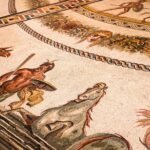
Laurel Wreath of Triumph
Introduction

The laurel wreath of triumph is one of the most enduring symbols of victory in the ancient Mediterranean world. Made from the evergreen leaves of the laurel tree, it became associated with athletic success, military honor, poetic excellence, and divine favor in Greek and Roman culture. In myth, religion, and state ceremony, the wreath represented not only achievement but also a form of sacred recognition.
Its importance extends far beyond antiquity. The laurel wreath appears in modern emblems, academic insignia, national symbolism, and popular culture as a shorthand for triumph, distinction, and honor. Although often treated as a single symbol, it developed across different contexts, each with its own meaning and ritual use.
Origin and Meaning
The word laurel in English comes through Latin laurus, meaning the laurel tree, especially Laurus nobilis, the Mediterranean bay laurel. The term wreath refers to a circular garland or crown woven from branches or leaves. The phrase “laurel wreath of triumph” therefore describes a crown made of laurel leaves that signifies victory or honor.
In Greek culture, the laurel wreath was closely linked to Apollo, god of prophecy, music, healing, and purification. One ancient explanation connects the tree with the myth of Daphne, who was transformed into a laurel to escape Apollo. As a result, laurel became sacred to the god, and wreaths made from its branches were used in his cult and in competitions dedicated to him.
The symbolic association of laurel with triumph was already established in classical antiquity. In Rome, a general granted a triumph—a public victory procession—might wear a laurel wreath or laurel crown. Over time, the wreath came to stand broadly for military success, poetic fame, and moral distinction.
Historical Context
The laurel wreath emerged within a wider ancient tradition of using plant garlands as signs of honor and ritual purity. Wreaths made of olive, oak, pine, celery, and other plants were used in festivals, athletic games, and religious ceremonies. Laurel acquired special prestige because of its links with Apollo and because it was evergreen, fragrant, and visually striking.
Greek context
In ancient Greece, crowns of leaves were awarded in major athletic and artistic contests. The most famous were the Pythian Games at Delphi, which honored Apollo. Victors there received a laurel wreath, reflecting the god’s sacred tree. Other games used different crowns, such as wild olive at Olympia, but the laurel remained an important emblem of excellence.
Roman context
The Romans adopted and adapted Greek traditions. The laurea or laurel crown became a strong symbol of military victory and state authority. Roman generals, emperors, and victorious commanders were often depicted with laurel wreaths in art and on coins. The wreath also carried political meaning: it could signal legitimacy, divine sanction, or public renown.
In addition to public ceremony, laurel was used in domestic and religious settings. Branches might be carried in processions, placed on altars, or displayed during festivals. The wreath thus moved between sacred, civic, and personal forms of honor.
Main Characteristics
The laurel wreath of triumph is identified by several consistent features:
- It is made from laurel leaves and branches
- It is usually circular, symbolizing completion, continuity, and honor
- It is associated with victory, achievement, and divine favor
- It often appears as a crown, especially in art and ceremony
- It may be worn on the head or displayed as an emblem
The wreath’s material matters. Laurel is an evergreen, so it suggested endurance and lasting fame. Its scent and glossy leaves made it suitable for ritual use. In art, laurel wreaths are often shown encircling the heads of victors, poets, rulers, or divine figures.
Core meanings of the laurel wreath
| Meaning | Historical association | Typical context |
|---|---|---|
| Victory | Athletic and military success | Games, triumphs, public honors |
| Sacred favor | Apollo and purification | Temples, oracles, rituals |
| Fame | Literary and artistic excellence | Poets, scholars, patrons |
| Authority | Political legitimacy and prestige | Emperors, generals, state imagery |
| Endurance | Evergreen foliage | Memorials, emblems, modern heraldry |
Family and Genealogy
The laurel wreath itself is not a mythological person and therefore does not have a genealogy in the usual sense. However, it belongs within a family of symbolic plants and ritual crowns in Greco-Roman religion.
Its mythic background is primarily tied to Apollo and Daphne. In the best-known version of the story, Daphne is transformed into a laurel tree, making the plant sacred to Apollo. Different ancient authors present the tale in varying forms, and some details differ. The basic connection, however, is consistent: the laurel becomes a sign of Apollo’s power and grief, and later of achievement under his patronage.
The wreath also relates to broader categories of sacred garlands used in antiquity:
- Olive wreaths for Olympian victors
- Oak crowns in some heroic contexts
- Myrtle garlands in certain festivals and weddings
- Pine crowns in Dionysiac or athletic settings
In this sense, the laurel wreath belongs to a wider symbolic “family” of crowns rather than a mythological lineage.
Symbols
The laurel wreath of triumph is itself a symbol, but several associated signs strengthen its meaning.
Principal symbols connected to laurel
- Evergreen leaves: endurance, immortality, continuing fame
- Circular shape: completion, unity, and unbroken honor
- Apollo: artistic excellence, prophecy, purification, and victory
- Victory figures: military success and public acclaim
- Trumpets, standards, and chariots: in Roman triumphal imagery
Colors and material associations
Laurel is naturally green, and that color has traditionally suggested life, renewal, and vitality. In artistic depictions, gold or gilded laurel wreaths may appear as later symbolic adaptations, especially in medals, emblems, and decorative arts. These golden versions preserve the old meaning while emphasizing magnificence and honor.
Sacred Animals
The laurel wreath is not strongly associated with a specific sacred animal in the way that some deities are. However, animals linked to Apollo and triumphal imagery can appear in the broader symbolic field.
Animals associated with Apollo and related themes
- Swans: associated with Apollo in song, beauty, and poetic elegance
- Ravens or crows: appear in some Apollo myths
- Dolphins: connected with Apollo in his Delphic and maritime associations
- Horses: linked to processions, chariots, and victory displays
These animals are not sacred to the laurel wreath itself, but they belong to the cultural world in which laurel functioned as a sign of divine and civic honor.
Sacred Plants
The most important sacred plant is, of course, the laurel tree itself.
Laurel
The bay laurel was valued in the ancient Mediterranean for its fragrance, glossy leaves, and evergreen nature. Because it was connected to Apollo, it acquired religious significance and was used in rites of purification and victory.
Related plants in wreath traditions
Other plants played important roles in ancient crowns:
- Olive: peace, athletic success, and civic honor
- Oak: strength, endurance, and heroic prestige
- Myrtle: love, celebration, and ritual purity
- Pine: certain festival and cult associations
Laurel stood out because it combined sacred affiliation with a broad public meaning. It could signal piety, victory, literary achievement, or imperial authority depending on context.
Sacred Places
The laurel wreath of triumph is connected to several important sacred and ceremonial locations in the ancient world.
Delphi
Delphi was the most famous sanctuary of Apollo and one of the primary places associated with laurel. The god’s oracle, the Pythian games, and many Delphic rituals all reinforced the plant’s sacred status.
Rome
In Rome, laurel became deeply embedded in civic ritual. It was associated with triumphal processions, public statues, and imperial imagery. Roman victory culture made the laurel wreath a visible sign of state power.
Olympia and other games sites
While Olympia is more closely associated with the olive crown, the wider Greek world of athletic competition helped define the role of wreaths in honor systems. Laurel’s prestige was part of this broader tradition.
Temples and altars
Laurel branches were used in temple decoration and ritual purification. Because Apollo was a god of cleansing and order, laurel often appeared in sacred spaces dedicated to him.
Powers and Attributes
The laurel wreath itself does not possess powers in a magical sense, but it embodies a cluster of attributes understood by ancient societies.
Main attributes
- Victory in war, sport, or artistic contest
- Legitimacy granted by gods or institutions
- Purification and ritual cleanliness
- Fame and lasting remembrance
- Excellence in public and cultural life
In some traditions, laurel branches were thought to repel evil or impurities, reflecting Apollo’s protective and purifying role. Such beliefs varied by place and period, and ancient sources do not always describe the same ritual practices. What remains constant is the wreath’s status as a sign of elevated rank and achievement.
Main Myths
The most famous myth related to the laurel wreath is the story of Apollo and Daphne.
Apollo and Daphne
According to the best-known version, Apollo pursued the nymph Daphne. To escape him, she prayed for rescue and was transformed into a laurel tree. Apollo then declared the laurel sacred to him and adopted its leaves as his emblem. This myth explains why laurel became closely associated with the god, although versions differ in detail depending on the author.
Apollo and victory
The laurel wreath also belongs to broader myths of Apollo as a victorious and civilizing god. He is associated with the defeat of Python at Delphi and with the establishment of his oracle. Although not always tied directly to a wreath in the myths themselves, these stories support laurel’s connection to triumph and sacred order.
Heroic and civic triumph
In Roman culture, the mythic dimension of laurel extended to the triumph of generals and emperors. The public spectacle of victory echoed divine favor, linking the successful commander to Apollo-like prestige and authority.
Relationship with Other Mythological Figures
The laurel wreath is most closely related to Apollo, but its symbolic network includes several other figures.
Apollo
Apollo is the central divine figure associated with laurel. The wreath marks his sacred tree and, by extension, his domains of music, prophecy, healing, and victory.
Daphne
Daphne is the principal figure in the mythic origin of the laurel’s sacred status. Her transformation gives the tree its emotional and religious resonance.
Zeus and other gods
Although not directly connected to laurel in the same way, Zeus and other Olympian figures appear in the competitive world of honor and divine sanction in which wreaths functioned. In the Roman state, victory and legitimation could also be framed in a way that overlapped with Jupiter’s authority.
Poets and victors
The laurel wreath became a symbolic relationship between divinity and human excellence. Poets, athletes, and commanders received laurel as a sign that their achievements had entered the realm of public memory.
Worship and Cult
The laurel wreath had a strong ritual role in Greek and Roman worship.
Ritual uses
- Crowns for victors in sacred games
- Offerings and decorations in temples
- Purification rites, especially in Apollonian contexts
- Processional ornaments in festivals and triumphs
In ancient practice, laurel could be held, worn, or displayed. It was not merely decorative; it marked a person or event as ritually and socially elevated.
Festivals and ceremonies
At Delphic celebrations and in Roman triumphs, laurel expressed the union of sacred approval and public success. The wreath thus moved across different spheres:
- Religious ritual
- Athletic competition
- Military ceremony
- Poetic and artistic recognition
Priestly and imperial use
In Rome, laurel became especially important in state religion and imperial representation. Emperors were often shown with laurel wreaths in sculpture and on coins, reflecting authority, victory, and continuity.
Ancient Sources
The laurel wreath appears in many ancient texts, though not always in the same form or emphasis. Important sources include:
- Homer: While Homer does not focus specifically on the laurel wreath of triumph, his epics establish the heroic world in which victory prizes and honors matter profoundly.
- Hesiod: Provides the broader mythic and divine framework of early Greek religion.
- Apollodorus: Includes mythological summaries relevant to Apollo and Daphne.
- Ovid, Metamorphoses: The most famous literary account of Apollo and Daphne, crucial for the laurel’s mythic meaning.
- Pausanias: Describes Greek sanctuaries, cult practices, and local traditions that help contextualize wreath usage.
- Virgil and Propertius: Reflect the Roman literary world in which laurel signifies glory, poetry, and state power.
- Pliny the Elder: Discusses plants and their uses, including the cultural significance of laurel.
Different authors emphasize different aspects. Some focus on myth, others on ritual, and others on political symbolism.
Roman Equivalent
The Roman equivalent of the laurel wreath is not a separate object but a Roman adaptation of the Greek tradition. In Rome, the laurel crown became one of the most visible marks of military triumph and imperial prestige.
Roman uses of laurel
- Worn by victorious generals in triumphal processions
- Associated with emperors and public honor
- Displayed on coins, monuments, and statues
- Used in household and civic decoration during festivals
Romans sometimes distinguished between different kinds of crowns, such as the corona triumphalis and related honors. Laurel was especially prominent because it conveyed both sacred approval and public authority.
In later Western tradition, the laurel wreath remained a general emblem of victory and distinction, even when detached from its original religious setting.
Influence on Modern Culture
The laurel wreath of triumph remains one of the most recognizable classical symbols in modern culture.
Literature and scholarship
Laurel is still used to symbolize poetic achievement. The very phrase “to rest on one’s laurels” reflects the idea of relying on past success rather than pursuing new achievement.
Education and academic honor
Many universities, academic seals, and graduation emblems use laurel wreaths to represent knowledge, honor, and accomplishment.
Government and heraldry
Laurel appears in national seals, military insignia, medals, and official emblems. It often signifies victory, peace, or civic merit.
Film, television, and games
Classical imagery in historical films, fantasy settings, and video games frequently includes laurel crowns for emperors, champions, or divine figures. Even when stylized, the symbol remains immediately legible.
Art and design
From neoclassical sculpture to modern logos, the laurel wreath continues to represent elegance, permanence, and achievement. Its circular form makes it visually adaptable, while its meaning remains remarkably stable.
Curiosities
- The laurel wreath is one of the few ancient symbols that remained continuously recognizable across Europe for centuries.
- In some classical contexts, the wreath mattered as much as the object awarded itself, because it publicly identified honor.
- Laurel was often associated with poets because literary success was imagined as a form of victory.
- The image of a “crowned” victor has survived in many languages and traditions, even where actual wreaths are no longer used.
- The Roman political use of laurel helped turn a religious plant into a symbol of state power.
- The evergreen nature of laurel made it especially suitable for representing lasting fame.
Frequently Asked Questions
What does the laurel wreath of triumph symbolize?
It symbolizes victory, honor, divine favor, and lasting achievement. In ancient contexts it could also represent purification, legitimacy, and poetic excellence.
Why was laurel associated with Apollo?
Because of the myth of Apollo and Daphne, in which Daphne is transformed into a laurel tree. The plant became sacred to Apollo and was used in his cult and festival traditions.
Was the laurel wreath only used for military victory?
No. It was also used in athletic games, poetic competitions, religious ceremonies, and imperial or civic honors.
Did Greeks and Romans use the laurel wreath in the same way?
Not exactly. Greeks associated laurel strongly with Apollo and certain contests, while Romans emphasized its role in triumphal processions, state authority, and imperial symbolism.
Is the laurel wreath mentioned in ancient literature?
Yes. It appears in many ancient texts, especially in Roman poetry and in Ovid’s account of Apollo and Daphne. It also belongs to broader Greek and Roman ritual literature.
Why is laurel still used today?
Because it has remained a powerful visual sign of success and honor. Its ancient association with excellence made it easy to adapt into academic, political, and artistic symbolism.
What is the difference between a laurel wreath and a crown?
A wreath is a garland or ring made of leaves or branches, while a crown is a broader term for a head ornament of authority or honor. In many ancient contexts, the laurel wreath functioned as a crown.
Conclusion
The laurel wreath of triumph is more than a decorative emblem from antiquity. It is a compact symbol of how the ancient world understood victory, fame, sacred favor, and public recognition. Rooted in Greek religion and expanded through Roman state culture, it became one of the most durable images of honor in Western tradition.
Its power lies in its flexibility. The same wreath could honor an athlete, a poet, a general, or an emperor. It could signify divine association, civic achievement, or personal excellence. Because of this versatility, the laurel wreath has survived long after the rituals that created it, remaining a lasting sign of triumph in art, language, and collective memory.

Orin Vale has spent the better part of two decades tracing the threads that connect the world’s oldest stories — from the halls of Asgard to the banks of the Nile, from Olympus to the jungles of the Maya. What began as a childhood fascination with flood myths and trickster gods grew into years of independent study across comparative mythology and ancient religion, always chasing the same question: what did these stories mean to the people who first told them? Orin writes for readers who want more than trivia — the ones looking for the beliefs, fears, and truths that myths were built to carry.