Serpents of Laocoön
Introduction
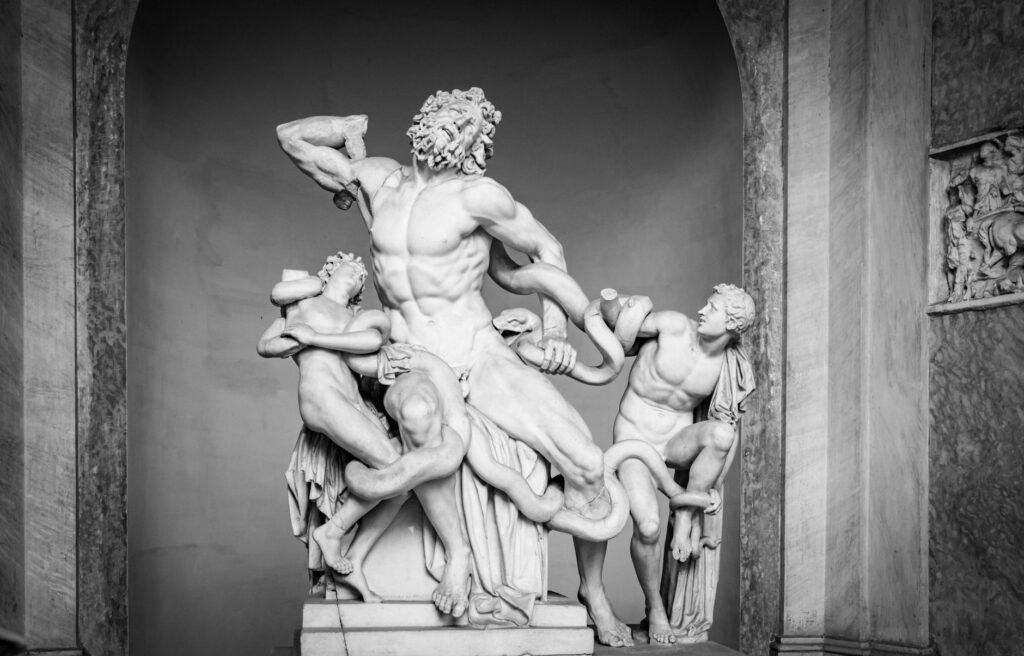
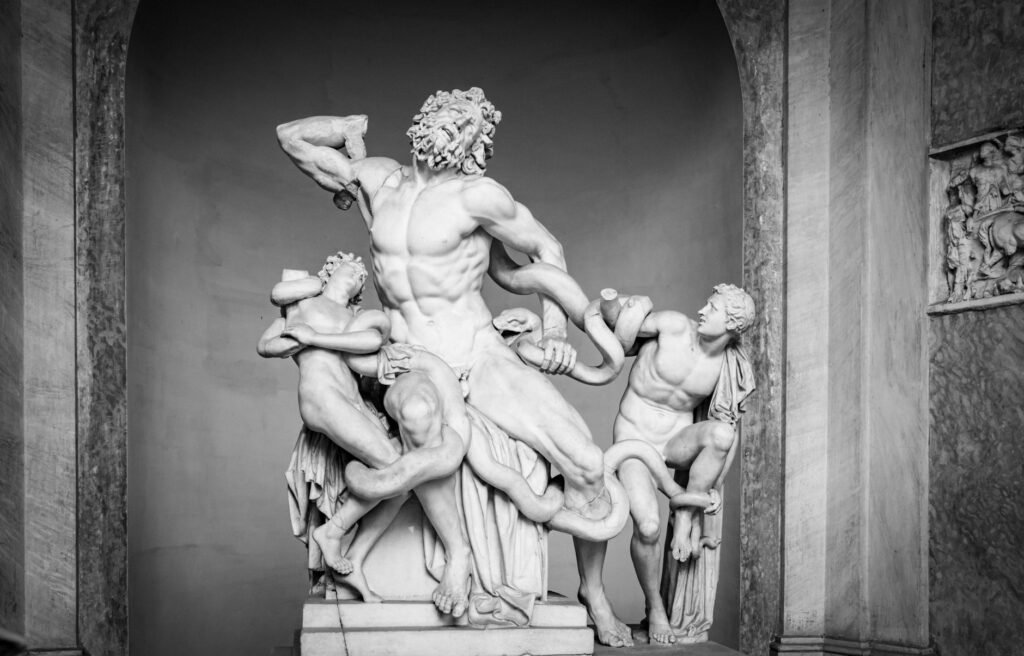
The Serpents of Laocoön are among the most famous monsters in Greco-Roman mythology, not because they appear in a vast number of surviving stories, but because of the extraordinary cultural afterlife of a single ancient episode. In myth, two enormous serpents were sent by the gods to attack Laocoön, a Trojan priest, and his two sons. The scene became one of the most enduring images of ancient art, especially through the celebrated sculptural group known as the Laocoön and His Sons.
The serpent episode matters for several reasons. In mythology, it is tied to the fall of Troy and to divine punishment. In art history, it became a canonical representation of suffering, movement, and emotional intensity. In literature and later scholarship, the story has been read as a warning against disobedience, a symbol of tragic fate, and a dramatic example of the tension between human knowledge and divine will.
Origin and Meaning
The phrase “Serpents of Laocoön” refers to the snakes that appear in the myth of Laocoön. The name Laocoön comes from Greek, commonly rendered as Laokoōn (Λαοκόων). Ancient authors do not provide a universally agreed etymology, and the precise linguistic origin remains uncertain. Like many Greek heroic names, it is treated as part of the traditional mythic inheritance rather than as a name with a transparent meaning preserved in the sources.
The serpents themselves are not named individually in the myth. They function as divine instruments. In the most influential versions of the story, they come from the sea, often associated with Poseidon and Athena or with divine anger more generally. Their role is to punish Laocoön after he warns the Trojans against accepting the wooden horse.
Historical Context
The story belongs to the Trojan cycle, the body of Greek legend connected with the Trojan War. It is set in the final stage of Troy’s destruction, when the Greeks’ deception with the wooden horse is about to succeed.
The myth reflects several important ancient themes:
- Divine intervention in human affairs
- The danger of ignoring warnings
- The fragility of human judgment
- The ambiguity of omens and prophecy
- The cost of resisting the will of the gods
In the broader religious culture of the ancient Mediterranean, serpents were complex symbols. They could represent danger, chaos, underworld power, protection, healing, or divine force. In the Laocoön story, they are unmistakably destructive. Yet their action also has a sacred dimension, since they execute a punishment associated with the gods.
The best-known visual tradition of the myth comes from Hellenistic and Roman art. The sculptural group usually called Laocoön and His Sons, found in Rome in 1506, strongly shaped the modern understanding of the scene. Although the sculpture’s exact date and workshop remain debated, it is often associated with Hellenistic artistic ambition and Roman collecting culture.
Main Characteristics
The serpents of Laocoön are usually described as large, sea-born snakes with overwhelming physical strength. They attack Laocoön and his sons as a coordinated pair, entwining the bodies of the victims in a violent and tightly structured composition.
Common characteristics in the mythic and artistic tradition include:
- Two in number
- Sent or guided by divine power
- Emerging from the sea
- Enormous in scale
- Capable of coiling around several human bodies
- Agents of punishment and terror
In the famous sculptural version, the serpents are not merely background creatures. They are central structural elements of the scene, linking the figures into a single dramatic knot of struggle. Their bodies guide the viewer’s eye across the composition and intensify the emotional tension.
Family and Genealogy
Because the serpents are mythic creatures rather than deities or human figures, they do not have a genealogy in the normal mythological sense. Ancient sources do not preserve a consistent family origin for them.
However, their divine affiliation matters. Different traditions connect them in different ways:
| Tradition | Connection of the serpents |
|---|---|
| Some Greek accounts | Sent by Poseidon, often with Athena involved |
| Some versions emphasizing the siege of Troy | Sent as punishment for Laocoön’s warning against the horse |
| Later artistic and literary treatments | Treated as instruments of fate or divine wrath rather than as independent beings |
The serpents attack:
- Laocoön, a priest of Apollo in some traditions, or of Poseidon in others
- His two sons, who are unnamed in most surviving ancient accounts
This family connection is essential to the story’s tragic force. The attack is not limited to an individual; it destroys a household and demonstrates the reach of divine punishment.
Symbols
The serpents of Laocoön are associated with several symbolic ideas. Their meaning depends on the source and on later interpretation.
Major symbolic meanings
- Divine punishment: the snakes act as instruments of higher power.
- Fatal warning ignored: Laocoön’s attempt to save Troy is answered by destruction.
- Chaos and inevitability: the serpents embody uncontrollable force.
- The failure of human reason: even a correct warning can be defeated by fate.
- Transition and liminality: serpents often mark boundaries between life and death, safety and danger, or human and divine realms.
Associated objects and visual symbols
In art, the serpents are often presented with:
- Coiling bodies
- Raised heads
- Open jaws
- Entanglement with altars or sacrificial settings
- Strained human flesh and dramatic facial expression
The famous sculptural representation turns the serpents into a symbol of physical and psychological suffering. Their presence defines the entire emotional tone of the work.
Sacred Animals
In the narrow sense, the serpents of Laocoön are not sacred animals in a worshiped cult. Still, serpents in ancient religion had strong symbolic associations. Their role in this myth reflects broader ancient attitudes toward snakes.
Cultural meanings of snakes in antiquity
- Healing and renewal, especially through associations with Asclepius
- Earth powers and chthonic forces
- Protection of sacred spaces
- Danger and death
- Wisdom and hidden knowledge
In the Laocoön myth, the serpent’s usual ambivalence is suppressed in favor of terror. The snakes are not protectors or healers here; they are destructive agents of divine vengeance.
Sacred Plants
There are no clearly attested sacred plants specifically linked to the serpents of Laocoön in the ancient sources.
Some later writers and interpreters have connected the episode more broadly with Trojan ritual or with sacrificial imagery, but these are interpretive associations rather than secure mythic facts. For an encyclopedia-style account, it is safest to say that no particular plant has a stable or central role in the Laocoön serpent tradition.
Sacred Places
The serpent episode is connected to Troy and, in literary retellings, to the seashore near the city.
Important locations
- Troy / Ilium: the city whose fate is sealed by the episode
- The shore or waterfront: where the serpents are said to emerge from the sea
- The temple or altar of Athena: in some versions, Laocoön is punished while acting in a sacred context
The location matters because the attack is not random wilderness violence. It occurs in a highly charged sacred and political environment during a moment of civic crisis.
In Roman reception, the episode gained a second geographical identity through the famous sculpture found in Rome. That discovery transformed the story from a literary myth into a major object of museum and scholarly study.
Powers and Attributes
The serpents of Laocoön do not possess a broad divine portfolio. They are not independent gods with temples or domains. Their “power” is specific and absolute within the myth.
Their functions in the story
- Punishment
- Execution of divine will
- Silencing of warning
- Creation of terror
- Demonstration of fate’s supremacy
They also carry the usual serpent attributes in mythic symbolism:
- Strength
- Speed
- Constricting force
- Deadly bite or crushing embrace
- Association with hidden or undersea realms
In the Laocoön story, their most important attribute is not speed or venom alone, but inescapability. Once they appear, the outcome is effectively sealed.
Main Myths
The serpent episode is part of a larger Trojan narrative, but several versions of the myth survive. Because ancient sources differ, the story should be presented with some caution.
The core narrative
Laocoön warns the Trojans not to bring the wooden horse inside the city. In some accounts he is a priest of Poseidon or Apollo; in others, he performs a sacrificial act when the disaster occurs. The gods send two serpents from the sea. They attack his sons first, then Laocoön himself, or attack all three in a sequence that varies by source. The Trojans interpret the event as a sign that Laocoön has offended the gods. As a result, they accept the horse, and Troy is destroyed.
Important variants
| Source/tradition | Key differences |
|---|---|
| Virgil, Aeneid | Laocoön warns against the horse; serpents attack him and his sons; the episode is highly dramatic and central to Roman Trojan memory |
| Apollodorus, Epitome | Provides a concise mythic account linked to the fall of Troy |
| Quintus Smyrnaeus | Expands the late Trojan narrative with epic detail |
| Servius and later commentators | Preserve interpretive variants, including differing explanations of why Laocoön was punished |
| Sophocles’ lost Laocoön? | Some ancient testimony suggests a dramatic treatment, but the work is not extant and details are uncertain |
The role of the serpents
The serpents are the mechanism by which the gods ensure that the Trojans misread the event. The myth’s tragic irony lies in the fact that Laocoön may be right in substance, yet appears wrong because divine punishment overrides human interpretation.
Relationship with Other Mythological Figures
The serpents of Laocoön are closely tied to the gods and heroes of the Trojan cycle.
Key relationships
- Laocoön: their chief victim and the focus of the myth
- Laocoön’s sons: secondary victims whose deaths intensify the pathos
- Athena: in some traditions, implicated in the punishment because she favored the Greeks
- Poseidon: in some versions, associated with the sending of the serpents
- Aeneas: indirectly connected through Virgil’s account, since the fall of Troy sets the stage for the Trojan refugee narrative
- Sinon and the Trojans: the serpents influence the interpretation of the wooden horse, benefiting the Greek stratagem
The story also resonates with other serpent-related myths, especially those in which snakes act as divine agents or guardians. But unlike protective serpents in other traditions, these creatures are overwhelmingly negative in function.
Worship and Cult
There is no established cult of the serpents of Laocoön. They are mythic figures, not objects of worship.
However, the episode intersects with broader ancient religious practices:
- Sacrificial ritual
- Interpreting signs and omens
- Concern over divine approval
- Fear of offending gods during civic crises
In some versions, Laocoön is at an altar when the serpents appear, which makes the scene especially charged. His punishment is framed not simply as random violence but as a religious event with ritual implications.
In Roman and later culture, the story became a moral and artistic exemplar rather than a cultic narrative. It was studied for what it suggested about fate, the gods, and human suffering.
Ancient Sources
The serpent episode is known from several ancient authors, though not always in the same form.
Principal sources
- Virgil, Aeneid 2: the most influential literary version in Latin
- Apollodorus, Epitome: a concise mythological summary
- Quintus Smyrnaeus, Posthomerica: later epic treatment of the Trojan War aftermath
- Sophocles: ancient testimonia refer to a lost play commonly linked to Laocoön, though the surviving evidence is fragmentary and uncertain
- Servius: late antique commentary preserving interpretive traditions
- Pausanias: not a central source for the myth itself, but relevant to broader ancient art-historical and religious context
- Pliny the Elder, Natural History: important for the sculpture’s fame, especially in connection with the Laocoön group in Rome
What the sources disagree about
Ancient traditions differ on:
- Whether Laocoön was a priest of Apollo or Poseidon
- Whether the serpents were sent by Poseidon alone or with Athena
- Whether Laocoön died because he disobeyed a divine prohibition on marriage or celibacy, as some later rationalizing accounts suggest
- The exact sequence of the serpents’ attack
- The meaning of the event in relation to his warning about the horse
These differences are important because they show that the myth was not fixed in a single canonical version.
Roman Equivalent
The serpents of Laocoön do not have a true Roman “equivalent” in the sense of a separate deity or fixed counterpart. The story entered Roman culture primarily through literary and artistic adaptation, especially in Virgil.
That said, Roman reception gave the myth a distinctly Roman shape:
- It became part of the foundational narrative of Troy and Rome
- It emphasized fate, duty, and the limits of human foresight
- It was admired as a model of artistic representation of suffering
In Roman art and criticism, the Laocoön group became a benchmark for expressing extreme emotion and physical struggle. The serpents therefore gained a second life as symbols of artistic power.
Influence on Modern Culture
The serpents of Laocoön have had a remarkable influence on modern culture, especially through the sculpture and through literary criticism.
Major areas of influence
- Art history: the Laocoön group became central to discussions of classical beauty and expressive realism.
- Aesthetic theory: thinkers such as Lessing used the sculpture in debates about the differences between poetry and visual art.
- Literature: the image of Laocoön has been invoked by poets, novelists, and essayists to symbolize suffering, warning, or tragic knowledge.
- Museums and archaeology: the discovery of the sculpture in Rome became a landmark event in Renaissance reception of antiquity.
- Popular culture: the scene appears in adaptations, visual references, and educational media about the Trojan War.
Why the image endures
The scene is memorable because it combines:
- A clear narrative
- Human vulnerability
- Dramatic composition
- Emotional intensity
- A universal theme of ignored warning
The serpents are essential to this endurance. They convert a political-military episode into a powerful image of helplessness against overwhelming forces.
Curiosities
- The most famous representation of the myth is a sculptural group, not a painting or a surviving epic text.
- The Laocoön sculpture was discovered in Rome in 1506, a moment often treated as crucial in the history of Renaissance art.
- Pliny the Elder praised the sculpture highly, helping secure its fame in later centuries.
- The story is one of the few Trojan War episodes in which serpents, rather than heroes, dominate the scene.
- Ancient authors do not agree on the precise religious office of Laocoön.
- Some interpretations have tried to explain the serpents naturalistically or politically, but the ancient sources present them as supernatural agents.
- The composition is often admired because the serpents create a visual spiral that unifies the figures into one intense sculptural mass.
Frequently Asked Questions
What are the serpents of Laocoön?
They are the two giant snakes sent in the myth of Laocoön to attack him and his sons, usually as divine punishment connected with the fall of Troy.
Why were the serpents sent?
Ancient sources differ. In the best-known traditions, they were sent because Laocoön warned the Trojans not to accept the wooden horse, and the gods wished to ensure Troy’s destruction.
Who sent the serpents?
Different ancient accounts attribute them to Poseidon, sometimes with Athena involved. Other versions present them more generally as instruments of divine wrath.
Are the serpents worshiped as gods?
No. They are mythic creatures, not objects of independent worship.
What is the connection between the serpents and the Laocoön sculpture?
The sculpture depicts the attack on Laocoön and his sons, with the serpents forming the central dramatic element of the composition.
Why is the story of Laocoön important?
It is important because it appears in the Trojan cycle, illustrates divine punishment and tragic irony, and inspired one of the most influential works of ancient art.
Do all ancient sources tell the same story?
No. Ancient authors disagree on several details, including Laocoön’s priestly role, the gods involved, and the exact reason for the punishment.
Conclusion
The Serpents of Laocoön are far more than mythic animals. They are central figures in one of the most famous episodes of the Trojan War tradition and among the most influential images in the history of Western art. In myth, they embody divine punishment, tragic irony, and the terrifying power of fate. In visual culture, they helped transform Laocoön into a universal symbol of human suffering under pressure.
Because ancient sources preserve differing accounts, the story should be read as part of a living mythic tradition rather than as a single fixed narrative. What remains constant is the serpents’ role as agents of overwhelming force, turning a warning into catastrophe and making the Laocoön episode an enduring meditation on the limits of human knowledge in the face of divine will.

Orin Vale has spent the better part of two decades tracing the threads that connect the world’s oldest stories — from the halls of Asgard to the banks of the Nile, from Olympus to the jungles of the Maya. What began as a childhood fascination with flood myths and trickster gods grew into years of independent study across comparative mythology and ancient religion, always chasing the same question: what did these stories mean to the people who first told them? Orin writes for readers who want more than trivia — the ones looking for the beliefs, fears, and truths that myths were built to carry.