Geryon
Introduction
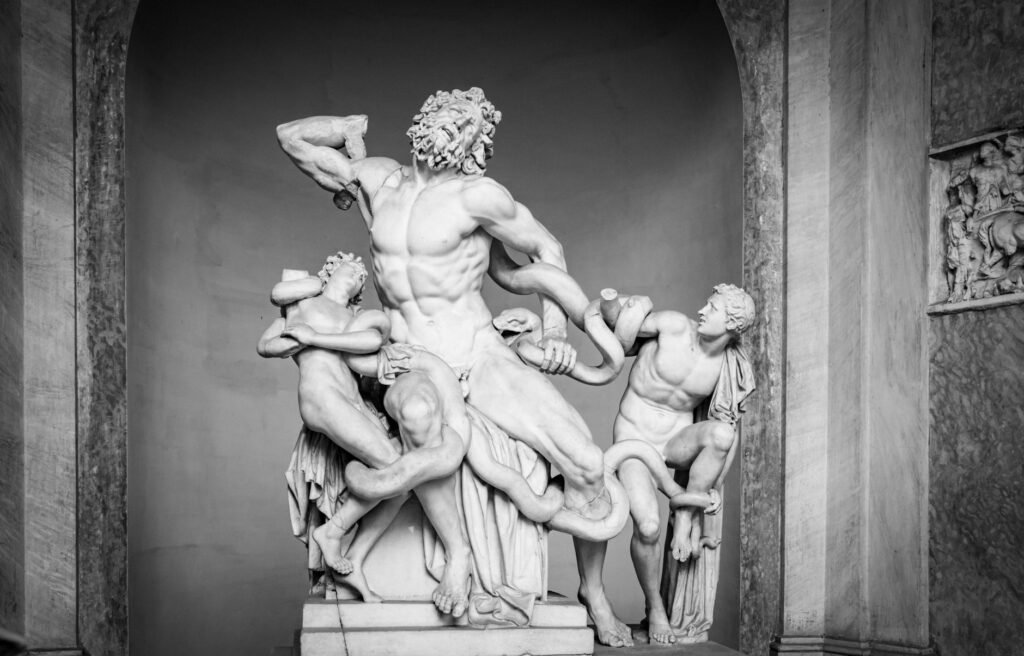
Geryon is a figure from Greek mythology best known as the monstrous king of the far western isle of Erytheia and as one of the labors of Heracles. In most ancient accounts, he is a gigantic being with three bodies or three joined torsos, often described as a formidable warrior who guarded a herd of red cattle. His defeat by Heracles became one of the best-known episodes in the Heracles cycle and helped define the mythic geography of the western edge of the known world.
Although Geryon is not among the most prominent gods or heroes of Greek religion, he is important for several reasons. He illustrates how Greek myth imagined remote lands beyond the Mediterranean, how heroic conquest was linked to cattle raiding and royal legitimacy, and how poets and later writers reshaped older traditions into memorable narratives. Geryon also appears in art, literature, and modern fiction as a symbol of monstrosity, liminality, and the distant West.
Origin and Meaning
The name Geryon appears in ancient Greek as Γηρυών (Gēryōn). Its etymology is uncertain. Ancient sources do not provide a reliable explanation, and modern scholars have proposed several possibilities, none of which is universally accepted. As with many mythic names, the form may preserve a very old pre-Greek or regional term whose original meaning was lost.
A related issue is the variation in how Geryon is described in early literature:
- In Hesiod, he is explicitly a triple-bodied monster.
- In later classical art and literature, the threefold nature sometimes becomes more visual and elaborate.
- In some traditions, he is treated less as a literal three-bodied being and more as a giant warrior with unusual size or strength.
Because of these differences, Geryon should be understood not as a single fixed character but as a mythic figure whose appearance and significance were shaped by different Greek traditions.
Historical Context
Geryon belongs to the mythic geography of the Greek imagination, especially the far western world. Greek poets often located extraordinary beings at the edges of the known earth: in Iberia, Libya, the Atlantic, or other distant regions beyond ordinary travel. Erytheia, Geryon’s island home, was usually placed near the setting sun, sometimes associated with the region around Gades (modern Cádiz) in southwestern Iberia.
This western setting matters historically and culturally. Greek colonization and trade brought Greeks into contact with the western Mediterranean, including Phoenician settlements and local communities in Iberia. Myths about Heracles’ journey westward likely absorbed elements of these expanding geographic horizons. Geryon’s cattle and his defeat by Heracles thus belong to a larger pattern in Greek myth in which heroic conquest maps unfamiliar lands into a symbolic order.
Geryon also appears in the context of Greek ideas about kingship, wealth, and cattle. In archaic society, cattle were a major measure of status and prosperity. The story of Heracles stealing Geryon’s cattle may reflect older heroic traditions about raiding and the transfer of wealth from one realm to another.
Main Characteristics
Geryon is usually characterized by the following features:
- A monstrous or hybrid body
- Exceptional strength
- Royal status
- Possession of red cattle
- Residence at the western edge of the world
- Opposition to Heracles
The most famous description is the triple-bodied Geryon in Hesiod’s Theogony, where he is said to have been born with three bodies joined together. In vase painting and later art, this trait is often emphasized by showing three torsos, three heads, or a combined body with multiple sets of limbs.
He is also associated with the herd of cattle guarded by his own herdsman and watchdog. In many versions, the herd is protected by two subordinate figures:
- Eurytion, the herdsman
- Orthrus, the two-headed dog
These guardians reinforce Geryon’s role as a remote and dangerous sovereign whose wealth is protected by monstrous force.
A concise comparison of common features in the sources:
| Source / Tradition | Description of Geryon |
|---|---|
| Hesiod | Triple-bodied monster; son of Chrysaor and Callirrhoe |
| Later mythographic tradition | Giant guardian of cattle in the far west |
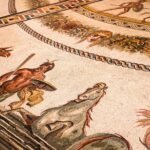
| Ancient art | Often shown with three torsos or threefold combat imagery |
| Roman poetic tradition | A major obstacle in Heracles/Hercules’ western labors |
Family and Genealogy
Geryon’s genealogy is relatively well established in Greek myth, though some details vary.
Parents
In Hesiod, Geryon is the son of:
- Chrysaor, born from Medusa after Perseus beheaded her
- Callirrhoe, an oceanid, daughter of Oceanus
This parentage links Geryon to both the monstrous line of the Gorgon Medusa and the watery, boundary-marking power of the oceanic world.
Children and Descendants
Ancient sources do not provide a consistent, widely accepted account of Geryon’s children. He is primarily remembered as a slain opponent rather than as the founder of a lineage. Some later traditions focus on his cattle and his island domain rather than on descendants.
Spouses
No universally accepted spouse is central to Geryon’s myth. Any mention of a partner is either absent or marginal in the surviving classical tradition.
Related Figures
His household includes important subordinate and companion figures:
- Eurytion, the herdsman
- Orthrus, the two-headed guard dog
- Eurytion’s brother? Some traditions and later accounts vary in how these attendants are grouped, but the pairing of herdsman and dog is common
Symbols
Geryon is not a figure with a formal cultic symbolism comparable to that of Olympian gods, but several symbols are strongly associated with him in myth and art.
Principal Symbols
- Three bodies or three torsos: the most recognizable attribute
- Red cattle: the central object of the Heracles myth
- Isolated western island: representing remoteness and boundary
- Spear or war gear: when depicted as a warrior
- Orthrus the dog: a symbol of guarded property and lethal protection
Meaning of the Symbols
The triple body can be interpreted in several ways:
- As an image of monstrous excess
- As a sign of superhuman power
- As a way of marking Geryon as belonging to a world beyond ordinary human norms
The cattle symbolize wealth, territorial possession, and the spoils of heroic victory. In Greek myth, controlling cattle often signifies control over land and power.
Sacred Animals
Strictly speaking, Geryon has no sacred animals in the cultic sense, since he was not a worshipped deity. However, certain animals are strongly linked to him in myth.
The Red Cattle
The cattle of Geryon are the most famous animals associated with him. They are usually described as red or reddish-golden, a detail that has fascinated ancient and modern readers alike. Their color may carry symbolic associations with rarity, heat, wealth, or the western sunset, though ancient sources do not explicitly explain it.
Orthrus
Orthrus, the two-headed dog guarding the herd, is closely connected to Geryon’s domain. As a mythic animal, Orthrus represents vigilance and the monstrous defense of property.
Other Symbolic Animals
In later interpretations, Geryon may be linked indirectly with other monsters of the western margins, but these associations belong more to comparative mythology than to the direct ancient tradition.
Sacred Plants
No plant is securely established as sacred or specially associated with Geryon in the way that certain plants are associated with gods such as Apollo, Demeter, or Dionysus. Ancient sources do not preserve a distinct botanical cult around him.
Still, because Geryon belongs to western and liminal mythic landscapes, later literary and artistic interpretations sometimes connect him with the harsh terrain of the far west rather than with a specific plant symbolism. Any botanical associations in later works should be treated cautiously and not assumed to reflect ancient belief.
Sacred Places
Geryon is connected to a small number of important mythic places, most famously in the far west.
Erytheia
Erytheia is the island or land where Geryon lived and where his cattle grazed. Its exact location is uncertain. Ancient writers place it at the western edge of the world, and later associations often identify it with the region around southwestern Iberia.
The name Erytheia is sometimes linked with the idea of “red” or “reddish,” which may correspond to the color of the cattle or the imagery of the sunset.
Tartessus and the Western Mediterranean
Some Greek traditions connect the Geryon myth to the wider Tartessian or Iberian world. This does not mean that Geryon was a historical king of a known city; rather, the myth may reflect Greek knowledge of western trading regions.
The Route of Heracles
Because Heracles travels to Geryon’s land as part of his labor, many later myths and local traditions treated the route itself as significant. Sites associated with Heracles in the western Mediterranean, including straits and promontories, were sometimes linked to this journey.
Powers and Attributes
Geryon is not a god with defined divine powers, but he possesses attributes that make him formidable in myth.
Key Attributes
- Physical strength
- Monstrous form
- Kingship over a remote land
- Possession and defense of valuable cattle
- Resistance to heroic intrusion
Domain of Influence
Geryon’s influence is limited to his own mythic realm. He does not govern a cosmic domain like a deity; instead, he represents a specific kind of opponent: the distant ruler whose wealth and territory must be overcome by the hero.
In narrative terms, Geryon’s main function is to embody the challenge of the far western journey. He stands at the threshold between the known and unknown world, between civilization and the uncanny.
Main Myths
The Labor of Heracles
Geryon’s central myth is his confrontation with Heracles, who was ordered to bring back Geryon’s cattle as one of his labors. This episode is usually counted as the tenth labor in later traditions, though numbering can vary slightly in ancient sources.
The basic sequence is:
- Heracles travels to the far west.
- He confronts obstacles on the way, including the heat of the sun.
- In some versions, he shoots an arrow at the sun and is granted a golden cup or boat for travel.
- He kills Orthrus, the watchdog.
- He kills Eurytion, the herdsman.
- He confronts and kills Geryon.
- He drives the cattle back to Greece.
The Death of Geryon
The manner of Geryon’s death differs by source. In Hesiod, Heracles kills him with an arrow. Later art and poetry may depict him in combat with spear or sword. The important point is not the exact weapon but the hero’s victory over a giant guardian of the west.
Meaning of the Myth
The story has several layers:
- It is a heroic theft narrative
- It represents the expansion of mythic geography
- It dramatizes the conquest of wealth and borders
- It places Heracles in the role of a civilizing or world-crossing figure
Relationship with Other Mythological Figures
Heracles
Geryon’s most important relationship is with Heracles, who kills him and seizes his cattle. This is a hostile relationship, but it is also the relationship that ensures Geryon’s lasting fame. Without Heracles, Geryon would be a relatively obscure figure in Greek myth.
Orthrus and Eurytion
These figures form Geryon’s protective entourage. Their deaths are typically mentioned as part of the labor’s violent completion.
Medusa and Chrysaor
Through his parentage, Geryon is connected to the line of Medusa and Chrysaor, placing him within a family of monstrous or extraordinary beings. This genealogy adds to the sense that Geryon belongs to a powerful and dangerous mythic house.
Oceanids and Oceanus
His mother Callirrhoe is an Oceanid, which links Geryon symbolically to the borders of the earth and the encircling waters of the world.
Worship and Cult
There is no well-attested evidence of a major cult devoted specifically to Geryon in the way that there was for gods, heroes, or local founders. He is best understood as a mythic antagonist rather than a worshipped figure.
That said, the story of Geryon may have had local legendary significance in western regions associated with Heracles’ travels. Such traditions could influence place-names, monuments, or local identity without amounting to formal worship of Geryon himself.
Ritual Context
Any ritual connection is indirect and generally belongs to Heracles rather than to Geryon. Offerings, sanctuaries, and festivals in the Heraclean tradition are more likely to commemorate Heracles’ deeds than to honor Geryon.
Ancient Sources
Geryon is attested in several important ancient texts and traditions.
Major Ancient Authors
- Hesiod, Theogony: one of the earliest and most important accounts; Geryon is triple-bodied and genealogically placed among monstrous descendants
- Pindar: refers to Heracles’ western exploits in a broader heroic framework
- Apollodorus, Bibliotheca: provides a clear mythographic summary of the labor
- Diodorus Siculus: offers rationalizing or historical-style interpretation in some passages
- Strabo: discusses western geography and mythic associations
- Ovid: in Roman literature, reworks Heracles/Hercules narratives
- Virgil and other Latin authors: occasionally allude to Geryon or his associated western mythscape
Importance of the Sources
These texts show that Geryon was not a single fixed literary creation. Instead, he evolved across genres:
- Epic
- Mythography
- Geography
- Lyric poetry
- Roman adaptation
This diversity helps explain why some accounts stress his monstrous body while others emphasize his royal cattle wealth.
Roman Equivalent
Geryon has no true Roman equivalent in the sense of a direct Roman god or native mythic counterpart. He enters Roman literature through the Greek tradition, especially in stories of Hercules, the Roman counterpart of Heracles.
In Roman usage, Geryon is usually retained as Geryon rather than translated into a separate Roman figure. He appears as part of the inherited Greek mythological corpus, often in poetic or literary contexts. His role remains essentially the same: a powerful western monster defeated by Hercules.
Influence on Modern Culture
Geryon has had a notable afterlife in modern literature, art, and popular culture, though he is less widely known than Heracles or other major mythic figures.
Literature
Modern writers have often drawn on Geryon as a symbol of otherness, multiplicity, and identity. One of the most important modern reinterpretations is Anne Carson’s Autobiography of Red, which reimagines Geryon in a contemporary, psychologically complex form. In such works, he is no longer merely a monster but a figure of vulnerability and difference.
Art
Classical vase paintings and Roman depictions of the labors of Heracles helped establish the visual tradition of Geryon’s threefold body. Modern artists interested in mythic hybridity and the monstrous body have occasionally revisited him.
Games, Television, and Popular Media
Geryon appears occasionally in:
- fantasy literature
- role-playing games
- reinterpretations of Greek myth
- museum education and historical media
He is often used as a shorthand for a powerful multi-bodied monster or a guardian of hidden treasure.
Cultural Significance Today
In modern reception, Geryon often functions less as a specific mythological king and more as an image of fragmentation, multiplicity, or the border between human and inhuman identity.
Curiosities
- Geryon’s three-bodied form is one of the most visually distinctive monster images in Greek myth.
- Some ancient artistic traditions depict him in ways that are difficult to reconcile exactly with the textual descriptions.
- His story belongs to the westward journey of Heracles, a theme that also helped Greeks imagine the edges of the Mediterranean world.
- The red cattle of Geryon are among the most famous mythic herds in classical literature.
- In some scholarly discussions, Geryon is treated as a figure who may preserve traces of older, non-Greek western traditions, though this remains speculative.
- His myth is one of the clearest examples of how Greek heroes were used to narrate the seizure of wealth from remote and dangerous places.
- Modern literature has sometimes transformed him from monster into tragic or introspective character, showing the flexibility of ancient myth.
Frequently Asked Questions
Who was Geryon in Greek mythology?
Geryon was a monstrous king or giant associated with the far western isle of Erytheia. He is best known as the owner of the red cattle stolen by Heracles.
Was Geryon really three-bodied?
In Hesiod and some later depictions, yes. However, ancient traditions vary, and some sources emphasize his monstrous size or composite nature rather than a strict three-body form.
Why did Heracles fight Geryon?
Heracles fought Geryon as part of one of his labors, which required him to bring back Geryon’s cattle. The episode marks one of Heracles’ greatest western adventures.
Where did Geryon live?
He lived on Erytheia, a remote western island or land whose exact historical location is uncertain. Ancient writers often linked it with the far western Mediterranean, especially around Iberia.
What is Geryon’s connection to the color red?
His cattle are commonly described as red, and Erytheia itself may be associated with redness. The precise symbolic meaning is not explained by the ancient texts, but the color is central to the myth.
Does Geryon have a cult or temple?
No major cult of Geryon is known. He is mainly a mythological antagonist rather than a worshipped deity or hero.
How is Geryon represented in modern culture?
Modern writers and artists often reinterpret him as a symbol of multiplicity, alienation, or hidden strength. He appears in literature, art, games, and adaptations of Greek myth.
Conclusion
Geryon is a striking figure from Greek mythology whose importance lies not in worship or political history, but in the enduring power of his story. As the triple-bodied guardian of the red cattle in the far west, he embodies the monstrous edge of the world, the richness of mythic geography, and the heroic force of Heracles’ labors. Ancient authors such as Hesiod and later mythographers preserved different versions of his form and lineage, showing how Greek tradition could adapt a figure to changing literary and cultural needs.
Today, Geryon remains significant as one of mythology’s most memorable liminal beings: a king of a distant land, a monster of multiplicity, and a symbol of the boundary between the familiar world and the unknown.

Orin Vale has spent the better part of two decades tracing the threads that connect the world’s oldest stories — from the halls of Asgard to the banks of the Nile, from Olympus to the jungles of the Maya. What began as a childhood fascination with flood myths and trickster gods grew into years of independent study across comparative mythology and ancient religion, always chasing the same question: what did these stories mean to the people who first told them? Orin writes for readers who want more than trivia — the ones looking for the beliefs, fears, and truths that myths were built to carry.