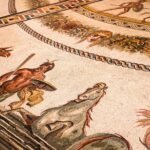
Aeneas and Dido in Carthage
Introduction

The story of Aeneas and Dido in Carthage is one of the most influential episodes in Greco-Roman mythology and literature. It appears most famously in Virgil’s Aeneid, where the Trojan hero Aeneas, fleeing the ruins of Troy, arrives in Carthage and becomes entangled in a tragic relationship with Queen Dido. Their encounter combines love, destiny, political duty, and divine intervention, making it one of the foundational narratives of Roman identity and a major source for later European literature.
The episode matters because it links several large themes: the suffering of refugees, the clash between private feeling and public duty, the origins of Rome, and the symbolic opposition between Carthage and Rome. It has also been read as a meditation on empire, gender, loyalty, and sacrifice.
Origin and Meaning
The names Aeneas and Dido come from different linguistic and cultural backgrounds.
Aeneas
The name Aeneas (Greek: Aineias) is ancient and probably of pre-Greek or uncertain origin. Ancient authors sometimes connected it with the Greek adjective ainos (“terrible,” “awful”) or with a wordplay on praise and grief, but no single etymology is universally accepted. In myth, Aeneas is a Trojan prince, son of the mortal Anchises and the goddess Aphrodite.
Dido
The name Dido is the Latin form of the Phoenician name Elissa, the legendary founder-queen of Carthage. The nickname Dido is often explained in ancient tradition as meaning “wanderer” or “the one who roams,” though scholars treat such explanations cautiously. Ancient sources vary in their account of her identity, but she is consistently associated with the founding of Carthage in North Africa.
Historical Context
The episode of Aeneas and Dido is set in a mythic past, but it draws on several real historical and cultural contexts.
Carthage and the Phoenician World
Carthage was a major Phoenician colony founded in North Africa, traditionally in the 9th century BCE. By the classical period, Carthage had become a powerful maritime and commercial city. Greek and Roman writers often treated it as Rome’s great rival.
Rome and Trojan Ancestry
Roman myth traced the ancestry of the Roman people back to Troy through Aeneas. This gave Rome a heroic origin outside Italy while connecting Roman destiny to the aftermath of the Trojan War. Virgil’s Aeneid, written under Augustus, transformed this myth into a national epic for Rome.
The Function of the Story
The love story in Carthage serves several purposes in Virgil’s poem:
- it humanizes Aeneas before his final mission
- it dramatizes the tension between love and fate
- it foreshadows the later Punic Wars through the curse-like final words of Dido
- it contrasts Carthage with the future power of Rome
Main Characteristics
The episode is defined by several distinctive features.
| Feature | Aeneas | Dido |
|---|---|---|
| Status | Trojan prince, refugee, future founder | Queen of Carthage, widow, city founder |
| Core trait | Pietas (duty, devotion to gods, family, destiny) | Royal dignity, intelligence, passion, tragic vulnerability |
| Narrative role | Agent of fate, reluctant lover | Host and lover, later abandoned woman |
| Symbolic function | Roman mission and endurance | Carthage’s dignity and tragic opposition to Rome |
Aeneas in Carthage
Aeneas arrives as a survivor of disaster. He is pious, burdened by responsibility, and repeatedly reminded by the gods that his destiny lies in Italy. He is portrayed as capable of affection, but not free to abandon his mission.
Dido in Carthage
Dido is introduced as a powerful and admirable queen. She is generous, politically capable, and still mourning her dead husband, Sychaeus. Virgil presents her as both majestic and emotionally exposed, which heightens the tragedy of her fall.
Family and Genealogy
Aeneas
Aeneas belongs to a major mythological lineage:
- Father: Anchises, a Trojan prince
- Mother: Aphrodite/Venus
- Son: Ascanius, also called Iulus in Roman tradition
- Wife: Creusa, who dies during the fall of Troy
In some traditions, Aeneas also has other offspring associated with his later life in Italy, though these vary by source.
Dido
Dido’s genealogy is clearer in some sources than in others:
- Birth name: Elissa in Phoenician tradition
- Family: Daughter of a Tyrian royal line in some accounts
- Husband: Sychaeus, a wealthy and noble man
- No surviving children with Aeneas in the best-known literary version
The Relationship Between Aeneas and Dido
In Virgil, their relationship is not a simple romance. It develops under divine pressure, especially through the interventions of Venus, Juno, and Cupid. Some later traditions soften or expand the story, but the central Roman literary version emphasizes tragic separation rather than lasting union.
Symbols
The story is rich in symbols, many of them associated more with the epic narrative than with a cult or religion.
Common symbolic elements
- Fire: passion, destruction, and Dido’s funeral pyre
- Storm: divine manipulation and emotional upheaval
- Sword: both heroic identity and suicide
- City walls: Carthage as a civilized, organized power
- Ships: exile, migration, and fate
- Bed or marriage chamber: the ambiguous union of love and political alliance
Symbolic meanings
Aeneas and Dido in Carthage symbolizes the conflict between:
- love and duty
- hospitality and betrayal
- private desire and public destiny
- East and West in later Roman imagination
- Carthaginian loss and Roman triumph
Sacred Animals
There is no formal cultic “sacred animal” attached specifically to Aeneas and Dido as a paired mythic episode. However, several animals appear symbolically in the narrative tradition.
Associated animals
- Pigeons or doves: linked to Venus in broader mythic symbolism
- Deer: in Virgil, often associated with hunting and the passions of Dido’s court
- Horses and ships’ animals in epic imagery: signs of movement, war, and state power
These are literary symbols rather than objects of independent worship.
Sacred Plants
As with animals, there is no fixed sacred plant directly tied to the pair, but the episode uses plant imagery in ways that matter symbolically.
Notable plant imagery
- Evergreen or growth imagery associated with the building of Carthage
- Funerary vegetation in scenes of mourning
- Branches and wreaths in epic and ritual contexts
Later artistic traditions sometimes associate Dido’s story with the laurel of destiny or the myrtle of love, but these associations are interpretive rather than canonical.
Sacred Places
The story is anchored in several major locations.
Troy
Aeneas begins as a Trojan survivor. Troy represents loss, memory, and the destroyed homeland from which Roman destiny must emerge.
Carthage
Carthage is the central place in the episode. In Virgil, it is a young, rising city under construction. It functions as:
- a royal court
- a site of hospitality
- a political and emotional crossroads
- a future enemy of Rome in historical memory
The Temple/Court Spaces
In the Aeneid, public and sacred spaces in Carthage help frame the relationship. Dido receives Aeneas in royal and civic settings, emphasizing hospitality and statecraft.
The Cave
The famous cave scene, where Aeneas and Dido are united during a storm and hunt, is not a temple in any formal sense, but it acts like a liminal sacred space where social rules break down.
The Pyre
Dido’s funeral pyre becomes one of the most powerful places in the story. It is at once:
- a sacrificial stage
- a royal monument
- an instrument of death
- a dramatic reversal of wedding symbolism
Powers and Attributes
Aeneas and Dido do not have “powers” in the divine sense when treated as mythic characters, but they do embody major domains and attributes.
Aeneas
- endurance
- piety
- leadership
- obedience to destiny
- migration and foundation
Dido
- queenship
- civic order
- hospitality
- diplomatic authority
- passion transformed into tragedy
Divine Influence
The gods exercise great power over the episode:
- Venus protects Aeneas
- Juno seeks to delay or redirect his mission
- Cupid inflames Dido’s love
- Jupiter and Mercury enforce destiny
This divine structure is essential to the meaning of the story.
Main Myths
The Aeneas and Dido episode is best known through Virgil, but it is related to earlier and later traditions.
Dido’s Foundation of Carthage
Before meeting Aeneas, Dido is said to have fled Tyre after the murder of her husband Sychaeus by her brother Pygmalion. She leads followers to Africa and founds Carthage. This foundation narrative appears in various ancient sources, though details differ.
Aeneas Reaches Carthage
After leaving Troy and wandering the Mediterranean, Aeneas and his companions are driven by a storm to Carthage. Dido receives them with royal hospitality.
The Love Affair
In Virgil, Dido falls in love under divine influence. A storm and a cave scene bring the pair together in a union that is treated as both marriage-like and politically ambiguous.
The Gods Recall Aeneas to Fate
Mercury is sent by Jupiter to remind Aeneas that he must continue to Italy. Aeneas reluctantly obeys.
Dido’s Death
When Aeneas prepares to leave, Dido is devastated. She curses him and his descendants in one of the poem’s most famous speeches, then dies by suicide on a pyre.
Aftermath and Prophecy
Dido’s curse is later read by Roman tradition as symbolic anticipation of the hostility between Rome and Carthage, especially the Punic Wars. Virgil turns private sorrow into a quasi-historical explanation for imperial conflict.
Relationship with Other Mythological Figures
Venus
Venus is Aeneas’s mother and principal protector. She is deeply involved in securing his survival and destiny, though her actions in Carthage also help cause Dido’s suffering.
Juno
Juno opposes the Trojans throughout the Aeneid. In Carthage she hopes to delay Aeneas and perhaps bind him to Dido permanently, which would prevent the Roman future.
Cupid
Cupid, disguised as Ascanius in Virgil, causes Dido’s love by inspiring passion. He functions as a divine agent of irresistible emotion.
Mercury
Mercury delivers Jupiter’s command that Aeneas leave Carthage. He represents divine communication and the supremacy of fate over affection.
Sychaeus
Dido’s dead husband, Sychaeus, is crucial to her backstory. His murder and memory frame her loyalty and contribute to the tragedy of her love for Aeneas.
Ascanius/Iulus
Aeneas’s son is present indirectly in the episode, especially because Cupid takes his form. Ascanius also symbolizes the future Roman line.
Worship and Cult
There is no evidence of a widespread ancient cult devoted specifically to Aeneas and Dido as a pair. However, both figures were important in religious, civic, and literary memory.
Aeneas in Cultic Tradition
Aeneas was sometimes honored in local traditions, especially in Italy, where he was linked with foundations and hero cults. In some places, he received quasi-heroic veneration.
Dido in Tradition
Dido was primarily remembered as a legendary founder of Carthage and tragic queen rather than a cult figure. She appears in literature, historical myth, and later symbolic traditions, but not as a major object of worship.
Ritual and Literary Reenactment
The episode influenced:
- Roman education and rhetorical training
- dramatic adaptation
- funerary symbolism
- political allegory
Its “cult” is best understood as literary and cultural rather than religious.
Ancient Sources
Several ancient authors contribute to the tradition of Aeneas and Dido, though Virgil’s Aeneid remains the most influential.
| Author | Work | Contribution |
|---|---|---|
| Virgil | Aeneid Books 1, 4, and 6 | Definitive literary version of the love story and Dido’s death |
| Timaeus | Fragments via later authors | Early Carthaginian chronology and foundation traditions |
| Justin | Epitome of Pompeius Trogus | Dido/Elissa foundation narrative |
| Servius | Commentary on Virgil | Ancient interpretive details and variants |
| Ovid | Heroides 7 | Imagines Dido’s letter to Aeneas |
| Hyginus | Fabulae | Mythographic summaries |
| Dionysius of Halicarnassus | Roman Antiquities | Roman origins and Trojan genealogy |
Virgil’s Special Role
Virgil does not invent all the material, but he combines existing traditions into a highly influential tragic narrative. His version determines most later understandings of the episode.
Roman Equivalent
There is no direct “Roman equivalent” in the sense of a separate Roman god or counterpart. The episode itself is a Roman adaptation of older Mediterranean myth.
Roman Adaptation
Roman literature transformed the story into a national origin myth:
- Aeneas becomes the ancestor of Rome
- Dido becomes the tragic queen of Carthage
- the personal relationship is recast as a prehistory of Roman-Carthaginian conflict
Broader Roman Meaning
For Roman readers, Aeneas represented pietas and the burden of destiny, while Dido represented a noble but ultimately subordinate rival civilization. This does not mean the poem is simplistic; Virgil also gives Dido great dignity and emotional depth.
Influence on Modern Culture
The story of Aeneas and Dido in Carthage has had lasting influence across many media.
Literature
The episode has inspired:
- Renaissance epic poetry
- opera librettos
- tragic drama
- modern novels
- feminist re-readings of Dido’s voice
Ovid’s imagined letter from Dido to Aeneas is especially influential in later literary treatments.
Music and Opera
The most famous musical adaptation is Henry Purcell’s Dido and Aeneas, which reinterprets the story as a compact and highly emotional opera. Other composers have also adapted the myth.
Visual Art
Painters frequently depict:
- the meeting in Carthage
- the storm and cave scene
- Dido’s suicide on the pyre
- Aeneas’s departure
Film and Television
The story appears less often than some Greek myths, but it remains a recognizable source for historical dramas, classical adaptations, and educational productions.
Games and Popular Culture
Classical references to Aeneas and Dido appear in strategy games, literature-based games, and fantasy works that draw on Roman myth and epic themes.
Curiosities
- Virgil’s Dido is not the same as all earlier versions of Elissa. Ancient traditions about her are not identical, and Virgil reshapes her story for epic purposes.
- The cave scene is ambiguous. Some readings treat it as a real marriage-like union; others emphasize that it is a symbolic or politically charged encounter rather than a formal marriage.
- Dido’s curse has historical resonance. Romans later interpreted it as a mythic explanation for the long enmity between Rome and Carthage.
- Aeneas is often criticized in modern readings. Ancient and modern audiences differ on whether he is heroic, emotionally restrained, or morally evasive.
- Dido is one of literature’s most powerful abandoned women. Her speeches and death scene have made her a lasting symbol of betrayed love and political loss.
- The episode is central to Roman ideology but also self-critical. Virgil gives Aeneas’s mission grandeur while showing the human cost of imperial destiny.
Frequently Asked Questions
Who were Aeneas and Dido?
Aeneas was a Trojan hero and legendary ancestor of the Romans. Dido, also called Elissa, was the legendary queen and founder of Carthage.
Why did Aeneas leave Dido?
In Virgil’s Aeneid, the gods remind Aeneas that his destiny is to reach Italy and found the line that will lead to Rome. He leaves because he must obey divine fate.
Did Aeneas and Dido really marry?
Ancient sources differ, and Virgil presents their union in an intentionally ambiguous way. It resembles a marriage, but it is not clearly a formal, legally recognized one.
Why is Dido important in the story?
Dido is important because she is a powerful ruler whose tragic love and death give the episode its emotional force. She also symbolizes Carthage, the future rival of Rome.
What does the story symbolize?
The story symbolizes the conflict between love and duty, the pain of exile, the burden of destiny, and the historical rivalry between Rome and Carthage.
What is the main source for the story?
The main and most famous source is Virgil’s Aeneid, especially Books 1 and 4.
Is Dido based on a historical figure?
Dido is legendary rather than historically verifiable in detail. She is associated with the founding myth of Carthage, but her story belongs to mythic tradition.
Why does the story remain influential?
It remains influential because it combines romance, tragedy, political destiny, and powerful character writing. It is also one of the most memorable scenes in classical literature.
Conclusion
The story of Aeneas and Dido in Carthage is a central episode in Roman myth and one of the most enduring tragic narratives of antiquity. Through Virgil’s Aeneid, it became a symbol of the tension between personal desire and public responsibility, while also giving mythic shape to the historic rivalry between Rome and Carthage.
Its lasting power comes from its layered meanings. It is a love story, but also a political allegory, a foundation myth, and a meditation on sacrifice. Aeneas and Dido remain compelling because they are both larger than life and deeply human: one bound to destiny, the other destroyed by the emotional cost of that destiny.

Orin Vale has spent the better part of two decades tracing the threads that connect the world’s oldest stories — from the halls of Asgard to the banks of the Nile, from Olympus to the jungles of the Maya. What began as a childhood fascination with flood myths and trickster gods grew into years of independent study across comparative mythology and ancient religion, always chasing the same question: what did these stories mean to the people who first told them? Orin writes for readers who want more than trivia — the ones looking for the beliefs, fears, and truths that myths were built to carry.