Pyramus and Thisbe
Introduction
Pyramus and Thisbe are legendary lovers from Greco-Roman mythology whose tragic story became one of the most influential examples of doomed romance in Western literature. Their tale, preserved most famously by the Roman poet Ovid, centers on two young Babylonians whose love is forbidden by their families. A miscommunication leads each to believe the other has died, and both take their own lives. The story is best known for explaining the origin of the mulberry’s dark fruit and for providing a model later echoed in works such as Romeo and Juliet.
Although Pyramus and Thisbe are not major deities or heroes in the sense of Homeric or Olympian myth, their narrative has had extraordinary cultural durability. It combines themes of family conflict, youthful desire, secrecy, fate, and the fatal consequences of misunderstanding. For this reason, the myth has been retold, adapted, parodied, and referenced for more than two millennia.
Origin and Meaning
The names Pyramus and Thisbe are traditionally presented as foreign-sounding, fitting the story’s setting in Babylon. Their precise etymology is uncertain, and ancient sources do not provide a definitive linguistic explanation.
Name of Pyramus
The name Pyramus has sometimes been connected by later speculation to Semitic or Near Eastern naming traditions, but no secure derivation is established in surviving ancient literature. In mythological storytelling, the name contributes to the exotic, eastern setting associated with Babylon.
Name of Thisbe
Thisbe is likewise of uncertain origin. Some modern readers have noted that it resembles Greek forms, but ancient evidence for a clear etymology is lacking. As with Pyramus, the name serves more as a narrative marker than as a historically documented personal name.
Literary Origin
The story is most fully known from Ovid’s Metamorphoses, written in the early first century CE. Ovid presents it as a mythic tale of tragic love within a broader sequence of transformations. It is not clear whether he was drawing on an older Greek version, on a Hellenistic source now lost, or on an independent literary tradition. The lack of earlier surviving accounts means that Ovid is the principal source for the version familiar today.
Historical Context
The tale of Pyramus and Thisbe belongs to the world of classical mythology as literary tradition rather than to a clearly attested religious cult. It reflects several major cultural contexts.
Babylon as a Mythic Setting
The story is set in Babylon, one of the most famous cities of the ancient Near East in Greek and Roman imagination. For Greek and Roman writers, Babylon often represented ancient wealth, urban grandeur, and eastern otherness. Ovid’s Babylon is not a historical documentary setting but a mythic landscape suitable for an exotic love story.
Family Authority and Marriage Customs
The plot depends on parental opposition to love. This is a familiar motif in ancient literature, where young people’s romantic choices often collide with family expectations, social status, or arranged marriage. The wall between the two houses symbolizes both physical separation and social constraint.
Tragic Love in Classical Literature
Pyramus and Thisbe also belong to a broader tradition of tragic romance, in which love is intense precisely because it is obstructed. Their story anticipates later literary narratives involving secrecy, fate, death, and misunderstanding. In antiquity, such tales could serve as moral examples, emotional exempla, or poetic material demonstrating the power of language and narrative transformation.
Main Characteristics
Pyramus and Thisbe are not gods, kings, or epic warriors. Their importance lies in the structure and emotional force of their story.
Core Traits
- Youthful lovers: They are often described as young and deeply attached.
- Separated by family conflict: Their parents forbid the union.
- Communicators through a wall: Their secret conversations occur through a crack in the wall separating their houses.
- Marked by secrecy: They plan a private meeting outside the city.
- Victims of misunderstanding: A tragic chain of events leads to mutual death.
- Memorialized through transformation: Their blood darkens the mulberry fruit, explaining a feature of the natural world.
Narrative Features
The story is notable for:
- a shared wall that allows contact but not union,
- a night meeting outside the city,
- a lioness that frightens Thisbe away,
- the bloodied veil that leads Pyramus to believe she has been killed,
- and the final double suicide, which seals the tragedy.
These elements make the myth memorable and visually vivid, and they have helped the story endure in literature, painting, and drama.
Family and Genealogy
Unlike many Greek myths, the story of Pyramus and Thisbe does not present extensive genealogies.
Parents
The lovers are identified only as children of neighboring families in Babylon. Their parents oppose the relationship, but surviving sources do not provide names or detailed lineages for them.
Children and Descendants
There are no children of Pyramus and Thisbe in the mythic tradition. The story ends with their deaths and the symbolic transformation of the mulberry tree.
Spouses and Relationships
Pyramus and Thisbe are lovers, but they never become husband and wife. Their relationship is central to the myth’s tragedy: love exists, but marriage is denied by circumstance and parental authority.
Symbols
The myth is rich in symbolic imagery, especially in Ovid’s telling.
Key Symbols
| Symbol | Meaning |
|---|---|
| The wall | Separation, obstruction, and the limits placed on love |
| The crack in the wall | A narrow channel of communication and hope |
| The white veil or cloak | Identity, purity, and the fatal cause of misunderstanding |
| The sword | Violent self-destruction and irreversible action |
| The mulberry fruit | Mourning, transformation, and the lasting mark of tragedy |
| Blood | Death, grief, and the literalization of emotional suffering |
The Mulberry Tree
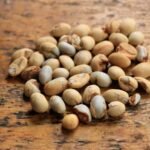
The most famous symbol is the mulberry tree. In Ovid’s version, the fruit changes from white to dark purple or black because it is stained by the lovers’ blood. This etiological ending explains a natural feature through myth, a common device in classical literature.
Sacred Animals
Pyramus and Thisbe are not associated with a formal sacred animal in the way gods such as Athena or Zeus are. However, one animal has a crucial narrative role.
The Lioness
The lioness is the story’s central animal figure. She appears while Thisbe waits at the meeting place and frightens her away. Although not sacred in the religious sense, the lioness is symbolic of:
- danger in the wilderness,
- the fragility of human plans,
- and the way accidental events can redirect fate.
In Ovid’s account, the lioness has recently killed prey and so is associated with blood and violence, which also foreshadows the tragedy that follows.
Sacred Plants
No plant is sacred to Pyramus and Thisbe in a cultic sense, but the myth is closely linked to a specific tree.
The Mulberry Tree
The mulberry is the defining plant of the story. In Ovid’s version, its berries become dark because they are stained with the lovers’ blood. The plant functions as:
- an explanation of natural change,
- a memorial of love and grief,
- and a poetic symbol of transformation through suffering.
Other Plant Imagery
The story may also evoke fruit, leaves, and shade in a pastoral or suburban setting outside the city walls. These details contribute to the atmosphere of secrecy and suspended time before tragedy.
Sacred Places
Pyramus and Thisbe are not linked to temples or pilgrimage sites, but the myth is anchored in a number of important locations.
Babylon
Babylon is the primary setting. In mythic literature, it stands as a great ancient city and a symbolically rich eastern locale. The story’s Babylon is literary rather than topographically precise.
The Shared Wall
The wall between the two houses is the myth’s most important constructed place. It is not a sacred site, but it is the emotional center of the story. The lovers speak through a crack in it, turning a barrier into a channel of intimacy.
The Tomb of Ninus
In Ovid’s version, the couple agrees to meet near the tomb of Ninus, a landmark associated with Babylonian legendary history. The site contributes to the atmosphere of ancient grandeur and danger outside the city.
The Mulberry Tree Outside the City
The final meeting takes place near a mulberry tree outside the city. This becomes the memorial site of their deaths and the place where nature itself is transformed by tragedy.
Powers and Attributes
Pyramus and Thisbe do not possess supernatural powers or divine domains. Their significance lies in what the story reveals about human experience.
Their Narrative “Attributes”
- Enduring love
- Secrecy and trust
- Courage in defying constraints
- Emotional intensity
- Vulnerability to chance
- Capacity to inspire memory and art
Mythic Function
Within the myth, they embody the power of desire confronted by social restriction. Their tale demonstrates how a minor misunderstanding can become fatal when framed by fear, haste, and emotional extremity.
Main Myths
The story of Pyramus and Thisbe is the principal myth associated with these figures. The most influential form is Ovid’s account.
Ovid’s Version in Metamorphoses
According to Ovid, Pyramus and Thisbe lived in neighboring houses in Babylon. Their parents forbade their union, but the lovers discovered that a narrow crack in the wall allowed them to exchange words. Through this tiny opening, their affection grew.
Unable to meet openly, they planned a secret rendezvous outside the city near the tomb of Ninus. Thisbe arrived first, but she fled when she saw a lioness with a bloody mouth. In her haste, she dropped or left behind her veil. The lioness tore at the veil after drinking from a spring.
When Pyramus arrived and saw the torn, bloodied fabric, he believed Thisbe had been killed. In despair, he stabbed himself with his sword. Thisbe returned, found him dying, and then killed herself as well. Before dying, she declared that the mulberry tree should forever bear dark fruit in remembrance of their blood.
Features of the Myth
The story is often read as an etiological myth, meaning it explains the origin of something in the natural world. In this case, the dark color of mulberries is tied to the lovers’ blood.
Themes in the Myth
| Theme | Explanation |
|---|---|
| Forbidden love | The relationship is blocked by family authority |
| Communication | The wall crack enables secret speech |
| Misunderstanding | A wrong conclusion leads to catastrophe |
| Fate and chance | A series of accidents determines the outcome |
| Transformation | Death produces a lasting natural sign |
Relationship with Other Mythological Figures
Pyramus and Thisbe have relatively limited interaction with other mythological characters compared with major heroic figures. Still, their story fits into a wider mythic and literary network.
The Lioness
The lioness functions as a critical external force. She is not a personal enemy but an accidental agent of tragedy.
Ninus and Babylonian Tradition
The tomb of Ninus situates the myth within a legendary Babylonian frame. Ninus is a figure from ancient Near Eastern and Greek legendary history, often associated with the founding or early history of Nineveh and Babylonian royal tradition in later literature.
Later Literary Comparisons
The couple is often compared with:
- Romeo and Juliet, because both stories involve forbidden love and fatal misunderstanding,
- other tragic couples in classical literature,
- and mythic pairs whose stories end in metamorphosis or memorialization.
Worship and Cult
There is no known cult, temple worship, or ritual practice dedicated to Pyramus and Thisbe in surviving ancient sources. They are literary figures, not deities.
Literary Commemoration
Their “worship” is best understood as cultural remembrance:
- through recitation of poetry,
- through later retellings,
- and through artistic adaptation.
Ritual-Like Memory
Although not objects of worship, their story functions almost like a cautionary memorial for the power of passion and the dangers of misinterpretation.
Ancient Sources
The most important ancient source for Pyramus and Thisbe is Ovid.
Primary Source
- Ovid, Metamorphoses 4.55–166: the fullest and most famous account.
Other Ancient References
The story is known primarily through Ovid, and earlier extant references are limited or uncertain. Later classical and post-classical authors refer to it as a well-known example of tragic love, but Ovid remains the foundational source for the standard version.
Source Reliability
Because the story survives chiefly in a literary form, scholars treat it as a mythological narrative rather than historical record. Details such as Babylonian setting, character names, and the exact sequence of events are preserved as poetic storytelling, not independently verifiable history.
Roman Equivalent
There is no Roman equivalent in the strict sense, because Pyramus and Thisbe are themselves best known through a Roman author, Ovid, who adapted and transmitted the tale in Latin literature.
Roman Adaptation
If one speaks of a Roman “equivalent,” it is more accurate to say that Ovid Romanized and canonized the story. He placed it in Latin poetic form and ensured its survival in later European literature.
Cultural Legacy in Rome
The Roman literary tradition valued:
- transformation myths,
- pathos,
- and ingenious etiologies.
Pyramus and Thisbe fit these tastes perfectly, which helped make the story influential in Roman and later Western education.
Influence on Modern Culture
The influence of Pyramus and Thisbe is broad and long-lasting.
Literature
The story strongly influenced later depictions of tragic lovers, especially Shakespeare’s Romeo and Juliet, which echoes the themes of forbidden love, secrecy, a fatal misunderstanding, and double death.
Other writers have alluded to the pair as a shorthand for doomed romance or miscommunication.
Drama and Opera
The myth has appeared in:
- Renaissance and Baroque drama,
- operatic and musical adaptations,
- and comic theatrical treatments.
One famous example is the play-within-a-play in Shakespeare’s A Midsummer Night’s Dream, where the “mechanicals” perform a humorous version of Pyramus and Thisbe.
Visual Arts
Artists have repeatedly depicted:
- the wall with the lovers speaking through it,
- Thisbe fleeing the lioness,
- Pyramus discovering the bloodied veil,
- and the lovers’ deaths beneath the mulberry tree.
Music and Popular Culture
The story continues to appear in:
- songs and librettos,
- children’s adaptations,
- illustrated books,
- and modern references in film, television, and digital media.
Scholarly and Educational Use
Because it exemplifies:
- classic narrative structure,
- metamorphosis,
- and tragic irony,
the story is frequently taught in literature, classics, and mythology courses.
Curiosities
- Pyramus and Thisbe are sometimes called the “original star-crossed lovers” in popular summaries, though that phrase is now more closely associated with Shakespeare.
- Their story is one of the most famous etiological myths in Roman poetry, explaining a feature of the mulberry fruit.
- The lovers communicate through a tiny crack in a wall, one of the most memorable images in ancient love poetry.
- The tale is both romantic and darkly ironic: the lovers try to overcome separation, but the very plan that allows them to meet brings about their deaths.
- In A Midsummer Night’s Dream, Shakespeare turns the story into comedy while still preserving its core tragedy.
- The myth is sometimes used in literary studies to illustrate the difference between miscommunication and misfortune in tragic plotting.
- Despite their fame, Pyramus and Thisbe are not major figures in civic religion or mythic genealogy; their importance is overwhelmingly literary.
Frequently Asked Questions
Who were Pyramus and Thisbe?
Pyramus and Thisbe were mythological lovers from Babylon whose forbidden relationship ended in tragedy after a fatal misunderstanding.
What is the story of Pyramus and Thisbe about?
The story tells of two young lovers separated by their families who communicate through a crack in a wall, plan a secret meeting, and die after each mistakenly believes the other has been killed.
Who wrote the most famous version of the myth?
The most famous surviving version is by Ovid in Metamorphoses.
Why is the mulberry tree important in the story?
The mulberry tree becomes dark because, in the myth, its fruit is stained by the blood of the lovers. It serves as a memorial and explanation for the fruit’s color.
Is Pyramus and Thisbe a Greek or Roman myth?
The story is best known through Roman literature, especially Ovid, though it may preserve older Greek or Hellenistic storytelling traditions now lost.
Did Shakespeare use the story?
Yes. Shakespeare parodied the story in A Midsummer Night’s Dream and its themes also influenced later tragic-romantic drama, including Romeo and Juliet.
Are there temples or rituals dedicated to them?
No surviving evidence shows any formal cult, temple, or worship dedicated to Pyramus and Thisbe.
What is the main theme of the myth?
The main themes are forbidden love, secrecy, misunderstanding, fate, and the tragic consequences of acting too hastily.
Conclusion
Pyramus and Thisbe occupy a special place in classical mythology and literary history. Their story is not one of divine power or heroic conquest, but of human love constrained by family opposition and destroyed by chance. Preserved most fully by Ovid, the myth became one of antiquity’s most enduring tragic romances and a lasting symbol of miscommunication and doomed devotion.
Its influence has extended far beyond the ancient world. From Shakespeare to modern adaptations, Pyramus and Thisbe continue to shape the language of romantic tragedy. Their tale remains powerful because it combines simplicity with emotional force: a wall, a crack, a meeting place, a mistaken sight, and two deaths that transform grief into memory.

Orin Vale has spent the better part of two decades tracing the threads that connect the world’s oldest stories — from the halls of Asgard to the banks of the Nile, from Olympus to the jungles of the Maya. What began as a childhood fascination with flood myths and trickster gods grew into years of independent study across comparative mythology and ancient religion, always chasing the same question: what did these stories mean to the people who first told them? Orin writes for readers who want more than trivia — the ones looking for the beliefs, fears, and truths that myths were built to carry.