How Many Celtic Gods Are There?
Introduction
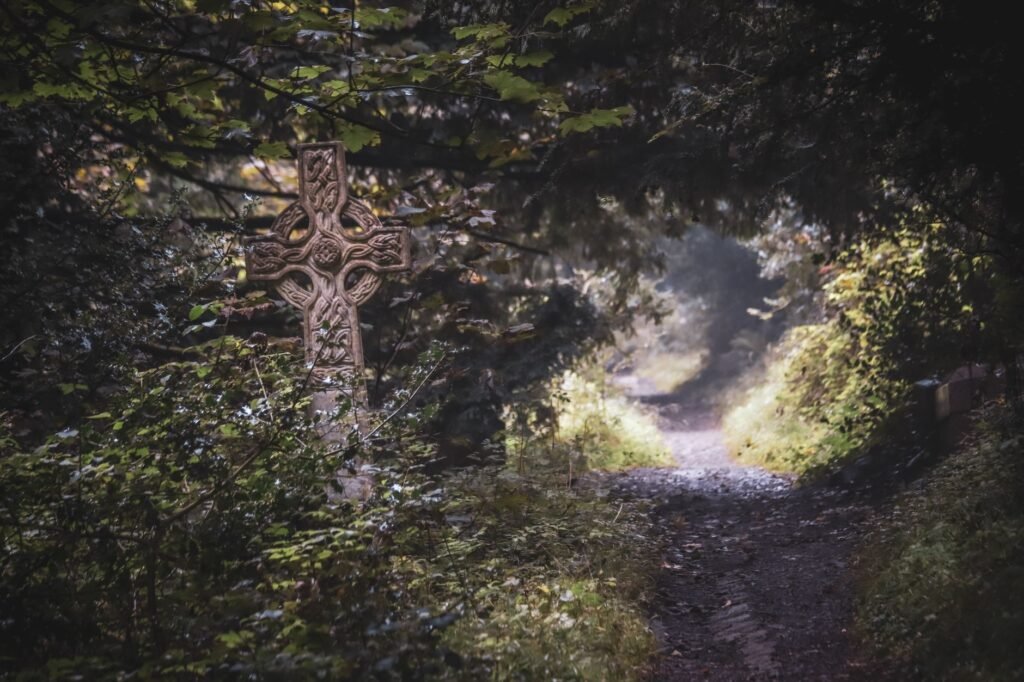
The question “How many Celtic gods are there?” does not have a single exact answer. Unlike some mythologies preserved in extensive literary canons, the religions of the Celtic peoples were never collected into one authoritative sacred text. What survives comes from many different regions, languages, and historical periods, preserved in archaeology, later medieval manuscripts, classical references, inscriptions, and folklore.
As a result, scholars generally agree on one central point: there were many Celtic gods, probably dozens or even hundreds if local and regional deities are counted individually. Some were widely worshipped across large areas of the Celtic world, while others were highly localized, known only from a single inscription, sanctuary, or legend. The number depends on what is being counted:
- named deities from inscriptions and texts
- regional gods and goddesses
- local tribal divinities
- later medieval literary figures with divine or semi-divine traits
- reconstructed deities inferred from comparative evidence
Because of this diversity, asking how many Celtic gods there are is less about finding a fixed total and more about understanding the fragmented and regional nature of Celtic religion.
Origin and Meaning
The term “Celtic” comes from ancient Greek and Roman ethnographic labels used for certain peoples of Iron Age Europe. It is not the name of a single unified ancient religion, but a modern umbrella term for a group of related cultures and languages across:
- Gaul
- the British Isles
- parts of Iberia
- the Alpine region
- parts of central Europe
The word god in this context refers to divine beings worshipped by Celtic-speaking peoples. Many were linked to natural features, war, sovereignty, fertility, healing, rivers, or craftsmanship. Some existed as local tutelary deities, protecting a tribe, a place, or a landscape.
The historical origin of Celtic gods is difficult to trace precisely. The surviving evidence suggests a long development shaped by:
- pre-Roman Iron Age religions
- contact with Roman religion after conquest
- local traditions preserved under Roman rule
- Christian-era literary reinterpretation in Ireland and Wales
In practice, the “Celtic gods” of modern scholarship are a combination of directly attested deities and carefully reconstructed figures.
Historical Context
Celtic religion was never a single centralized institution. It varied from region to region and changed over time. The best-attested gods come from the periods when Celtic societies encountered the Roman world, especially in Gaul and Britain.
Major historical settings
| Region | Evidence | Characteristics |
|---|---|---|
| Gaul | Latin inscriptions, votive altars, Roman authors | Many local and tribal deities; frequent interpretatio Romana |
| Britain | Inscriptions, temple remains, Roman-era dedications | Regional cults, river goddesses, healing and war deities |
| Ireland | Medieval manuscripts, mythological tales | Literary preservation of older traditions, though filtered through Christianity |
| Wales | Medieval Welsh literature | Mythic figures with divine or semi-divine traits |
| Iberia and other areas | Scarcer inscriptions and archaeological traces | Fragmentary evidence, often difficult to interpret |
The Roman Empire greatly affected Celtic religion. Romans often identified local gods with their own deities, a practice known as interpretatio Romana. For example, a local deity of healing might be equated with Apollo, and a war god with Mars. This helps explain why many Celtic gods are known only through Roman-style inscriptions.
After Christianization, many older deities disappeared from public worship. Some survived in altered form in folklore or medieval literature, but their original cults ended.
Main Characteristics
Celtic gods share several broad characteristics, though not all gods fit all categories.
Common features
- Regional diversity: Many deities were tied to one tribe, river, mountain, or sanctuary.
- Functional specialization: Gods often governed specific areas such as healing, war, fertility, craft, or sovereignty.
- Triple and paired forms: Some divine figures appear in triads or paired relationships.
- Animal and natural symbolism: Rivers, horses, boars, birds, and trees were especially important.
- Fluid identities: A single deity could have multiple local names, epithets, or Roman equivalents.
- Connection to sovereignty: Kingship and sacred land were often linked to divine favor.
Unlike in some mythologies, Celtic gods are not always preserved with clear genealogies or consistent personalities. Many are known mainly through names, symbols, and dedications rather than complete myths.
Family and Genealogy
Genealogy is one of the most uncertain areas in Celtic mythology. In many cases, the surviving sources do not provide clear family trees. This is especially true for continental deities known only from inscriptions.
Where genealogy is known
Some well-known deities from Irish and Welsh traditions have narrative family relationships:
- The Dagda is often presented as a father figure among the Tuatha Dé Danann in Irish myth.
- Brigid/Brigit appears in some traditions as a daughter of the Dagda.
- Lugh is said in Irish tradition to be associated with the Tuatha Dé Danann and to have a complex parentage involving divine and human elements.
- The Morrígan sometimes appears as a singular figure and sometimes as a complex trio or set of related war goddesses.
Important caution
These genealogies come mainly from medieval Irish texts, not from Iron Age inscriptions. They reflect later literary tradition and Christian-era transmission. For many continental Celtic gods, parentage, spouses, and descendants are unknown.
Examples of divine relationships in tradition
| Deity | Relationship status in surviving sources |
|---|---|
| Dagda | Father figure, sometimes linked to Brigid as father |
| Brigid | Sometimes represented as part of a divine family |
| Lugh | Associated with divine ancestry, but details vary |
| Epona | No reliable family genealogy preserved |
| Taranis | No secure family relationships known |
| Cernunnos | No known genealogy |
Symbols
Celtic gods are often identified by symbols in sculpture, coinage, inscriptions, and later narrative tradition. Because evidence varies by region, symbols are usually associated with particular deities rather than with “all Celtic gods” in general.
Common symbols and meanings
| Symbol | Associated meaning | Commonly linked deities or traditions |
|---|---|---|
| Horns or antlers | Fertility, animals, abundance, nature | Cernunnos |
| Wheel | Sky, solar power, sovereignty, cosmic order | Taranis |
| Spear or lance | Warfare, authority, protection | Several war deities, including continental and Irish figures |
| Cauldron | Plenty, resurrection, hospitality, wisdom | The Dagda and related mythic themes |
| Horse | Travel, sovereignty, fertility, speed | Epona and other horse-related cults |
| Birds | Prophecy, otherworld, sovereignty | Various goddesses and heroic figures |
| Boar | Strength, wildness, battle | Some war-related gods and heroes |
Important note
Symbolism in Celtic religion was often shared and overlapping. A wheel may indicate a sky deity in one region and a different cultic meaning in another. Because evidence is fragmentary, symbolic interpretation must remain cautious.
Sacred Animals
Animals played a major role in Celtic religious imagination. Some were sacred because of their practical importance; others because they represented power, fertility, or the boundary between worlds.
Frequently associated animals
- Horse: especially important in cults of sovereignty, travel, and fertility
- Bull: linked to wealth, power, and vitality
- Boar: symbol of ferocity and martial strength
- Hound or dog: protection, hunting, healing, and liminal functions
- Cow: abundance and nurturing
- Deer and stag: wilderness, regeneration, and divine authority
- Birds: prophecy, communication with the otherworld, and spiritual insight
- Snake or serpent: transformation, healing, and earth power in some contexts
Notable examples
- Epona is the best-known horse goddess.
- Cernunnos is often shown with antlers and surrounded by animals.
- The Morrígan is associated in some traditions with ravens or crows.
- River and mother goddesses may be linked to local fauna and fertility imagery.
Sacred Plants
Plant symbolism in Celtic religion is difficult to prove in every case, but several plants recur in later tradition and archaeological interpretation.
Commonly significant plants
- Oak: one of the most important sacred trees in Celtic tradition, often linked to strength, wisdom, and sacred power
- Yew: associated with death, endurance, and sacred groves
- Hazel: wisdom and inspired knowledge in Irish tradition
- Mistletoe: famously mentioned by Pliny the Elder in connection with druids and ritual use
- Rowan: later folklore associates it with protection
- Alder, ash, and apple: often appear in mythic and symbolic contexts
Cultural importance
Trees and plants were not merely decorative symbols. They were connected to:
- ritual spaces
- healing
- seasonal cycles
- poetic inspiration
- sacred kingship
- boundary between the human and divine worlds
The evidence for specific plant cults is stronger in later literary and folkloric tradition than in inscriptions. Still, the importance of trees in Celtic religious culture is widely recognized.
Sacred Places
Celtic worship often centered on natural sacred spaces rather than monumental temples alone. Springs, rivers, groves, hilltops, and open-air sanctuaries were especially important.
Types of sacred places
- Rivers and springs: often dedicated to goddesses and healing cults
- Forests and groves: associated with druids and ritual practice
- Hilltops and mountains: places of visibility, sovereignty, and contact with the divine
- Lakes and wetlands: offering places for votive deposition
- Temples and shrines: especially in Roman-period Gaul and Britain
- Islands and remote places: often connected in later legend to the otherworld
Examples of important locations
| Place | Significance |
|---|---|
| Bath (Aquae Sulis) | Healing sanctuary linked to Sulis Minerva |
| Severn and other rivers | Associated with river goddesses |
| Mont Beuvray and other hill sanctuaries | Early Celtic religious and political centers |
| Sacred groves in ancient sources | Ritual sites described by Roman writers |
| Isle of Man and Irish otherworld sites in legend | Later mythic and sacred geography |
Many local deities are known only because a sanctuary or offering site preserved their names.
Powers and Attributes
Celtic gods do not form a single standardized pantheon, but they commonly exercised powers over crucial aspects of life.
Major domains
- Sovereignty and kingship
- War and victory
- Healing and medicine
- Fertility and abundance
- Craft and skill
- Weather and sky powers
- Prophecy and inspiration
- Protection of territory
- Otherworld access and transformation
Examples
- Taranis is commonly associated with thunder and the sky, though details are limited.
- Lugus/Lugh is often linked to mastery, skill, and many arts.
- Epona is associated with horses and fertility.
- Sulis is linked to healing waters.
- Brigid/Brigit in Irish tradition is associated with poetry, healing, and smithcraft.
- The Dagda is often presented as a god of abundance, strength, and knowledge.
Because these figures come from different traditions, their powers should not be oversimplified into one fixed “Celtic religion.”
Main Myths
The surviving myths about Celtic gods mostly come from medieval Irish and Welsh literature, not from pagan-era scriptures. These texts preserve older material, but in transformed form.
Irish mythological cycles
Important figures include:
- The Tuatha Dé Danann, a supernatural people often treated as divine beings
- The Dagda, associated with abundance and leadership
- Lugh, a master of skills and strategic power
- The Morrígan, linked to war, fate, and sovereignty
- Brigid, associated with healing, poetry, and craft
- Nuada, king figure who loses an arm and later regains status
- Manannán mac Lir, sea and otherworld figure
Recurring mythic themes
- arrival from beyond the sea or from the otherworld
- battles for sovereignty
- contests of skill and wisdom
- magical weapons and sacred treasures
- transformation and shape-shifting
- cattle raids and wealth conflicts
- encounters between mortals and divine beings
Welsh tradition
Welsh sources preserve mythic figures often related to ancient divine figures, though later euhemerism complicates interpretation. Key names include:
- Arawn
- Rhiannon
- Gwydion
- Arianrhod
- Llŷr
These are not always clearly “gods” in the same sense as continental deities, but they are important to the broader study of Celtic myth.
Relationship with Other Mythological Figures
Celtic gods often appear in networks of relationships rather than as isolated beings.
Common types of relationships
- Alliances in war or sovereignty
- Rivalries for kingship or territory
- Family ties in medieval genealogical narratives
- Pairings such as male-female or deity-land relationships
- Comparisons with Roman gods under interpretatio Romana
Examples
- The Dagda and the Morrígan sometimes interact in ways that connect war, fertility, and sovereignty.
- Lugh and Nuada are linked through the political and military order of the Tuatha Dé Danann.
- Epona is connected not to a known mythic family but to a wide cultic network involving horses.
- Sulis is paired with Minerva in Roman Britain, showing how local and Roman religious identities merged.
Relationships are often narrative, symbolic, or cultic rather than genealogically fixed.
Worship and Cult
Celtic worship varied widely across regions and centuries. There was no single standardized liturgy known to modern scholarship.
Common forms of worship
- offering food, drink, weapons, jewelry, or animals
- dedicating votive objects at springs, rivers, lakes, and temples
- inscribing altars and dedications
- seasonal rites tied to agricultural cycles
- honoring deities through poetry, praise, and remembrance
- ritual gatherings at sacred sites
Evidence for ritual practice
Archaeology reveals:
- votive deposits in watery places
- sacred precincts and temple remains
- altars and inscriptions
- animal remains associated with ritual activity
Classical writers occasionally describe Celtic ritual life, but often through outsider perspectives. Their accounts must be used carefully because they may reflect bias, misunderstanding, or generalization.
Druids
Druids are frequently associated with Celtic religion, especially in Roman accounts. They may have served as ritual specialists, teachers, judges, or intermediaries. However, their exact role remains debated, and they should not be imagined too simplistically as priests in a later institutional sense.
Ancient Sources
Because Celtic religion was transmitted mainly through fragmentary and external sources, the evidence comes from many kinds of material.
Important ancient and early sources
- Julius Caesar, Commentarii de Bello Gallico — one of the most famous Roman accounts of Gaulish religion
- Strabo — discusses peoples and customs of western Europe
- Diodorus Siculus — offers information on Celtic peoples through Hellenistic historiography
- Lucan — contains references to druidic and Gaulish religious themes
- Pliny the Elder — mentions druids and mistletoe
- Tacitus — describes the religious landscape of Britain and related conflicts
- Inscriptions and altars — among the most important direct sources for divine names
- Medieval Irish texts such as the Lebor Gabála Érenn, Táin Bó Cúailnge, and other saga material
- Welsh texts including the Mabinogion
Why sources are difficult
No single source gives a complete list of Celtic gods. The evidence is scattered, and many names appear only once. Some divine beings may have been regional, others may have been known under different local epithets, and some may have been reinterpreted after Roman or Christian contact.
Roman Equivalent
Many Celtic gods were associated with Roman gods through syncretism. This is one reason the surviving record is so rich in inscriptions but also so confusing.
Common pairings
| Celtic deity | Roman equivalent or association |
|---|---|
| Sulis | Minerva |
| Lenus | Mars or healing associations in local contexts |
| Taranis | Jupiter-like sky/thunder associations |
| Epona | Unique in being widely adopted by Romans without a perfect equivalent |
| Brigid/Brigit | Sometimes compared with Minerva or Vesta in modern interpretation, though no exact ancient Roman equivalent is secure |
| Cernunnos | No direct Roman equivalent |
| Lugh/Lugus | Sometimes linked with Mercury or Apollo depending on interpretation |
Important caution
Roman equivalence does not mean the gods were identical. It often reflects Roman attempts to classify foreign deities according to familiar categories.
Influence on Modern Culture
Celtic gods have become prominent in modern literature, fantasy, religion, and popular culture. Their influence has grown especially through the revival of interest in mythology, folklore, and neopagan spirituality.
Areas of modern influence
- Fantasy literature: inspired characters, names, and world-building
- Film and television: mythic and druidic imagery
- Video games: Celtic-inspired gods, warriors, and landscapes
- Music and visual art: recurring motifs of horns, spirals, cauldrons, and sacred landscapes
- Neopagan and revivalist movements: modern spiritual reinterpretations
- Academic research: continued study of inscriptions, archaeology, and comparative mythology
Modern challenges
Popular culture often simplifies Celtic mythology into a single neat pantheon. In reality, the historical record is far more diverse and uncertain. Responsible representations should acknowledge that many Celtic gods are known only partially and that modern reconstructions are not always historically secure.
Curiosities
- Some Celtic deities are known from only one inscription, making them elusive to historians.
- The horned god image often associated with Cernunnos is one of the most recognizable visual motifs in Celtic religious art.
- The Roman sanctuary at Bath combined a local healing goddess with a Roman goddess, showing cultural blending rather than simple replacement.
- Epona became popular enough in the Roman world to be honored far beyond Celtic-speaking regions.
- Several Celtic gods may have been regional manifestations of broader divine functions, which means that modern counts can vary significantly.
- In some cases, a “god” in modern terms may originally have been a river spirit, local power, or sacred personification rather than a deity in a later classical sense.
- The number of known Celtic divine names continues to change as scholars reassess inscriptions and archaeological finds.
Frequently Asked Questions
1. How many Celtic gods are there in total?
There is no exact total. If one counts all named deities, local gods, and goddesses known from inscriptions and texts, the number is likely well over a hundred, and possibly much higher. The exact count depends on how broadly “Celtic gods” is defined.
2. Why is it so hard to give an exact number?
Because Celtic religion was regional and never preserved in a single sacred canon. Many gods were local, some had multiple names, and much of the evidence comes from fragmentary inscriptions or later literary sources.
3. Were there major Celtic gods like in Greek mythology?
Yes, but the situation is different. Some deities, such as Lugh, the Dagda, Brigid, Epona, Taranis, and Cernunnos, are widely known today. However, many Celtic gods were local rather than pan-Celtic, so there is no universally agreed “main pantheon” comparable to Olympus.
4. Were Celtic gods worshipped in temples?
Sometimes, yes. The Celts also worshipped in natural sacred places such as rivers, springs, groves, and hilltops. Roman-era temples and shrines are well attested in some regions, especially in Gaul and Britain.
5. Did all Celtic peoples worship the same gods?
No. Celtic-speaking peoples shared related religious patterns, but deities varied by region, tribe, and period. A god known in one area might not have been known in another.
6. Are the gods in Irish mythology the same as the ancient Celtic gods?
Partly, but not exactly. Medieval Irish texts preserve older mythological material, yet they were written centuries after pagan worship declined. They are valuable sources, but they do not provide a direct, unaltered record of Iron Age religion.
7. Is Cernunnos the chief Celtic god?
No historical source identifies Cernunnos as the chief Celtic god. He is an important and fascinating deity or divine figure, but his role remains uncertain, and we should avoid overstatement.
8. Is there a list of all Celtic gods?
There are scholarly lists of attested names, but no universally agreed complete list. New interpretations can add or remove figures depending on how evidence is read.
Conclusion
So, how many Celtic gods are there? The most accurate answer is that there were many, probably dozens to hundreds, depending on whether one counts major deities, local gods, regional epithets, and later literary figures. Celtic religion was decentralized, diverse, and deeply tied to landscape, tribe, and function. This makes it impossible to give a single exact number, but it also makes the tradition unusually rich and varied.
What survives today is a mosaic of inscriptions, archaeology, classical testimony, and medieval literature. Together, these sources reveal a religious world in which gods were closely connected to rivers, horses, sovereignty, healing, battle, craftsmanship, and the natural environment. The legacy of Celtic gods continues in scholarship, folklore, and modern culture, where they remain symbols of an ancient and complex spiritual heritage.

Orin Vale has spent the better part of two decades tracing the threads that connect the world’s oldest stories — from the halls of Asgard to the banks of the Nile, from Olympus to the jungles of the Maya. What began as a childhood fascination with flood myths and trickster gods grew into years of independent study across comparative mythology and ancient religion, always chasing the same question: what did these stories mean to the people who first told them? Orin writes for readers who want more than trivia — the ones looking for the beliefs, fears, and truths that myths were built to carry.