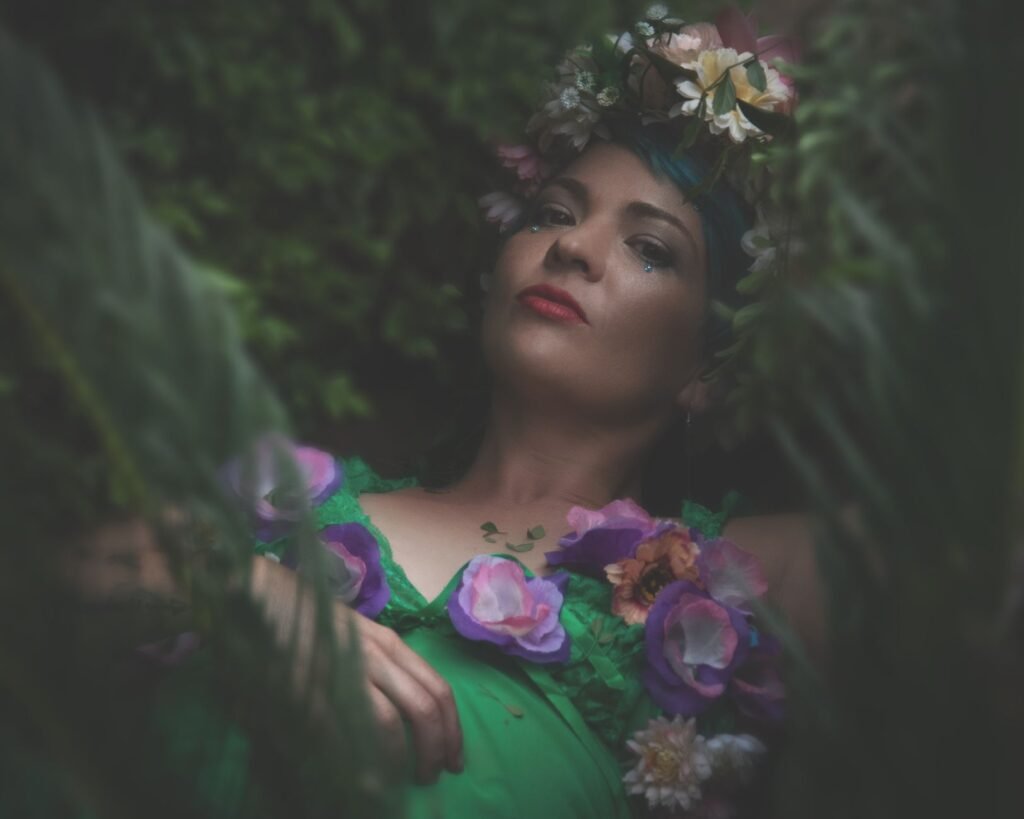
Blodeuwedd: The Woman Made of Flowers
Introduction
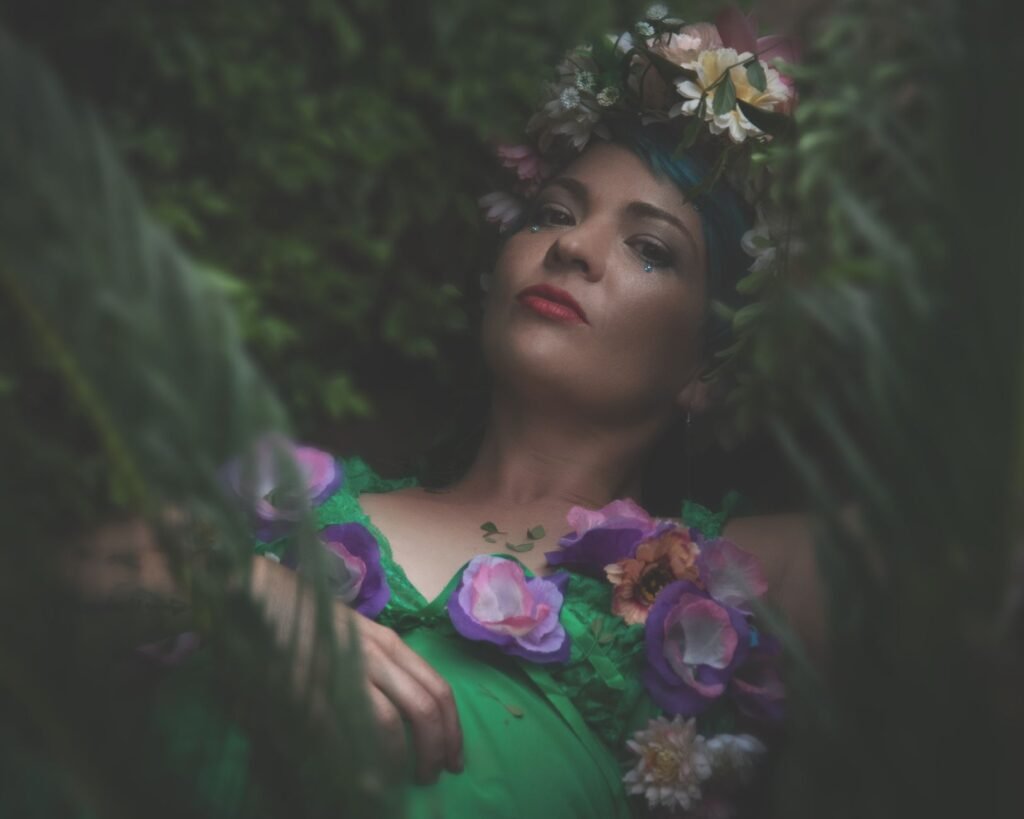
Blodeuwedd is one of the most famous figures in Welsh mythology and a central character in the Fourth Branch of the Mabinogi, a medieval collection of prose tales preserved in the White Book of Rhydderch and the Red Book of Hergest. Her story combines themes of creation, desire, betrayal, punishment, and transformation, making her one of the most enduring and complex figures in the Celtic mythological tradition.
The name Blodeuwedd: The Woman Made of Flowers refers to the miraculous being fashioned from blossoms by the magicians Gwydion and Math. Created as a wife for the hero Lleu Llaw Gyffes, she becomes the focus of one of the best-known Welsh myths, in which her origins, marriage, rebellion, and metamorphosis are central to the tale. Over time, Blodeuwedd has come to symbolize both beauty and agency, as well as the tragic consequences of being made to serve the designs of others.
Origin and Meaning
The name Blodeuwedd is generally interpreted in Welsh as meaning “flower-face” or “flower-like,” from blodau (“flowers”) and gwydd or a related element in older forms sometimes understood as “face” or “appearance.” Scholarly discussion of the exact etymology has varied, but the traditional association with flowers is firmly established in the myth itself.
In the Mabinogi, Blodeuwedd is not born in the ordinary human manner. Instead, she is created magically from flowers chosen from several plants. Her name therefore reflects both her origin and her constructed nature. In modern Welsh literary and cultural interpretation, the name has often been taken as a poetic emblem of beauty, fragility, and transformation.
Historical Context
Blodeuwedd belongs to medieval Welsh literature, but her roots likely reach much deeper into earlier oral tradition. The Mabinogion is not a single ancient book but a modern label for a group of medieval Welsh tales, with the Mabinogi branches preserving narrative material that may derive from pre-Christian or early medieval Celtic storytelling.
The world of the Mabinogi reflects a mythic Britain shaped by kingship, sovereignty, magical knowledge, kinship obligations, and conflict between humans and otherworldly powers. In this setting, women often play key roles as marriage partners, political links, or agents of fate. Blodeuwedd is unusual because she is literally created for a social purpose: to satisfy a taboo that prevents Lleu from marrying any ordinary woman.
Her tale reflects a mythic worldview in which identity, kinship, and power are unstable. The story also reveals medieval Welsh concerns with honor, punishment, treachery, and the tension between free will and enchantment.
Main Characteristics
Blodeuwedd’s most distinctive feature is that she is an artificial woman fashioned from flowers by magic. She is associated with beauty, fragrance, and seasonal vitality, but also with autonomy and rebellion.
Key characteristics include:
- Created rather than born
- Linked to flowers and botanical imagery
- Initially intended as a compliant wife
- Accused of betrayal and complicity in a murder plot
- Transformed into an owl as punishment
- Associated with liminality and metamorphosis
She is not a deity in the usual sense, nor a mortal queen, but a mythic being whose existence bridges the natural, supernatural, and human worlds. Her transformation into an owl is among the most memorable endings in Welsh myth.
Family and Genealogy
Blodeuwedd does not belong to a normal genealogical line, since she is created by magic rather than born.
Her mythic relationships include:
| Relationship | Figure | Notes |
|---|---|---|
| Creator(s) | Gwydion and Math | Magical makers of Blodeuwedd |
| Husband | Lleu Llaw Gyffes | The hero for whom she was created |
| Lover | Gronw Pebr | With whom she plots against Lleu |
| Indirect kinship links | Arianrhod, Lleu’s mother | Blodeuwedd is created to bypass Arianrhod’s curse |
Blodeuwedd has no children mentioned in the principal medieval text. Some later literary and interpretive traditions expand her symbolic role, but these are not part of the earliest surviving narrative.
Her most important “genealogical” context is the curse of Arianrhod, who had declared that Lleu would never have a wife of any race on earth. This curse motivates the creation of Blodeuwedd from flowers.
Symbols
Blodeuwedd is strongly associated with symbols of transformation, beauty, and hidden identity.
Common symbolic associations include:
- Flowers: beauty, seasonality, creation, and ephemerality
- Owl: punishment, nocturnal wisdom, estrangement, and altered identity
- Moonlit or twilight imagery: later cultural associations rather than explicit medieval detail
- Enchantment and disguise: the instability of appearances
The owl is especially significant. In the tale, Blodeuwedd is transformed into an owl after her betrayal is exposed. This change has made her a powerful symbol in later literature and modern pagan or feminist reinterpretations.
Sacred Animals
The principal animal associated with Blodeuwedd is the owl.
Symbolic significance of the owl:
- Night and darkness
- Solitude and exile
- Wisdom or hidden knowledge
- A reminder of punishment and transformation
In the original tale, the owl is not presented as a “sacred” animal in a religious sense, but as the form into which Blodeuwedd is cursed. Later Welsh folklore and modern symbolic readings often reinterpret this as a meaningful animal association.
No other animal is consistently or uniquely tied to Blodeuwedd in the primary medieval sources.
Sacred Plants
Because Blodeuwedd is created from flowers, plant symbolism is fundamental to her character. The Mabinogi specifies that Gwydion and Math gather blossoms from different plants to fashion her.
The flowers used in her creation are often identified as including:
- Meadowsweet
- Broom
- Oak blossom
- Meadows and woodland flowers in general
The exact plant list varies in translation and scholarly discussion. The medieval text presents the idea broadly rather than as a botanical inventory with modern precision.
Importance of plant symbolism:
- Life and fertility: flowers represent vitality and seasonal renewal
- Artificial creation: plants become a substitute for human birth
- Beauty and transience: flowers bloom briefly, reflecting Blodeuwedd’s unstable role
- Connection to the land: her form links her to the natural world more directly than to human society
Sacred Places
Blodeuwedd is not tied to a widely attested cult site or temple. Her story is set in a mythic version of Wales, especially in regions associated with Lleu and the house of Math.
Key locations in the mythic narrative include:
- Gwynedd: the broader mythic kingdom in which much of the tale unfolds
- Math’s court: the royal and magical center from which Blodeuwedd is created
- Caer Dathyl: associated with the wider narrative world of the Fourth Branch
- The landscape of the mountain and forest: important in the pursuit and transformation scenes
The countryside itself matters more than a fixed shrine or sanctuary. As with many Welsh myths, the landscape functions as a living setting of memory and transformation.
Powers and Attributes
Blodeuwedd is not usually described as a goddess with defined divine powers, but she possesses extraordinary attributes because of her magical origin.
Her key mythic attributes are:
- Artificial life: she is brought into existence by enchantment
- Speech and personhood: she behaves as an autonomous social being
- Desire and choice: she is not merely passive, despite her creation
- Liminal identity: between plant, human, and animal forms
- Metamorphic destiny: her shape can be altered by magic
In the narrative, her role is to become a wife, but she develops her own desires and allegiances. This tension between intended function and personal agency is one of the most important aspects of her character.
Main Myths
The principal myth involving Blodeuwedd appears in the Fourth Branch of the Mabinogi.
The story in brief
Lleu Llaw Gyffes is under a curse from his mother, Arianrhod, who prevents him from obtaining a human wife. In response, the magician Gwydion and the king Math create a woman from flowers. She is named Blodeuwedd and married to Lleu.
Later, while Lleu is away, Blodeuwedd meets Gronw Pebr. They become lovers and conspire to kill Lleu. Because Lleu cannot be killed under ordinary circumstances, the plot requires trickery. Blodeuwedd extracts from Lleu the secret conditions under which he can be slain.
When the attack occurs, Lleu is seriously wounded but escapes and is later healed. He returns in vengeance. Gronw is killed, and Blodeuwedd is transformed into an owl as punishment.
Major themes in the myth
- Creation for political convenience
- Marriage as a social solution
- Infidelity and betrayal
- Hidden vulnerability
- Retribution and transformation
- The instability of identity
The owl transformation
The owl transformation is one of the most iconic moments in Welsh mythology. It explains why owls are associated in later tradition with darkness and estrangement. In the tale, the transformed Blodeuwedd is condemned to be hated by other birds, emphasizing her isolation.
Relationship with Other Mythological Figures
Blodeuwedd’s relationships are central to her meaning.
Lleu Llaw Gyffes
Lleu is her husband and the intended recipient of her service. Their marriage is arranged by magic and is part of the effort to circumvent Arianrhod’s curse. The relationship fails catastrophically and becomes the foundation of the tragedy.
Gwydion
Gwydion is one of Blodeuwedd’s creators. He is a master magician, strategist, and trickster figure. He helps bring her into being but also indirectly contributes to her constrained position. His role has been interpreted variously as paternal, manipulative, or merely instrumental.
Math
Math is the king and magician who assists in her creation. He represents legitimate authority and magical power within the narrative structure.
Arianrhod
Although not directly involved in her creation, Arianrhod’s curse is the reason Blodeuwedd is made. Thus, Blodeuwedd is part of a chain of magical and familial conflict.
Gronw Pebr
Gronw is Blodeuwedd’s lover and accomplice in the plot against Lleu. Their relationship is central to the betrayal narrative.
Worship and Cult
There is no evidence for a historical cult or formal worship of Blodeuwedd in the way one might speak of a deity from ancient Greek, Roman, or Egyptian religion. She is known from literature rather than from temple religion or ritual practice.
What is known:
- She appears in a medieval mythological tale
- She is not securely attested as an object of ancient worship
- No dedicated temples, priesthood, or festivals are documented in the primary sources
In modern times, Blodeuwedd has gained symbolic significance in neo-pagan, feminist, literary, and artistic contexts. Some modern spiritual traditions treat her as an archetype of feminine transformation, though this is a contemporary development rather than an ancient cult.
Ancient Sources
The principal source for Blodeuwedd is the Welsh prose tale “Math fab Mathonwy” in the Mabinogi.
Important sources and textual witnesses:
- The White Book of Rhydderch (Llyfr Gwyn Rhydderch)
- The Red Book of Hergest (Llyfr Coch Hergest)
- The Mabinogi / Mabinogion tradition
The tale survives in medieval manuscripts, but the narratives likely preserve older oral material.
Unlike figures from Greco-Roman myth, Blodeuwedd does not appear in Homer, Hesiod, Apollodorus, Pausanias, or Ovid. Those authors are important for comparative mythology, but they are not sources for Blodeuwedd herself.
Roman Equivalent
Blodeuwedd has no direct Roman equivalent.
Some Roman and broader classical figures may invite thematic comparison, such as:
- Galatea, in the sense of a crafted female figure
- Daphne, in relation to plant-based transformation
- Philomela, in relation to metamorphosis and violence
- Persephone, in relation to seasonal symbolism
However, these are only analogies. None is a true counterpart, and Blodeuwedd remains distinctively Welsh in origin, narrative structure, and symbolic meaning.
Influence on Modern Culture
Blodeuwedd has had a major impact on modern Welsh identity, literature, and feminist interpretation. She is often read as a figure who moves from objectification to self-determination, even though the medieval story presents her primarily as a transgressive and punished character.
Areas of modern influence include:
Literature
Blodeuwedd appears in modern Welsh poetry, drama, and fiction. Writers have reimagined her as a victim, rebel, or tragic heroine rather than merely a treacherous wife.
Feminist interpretation
Many modern readers see Blodeuwedd as a woman created by male magicians for a purpose she did not choose. Her subsequent rebellion can be interpreted as an assertion of agency within a system that denied her autonomy.
Music and performance
Welsh composers and theatrical productions have adapted the story, especially in works focused on identity, transformation, and female voice.
Visual art
Her flower-form and owl transformation have made her a recurring subject in painting, illustration, and contemporary symbolic art.
Popular culture
Blodeuwedd appears in fantasy literature, neopagan discourse, and cultural references to Welsh mythology. Her name is sometimes used for artistic projects, organizations, or symbolic personas connected to nature and femininity.
Curiosities
Interesting facts about Blodeuwedd
- She is one of the few mythic women whose very body is constructed from flowers.
- Her story is among the most psychologically rich in the Mabinogi.
- The owl transformation is one of the earliest and best-known explanations of owl symbolism in Welsh tradition.
- Modern readers often admire her autonomy, even though the medieval tale frames her actions as betrayal.
- She is sometimes treated as a myth of artificial creation, comparable in theme to later stories about made or assembled beings.
- The tale contains elements of prophecy, taboo, magical engineering, and revenge within a single narrative arc.
Frequently Asked Questions
Who is Blodeuwedd?
Blodeuwedd is a mythological woman from Welsh tradition who was created from flowers by magic and became the wife of Lleu Llaw Gyffes.
Why was Blodeuwedd made of flowers?
She was created because Lleu’s mother had cursed him so that he could not marry any human woman. Gwydion and Math made Blodeuwedd as a magical solution.
What happens to Blodeuwedd in the myth?
After she and her lover Gronw plot against Lleu, she is transformed into an owl as punishment.
Is Blodeuwedd a goddess?
In the surviving medieval sources, she is not clearly presented as a goddess. She is a mythic, magically created woman rather than a formally worshipped deity.
What does the owl mean in Blodeuwedd’s story?
The owl symbolizes her punishment, isolation, and altered identity. It also reinforces the myth’s themes of transformation and exile.
What plants were used to create Blodeuwedd?
The text says she was made from flowers gathered from different plants, but translations and interpretations vary. The source does not provide a modern botanical certainty for every flower.
Is there a real historical cult of Blodeuwedd?
No historical cult is securely documented. Her significance comes from literature and later cultural interpretation rather than established ancient worship.
Why is Blodeuwedd important today?
She remains important because her story explores themes of creation, agency, gender, and transformation, and she has become a powerful figure in modern Welsh and feminist cultural thought.
Conclusion
Blodeuwedd is one of the most compelling figures in Welsh mythology. In Blodeuwedd: The Woman Made of Flowers, the medieval tale presents a being created from blossoms to solve a dynastic problem, only for her to become an autonomous character whose choices reshape the story. Her transformation into an owl gives the myth its lasting emotional and symbolic power.
Although she is not a goddess with a documented ancient cult, Blodeuwedd occupies a major place in the cultural imagination of Wales and beyond. She stands at the intersection of nature and artifice, obedience and resistance, beauty and punishment. For this reason, she remains an enduring mythic figure whose story continues to invite literary, historical, and symbolic interpretation.

Orin Vale has spent the better part of two decades tracing the threads that connect the world’s oldest stories — from the halls of Asgard to the banks of the Nile, from Olympus to the jungles of the Maya. What began as a childhood fascination with flood myths and trickster gods grew into years of independent study across comparative mythology and ancient religion, always chasing the same question: what did these stories mean to the people who first told them? Orin writes for readers who want more than trivia — the ones looking for the beliefs, fears, and truths that myths were built to carry.