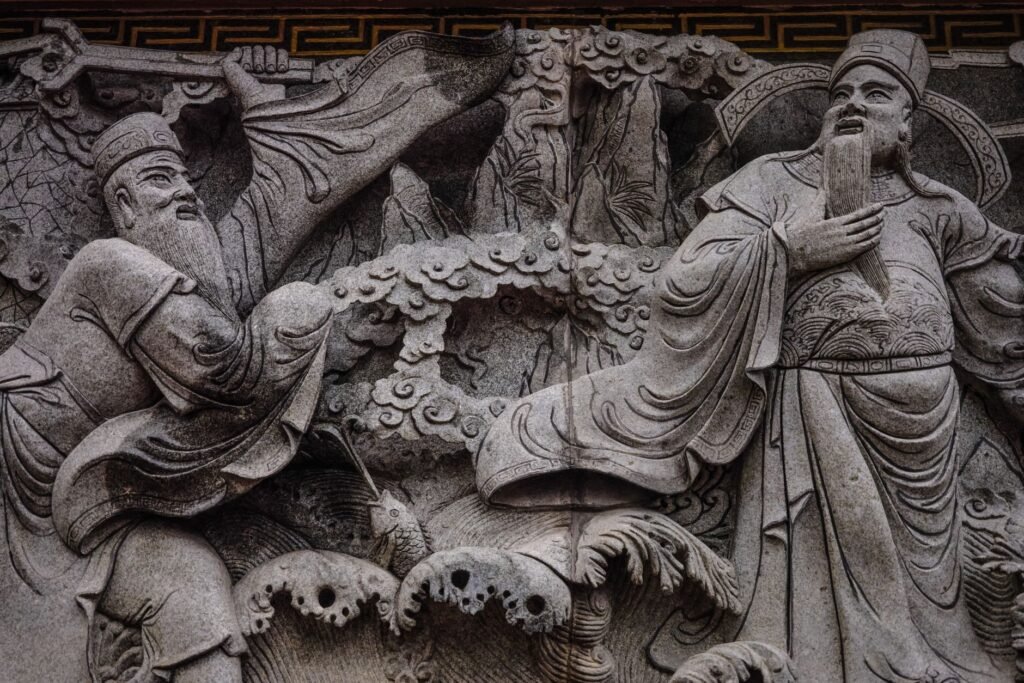
Susanoo
Susanoo is one of the most important deities in Japanese mythology. Known as a storm god, sea deity, and force of disorder and renewal, he appears prominently in Japan’s earliest written sources and has remained influential in religion, literature, art, and popular culture. Susanoo is especially famous for his dramatic conflict with his sister Amaterasu, the sun goddess, and for his role in the slaying of the monstrous serpent Yamata no Orochi. Over time, his image has ranged from a destructive and unruly figure to a protector associated with fertility, healing, and the pacification of calamity.
Origin and Meaning
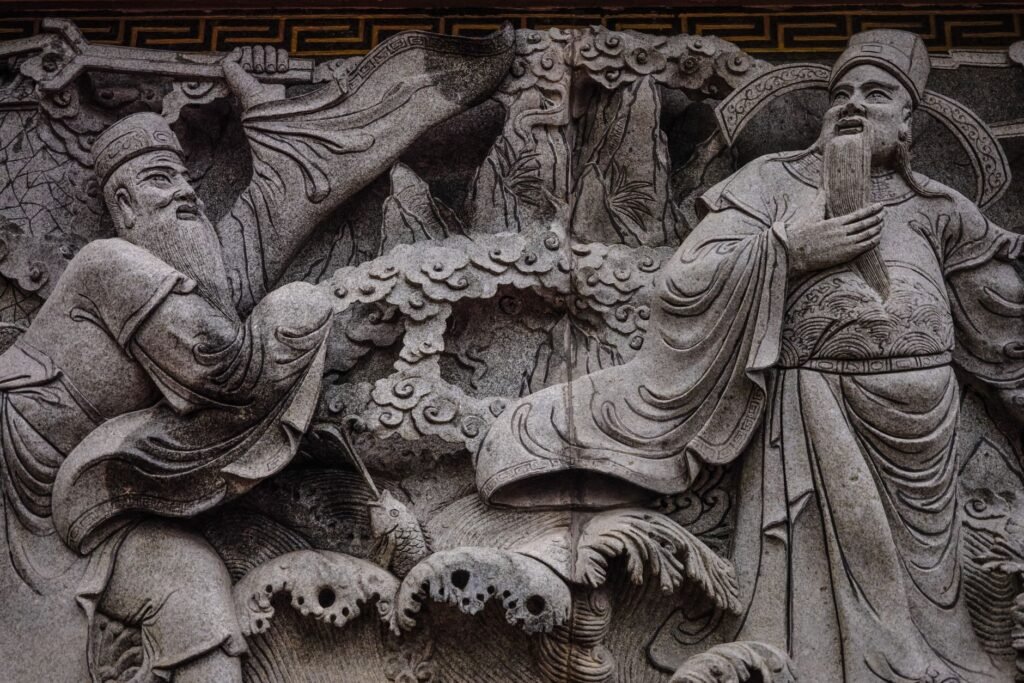
The name Susanoo is usually written in Japanese as 須佐之男命, 素戔嗚尊, or related variants. The exact etymology is not fully certain, and scholars have proposed different interpretations. In ancient texts, the name appears in forms such as Takehaya Susanoo-no-Mikoto or Susanoo-no-Mikoto, where -no-Mikoto is an honorific title meaning something like “august deity” or “noble divine being.”
Different readings and spellings reflect the age of the sources and the fluid nature of early Japanese religious language. Because the name is ancient, its original meaning is debated. Some interpretations connect it with the sea, storms, or impetuous behavior, but no single explanation is universally accepted.
Historical Context
Susanoo belongs to the world of Shinto mythology and early Japanese cosmology. His stories are preserved mainly in Japan’s oldest extant chronicles, the Kojiki (712) and the Nihon Shoki (720), both compiled at court in the early 8th century. These works gathered oral traditions, ritual lore, political genealogy, and mythic history into written form.
The myths of Susanoo were shaped in a period when the Yamato court was consolidating authority and linking ruling lineages to divine ancestry. In that context, deities such as Amaterasu, Susanoo, and Ōkuninushi were not only religious figures but also part of a broader political and cosmological order.
Susanoo’s character reflects several layers of belief:
- Storm and sea imagery, common in agrarian and maritime societies
- Ritual notions of purification and pollution
- Myths of divine conflict and reconciliation
- Local shrine traditions, especially in western Japan
His role varied across regions and periods. In some traditions he appears as a dangerous force that must be controlled; in others, he becomes a benevolent protector and culture hero.
Main Characteristics
Susanoo is usually portrayed as a deity of storms, rough seas, violence, and untamed energy. In the early myths, he often behaves in disruptive ways. His actions can cause destruction, fear, and divine conflict. At the same time, he is also capable of heroic deeds, strategic intelligence, and powerful protection.
Common traits associated with Susanoo
- Impetuous, emotional, and difficult to control
- Linked to storms, tempests, and turbulent water
- Associated with both chaos and cleansing
- Capable of heroic combat
- Connected to the underworld or other distant realms in some traditions
- Protector against disease and calamity in later worship
Unlike a purely malevolent figure, Susanoo is complex and ambivalent. His myths often show that disorder can lead to creation, and danger can produce renewal.
Family and Genealogy
Susanoo’s genealogy differs slightly between sources, but the broad outline is consistent. In the most common tradition, he is one of the three noble children born to the creator god Izanagi after Izanagi’s purification ritual.
Parents and siblings
- Father: Izanagi
- Mother: Usually not emphasized in the main creation myths
- Siblings:
- Amaterasu, the sun goddess
- Tsukuyomi, the moon deity
In the traditional divine family, Susanoo is the brother of the central celestial deities. The myths often stress his conflict with Amaterasu, which symbolically dramatizes the tension between order and disorder, light and storm.
Spouses and descendants
Susanoo’s family relationships vary across traditions.
- He is commonly associated with Kushinadahime, whom he rescues from the serpent Yamata no Orochi.
- Some traditions name him as the ancestor of important lineages through his descendants.
- In the Kojiki, his offspring includes figures linked to the ruling or semi-divine genealogies of Japan.
One important descendant is Ōkuninushi, the great deity of Izumo tradition, who is often considered part of Susanoo’s wider mythic family line, though the exact genealogical details differ among sources.
Symbols
Susanoo has no single universal icon, but several symbols are strongly associated with him through myth and later worship.
| Symbol | Meaning |
|---|---|
| Sword | Martial power, heroism, divine authority |
| Serpent/dragon | Chaos, danger, and conquest of evil |
| Storm clouds and rain | His domain over tempests and atmospheric power |
| Rope or ritual boundary | Protection and purification |
| Sea imagery | His association with the ocean and navigation |
The most famous symbolic object tied to Susanoo is the sword found in the body of Yamata no Orochi, known as Kusanagi-no-Tsurugi. This sword became one of the Imperial Regalia of Japan and is one of the most significant sacred symbols in Japanese tradition.
Sacred Animals
Susanoo is especially linked to creatures associated with danger, transformation, and divine power.
Serpent
The most famous animal in his mythic cycle is the serpent, especially Yamata no Orochi, the eight-headed serpent slain by Susanoo. The serpent symbolizes:
- chaotic natural forces
- floods or destructive waters
- monstrous danger
- the triumph of divine order over threat
In some local traditions
Susanoo may also be associated with:
- dragons, through broader East Asian storm symbolism
- cows and horses in later ritual and popular imagination
- sea creatures, reflecting his maritime aspect
These associations vary regionally and should not be treated as uniform across all Japanese traditions.
Sacred Plants
The best-known plant connected to Susanoo is the cannabis plant in a mythic episode described in the Kojiki. According to one tradition, after slaying Yamata no Orochi, Susanoo discovered sacred items in the serpent’s body, including the sword later linked with imperial legitimacy. In some accounts, plant imagery and medicinal or ritual substances are tied to purification and divine discovery.
More broadly, Susanoo is linked to plants through the agricultural and fertility dimensions of his worship. However, unlike deities of specific crops, he is not primarily a plant god. His plant associations are secondary and often symbolic.
Sacred Places
Susanoo is connected to several important places in Japan, especially in Izumo, a region deeply associated with ancient myth and shrine tradition.
Major sites and regions
| Place | Significance |
|---|---|
| Izumo Province | Central region in many Susanoo and Ōkuninushi traditions |
| Susa Shrine | Traditionally linked to Susanoo’s name and cult |
| Izumo Taisha | Major shrine connected to the broader mythic world of Izumo |
| Yasugi and surrounding areas | Local traditions connected with serpent-slaying myths |
| Amano-Iwato | Cave site associated with Amaterasu’s withdrawal after Susanoo’s misconduct |
Amano-Iwato
One of the most famous sacred locations in the Susanoo cycle is the cave where Amaterasu hides after his destructive behavior. The sun’s disappearance plunges the world into darkness until the gods devise a plan to lure her out. This site represents both cosmic disorder and ritual restoration.
Izumo
Susanoo is strongly connected to Izumo, a center of ancient religious significance. In later tradition, Izumo became associated with powerful deities of nation-building, marriage, and cosmological order. Susanoo’s presence there links him to local cult and regional identity.
Powers and Attributes
Susanoo’s powers are broad and vary according to the source.
Core domains
- Storms and tempests
- Sea and water
- Chaos and disruption
- Purification through ordeal
- Protection against evil and disease
- Heroic combat
- Serpent-slaying
In some traditions, Susanoo also functions as a deity whose destructive energy can be transformed into protective power. This ambivalence is central to his character. He is not merely a destroyer; he also enables renewal by removing threats, monsters, and impurities.
Religious meaning of his power
Susanoo’s myths often show a recurring pattern:
- Disorder or excess appears.
- Conflict or transgression follows.
- A crisis forces intervention.
- The crisis ends in restoration, divine reward, or new order.
This pattern gives Susanoo a special place in Japanese mythology as a deity who embodies both danger and transformation.
Main Myths
Susanoo appears in several major mythic episodes, especially in the Kojiki and Nihon Shoki.
Birth after Izanagi’s purification
After Izanagi returns from the land of the dead, he performs a purification ritual. From this act, important deities are born, including Amaterasu, Tsukuyomi, and Susanoo. The myth reflects the sacred importance of purification in Japanese ritual thought.
Susanoo’s disruptive behavior in heaven
In the celestial realm, Susanoo behaves violently and disruptively. Different versions say he damages rice fields, defiles sacred places, or acts in reckless ways. His behavior causes distress to Amaterasu and the other deities.
Amaterasu hides in the heavenly rock cave
After Susanoo’s misconduct, Amaterasu retreats into the cave of Amano-Iwato, causing darkness to fall over the world. The gods then stage a ritual performance, with laughter, music, and a mirror, to entice her out. This is one of the most famous myths in Japanese tradition, and Susanoo’s actions are the immediate cause of the crisis.
Susanoo’s expulsion
Because of his behavior, Susanoo is cast out from the heavenly realm. This expulsion marks a turning point in his mythic career. He moves from divine family conflict to wandering hero.
The slaying of Yamata no Orochi
Susanoo’s most famous heroic myth concerns Yamata no Orochi, a giant eight-headed serpent that terrorizes a family in Izumo. Susanoo encounters an old man and woman who have lost their daughters to the beast. He prepares strong sake, arranges a trap, and kills the serpent after it becomes intoxicated.
Inside the serpent’s body, he discovers a sword, later revered as the Kusanagi-no-Tsurugi. This episode is central to his heroic identity and to the mythic legitimacy of sacred regalia.
Marriage to Kushinadahime
In the Orochi myth, Susanoo rescues Kushinadahime and marries her. Their union links divine violence with fertility, settlement, and lineage. In this tradition, he transforms from a wandering storm god into a progenitor connected to Izumo.
Descent and later deeds
Some traditions place Susanoo in distant lands or connect him with further lineage myths. These stories vary, and the sources do not always agree on his later movements or descendants.
Relationship with Other Mythological Figures
Susanoo’s importance is magnified by his relationships with other deities.
Amaterasu
His relationship with Amaterasu is one of the most famous divine sibling rivalries in Japanese mythology. Their conflict dramatizes opposition between:
- sun and storm
- order and chaos
- restraint and impulse
- legitimacy and transgression
Despite their conflict, both are central to the divine structure of Japan’s mythic origin.
Tsukuyomi
Tsukuyomi appears far less often than Amaterasu, but as Susanoo’s sibling he completes the triad born from Izanagi’s purification. The moon deity’s mythic profile is comparatively quiet, especially when contrasted with Susanoo’s dramatic narrative.
Ōkuninushi
Susanoo is connected to Ōkuninushi, the great deity of Izumo, in traditions that emphasize genealogy, instruction, and inheritance of authority. These myths are complex and vary by source. They often link Susanoo to the deeper sacred identity of Izumo.
Other divine and heroic figures
Susanoo also appears alongside ritual specialists, local deities, and monster figures. His role is frequently defined through confrontation, mediation, or transmission of power.
Worship and Cult
Susanoo has been widely worshipped in Japan, though his cult differs from place to place. He is often honored as a deity who can avert disease, protect communities, and control harmful forces.
Forms of worship
Common elements in Susanoo worship include:
- offerings of sake
- prayers for protection from epidemics
- rites for purification
- festival processions
- community celebrations centered on local shrine identity
Gion and epidemic protection
Susanoo is often identified with, or closely linked to, Gozu Tennō in later syncretic traditions, especially in shrine and festival culture associated with the prevention of disease. This relationship reflects the historical blending of Shinto, Buddhist, and folk religious elements.
The Gion Matsuri
One of the most famous festival traditions connected with his broader cultic sphere is the Gion Matsuri in Kyoto, historically tied to protection against pestilence. The festival’s religious history is complex and includes both Buddhist and Shinto influences. In later interpretation, Susanoo is often associated with protective power against epidemics.
Shrine devotion
Many shrines dedicated to Susanoo or related deities emphasize:
- purification
- protection of the community
- safe travel
- health and exorcism of harmful forces
Because local traditions vary, the precise form of worship differs from one shrine to another.
Ancient Sources
The main ancient sources for Susanoo are Japanese rather than Greek or Roman classical texts. The most important are:
| Source | Date | Importance |
|---|---|---|
| Kojiki | 712 | Earliest surviving Japanese mythological chronicle |
| Nihon Shoki | 720 | Major historical and mythological compilation |
| Fudoki | 8th century and later fragments | Regional traditions, some relevant to local cults |
| Engishiki | 927 | Records rituals, shrines, and liturgical practice |
The Kojiki gives especially vivid accounts of Susanoo’s birth, misconduct, and slaying of Yamata no Orochi. The Nihon Shoki includes multiple versions of some myths, which is valuable because it shows that early Japanese tradition was not uniform.
Later commentaries, shrine records, and medieval religious texts further expanded his image. Because these sources belong to different periods, careful interpretation is needed when comparing them.
Roman Equivalent
There is no exact Roman equivalent of Susanoo. He combines traits of storm gods, heroic monster-slayers, and ambiguous divine tricksters in a way that does not match any single Roman deity.
If a rough comparison is needed, some aspects of Susanoo may remind readers of:
- Neptune, through sea and water associations
- Jupiter, through storm imagery
- Mars, through martial and heroic qualities
However, these parallels are limited. Susanoo is a distinct figure within Japanese religious tradition and should not be reduced to a Roman analogue.
Influence on Modern Culture
Susanoo remains highly visible in modern culture, especially in Japan and in global media inspired by Japanese mythology.
Literature and scholarship
He is a major subject in:
- Japanese mythology studies
- comparative religion
- folklore research
- modern retellings of the Kojiki and Nihon Shoki
Manga, anime, and games
Susanoo appears frequently in:
- anime and manga
- role-playing games
- action games
- card and strategy games
- fantasy adaptations of Japanese myth
His image is often adapted as a powerful warrior, divine weapon, or storm-themed entity.
Popular culture themes
Modern portrayals often emphasize:
- his swordsmanship
- his storm powers
- his rivalry with Amaterasu
- his serpent-slaying fame
- his dual nature as destructive and protective
These adaptations sometimes simplify the older myths, but they also help keep Susanoo visible to new audiences worldwide.
Curiosities
- Susanoo is one of the few major Japanese deities who is both a disruptive troublemaker and a heroic savior.
- The sword associated with his serpent-slaying myth became one of the Imperial Regalia of Japan in tradition.
- His myth is linked to the idea that chaos can lead to sacred discovery.
- Some shrine traditions merge Susanoo with later protective deities, showing how Japanese religion often blended different layers of belief.
- The Amano-Iwato story is not only about Susanoo but also about the restoration of cosmic order through ritual performance.
- In local traditions, his role may shift from storm god to protector against epidemics.
- The sources preserve multiple versions of several Susanoo myths, demonstrating that early Japanese mythology was not fixed in a single form.
Frequently Asked Questions
Who is Susanoo?
Susanoo is a major deity in Japanese mythology, usually associated with storms, the sea, and heroic conflict. He is famous for his rivalry with Amaterasu and for slaying the serpent Yamata no Orochi.
Is Susanoo evil?
No. He is not simply evil. He often acts violently and causes disorder, but he also performs heroic and protective deeds. His character is best understood as complex and ambivalent.
What is Susanoo the god of?
He is commonly linked to storms, seas, chaos, purification, and protection against harmful forces. In later worship, he is also associated with disease prevention and local guardianship.
Who are Susanoo’s parents and siblings?
In the most common tradition, he is born from Izanagi’s purification ritual. His siblings are Amaterasu, the sun goddess, and Tsukuyomi, the moon deity.
What is Susanoo famous for?
He is especially famous for two myths: his disruptive conflict with Amaterasu and the slaying of Yamata no Orochi, from which he obtains the sacred sword associated with Kusanagi.
Where was Susanoo worshipped?
He was worshipped in many places in Japan, especially in traditions connected with Izumo and shrine cults. His worship varied regionally and over time.
Is Susanoo connected to any modern festivals?
Yes. He is associated in later tradition with protective cults and festivals linked to disease prevention, including shrine traditions connected to the broader Gion complex.
Conclusion
Susanoo is one of the most enduring figures in Japanese mythology because he embodies contradiction. He is destructive yet protective, unruly yet heroic, frightening yet necessary. His stories explain divine family conflict, ritual purification, the defeat of monstrous danger, and the transformation of chaos into sacred order.
Through the Kojiki and Nihon Shoki, Susanoo became a central figure in Japan’s mythic past. Through shrine worship, regional tradition, and modern popular culture, he has remained a living symbol of storm power, divine struggle, and cultural imagination. His legacy continues to show how mythology can preserve both the fear of disorder and the hope of renewal.

Orin Vale has spent the better part of two decades tracing the threads that connect the world’s oldest stories — from the halls of Asgard to the banks of the Nile, from Olympus to the jungles of the Maya. What began as a childhood fascination with flood myths and trickster gods grew into years of independent study across comparative mythology and ancient religion, always chasing the same question: what did these stories mean to the people who first told them? Orin writes for readers who want more than trivia — the ones looking for the beliefs, fears, and truths that myths were built to carry.