Ryujin
Introduction
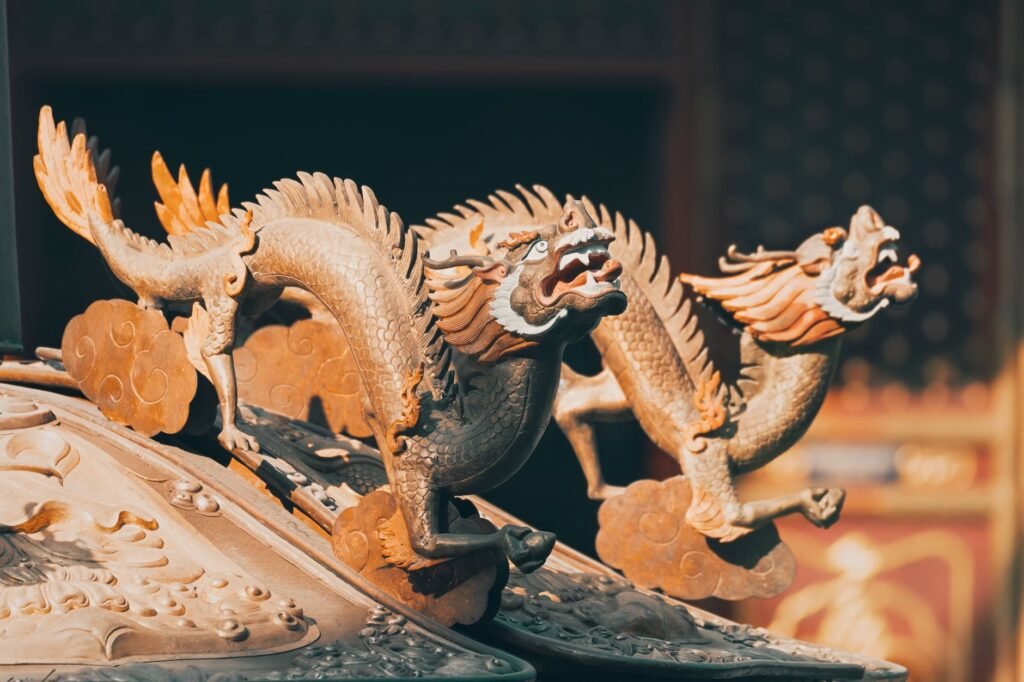
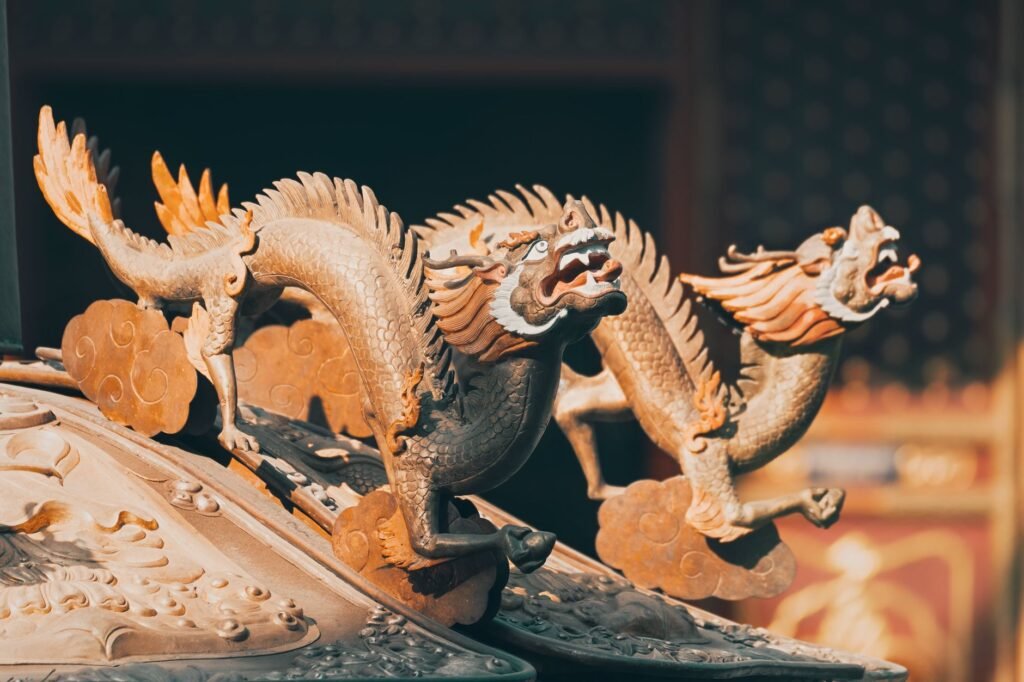
Ryujin is a major figure in Japanese mythology: the dragon god of the sea, often associated with oceans, storms, tides, rain, and the deep watery realm. In many traditions he is imagined as a majestic dragon or a dragon-king dwelling in an underwater palace, ruling fish, marine life, and the hidden forces of the sea. Because Japan is an island nation whose history has always been shaped by the ocean, Ryujin occupies an important place in religion, folklore, literature, and popular culture.
Ryujin appears in multiple forms across Japanese sources. Sometimes he is a divine sea ruler; sometimes a protective water spirit; sometimes a legendary ancestor or patron of ruling houses; and sometimes a being connected to treasures, weather, or agricultural fertility through water. His character reflects a long blending of indigenous Japanese beliefs, Chinese dragon imagery, and broader East Asian cosmological ideas.
Origin and Meaning
The name Ryujin is usually written as 龍神 or 竜神, meaning “dragon god” or “dragon deity.”
Etymology
- Ryū (龍 / 竜): dragon
- Jin (神): god, divine being, spirit
In Japanese usage, the term can refer broadly to any dragon deity, but in mythology it most often refers to the specific sea god who rules from beneath the waves.
Historical origin
Ryujin is not a single, fixed figure in the way that some classical gods are. Rather, he developed through the interaction of:
- Ancient Japanese water and sea worship
- Shinto beliefs about kami associated with rivers, rain, and oceans
- Chinese dragon symbolism, introduced through cultural exchange
- Buddhist and Buddhist-influenced dragon-king traditions from East Asia
The idea of a dragon associated with water is widespread in East Asia. In Japan, that image became integrated into local myth and ritual, producing a deity who is both distinctly Japanese and part of a larger regional tradition.
Historical Context
Ryujin belongs to the broader world of Shinto mythology, though his image also crosses into folklore and later religious thought. In early Japan, water was understood as both life-giving and dangerous. Seas could provide food, transport, and trade, but they could also bring storms, shipwrecks, and destruction. A sea deity like Ryujin embodied this double nature.
Religious background
Ryujin is associated with several overlapping traditions:
- Shinto: kami connected with water, purification, and natural forces
- Folk religion: local beliefs in dragons, wells, lakes, springs, and ocean spirits
- Buddhist influence: the East Asian concept of dragon kings, known as nāga-like or dragon protectors in Buddhist cosmology
- Court and regional cults: maritime communities, fishermen, and some ruling families venerated water deities for safety and prosperity
Cultural significance
As Japan developed maritime trade and coastal settlements, gods of the sea gained practical importance. Ryujin represented:
- safe travel by sea
- abundant fish
- rainfall and agricultural fertility
- protection from floods and storms
- divine authority over watery realms
His mythic role also helped explain natural phenomena in a symbolic way, giving shape to the power and unpredictability of the ocean.
Main Characteristics
Ryujin is most often described as a dragon or dragon-king with immense supernatural power.
Common traits
- Lives in a palace beneath the sea
- Commands marine creatures
- Controls tides, rainfall, and storms
- Possesses magical or sacred jewels
- Acts as a ruler, patron, or divine ancestor in some legends
- May appear benevolent, but can also be formidable and unpredictable
Iconography and appearance
Representations vary, but Ryujin is often shown as:
- a large serpent-like dragon
- a dragon with flowing whiskers and claws
- a human-like figure associated with dragon imagery in later art
- an underwater king in rich robes, especially in theatrical or later literary depictions
In Japanese visual culture, he may be linked with waves, storm clouds, pearls, and sea creatures.
Family and Genealogy
Ryujin’s genealogy is not fully standardized across all sources. Different legends present different relationships.
Commonly associated relations
| Relationship | Details |
|---|---|
| Consorts/spouses | Some traditions describe Ryujin as having wives or sea-queen figures, but these accounts vary and are not consistent across sources. |
| Children | Certain myths identify marine or dragon-related offspring, though the best-known examples differ by region and story. |
| Servants and attendants | He is frequently surrounded by fish, turtles, and sea creatures acting as his messengers or retainers. |
Notable traditions
One famous myth involves Otohime, a princess associated with the sea palace. In some versions she is Ryujin’s daughter; in others she is linked to his realm more generally. The story of Urashima Tarō makes Ryujin’s household central to the narrative.
In some regional traditions, local rulers or heroic figures are said to descend from dragon or sea deity lineages, but these genealogies are often symbolic rather than historical in a strict sense.
Symbols
Ryujin is connected with several powerful symbols that reflect his role as a water deity.
Key symbols
- Dragon form: the primary sign of divine power and mastery over water
- Pearl or jewel: often interpreted as a treasure, wish-granting object, or symbol of tidal control
- Sea palace: a sign of his hidden sovereignty beneath the waves
- Waves and rain clouds: visual markers of his weather control
- Shells and coral: associated with the underwater world
Symbolic meanings
| Symbol | Meaning |
|---|---|
| Dragon | Authority, supernatural power, transformation |
| Pearl/jewel | Divine treasure, fertility, control over water |
| Ocean palace | Hidden realm of the gods |
| Rain cloud | Fertility, weather influence |
| Waves | The sea’s strength and unpredictability |
Ryujin’s symbols often emphasize his role as mediator between humans and the natural world.
Sacred Animals
Ryujin is associated with a range of aquatic creatures, especially those thought to live near or under the sea.
Associated animals
- Fish: represent the life of the sea and his dominion over marine abundance
- Turtles: often linked with longevity, wisdom, and oceanic symbolism
- Sea serpents: reinforce his dragon identity
- Crabs, eels, and other marine creatures: sometimes appear in local legends and folk beliefs
Symbolic significance
These animals are not merely companions; they reflect the divine ecosystem of Ryujin’s realm. Fish and other sea creatures show his abundance-giving aspect, while serpentine forms emphasize his connection to dragons, transformation, and liminal spaces between land and water.
Sacred Plants
Ryujin is not strongly linked to a single universally recognized sacred plant in the way some deities are. However, several plants recur in mythic and ritual settings connected to the sea, purity, and fertility.
Commonly relevant plants
- Seaweed: symbolizes the ocean’s fertility and marine life
- Reeds: associated with wetland environments and boundaries between land and water
- Rice: indirectly connected through the water needed for cultivation and rainfall
- Lotus in broader East Asian religious contexts: associated with purity and sacred waters, though not uniquely Ryujin’s emblem
Because Ryujin’s worship was often local and practical, plant associations vary by region and story rather than forming a single canonical sacred flora.
Sacred Places
Ryujin’s places are usually watery and liminal: the sea, islands, coasts, springs, and underwater palaces.
Important locations and types of places
- The sea itself: his primary domain
- Underwater palace: often described as a splendid marine residence
- Coastal shrines: places where fishermen and travelers prayed for safety
- Rivers and springs: in some traditions, dragon deities extend beyond the sea to inland waters
- Islands: especially those connected to dragon or sea legends
The underwater palace
The underwater palace, sometimes called a dragon palace in English, is one of Ryujin’s best-known settings. It is often imagined as a glittering court below the waves, populated by fish attendants and marine treasures. In Japanese literature and folktale, this palace functions as a place of wonder, separation from ordinary human time, and access to the supernatural.
Powers and Attributes
Ryujin is a deity of enormous natural power. His main sphere of influence is the sea, but his powers extend into related areas.
Principal domains
- Oceans and seas
- Tides and currents
- Rain and storms
- Marine life
- Fertility and abundance
- Protection at sea
- Sacred treasure and hidden wealth
Functions
Ryujin’s role is both destructive and beneficent:
- He can bring rain needed for crops.
- He can calm or raise storms.
- He can protect fishermen and sailors.
- He can threaten ships and coastal settlements.
- He may bestow magical gifts or divine favor.
In many traditions, this dual nature reflects the sea itself: a source of sustenance and danger, generosity and loss.
Main Myths
Ryujin appears in a number of Japanese myths and folktales. The exact details vary from source to source.
The story of Urashima Tarō
One of the most famous stories involving Ryujin is the tale of Urashima Tarō, a fisherman who rescues a turtle and is taken to the underwater palace. There he meets a beautiful princess, often identified as Otohime, and spends what seems like a short time in the sea kingdom. When he returns to land, however, many years have passed.
This myth is important for several reasons:
- it introduces Ryujin’s underwater court
- it emphasizes the strangeness of divine time
- it links the sea with wonder, beauty, and loss
- it became one of the most enduring Japanese folktales
Rain-bringing and storm myths
In some local traditions, Ryujin is invoked to send rain during drought or to moderate dangerous storms. Such stories reflect agricultural dependence on water and the need to interpret weather in religious terms.
Dragon jewel legends
A recurring motif in East Asian dragon lore is the jewel or sacred pearl that grants power over water or prosperity. Ryujin is sometimes associated with such a jewel. In later imagination, it becomes a symbol of divine authority, treasure, and control over natural forces.
Sea and royal protection traditions
Some legends connect Ryujin with the protection of rulers or important families. These narratives may describe a deity granting legitimacy, victory, or maritime power. As with many mythic genealogies, such stories are often symbolic and should not be treated as literal historical evidence.
Relationship with Other Mythological Figures
Ryujin interacts with a wide range of figures in Japanese mythology and folklore.
Connections with humans
Ryujin’s stories often involve humans who enter his realm or receive his aid. Fishermen, travelers, and heroic figures may appeal to him for:
- safe passage
- rain
- healing
- wisdom
- access to hidden knowledge
Connections with sea creatures
In mythic imagery, Ryujin is surrounded by marine beings that function as subjects, messengers, or attendants.
Connections with dragons and dragon kings
Ryujin is related to broader dragon king traditions in East Asia, which include powerful water deities in Buddhist and folk cosmology. These connections show the influence of continental beliefs on Japanese religion.
Connections with other kami
Ryujin can also be discussed alongside other Shinto deities linked to nature, such as gods of wind, thunder, mountains, or agriculture. In mythic systems, these forces often interact: rain, sea, and storm are all interconnected.
Worship and Cult
Ryujin was and remains important in religious practice, especially in coastal and fishing communities.
Forms of worship
Historically, worship could include:
- prayers for safe voyages
- offerings for abundant catches
- rituals for rain
- purification rites near water
- dedication at shrines associated with sea deities
Offerings
Offerings varied by place and period, but could include:
- fish and seafood
- rice
- sake
- salt
- symbolic gifts for safe travel or good weather
Festivals and local observances
Many Japanese communities maintain festivals related to the sea, fishing, or water purification. While not always dedicated solely to Ryujin, such observances often reflect beliefs in his protective power. Local dragon or sea deity festivals may differ greatly across regions, showing the decentralized nature of Japanese folk religion.
Shrines and continuity of belief
Ryujin is not associated with one universally dominant shrine. Instead, his worship appears in many local forms, especially where the sea had direct economic and spiritual importance. This makes him less centralized than some major kami, but widely respected.
Ancient Sources
Ryujin is not described in a single canonical text in the same way as some Greek or Roman gods. Instead, his image emerges across Japanese mythic and historical-literary sources.
Important sources and traditions
| Source | Relevance |
|---|---|
| Kojiki | Early Japanese mythological compilation; important for understanding sea deities and related mythic structures. |
| Nihon Shoki | Another foundational chronicle; preserves variant traditions and court-centered mythic accounts. |
| Fudoki | Regional records that sometimes preserve local deities and water-related beliefs. |
| The tale of Urashima Tarō | A later literary and folkloric tradition crucial for Ryujin’s popular image. |
| Buddhist texts and East Asian dragon lore | Help explain the dragon-king aspect and the broader religious context. |
Because traditions vary, readers should be cautious about treating any one text as definitive. Ryujin is best understood as a figure formed across multiple layers of tradition.
Roman Equivalent
Ryujin has no exact Roman equivalent. However, in comparative terms he is sometimes loosely compared with sea deities such as:
- Neptune
- Triton
- other marine or water gods
These comparisons are limited. Neptune is a Roman god of the sea, but Ryujin belongs to a different cultural and religious system, with stronger links to dragons, East Asian cosmology, and Shinto-style water worship. Any “equivalent” is therefore approximate rather than direct.
Influence on Modern Culture
Ryujin remains widely recognizable in modern Japanese and global culture.
Literature and art
Ryujin appears in:
- retellings of Japanese myths
- children’s books and folktale collections
- contemporary fantasy literature
- manga-inspired art and illustration
His underwater palace and dragon imagery are especially popular in visual art.
Film, television, and animation
Ryujin and dragon-god imagery frequently appear in:
- Japanese animation
- fantasy films
- television series based on myth
- modern adaptations of traditional folktales
He may be portrayed directly or indirectly through dragon kings, sea rulers, and ocean spirits.
Games and popular entertainment
Ryujin is also common in:
- video games
- tabletop role-playing games
- trading card and collectible games
- character design for fantasy worlds
His name and image are appealing because they combine majesty, mystery, and strong visual identity.
Broader cultural impact
Ryujin has become a symbol of:
- Japanese mythic heritage
- the power of the sea
- dragon iconography in East Asia
- the blending of folklore and religion
Curiosities
- The name Ryujin can refer generally to any dragon deity, not only the specific sea god of folklore.
- His underwater palace is one of the most memorable settings in Japanese myth.
- The Urashima Tarō story helped make Ryujin famous far beyond religious contexts.
- In some traditions, Ryujin’s power is linked not only to the sea but also to rainfall and agricultural fertility.
- Dragon imagery in Japan often reflects a blend of native and imported influences, so Ryujin is a cultural synthesis as much as a mythological character.
- Different regions of Japan may preserve different local sea gods or dragon spirits under similar names.
- Ryujin is sometimes portrayed as both benevolent and dangerous, matching the sea’s ambivalent nature.
Frequently Asked Questions
Who is Ryujin?
Ryujin is the Japanese dragon god of the sea, associated with oceans, tides, rain, storms, and marine life.
Is Ryujin the same as a dragon?
Ryujin is often depicted as a dragon, but he is also a deity. In myth, he may appear as a divine ruler who takes dragon form or embodies dragon power.
What is Ryujin’s palace called?
English translations often call it an underwater palace or dragon palace. The exact name can vary by source and retelling.
What is Ryujin known for?
He is best known for controlling the sea, governing marine creatures, and appearing in myths such as the story of Urashima Tarō.
Does Ryujin have children?
Some traditions describe children or descendants, but these accounts vary. There is no single universally accepted genealogy.
Is Ryujin worshipped today?
Direct worship of Ryujin is not uniform, but sea-related rituals, local shrines, and Japanese folklore continue to preserve his presence in cultural memory.
What does Ryujin symbolize?
He symbolizes the sea’s power, fertility, danger, abundance, and the mystery of hidden worlds beneath the water.
Is there a Roman equivalent to Ryujin?
There is no exact Roman equivalent. Neptune is the closest broad comparison, but the two figures belong to very different mythological systems.
Conclusion
Ryujin is one of the most significant water deities in Japanese mythology. As dragon god of the sea, he embodies the power, beauty, and unpredictability of oceans and storms. His image combines ancient Japanese beliefs, East Asian dragon traditions, and centuries of folklore into a figure that is both sacred and culturally enduring.
Through myths such as Urashima Tarō, Ryujin has become a lasting symbol of the boundary between human life and the supernatural. He represents not only maritime power but also the deeper cultural understanding that water is essential, mysterious, and worthy of reverence. For this reason, Ryujin remains an important figure in the study of Japanese religion, mythology, and cultural imagination.

Orin Vale has spent the better part of two decades tracing the threads that connect the world’s oldest stories — from the halls of Asgard to the banks of the Nile, from Olympus to the jungles of the Maya. What began as a childhood fascination with flood myths and trickster gods grew into years of independent study across comparative mythology and ancient religion, always chasing the same question: what did these stories mean to the people who first told them? Orin writes for readers who want more than trivia — the ones looking for the beliefs, fears, and truths that myths were built to carry.