Roman Myths & Legends

Founding of Rome: Myth or History Explained
The founding of Rome lies between myth and history, preserving the legendary tale of Romulus and Remus while also reflecting the real growth of Iron Age settlements along the Tiber. This article examines how Roman tradition, archaeology, and later historical writing shaped the enduring question of whether Rome began in 753 BCE or emerged gradually from earlier communities.

Why Rome Has Two Founding Myths: Aeneas and Romulus
Rome’s two founding myths, Aeneas and Romulus, reveal more than a contradiction: they preserve different ways Romans explained their origins, one reaching back to Troy and the wider Mediterranean, the other rooted in Italy and civic violence. This excerpt explores how both traditions shaped Roman identity, authority, and historical memory, and why neither ever fully displaced the other.

Aeneid vs. Iliad and Odyssey: Key Differences
The difference between the Aeneid and the Iliad/Odyssey lies not only in plot, but in purpose: Homer’s epics explore heroism, suffering, and return, while Virgil’s Aeneid recasts epic tradition to explain Rome’s destiny. Comparing their gods, heroes, and narrative aims reveals how Roman literature adapted Greek models into a work of political, cultural, and moral significance.
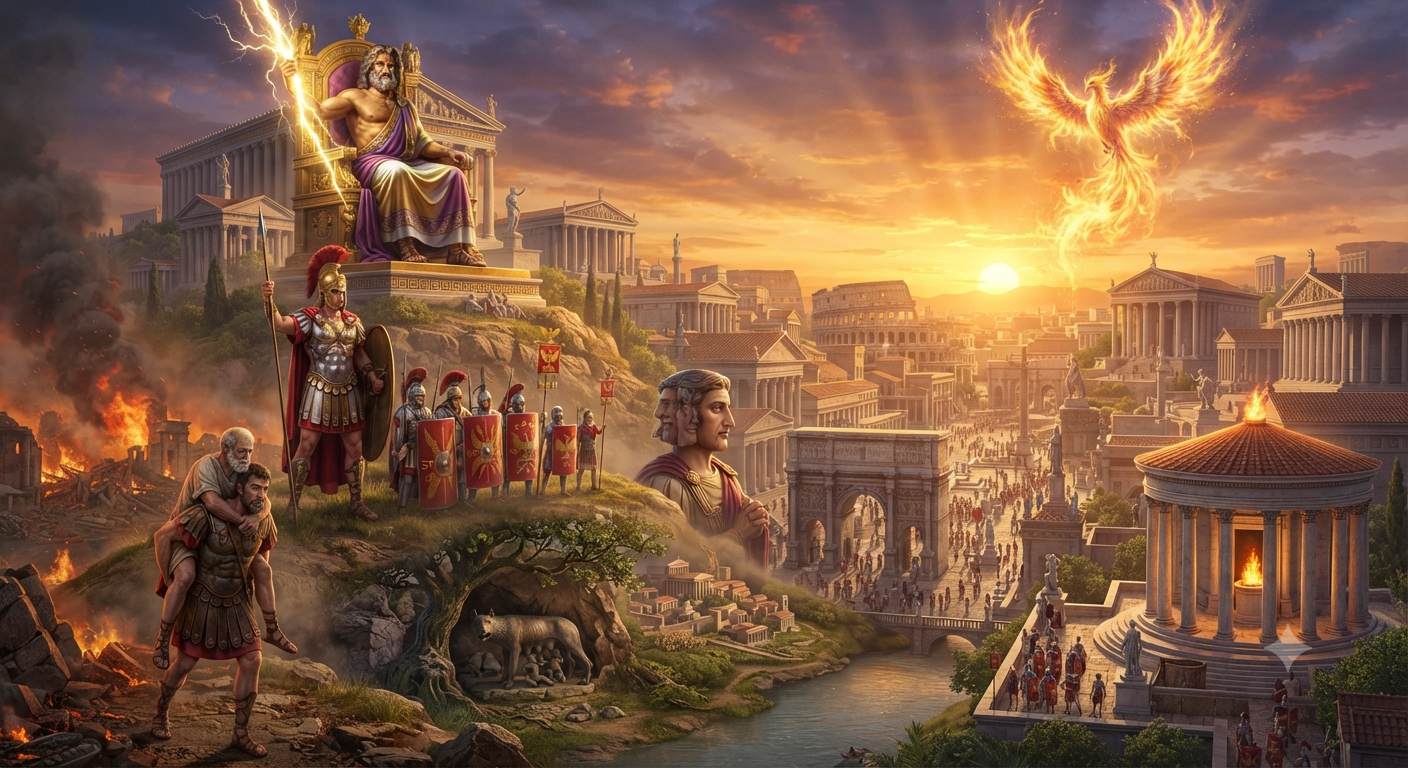
Roman Mythology: The Complete Guide to the Gods, Symbols, Creatures, and Myths of Ancient Rome
Historical and Geographic Context Roman mythology developed across more than a thousand years, from the legendary founding of Rome in ...
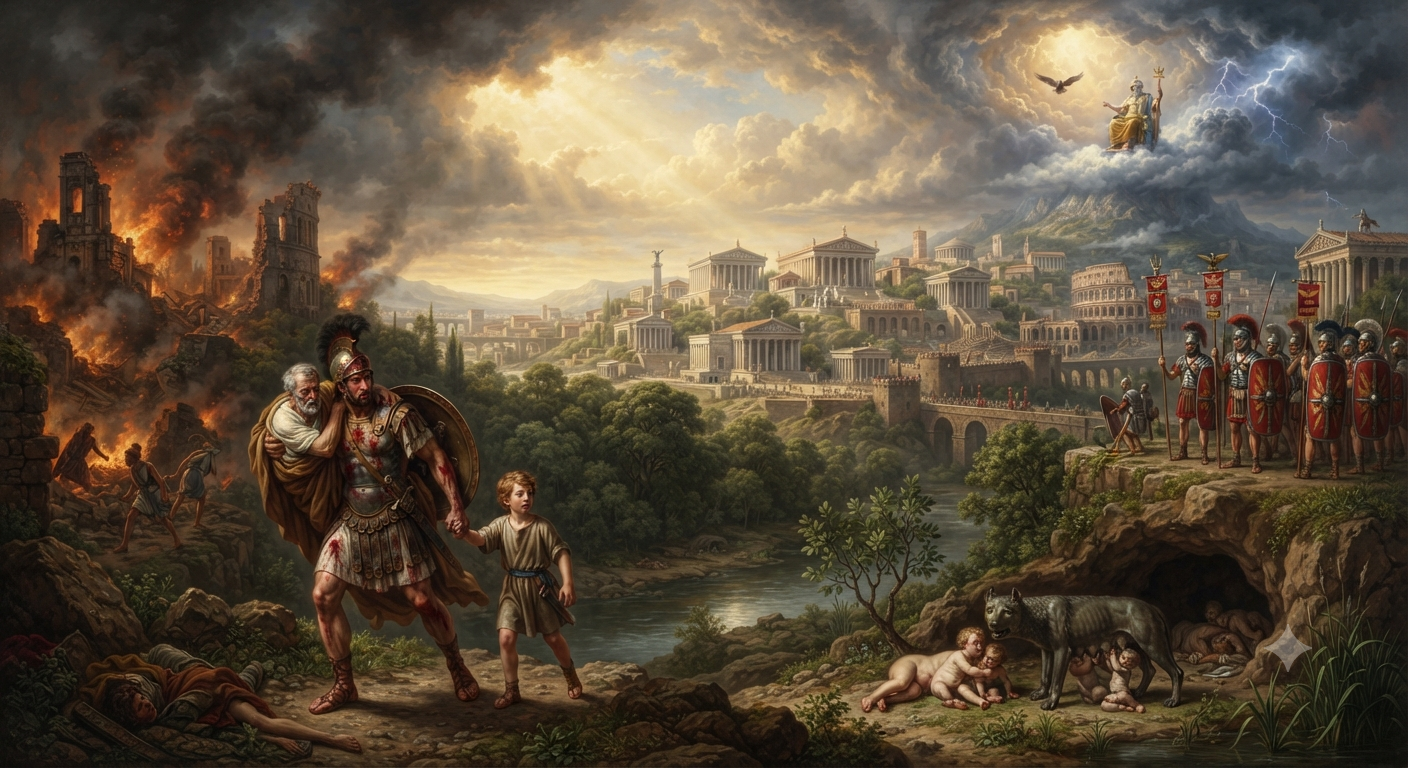
Roman Myths and Legends: The Complete Guide
Roman mythology’s greatest narratives are stories of founding — of a city, a people, and a set of values. This ...