Difference between a Giant and a Monster in Greek Mythology
Introduction
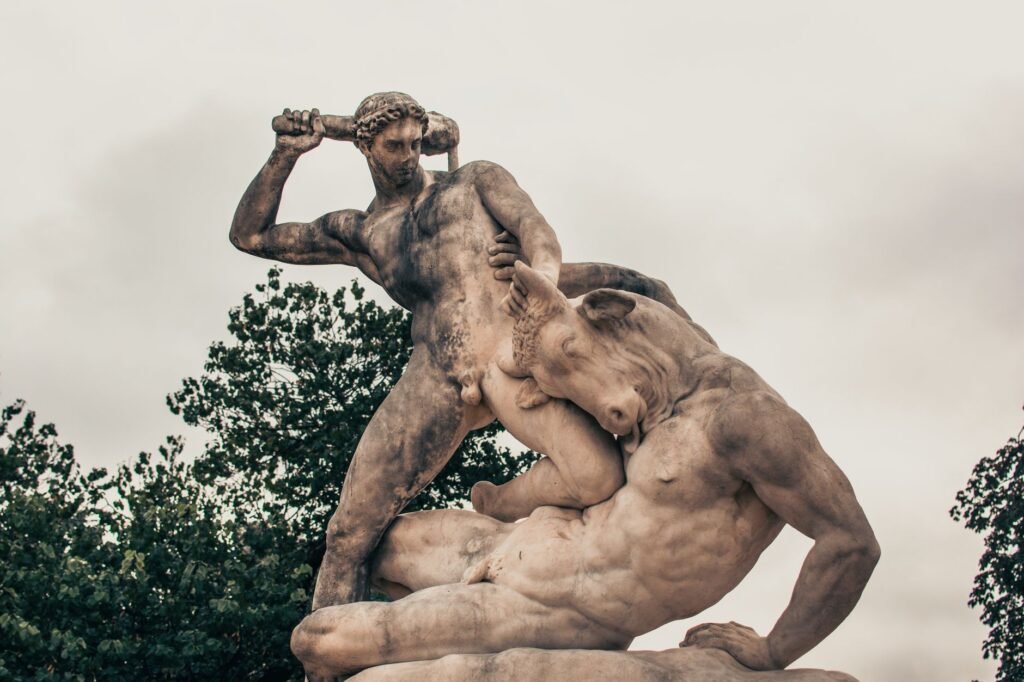
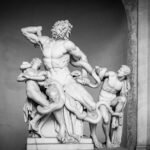
The difference between a giant and a monster in Greek mythology is often misunderstood because modern usage tends to blur the two terms. In ancient Greek literature, however, they are not identical categories. A giant usually refers to a being of extraordinary size and often divine or semi-divine ancestry, especially the Gigantes who challenged the Olympian gods. A monster is a broader term that can describe many kinds of terrifying or unnatural beings, from serpents and hybrid creatures to giant opponents and beings with multiple heads or bodies.
This distinction matters because Greek mythology does not classify supernatural beings in a single fixed system. Instead, myths use size, ancestry, shape, behavior, and relationship to the gods to define beings in different ways. Understanding the difference between giants and monsters helps clarify Greek religion, epic poetry, and later classical tradition.
Origin and Meaning
The English word giant comes from Latin gigas, which itself comes from Greek gígas (γίγας, plural Gigantes). In Greek myth, the Gigantes were a specific race of beings linked to the earth and the conflict with Zeus and the Olympians.
The word monster is broader. It comes into English through Latin monstrum, a term that originally meant an omen, warning, or prodigy. In Greek, several words can correspond loosely to “monster,” including:
- téras (τέρας): a marvel, wonder, or monstrous sign
- pháusma: apparition or specter in some contexts
- drákōn (δράκων): serpent or dragon-like creature
- descriptive terms for malformed, hybrid, or terrifying beings
In ancient Greek usage, a monster was not necessarily defined by size. A creature could be monstrous because it was unnatural, hybrid, dangerous, or associated with divine punishment or chaos.
Historical Context
Greek mythology developed over many centuries through oral tradition, poetry, local cult, and later literary retellings. Because of this, the categories of giant and monster do not function as rigid biological classes. They are mythic and symbolic categories.
Giants in Greek tradition
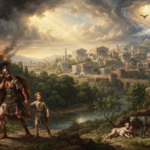
The best-known giants are the Gigantes, a race born from the earth, usually after Uranus was castrated by Cronus. They are primarily remembered for the Gigantomachy, their war against the Olympian gods. In art and literature, they are often depicted as enormous warriors with human features, sometimes with serpent legs.
Monsters in Greek tradition
Monsters appear throughout Greek myth and epic. They include:
- Typhon, a cosmic enemy of Zeus
- Echidna, mother of many monsters
- Cerberus, the three-headed hound of Hades
- Hydra, the many-headed serpent
- Chimera, the fire-breathing hybrid creature
- Scylla and Charybdis, sea dangers in mythic form
These beings are not one group. Some are unique individuals, some are offspring of primordial powers, and some are local or regional beings attached to specific stories.
Cultural function
Both giants and monsters help Greek myth express ideas about:
- chaos versus order
- civilization versus wilderness
- divine authority versus rebellion
- human limits and heroic testing
Main Characteristics
The difference between a giant and a monster in Greek mythology can be summarized by several key features.
| Feature | Giant | Monster |
|---|---|---|
| Core meaning | A large, powerful being, often from a specific race | A broad category of terrifying or unnatural beings |
| Greek term | Gigās, Gigantes | Téras, drákōn, and other descriptive terms |
| Typical role | Rebellious enemy of the gods, especially in Gigantomachy | Threat, trial, omen, or force of chaos |
| Shape | Often humanoid and oversized | Often hybrid, serpentine, multi-headed, or otherwise unnatural |
| Origin | Frequently earth-born or divine lineage | Varies widely; may be divine, primordial, cursed, or created |
| Function in myth | Cosmic rebellion and divine conflict | More varied: guardian, enemy, omen, punishment, or marvel |
Giants
Giants are usually characterized by:
- immense size
- strength surpassing mortals
- resistance to ordinary weapons
- close association with the earth
- antagonism toward the Olympian gods in many traditions
Monsters
Monsters are usually characterized by:
- unnatural appearance
- hybrid or non-human form
- threatening or chaotic behavior
- association with fear, danger, or divine punishment
- variable size; some are huge, but size is not essential
Family and Genealogy
Genealogy in Greek mythology differs from author to author. The family histories of giants and monsters are not always consistent.
The Gigantes
In the most influential tradition, the Gigantes are born from Gaia (Earth), sometimes from the blood of Uranus after his castration. Ancient sources do not always agree on details. The Gigantes are sometimes treated as a race rather than individual personalities.
Famous giants include:
- Alcyoneus
- Porphyrion
- Enceladus
- Ephialtes
- Mimas
- Pallas
Their parentage and number vary in different sources.
Monstrous genealogies
Monsters often have richer family connections than giants. For example:
- Typhon is usually the child of Gaia and Tartarus, though sources vary.
- Echidna is often a mate or counterpart of Typhon.
- Their offspring include Cerberus, Orthrus, the Lernaean Hydra, and the Chimera.
- Scylla appears with multiple genealogies in ancient literature.
Unlike giants, monsters are frequently integrated into a broader mythic family of danger and chaos.
Relationship to gods and heroes
Giants are often direct enemies of the Olympians. Monsters are more likely to confront individual heroes such as:
- Heracles
- Perseus
- Bellerophon
- Odysseus
- Jason, in some traditions
Symbols
There is no single universal set of symbols for giants or monsters in Greek mythology, but several images recur.
Symbols associated with giants
- stones and mountains: because giants are linked to earth power
- weapons such as clubs and boulders: representing brute force
- serpent legs in art: emphasizing chthonic, earth-born nature
- scale and height: visual markers of overpowering strength
Symbols associated with monsters
- multiple heads
- serpent bodies
- hybrid anatomy
- fire or venom
- sea imagery in the case of aquatic monsters
Symbolic meaning
Giants symbolize resistance to divine order. Monsters symbolize the boundaries of the human and natural world. Both can stand for chaos, but monsters often do so in more varied and imaginative forms.
Sacred Animals
Greek mythology does not assign sacred animals to giants in the same way it does to some gods. However, certain animals are associated with monstrous beings.
Animals linked to monsters
- serpents: common in monster imagery, especially for earth-born or chthonic beings
- dogs: associated with Cerberus and other underworld creatures
- lions: part of the Chimera
- goats: also part of the Chimera
- birds: in some hybrid monsters or harpy-like beings
- sea creatures: associated with marine monsters such as Scylla
Symbolic significance
These animals often represent:
- wildness
- danger
- liminality
- death
- fertility and earth power
- the untamed forces of nature
For giants, serpent imagery is especially important in art because it links them to the earth and the underworld.
Sacred Plants
Greek myths about giants and monsters do not establish a stable set of sacred plants comparable to the laurel of Apollo or the olive of Athena. Still, some plants appear in related stories.
Plants in monster myths
- asphodel is associated with the underworld in later Greek tradition
- reeds and marsh plants may appear in landscapes of monstrous encounters
- medicinal herbs sometimes appear in myths involving poisons, wounds, or healing
Plants in giant and earth symbolism
Because giants are earth-born, they are sometimes indirectly associated with:
- fertile soil
- stone-covered mountains
- roots and subterranean forces
This is symbolic rather than cultic. Ancient sources do not present a standard “sacred plant of the giants.”
Sacred Places
Giants and monsters are often tied to specific places in myth, though these are not usually “sacred” in the same sense as temples dedicated to gods.
Places associated with giants
- Phlegra: often identified as the battlefield of the Gigantomachy
- Mount Olympus: site of their conflict with the gods
- Sicily: linked in some traditions to Enceladus beneath Mount Etna
- Campania and volcanic regions: later traditions connect giants with subterranean fires and seismic activity
Places associated with monsters
- the cave or marsh of Lerna: home of the Hydra
- the underworld: for Cerberus and other chthonic beings
- the sea: for Scylla, Charybdis, and other maritime dangers
- the far west or remote landscapes: where heroic myths often place monstrous encounters
- Aethiopia and other distant lands in some traditions, where wonders and monsters are placed at the edge of the known world
Geographic meaning
These places reinforce the symbolic function of both categories. Giants often belong to the earth itself, especially mountains and volcanic landscapes. Monsters often inhabit borders: caves, seas, deserts, and underworld entrances.
Powers and Attributes
Giants
Giants are powerful because of their size and strength. In some traditions, they are nearly invincible unless attacked by both gods and heroes working together. Their main attributes include:
- tremendous physical force
- resistance to ordinary combat
- earth-linked vitality
- aggressive rebellion against divine rule
Monsters
Monsters have more varied attributes depending on the creature. Their powers may include:
- multiple heads that regrow when cut off
- poisonous breath or blood
- fire
- flight
- invisibility in some traditions
- overwhelming speed or stealth
- ability to inspire terror
Comparison
The giant is a type of overwhelming being defined mainly by scale and opposition. The monster is defined more by deformity, hybridity, or transgression of boundaries. A giant can be monstrous, but not all monsters are giants.
Main Myths
The Gigantomachy
The most important giant myth is the Gigantomachy, the battle between the Olympian gods and the Gigantes. This conflict is a major theme in Greek art and religion. The gods are usually victorious, often with the help of Heracles.
Important giants in the myth include:
- Alcyoneus, who was said to be immortal in his homeland until dragged away
- Porphyrion, who attacked Hera in some versions
- Enceladus, sometimes buried beneath volcanic terrain
- Mimas, defeated in the conflict
This myth represents the triumph of cosmic order over rebellious force.
Heracles and monsters
Heracles is the great monster-slayer of Greek mythology. His labors involve many beings that are clearly monsters rather than giants:
- the Nemean Lion
- the Lernaean Hydra
- Cerberus
- the Stymphalian Birds
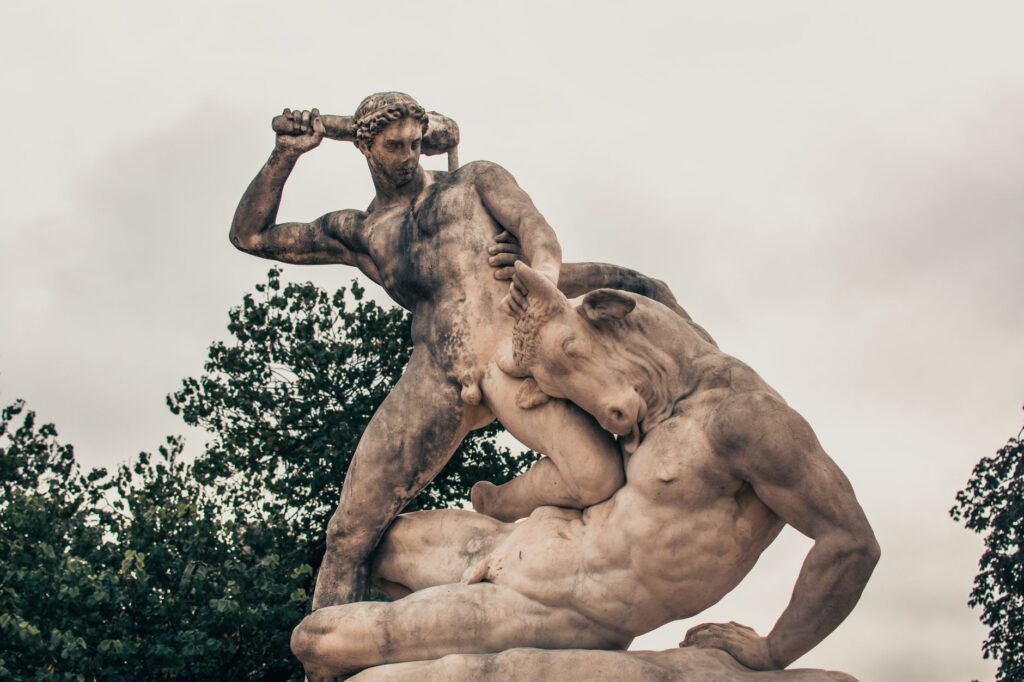
- the Cretan Bull
These stories emphasize heroic mastery over chaos and danger.
Perseus and the Gorgon
Perseus defeats Medusa, a monstrous Gorgon. Medusa is not a giant. She is a monster by appearance and function, associated with petrification and divine terror.
Bellerophon and the Chimera
Bellerophon defeats the Chimera, a hybrid monster. The Chimera is a classic example of a monster in Greek mythology because it combines different animal forms into one unnatural whole.
Relationship with Other Mythological Figures
Giants and the gods
Giants are defined by conflict with the Olympians. They challenge Zeus’s rule and the stability of the cosmos. Their relationship to the gods is primarily adversarial.
Monsters and the gods
Monsters may serve or oppose gods, depending on the myth. For example:
- Cerberus guards the underworld and is associated with Hades
- some monsters are born from divine or primordial powers
- many monsters are punished by the gods or set as trials for mortals
Giants and heroes
Heracles is crucial in giant myths because he helps the gods in the Gigantomachy. Giants often function as enemies of both gods and heroes.
Monsters and heroes
Monsters often provide tests for individual heroes. These stories stress courage, intelligence, and divine assistance.
Worship and Cult
Giants
Giants were not typically worshipped as gods. However, their myths appear in religious art, festival imagery, and local explanations of landscape phenomena such as earthquakes or volcanic activity.
Monsters
Monsters are not objects of worship either. Still, they are important in ritual imagination because they embody dangers that religion seeks to control. Apotropaic images—meant to ward off evil—sometimes reflect monstrous forms, especially in the case of gorgoneia, images of Medusa’s face.
Ritual function
The existence of monsters in myth can be understood as religiously meaningful:
- they define what is dangerous or impure
- they mark the limits of civilization
- they justify sacrifice, prayer, and divine protection
- they offer narrative explanations for ritual fear and protection
Ancient Sources
Several ancient authors are essential for understanding the distinction between giants and monsters.
Key sources on giants
- Hesiod, especially the Theogony, for divine genealogy and cosmic conflict
- Apollodorus, Bibliotheca, for systematic myth summaries
- Pindar, in references to the Gigantes and heroic combat
- Nonnus, much later, for expanded mythic material
Key sources on monsters
- Homer, Iliad and Odyssey, for early monster encounters
- Hesiod, for creatures such as Typhon and Echidna
- Apollodorus, for heroic monster-slaying narratives
- Pausanias, for local traditions and cultic interpretation
- Ovid, especially the Metamorphoses, for Roman literary retellings of Greek monsters
Important caution
Ancient sources do not always agree. The same being may be described differently depending on author, genre, and period. In some texts, a figure may seem giant-like because of size, but function as a monster because of appearance or behavior.
Roman Equivalent
There is no exact Roman equivalent to the Greek distinction, but Roman literature adopted both categories.
Giants in Roman tradition
Roman authors used gigas and related forms for Greek giants. The Giants appear in Roman poetry and art, often as symbols of rebellion against cosmic order.
Monsters in Roman tradition
The Latin term monstrum broadened the idea of a monster or portent. Roman literature, especially in Ovid, transformed many Greek monsters into major literary figures. The Romans also inherited the Greek tendency to use monsters as symbols of divine warning, disorder, and transformation.
Adaptation rather than replacement
Roman tradition did not erase the Greek distinction. Instead, it reworked it through Latin language, political symbolism, and artistic adaptation.
Influence on Modern Culture
The difference between giants and monsters in Greek mythology remains important in modern storytelling, fantasy, and popular culture.
Literature
Modern authors often borrow Greek giants as symbols of ancient rebellion and monsters as embodiments of fear or chaos. Writers of fantasy frequently distinguish between:
- gigantic humanoid enemies
- monsters with hybrid or unnatural forms
Cinema and television
Greek myth appears in films and TV series where giants are often shown as massive humanoid warriors, while monsters are rendered as distinct creature designs. The contrast remains visually powerful.
Games
Video games often use the distinction clearly:
- giants as large melee enemies or boss figures
- monsters as a wider class of dangerous creatures with special abilities
Art and comics
Artists continue to use the visual language inherited from Greek myth:
- giants: towering humanlike bodies, often armed
- monsters: serpent bodies, multiple heads, claws, wings, or mixed anatomy
Cultural legacy
The distinction helps modern audiences understand why a creature like the Hydra is not simply a giant, and why the Gigantes are not merely generic monsters.
Curiosities
- In Greek myth, not every giant is a monster, but many giants are presented in monstrous ways in art and later retellings.
- The Gigantes are sometimes shown with snake legs, a detail that emphasizes their earth-born nature.
- Some ancient vase paintings depict giants fighting the gods in highly stylized combat scenes that mix human and animal features.
- The Greek word téras could mean both monster and wonder, showing that ancient attitudes were more flexible than modern ones.
- Typhon is one of the most terrifying figures in Greek mythology, but he is usually classed as a monster or primordial enemy rather than a giant.
- Medusa is a monster, not a giant, even though her size may be dramatized in modern depictions.
- The Gigantomachy became a powerful artistic symbol of order defeating chaos, especially in temple sculpture and monumental art.
Frequently Asked Questions
1. What is the main difference between a giant and a monster in Greek mythology?
A giant is usually a very large humanoid being, especially one of the Gigantes. A monster is a broader category that includes many kinds of unnatural, hybrid, or terrifying beings.
2. Are all giants monsters?
Not necessarily. Giants can be monstrous in appearance or behavior, but “monster” is a wider term. Some giants are mainly defined by size and rebellion rather than by hybrid form.
3. Are all monsters giants?
No. Most Greek monsters are not giants. Examples include the Hydra, Chimera, Cerberus, and Medusa.
4. Were giants and monsters worshipped?
Generally, no. They were usually feared, fought, or symbolically represented rather than worshipped. Their role was often to define the boundaries of divine and human order.
5. Who were the most famous giants in Greek mythology?
Famous giants include Alcyoneus, Porphyrion, Enceladus, Mimas, and Ephialtes. Their stories are mainly connected with the Gigantomachy.
6. What are the most famous monsters in Greek mythology?
Famous monsters include Typhon, Echidna, the Hydra, the Chimera, Cerberus, Scylla, and Medusa.
7. Why do ancient sources describe some beings differently?
Greek mythology was not fixed in a single authoritative version. Different poets, local traditions, and later authors preserved different accounts of the same figure.
8. Why does the distinction matter?
It helps readers understand Greek myth more accurately. Giants and monsters play different narrative and symbolic roles, even when both are dangerous and extraordinary.
Conclusion
The difference between a giant and a monster in Greek mythology lies in more than size. Giants, especially the Gigantes, are usually earth-born adversaries of the Olympian gods, associated with overwhelming strength and cosmic rebellion. Monsters form a broader and more flexible category of beings defined by unnatural shape, danger, hybridity, or divine menace.
Ancient Greek mythology uses both categories to explain the struggle between order and chaos, civilization and wilderness, and the human and the inhuman. Giants and monsters continue to matter because they reveal how the Greeks imagined the limits of nature, power, and divine authority.

Orin Vale has spent the better part of two decades tracing the threads that connect the world’s oldest stories — from the halls of Asgard to the banks of the Nile, from Olympus to the jungles of the Maya. What began as a childhood fascination with flood myths and trickster gods grew into years of independent study across comparative mythology and ancient religion, always chasing the same question: what did these stories mean to the people who first told them? Orin writes for readers who want more than trivia — the ones looking for the beliefs, fears, and truths that myths were built to carry.