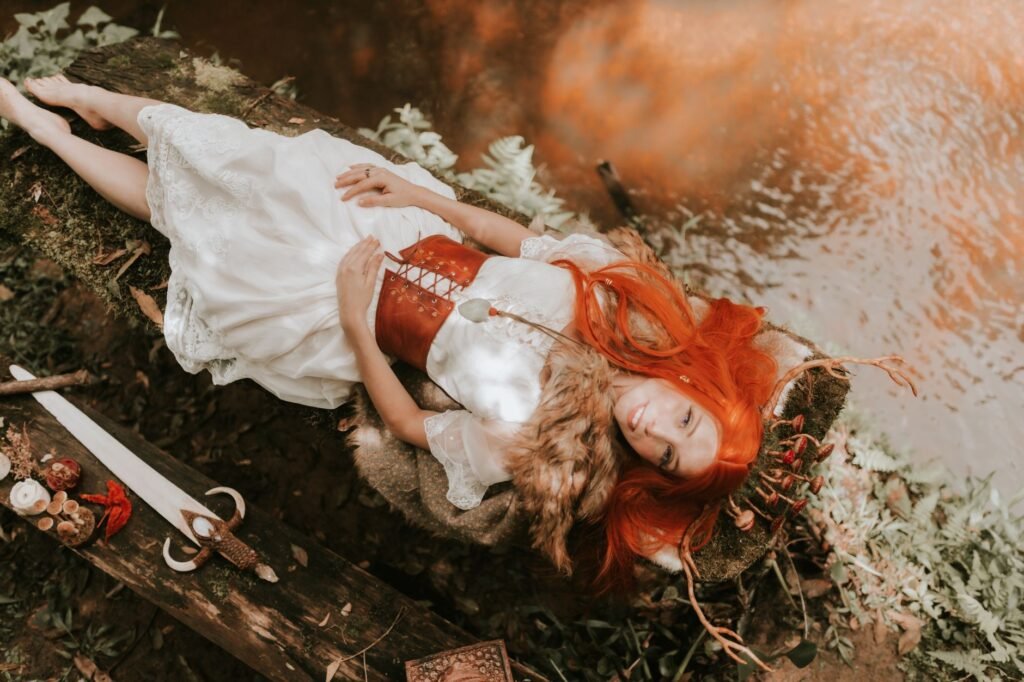
Flidais
Flidais is a figure from Irish mythology associated with wild animals, abundance, cattle, and the untamed natural world. She appears in medieval Irish literature as a powerful and enigmatic woman whose influence extends across forests, herds, and the fertility of the land. Although she is not among the most widely known deities of the Irish tradition, Flidais is important for understanding the complexity of pre-Christian Irish myth, where divine or semi-divine women often embodied both sovereignty and the productive powers of nature.
Unlike the gods of the classical Mediterranean world, Irish mythological figures are preserved mainly in medieval manuscripts compiled by Christian scribes. As a result, Flidais is known through scattered references rather than a single unified cult or canonical mythology. Even so, her role as a cattle-giving, animal-associated goddess or supernatural woman has made her a subject of interest in the study of Celtic religion, Irish literature, and the symbolism of kingship and fertility.
Origin and Meaning
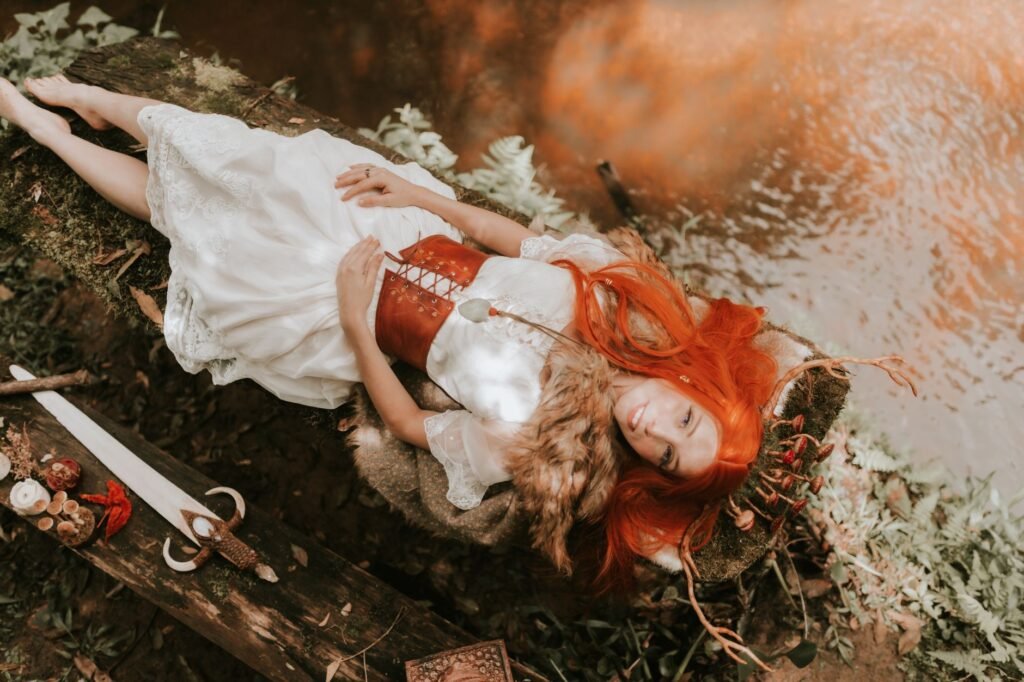
The name Flidais appears in Old Irish sources, but its exact etymology is uncertain and has been debated by scholars. Because the surviving evidence is limited and the mythology is filtered through later manuscripts, there is no universally accepted explanation of the name’s original meaning.
Some interpreters have connected Flidais with ideas of abundance, profusion, or wild growth, which would fit her association with fecundity and animal wealth. Others have treated the name as an inherited theonym whose precise linguistic development is no longer recoverable with confidence. In studies of Irish mythology, it is common to note that many divine names survive without clear etymological transparency.
The historical origin of Flidais belongs to the wider pre-Christian Irish religious landscape. She is best understood as part of a traditional Celtic mythic environment in which gods, goddesses, and other supernatural beings were linked to land, animals, and sovereignty. Because the written sources come from the early medieval period, her image reflects both older mythic material and later literary shaping.
Historical Context
Flidais is known from medieval Irish narrative and mythological material, not from a direct pagan liturgy or inscriptional record. The primary texts were written down by Christian monks, usually centuries after the oral traditions they preserved. This means the historical context of Flidais must be reconstructed cautiously.
Irish mythology often presents a world in which sacred kingship, fertility, and the health of livestock are deeply intertwined. In that setting, a figure such as Flidais represents more than a local forest spirit. She belongs to a mythic system where control over animals and the prosperity of herds could symbolize political and supernatural power.
Cattle were central to early Irish society. Wealth, status, and social obligation were frequently measured in cattle, and myths about cattle raids, herd protection, and supernatural cattle provision were especially significant. Flidais’s connection to cattle therefore places her in a major symbolic current within Irish tradition.
At the same time, she is associated with the wild: forests, deer, and untamed nature. This makes her one of the figures who mediates between cultivated society and the natural world beyond it. In Irish myth, such mediation is often crucial, because prosperity depends on a balanced relationship with the land and its hidden powers.
Main Characteristics
Flidais is generally characterized as a goddess or powerful supernatural woman linked to:
- Cattle and herd abundance
- Wild animals, especially deer
- Fertility and nourishment
- The woodland and uncultivated landscape
- Magical or extraordinary capacity to provide sustenance
One of the clearest themes associated with Flidais is her role as a source of milk and abundance. Some traditions describe her as having supernatural cattle or as being able to sustain many people and animals. This links her to the ancient Irish ideal of a generous otherworldly figure whose power ensures fertility and plenty.
Her association with deer and the forest also sets her apart from more domestic or courtly figures. She appears to belong to the liminal zone between civilization and wilderness. In that respect, she resembles other mythic women in Irish tradition whose identities are not confined to one role but encompass both nurturing and untamed aspects.
Because sources are sparse, scholars do not always agree on whether Flidais should be classified strictly as a goddess, a mythic queen, or an exceptional human woman endowed with supernatural features. The medieval texts often blur those categories.
Family and Genealogy
Flidais’s genealogy is not preserved consistently, and different sources provide different contexts for her relationships. This is typical of many Irish mythological figures whose stories were transmitted in multiple, sometimes contradictory, traditions.
In one tradition, Flidais is associated with Ailill Finn and is connected to cattle and property in the tale known as Táin Bó Flidhais (“The Cattle Raid of Flidais”). In this narrative tradition, she functions as a woman of great wealth and importance, with her own herds and household.
In another context, she appears as the consort or wife of Ailill, sometimes distinguished by epithet or genealogy depending on the text. These differing accounts show that Flidais was not fixed to a single narrative role.
Her children are not securely attested in a way that allows a definitive family tree. The surviving material is too limited to reconstruct a stable genealogy. As with many figures in Irish legend, her relationships are more important symbolically than biographically. She is defined less by a complete family line than by her association with abundance, land, and the supernatural economy of cattle.
Symbols
Flidais is commonly associated with symbols of fertility, animal life, and woodland plenty. While no formal iconographic tradition survives from pagan Ireland, several symbolic motifs recur in the literature:
| Symbol | Meaning |
|---|---|
| Cattle | Wealth, fertility, nourishment, social status |
| Milk | Sustenance, abundance, life-giving power |
| Deer | Wild nature, grace, liminality, forest power |
| Forest/Woodland | Untamed landscapes, hidden vitality, otherworldliness |
| Horned or herd imagery | Animal sovereignty and productive force |
In a mythological sense, cattle are probably her most important symbol. In early Irish culture, cattle were not merely livestock but an index of prestige and a measure of political and economic strength. A goddess associated with cattle abundance would naturally symbolize prosperity itself.
Deer, while less explicitly central in surviving texts than cattle, are also significant because they link Flidais to the forest and to a more elusive dimension of animal life. This makes her symbolically different from deities associated only with domestic fertility. She belongs both to the world of the herd and to the wild margins.
Sacred Animals
The animals most closely connected with Flidais are cattle and deer, though the evidence is literary rather than ritual.
Cattle
Cattle are the clearest sacred animal in relation to Flidais. In Irish myth, cattle often symbolize:
- prosperity and wealth
- kingship and legitimacy
- fertility of land and people
- divine generosity
Flidais’s role suggests a supernatural mastery over cattle or at least a special relationship to their productivity. This makes her part of a broader Indo-European pattern in which divine figures control herds and the flow of nourishment.
Deer
Deer symbolize the wild, forested aspects of her character. They are swift, elusive, and difficult to domesticate. In mythic terms, deer can represent untamed freedom and the vitality of nature outside human control.
Other animals
Some interpretations place Flidais in a broader class of animal-associated female figures, but the surviving sources do not justify a long list of specific sacred animals beyond cattle and deer. Any broader claims should be treated cautiously.
Sacred Plants
No plant can be securely identified as uniquely sacred to Flidais in the surviving sources. Unlike some mythological figures whose plant associations are explicit, Flidais is primarily animal-centered.
That said, because she is associated with woodland and fertility, scholars sometimes place her symbolically in the realm of:
- forest vegetation
- wild growth
- pastoral abundance
- the green, life-giving landscape
These are thematic associations rather than documented cult symbols. No ancient Irish text clearly names a specific sacred plant of Flidais. Any claim beyond this would be speculative.
Sacred Places
No temple or archaeological sanctuary dedicated to Flidais is known from the historical record. Ireland’s pre-Christian religious landscape did not leave behind easily identifiable temples in the classical sense, and medieval sources rarely preserve precise cult geography for gods and goddesses.
However, Flidais is strongly associated with the natural landscape, especially wooded or rural environments where herds could roam. Her mythic world is one of:
- forests and glades
- cattle pastures
- liminal spaces between settlement and wilderness
- potentially royal or aristocratic households linked to herds
The most important named literary setting connected with Flidais is Táin Bó Flidhais, a story centered on her cattle and wealth. In such tales, the location matters less as a fixed sacred site than as part of a narrative geography of raiding, guardianship, and sovereignty.
Powers and Attributes
Flidais is principally associated with powers of nourishment, fertility, and animal abundance. Her attributes can be summarized as follows:
- Provider of cattle and milk
- Guardian or possessor of herds
- Embodiment of wild fertility
- Association with forests and deer
- Possible sovereignty over land-based prosperity
- Connection to female generative power
Her ability to sustain cattle and produce abundance places her among the figures in Irish mythology who represent the land’s capacity to feed communities. This is not simply agricultural fertility in a narrow sense; it is the entire economic and symbolic foundation of early Irish society.
Her powers also suggest a bridge between civilization and wilderness. She is not merely a pastoral figure; she belongs to the wooded and untamed spaces that lie beyond ordinary domestic order. This combination of nurturing power and wildness is a defining feature of her mythic identity.
Main Myths
The most important story associated with Flidais is Táin Bó Flidhais, or The Cattle Raid of Flidais. This tale belongs to the broader Irish cycle of cattle raids, a genre in which wealth, honor, and political rivalry are dramatized through the theft or contestation of prized herds.
Táin Bó Flidhais
In this narrative, Flidais is linked with cattle of extraordinary abundance and value. The tale emphasizes her possession of great herds and the efforts of others to seize or control them. As with many Irish cattle-raid stories, the plot reflects both economic realities and symbolic concerns about power, legitimacy, and fertility.
Different versions and later summaries of the tale do not always align perfectly, and the text history is complex. Still, the central importance of Flidais is clear: she is not a marginal figure but the focus of the story’s wealth and tension.
Other mythic references
Flidais also appears in genealogical or incidental references in other Irish texts. These brief mentions reinforce her identity as a figure of cattle, richness, and supernatural importance, even when she is not the main subject of a story.
Because the corpus is small, her mythic profile rests heavily on a few key references rather than a long sequence of episodes.
Relationship with Other Mythological Figures
Flidais interacts with several important figures in Irish tradition, though the evidence is uneven.
Ailill and related figures
She is associated in some traditions with Ailill or Ailill Finn. As with many Irish mythic relationships, the exact nature of the connection varies by source. These associations place her within the network of aristocratic and heroic families that populate Irish narrative.
Cú Roí and heroic world associations
Flidais is sometimes discussed within the wider mythological milieu of heroic tales, cattle raids, and power struggles. She is not typically portrayed as a direct rival of major warriors, but her wealth makes her relevant to the same competitive world.
Other female sovereignty figures
Scholars often compare Flidais with other Irish women associated with land, fertility, and sovereignty. While the texts do not always present explicit connections, her role resonates with the broader pattern of female figures who embody the prosperity of the territory and the legitimacy of rulership.
This comparison should be made carefully. Flidais is not identical to these figures, but she participates in the same symbolic field.
Worship and Cult
There is no secure evidence for a formal cult of Flidais in the surviving historical record. No liturgy, temple system, or ritual calendar dedicated specifically to her is known.
However, the absence of direct evidence does not mean she lacked religious significance in pre-Christian tradition. Irish mythological deities were often integrated into a landscape of local customs, seasonal observances, and storytelling rather than centralized temple worship.
Possible forms of reverence, if they existed, would likely have involved:
- prayers or invocations for herd fertility
- protection of cattle
- acknowledgment of land-based abundance
- ritual storytelling or recitation
- seasonal customs linked to pastoral life
These possibilities are inferential rather than documented facts. The historical record does not permit a detailed reconstruction of her cult.
Ancient Sources
Flidais is known mainly from medieval Irish literature. The most important source is the tale Táin Bó Flidhais, preserved in manuscript tradition. Other references occur in genealogical and narrative materials.
Because Flidais is not a figure from Greco-Roman antiquity, she does not appear in the works of Homer, Hesiod, Ovid, or other classical Mediterranean authors. Instead, the principal sources belong to the Irish tradition:
- Táin Bó Flidhais
- assorted medieval Irish tales and genealogical texts
- later scholarly compilations and manuscript traditions
The difficulty in studying Flidais lies in the fragmentary and mediated nature of these sources. Many of the surviving texts were copied long after the pre-Christian period and may reflect literary adaptation as much as earlier belief.
Roman Equivalent
There is no exact Roman equivalent of Flidais.
She is sometimes loosely compared to Roman goddesses associated with animals, fertility, or the countryside, but such comparisons are interpretive rather than historical. Any parallel with figures such as Diana or Ceres should be treated cautiously, since these goddesses belong to a very different religious and literary system.
A better approach is to say that Flidais fits a broader Indo-European pattern of female figures linked to:
- fertility
- sovereignty
- animals
- land abundance
But she remains distinctly Irish in her literary context and symbolic associations.
Influence on Modern Culture
Flidais is not a major figure in global popular culture, but she has attracted interest in modern retellings of Celtic mythology, neo-pagan spirituality, and academic discussions of Irish religion.
Literature and scholarship
Flidais appears in studies of Irish myth, Celtic religion, and the symbolism of cattle in early Irish society. She is often cited as an example of the way mythological women can embody the productive power of the landscape.
Neo-pagan and pagan revival contexts
In modern pagan and reconstructionist circles, Flidais is sometimes honored as a goddess of the woods, wildlife, and fertility. These contemporary interpretations vary widely and are not identical to medieval evidence, but they show her continuing relevance in spiritual imagination.
Popular culture
Compared with better-known Celtic figures such as Brigid, the Morrígan, or the Dagda, Flidais has a limited presence in film, television, and mainstream fantasy. When she does appear, she is usually represented as a woodland goddess, animal guardian, or fertility figure.
Her relative obscurity has also contributed to her appeal among readers interested in lesser-known mythological figures.
Curiosities
- Flidais is one of the few Irish mythological figures strongly tied to cattle and woodland animals at the same time.
- Her story highlights how central livestock wealth was in early Irish culture.
- She is known mainly from a small number of sources, which means that much of her image is built from fragmentary evidence.
- In some modern interpretations, she is described as a forest goddess, but the ancient sources emphasize cattle more strongly than any modern label might suggest.
- The cattle-raid tradition shows that mythic stories were often used to dramatize real social values, especially wealth, prestige, and survival.
- Her name has uncertain etymology, which is common for many ancient Celtic divine names.
- Flidais belongs to a broader class of mythic women who combine nurturing power with a connection to wild nature.
Frequently Asked Questions
Who is Flidais?
Flidais is a figure from Irish mythology associated with cattle, fertility, abundance, and wild animals, especially deer.
Is Flidais a goddess?
She is often described as a goddess or divine figure, but the surviving sources do not always classify her in a single, consistent way.
What is Flidais known for?
She is best known for her association with cattle and for appearing in the tale Táin Bó Flidhais.
Does Flidais have a Roman equivalent?
No exact Roman equivalent exists. Some loose comparisons can be made with Roman nature or fertility goddesses, but they are not historically precise.
What animals are associated with Flidais?
Cattle are the most important animal associated with her, and deer are also strongly connected to her wild, forested aspect.
Are there temples dedicated to Flidais?
No confirmed temples or formal sanctuaries dedicated to Flidais are known from the historical record.
What is the meaning of the name Flidais?
The etymology of the name is uncertain, and scholars have not reached a definitive explanation.
Why is Flidais important?
Flidais is important because she reflects key themes in Irish mythology: fertility, cattle wealth, natural abundance, and the relationship between human society and the wild landscape.
Conclusion
Flidais occupies a distinctive place in Irish mythology as a powerful figure of cattle, fertility, and wilderness. Although the surviving evidence is limited, the themes associated with her are deeply rooted in the values of early Irish culture, where livestock, land, and sovereignty were central to social life.
Her mythological significance lies in her ability to connect the domestic and the wild, the economic and the sacred. As a cattle-giving and animal-associated figure, Flidais helps illuminate how the Irish tradition understood prosperity as something emerging not only from human effort but also from supernatural favor and the living landscape itself.
Because her stories survive only in fragmentary medieval sources, Flidais remains partly enigmatic. That uncertainty is itself characteristic of much of Irish myth, where ancient belief is preserved through layered literary transmission. Even so, she endures as an important emblem of abundance, animal power, and the deep mythic imagination of Ireland.

Orin Vale has spent the better part of two decades tracing the threads that connect the world’s oldest stories — from the halls of Asgard to the banks of the Nile, from Olympus to the jungles of the Maya. What began as a childhood fascination with flood myths and trickster gods grew into years of independent study across comparative mythology and ancient religion, always chasing the same question: what did these stories mean to the people who first told them? Orin writes for readers who want more than trivia — the ones looking for the beliefs, fears, and truths that myths were built to carry.