Anyone asking how did mythology help the Greeks explain the natural world is exploring one of the most fundamental functions ancient mythology served long before modern science existed to provide alternative explanations. Long before controlled experimentation or systematic observation offered reliable answers, mythology gave the ancient Greeks a coherent framework for understanding the sun, seasons, storms, and countless other natural phenomena they witnessed but could not otherwise explain. Understanding how did mythology help the Greeks explain the natural world means recognizing these myths not as primitive superstition, but as a genuinely functional system for organizing knowledge and meaning within a world that otherwise appeared unpredictable and mysterious.
Mythology as Pre-Scientific Explanation
Ancient Greek civilization developed centuries before the emergence of formal scientific method, meaning direct observation alone could not provide the systematic, testable explanations modern audiences typically expect when understanding natural phenomena. Within this context, mythology served as the primary explanatory framework available, offering causal narratives that connected observable natural events to the actions and intentions of specific divine figures.
This mythological approach to explanation differed fundamentally from scientific explanation, not through inferiority, but through serving a distinct cultural and cognitive function. Rather than relying on measurable, repeatable evidence, mythology provided causal coherence through narrative and divine agency, answering how did mythology help the Greeks explain the natural world by transforming unpredictable phenomena into stories involving comprehensible motivations and relationships.
Ancient Greek myths frequently took the form of etiological narratives, meaning stories specifically designed to explain the origin or cause of a particular natural feature, behavior, or phenomenon. This etiological function represents one of mythology’s most direct explanatory roles, providing a narrative “why” for natural occurrences that otherwise resisted straightforward observation or explanation using the tools available to ancient Greek society.
Recognizing mythology’s function as pre-scientific explanation provides essential context for understanding how did mythology help the Greeks explain the natural world across numerous specific domains, from celestial movement to seasonal change, each of which received its own dedicated mythological explanation within the broader Greek mythological system.
Explaining the Sky and Celestial Movement
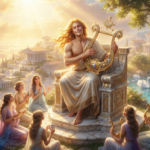
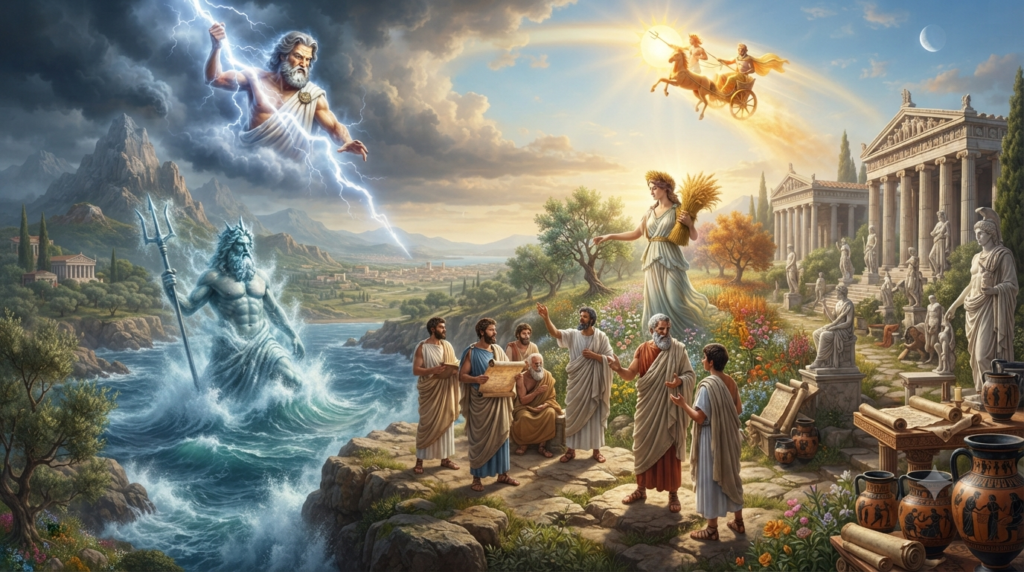
The daily movement of the sun across the sky received direct mythological explanation through the figure of Helios, who was believed to drive a golden chariot across the heavens each day, providing a clear causal narrative for the otherwise mysterious daily cycle of daylight and darkness. This myth exemplifies how did mythology help the Greeks explain the natural world by attributing predictable celestial patterns to deliberate, comprehensible divine action.
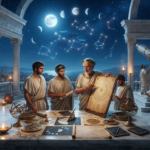
Constellations similarly received mythological explanation, with numerous star patterns understood as commemorating specific mythological figures, heroes, or creatures transformed into permanent celestial fixtures. This practice allowed the ancient Greeks to organize the night sky into a meaningful, narrative-rich framework rather than experiencing it as an arbitrary or unexplained scattering of distant lights.
Thunder and lightning were consistently attributed to Zeus, whose thunderbolt served as both weapon and symbol of his supreme authority among the gods. This mythological explanation provided the ancient Greeks with a direct causal link between observable atmospheric phenomena and divine will, transforming frightening, unpredictable weather events into expressions of intentional, comprehensible divine action rather than random natural occurrence.
These celestial and atmospheric myths collectively demonstrate how did mythology help the Greeks explain the natural world by providing consistent, narratively coherent explanations for phenomena occurring far beyond human control or direct manipulation, allowing ancient observers to feel a genuine sense of causal understanding regarding events in the sky above them.
Explaining the Seasons and Agriculture
The changing of the seasons received one of Greek mythology’s most enduring explanatory narratives through the myth of Demeter and Persephone, in which Persephone’s annual descent into and return from the underworld directly corresponds to the cycle of agricultural dormancy and renewal. This myth illustrates precisely how did mythology help the Greeks explain the natural world by connecting emotional narrative directly to observable seasonal agricultural patterns.
According to this myth, Demeter’s grief during Persephone’s absence causes the earth to become barren, explaining the reduced agricultural productivity associated with winter months, while her joy upon Persephone’s return corresponds directly to spring’s renewed fertility and growth. This narrative provided ancient Greek farmers with a comprehensible, emotionally resonant explanation for agricultural cycles central to their survival and economic stability.
This connection between seasonal change and divine emotional state reflects a broader pattern within Greek mythology, linking agricultural fertility directly to divine favor or displeasure. This mythological framework reinforced the perceived importance of proper religious observance, as maintaining positive relationships with agricultural deities became directly tied to ensuring successful harvests and continued community survival.
This seasonal mythology demonstrates how did mythology help the Greeks explain the natural world by transforming an abstract, cyclical natural pattern into a deeply human, emotionally comprehensible narrative, allowing agricultural communities to understand seasonal change through relatable divine experience rather than as an arbitrary, unexplained natural process.
Explaining the Sea and Natural Disasters
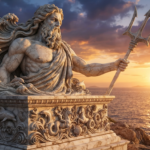
Poseidon’s association with the sea provided the ancient Greeks with a direct mythological explanation for maritime phenomena, including storms, rough waters, and the general unpredictability that defined ancient seafaring and coastal life. This attribution allowed sailors and coastal communities to understand oceanic danger through the lens of divine temperament rather than as entirely random, incomprehensible natural risk.
Poseidon’s connection to earthquakes further extended this explanatory function into geological phenomena, providing a causal mythological framework for sudden, destructive ground movement that would otherwise have appeared entirely unpredictable and inexplicable to ancient observers lacking any scientific understanding of tectonic activity or geological processes.
This mythological explanation for natural disasters served an important psychological function beyond mere causal explanation, providing communities with a sense of agency regarding otherwise uncontrollable events. By attributing storms and earthquakes to divine will, ancient Greeks could engage in ritual practices intended to appease relevant deities, transforming passive vulnerability into active, meaningful religious response.
This pattern illustrates a particularly significant dimension of how did mythology help the Greeks explain the natural world, demonstrating that mythological explanation served not only intellectual understanding, but also emotional and psychological needs, providing communities with actionable religious practices for confronting genuinely dangerous and unpredictable natural forces.
Explaining Human Traits and Natural Behaviors
Beyond major cosmic and seasonal phenomena, Greek mythology also addressed smaller-scale natural questions through etiological myths explaining the origin of specific plants, animals, and even particular human characteristics through mythological transformation narratives. These smaller myths demonstrate how did mythology help the Greeks explain the natural world at even the most localized, specific levels of observation.
Numerous Greek myths describe mortals or lesser figures transformed into specific plants or animals as consequences of divine interaction, providing origin explanations for particular natural features observed within the everyday environment. These transformation myths allowed ancient Greeks to understand specific natural details through narrative causation rather than leaving such details entirely unexplained within their broader worldview.
Beyond pure natural explanation, these etiological myths frequently carried additional moral or pedagogical significance, using the natural world as a canvas for reinforcing cultural values and appropriate behavior. This dual function meant that explaining natural phenomena and teaching moral lessons often occurred simultaneously within a single mythological narrative, maximizing the cultural utility of these smaller-scale explanatory myths.
This pattern of smaller, localized etiological mythology reinforces the comprehensive scope of how did mythology help the Greeks explain the natural world, demonstrating that this explanatory function extended from the grandest cosmic questions down to the smallest details of everyday natural observation encountered within ordinary Greek life.
Why This Explanatory Function Mattered to Greek Society
Mythology’s explanatory function provided ancient Greek society with genuine psychological and cultural coherence in the face of an unpredictable natural world, transforming potentially frightening or confusing phenomena into comprehensible narratives involving recognizable divine motivations and relationships. This coherence proved essential for maintaining social and psychological stability within communities regularly confronting genuine natural danger and uncertainty.
This explanatory framework also directly shaped religious practice, as understanding natural phenomena through mythological narrative provided clear guidance regarding which deities required appeasement or worship in relation to specific natural concerns, whether agricultural fertility, maritime safety, or protection from severe weather. This connection between explanation and religious practice reinforced mythology’s practical, functional role within everyday Greek life.
Understanding how did mythology help the Greeks explain the natural world also illuminates why these myths proved so culturally persistent and widely shared across Greek society, as their explanatory function addressed genuinely universal human concerns regarding safety, survival, and comprehension of an often unpredictable natural environment.
Ultimately, mythology’s explanatory role reveals it as a sophisticated cultural tool addressing genuine intellectual and psychological needs, rather than simply reflecting primitive misunderstanding. This recognition provides essential context for appreciating Greek mythology’s lasting significance as a serious, functional system for organizing human understanding of the natural world.
FAQ — Quick Answers About Mythology and the Natural World
How did mythology help the Greeks explain the natural world?
Greek mythology provided causal, narrative explanations for natural phenomena such as the sun’s movement, seasonal change, and storms, attributing them to the actions of specific gods.
What is an etiological myth?
An etiological myth is a story specifically designed to explain the origin or cause of a natural feature, behavior, or phenomenon within a culture’s mythological tradition.
How did the Greeks explain the seasons through mythology?
The Greeks explained the seasons through the myth of Demeter and Persephone, linking Persephone’s annual absence and return to agricultural dormancy and renewal.
Why did the Greeks attribute earthquakes to Poseidon?
Poseidon’s association with earthquakes provided the ancient Greeks with a comprehensible divine explanation for sudden, unpredictable geological events they could not otherwise understand.
Was Greek mythology considered scientific explanation?
No, Greek mythology functioned as pre-scientific explanation, offering narrative and religious understanding of nature rather than the systematic, evidence-based methods used in modern science.
Conclusion
Anyone who sets out to answer how did mythology help the Greeks explain the natural world discovers a remarkably comprehensive system, addressing everything from the daily movement of the sun to the changing of the seasons and the unpredictable dangers of the sea. Through figures like Helios, Demeter, and Poseidon, Greek mythology transformed confusing or frightening natural phenomena into comprehensible narratives grounded in recognizable divine motivation and relationship.
This explanatory function extended beyond grand cosmic questions into smaller, everyday natural observations, demonstrating mythology’s remarkable scope as a tool for organizing knowledge across every level of ancient Greek experience with the natural world. This system also provided crucial psychological stability and clear religious guidance for communities regularly facing genuine natural uncertainty and danger.
Ultimately, Greek mythology’s explanatory function reveals a sophisticated, culturally essential system that addressed real intellectual and emotional needs long before science offered alternative explanations, confirming why these myths remained so deeply significant to the society that created and relied upon them.

Orin Vale has spent the better part of two decades tracing the threads that connect the world’s oldest stories — from the halls of Asgard to the banks of the Nile, from Olympus to the jungles of the Maya. What began as a childhood fascination with flood myths and trickster gods grew into years of independent study across comparative mythology and ancient religion, always chasing the same question: what did these stories mean to the people who first told them? Orin writes for readers who want more than trivia — the ones looking for the beliefs, fears, and truths that myths were built to carry.