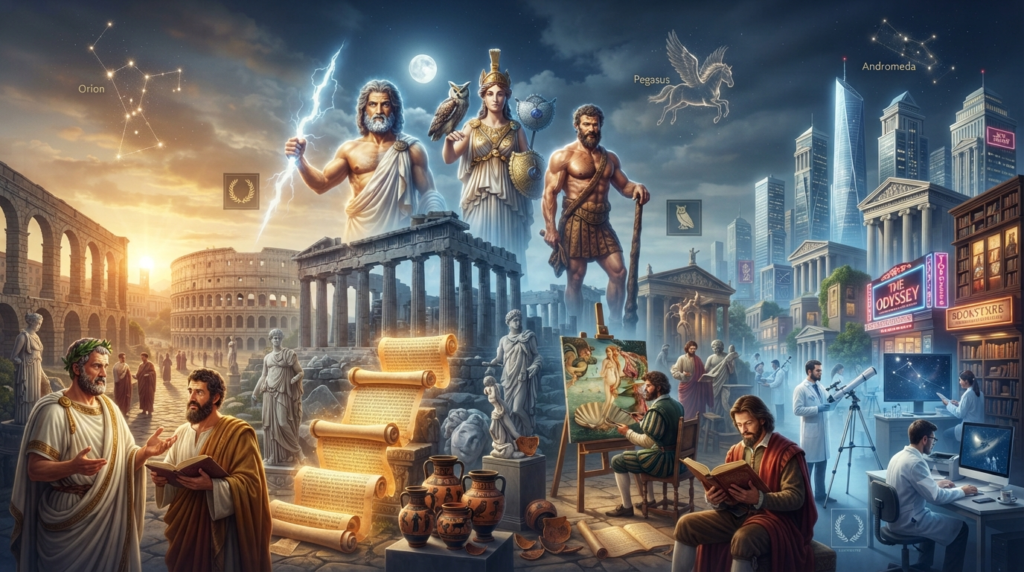
Anyone asking what impact did Greek mythology have on later civilizations quickly discovers that few ancient narrative traditions have shaped subsequent history as broadly or as deeply. From the religious practices of ancient Rome to the scientific vocabulary used today, the impact of Greek mythology extends across religion, art, literature, science, psychology, and everyday language. Understanding what impact did Greek mythology have on later civilizations requires tracing this influence across more than two thousand years, following a path that runs directly through Rome, the Renaissance, and into the structures of modern thought and expression.
The Direct Influence on Roman Mythology and Religion
Rome’s adoption and adaptation of Greek mythology represents one of the earliest and most direct examples of what impact did Greek mythology have on later civilizations, as Roman religion absorbed the Greek pantheon almost entirely, reassigning familiar deities with new names while preserving their essential characteristics. Zeus became Jupiter, Ares became Mars, and Aphrodite became Venus, illustrating how thoroughly Roman religious practice depended on the underlying structure Greek mythology had already established.
This process of adaptation extended beyond simple renaming, as Roman mythology frequently incorporated entire narrative frameworks directly from Greek sources, adjusting details to fit Roman cultural priorities while retaining the core mythological structure. This deep structural borrowing demonstrates that the impact of Greek mythology on Roman civilization went far beyond superficial influence, effectively providing the religious and narrative foundation upon which much of Roman spiritual life was built.
Because Rome eventually controlled a vast empire spanning much of Europe, North Africa, and the Near East, this Roman adaptation of Greek mythology became the primary vehicle through which Greek mythological ideas spread across the ancient world. Regions with no direct historical connection to Greece itself nonetheless encountered Greek mythological concepts through Roman religious practice, administration, and culture, significantly expanding the geographic reach of what began as a specifically Greek tradition.
This Roman transmission proved essential to answering what impact did Greek mythology have on later civilizations more broadly, since without Rome’s extensive adoption and dissemination of Greek mythological structure, these narratives might never have reached the wide geographic and cultural audience that ultimately allowed them to influence European civilization for centuries beyond the fall of both ancient Greece and Rome.
Greek Mythology in Renaissance Art and Literature
The Renaissance period marked a significant revival of interest in classical Greek and Roman sources, with artists and scholars actively rediscovering and reengaging with Greek mythology after centuries of reduced classical influence during the medieval period. This renewed engagement represents a crucial chapter in understanding what impact did Greek mythology have on later civilizations, as Renaissance culture deliberately positioned itself as a return to classical ideals, with Greek mythological subject matter becoming a central artistic and intellectual focus.
Renaissance painters and sculptors frequently drew directly on Greek mythological narratives for subject matter, using stories of gods, heroes, and mythological events as vehicles for exploring human emotion, beauty, and moral complexity within a classical framework. This artistic engagement demonstrated how Greek mythology continued to provide a rich, flexible narrative source even after more than a thousand years had passed since these myths were originally composed.
Renaissance writers similarly incorporated Greek mythological themes and references throughout their literary work, using familiar mythological figures and narratives as shared cultural reference points capable of conveying complex ideas to educated audiences. This literary engagement reinforced Greek mythology’s position as foundational cultural knowledge among European intellectuals during this period of renewed classical interest.
This Renaissance revival significantly shaped how later Western civilization would continue engaging with Greek mythology, establishing patterns of artistic and literary reference that persisted well beyond the Renaissance itself, illustrating a clear and lasting example of what impact did Greek mythology have on later civilizations across the broader arc of European cultural history.
Influence on Western Literature and Storytelling
Greek mythology contributed foundational narrative structures that continue to shape Western storytelling, including elements of the hero’s journey and the structure of tragedy, both of which trace significant roots back to ancient Greek mythological and dramatic tradition. These structural contributions represent a less obvious but equally significant example of what impact did Greek mythology have on later civilizations, influencing storytelling frameworks that extend far beyond mythology-specific content.
Greek tragedy, exemplified by playwrights such as Sophocles and Euripides, established narrative and dramatic conventions concerning fate, moral consequence, and human downfall that continued influencing Western literary tradition for centuries afterward. This dramatic legacy demonstrates how Greek mythology’s influence extended beyond its specific stories into the very mechanics of how later civilizations structured narrative and dramatic storytelling more broadly.
References to specific Greek mythological figures and narratives appear consistently throughout Western literature across many subsequent centuries, with authors frequently invoking familiar mythological touchstones to convey meaning efficiently to educated readers who shared this common cultural foundation. This recurring literary practice reinforced Greek mythology’s role as a persistent shared reference point within Western literary tradition long after ancient Greek civilization itself had ended.
This combination of structural influence and direct narrative reference illustrates a particularly enduring answer to what impact did Greek mythology have on later civilizations, demonstrating that its influence operated simultaneously at both the level of specific content and the deeper structural conventions shaping how stories themselves came to be told.
Greek Mythology’s Legacy in Science and Astronomy
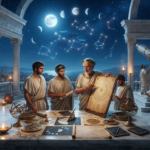
Greek mythology left a lasting mark on astronomy, particularly through the naming of constellations, many of which directly reflect figures and narratives from Greek mythological tradition. This naming convention, established in antiquity and preserved through subsequent astronomical tradition, ensures that Greek mythology remains embedded within the very language used to describe and study the night sky today.
Beyond constellations, planetary and lunar naming conventions frequently draw on Greek and Roman mythological figures, continuing a naming tradition that traces directly back to ancient mythological sources. This persistent astronomical naming practice represents a particularly visible and enduring example of what impact did Greek mythology have on later civilizations, extending its influence into scientific fields far removed from its original religious context.
Scientific and medical terminology also frequently derives from Greek mythological sources, with numerous conditions, phenomena, and technical terms named after specific mythological figures or narratives. This pattern demonstrates how thoroughly Greek mythology became embedded within technical and scientific vocabulary, providing a naming framework that later scientists continued to draw upon even as their fields developed far beyond anything the ancient Greeks could have anticipated.
This scientific and astronomical legacy illustrates a particularly durable dimension of what impact did Greek mythology have on later civilizations, showing that its influence extended well beyond art, literature, and religion into the technical language used to describe and understand the natural world itself.
Influence on Psychology and Philosophy
Modern psychology has drawn extensively on Greek mythology when naming and conceptualizing various psychological phenomena, with figures and narratives from Greek mythological tradition providing evocative, culturally resonant labels for complex aspects of human behavior and development. This pattern reflects a significant and specifically modern example of what impact did Greek mythology have on later civilizations, demonstrating its continued relevance well into the twentieth and twenty-first centuries.
Concepts named after Greek mythological figures continue to serve as accessible shorthand within psychological discourse, allowing complex ideas about human behavior and relationships to be communicated efficiently through familiar mythological reference points. This practice illustrates how Greek mythology provided later thinkers with a ready-made symbolic vocabulary for exploring aspects of human psychology that ancient Greek culture had already examined through its own mythological narratives.
Beyond psychology specifically, Greek mythology has long served philosophers and thinkers as a rich source of material for exploring broader questions about human nature, morality, and the human condition. This philosophical engagement with mythological narrative demonstrates that Greek mythology functioned not merely as religious belief, but as an enduring framework for examining fundamental aspects of human experience across many subsequent intellectual traditions.
This continued relevance within psychology and philosophy reinforces just how adaptable Greek mythology has proven across radically different historical and intellectual contexts, offering a particularly compelling answer to what impact did Greek mythology have on later civilizations that extends into contemporary academic and scientific disciplines far removed from ancient religious practice.
Language, Idioms, and Everyday Vocabulary
Greek mythology has left an extensive mark on everyday English vocabulary, with numerous words and idiomatic expressions tracing their origins directly back to specific mythological figures and narratives. Terms describing exceptional strength or difficult tasks often reference Herculean effort, while expressions describing a critical weakness frequently invoke the concept of an Achilles’ heel, both directly rooted in Greek mythological tradition.
This linguistic legacy extends into more specific vocabulary as well, including terms describing persistent, unfulfilled desire that trace back to the myth of Tantalus, demonstrating how even relatively obscure Greek mythological narratives have contributed lasting additions to everyday language. These linguistic contributions represent one of the most immediately accessible examples of what impact did Greek mythology have on later civilizations, visible in ordinary conversation regardless of a speaker’s specific knowledge of ancient mythology.
This pattern of linguistic borrowing extends beyond English into numerous other Western languages, reflecting the broad geographic and cultural reach Greek mythology achieved through its transmission via Roman civilization and subsequent European intellectual tradition. This widespread linguistic influence further demonstrates how deeply integrated Greek mythological concepts became within the fundamental vocabulary of Western civilization.
This persistent presence within everyday language offers perhaps the clearest and most immediately relatable answer to what impact did Greek mythology have on later civilizations, illustrating that its influence continues to operate quietly within ordinary speech patterns used by millions of people with little conscious awareness of their mythological origin.
Greek Mythology in Modern Culture
Contemporary literature, film, and other forms of popular media continue to draw extensively on Greek mythology, reflecting its ongoing relevance and adaptability across radically different modern storytelling formats. This continued engagement demonstrates that Greek mythology’s influence has not diminished with time, but instead continues finding new expression within evolving cultural and technological contexts.
This sustained modern interest reflects the same qualities that made Greek mythology influential throughout previous historical periods: rich characterization, morally complex narratives, and universally resonant themes concerning human nature, power, and consequence. These enduring qualities continue attracting contemporary audiences seeking meaningful, well-established narrative frameworks for exploring similar themes within modern contexts.
This ongoing cultural presence reinforces that understanding what impact did Greek mythology have on later civilizations remains an actively evolving question rather than a purely historical one, as new generations continue engaging with and reinterpreting these ancient narratives in ways that extend their influence into contemporary cultural production.
Recognizing this continued relevance provides essential context for fully appreciating the scope of Greek mythology’s historical impact, demonstrating that its influence represents an ongoing cultural process rather than a closed historical chapter belonging exclusively to ancient civilization.
FAQ — Quick Answers About the Impact of Greek Mythology
What impact did Greek mythology have on later civilizations?
Greek mythology significantly influenced Roman religion, Renaissance art and literature, Western storytelling structures, scientific and astronomical naming conventions, psychology, and everyday language.
How did Greek mythology influence Roman religion?
Roman religion adopted the Greek pantheon almost entirely, renaming familiar deities such as Zeus and Ares as Jupiter and Mars while retaining their core mythological characteristics.
Did Greek mythology influence modern science?
Yes, Greek mythology influenced scientific fields through constellation names, astronomical naming conventions, and numerous scientific and medical terms derived from mythological figures.
How does Greek mythology appear in everyday language?
Common expressions like “Herculean effort” and “Achilles’ heel” trace directly back to Greek mythology, demonstrating its lasting influence on everyday English vocabulary.
Is Greek mythology still influential in modern culture today?
Yes, Greek mythology continues to influence contemporary literature, film, and popular media, reflecting its ongoing cultural relevance well beyond ancient Greek civilization.
Conclusion
Anyone who sets out to answer what impact did Greek mythology have on later civilizations finds an influence so extensive that it touches religion, art, literature, science, psychology, and everyday language across more than two millennia of subsequent history. From Rome’s direct adoption of the Greek pantheon to the Renaissance revival of classical themes, Greek mythology has repeatedly proven its remarkable capacity to shape and inspire entirely new cultural and intellectual contexts.
This influence extends into unexpected areas, including scientific terminology, psychological vocabulary, and the very structure of Western storytelling itself, demonstrating that Greek mythology’s impact operates at both highly visible and quietly foundational levels throughout later civilization. Its continued presence within modern language and culture confirms that this influence remains active rather than merely historical.
Ultimately, Greek mythology’s impact on later civilizations demonstrates the extraordinary staying power of a narrative tradition capable of continuously adapting to new historical contexts while retaining its core mythological identity — a legacy few other ancient traditions have matched in scope or duration.

Orin Vale has spent the better part of two decades tracing the threads that connect the world’s oldest stories — from the halls of Asgard to the banks of the Nile, from Olympus to the jungles of the Maya. What began as a childhood fascination with flood myths and trickster gods grew into years of independent study across comparative mythology and ancient religion, always chasing the same question: what did these stories mean to the people who first told them? Orin writes for readers who want more than trivia — the ones looking for the beliefs, fears, and truths that myths were built to carry.