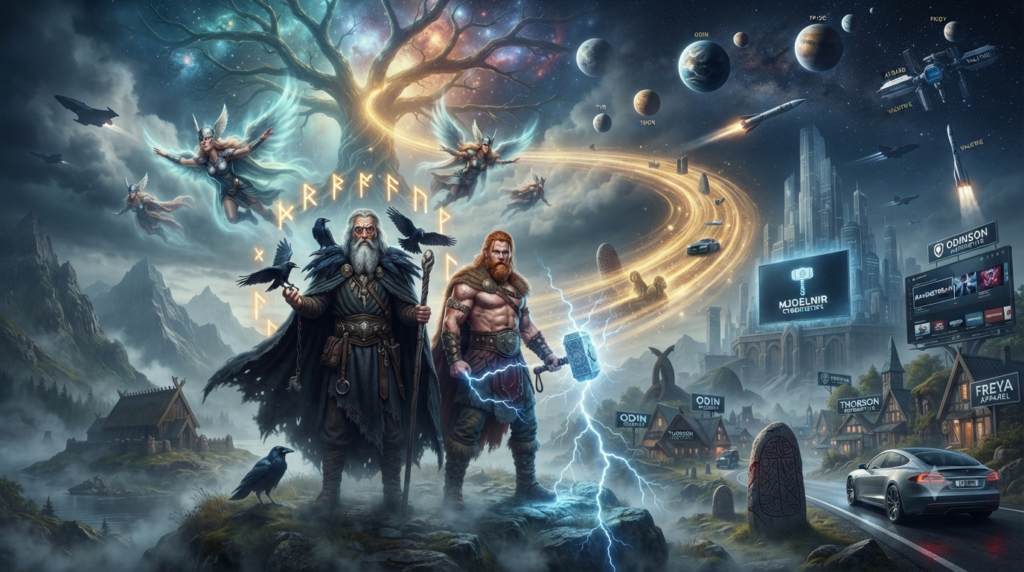
Anyone asking what are some things that are named after Norse mythology quickly discovers just how deeply this ancient Scandinavian tradition has embedded itself into everyday modern life, often without people realizing it. From the days of the week to distant moons orbiting Saturn, things named after Norse mythology surround us in ways that rarely draw attention despite their constant presence. Understanding what are some things that are named after Norse mythology reveals a legacy that has quietly persisted for over a thousand years, surviving Christianization, language change, and the passage of many centuries since these myths were actively practiced as religion.
The Days of the Week Named After Norse Gods
Several days of the week in English trace their names directly back to Norse and broader Germanic mythology, making the calendar itself one of the most consistently overlooked examples of things named after Norse mythology. Tuesday derives from Tyr, the Norse god associated with war, law, and justice, whose name was adapted into Old English as part of the broader Germanic naming pattern used to translate the Roman planetary day names.
Wednesday takes its name from Odin, referred to as Woden in Old English and Anglo-Saxon tradition, reflecting his position as the chief god within the Norse pantheon. This naming pattern directly parallels the Roman association of the same day with Mercury, illustrating how Germanic-speaking cultures substituted their own major deities for Roman gods with similar characteristics when adapting the weekly calendar structure.
Thursday honors Thor, the Norse god of thunder, whose name remains perhaps the most immediately recognizable example among things named after Norse mythology due to Thor’s continued prominence in modern popular culture. Friday, meanwhile, is generally attributed to Frigg, Odin’s wife and a significant goddess within Norse mythology, though some scholars debate whether this day instead honors Freyja, reflecting ongoing academic discussion about the precise etymological origins involved.
This pattern of naming days after Norse and Germanic deities emerged through direct adaptation of the earlier Roman calendar system, in which each day honored a corresponding Roman god or celestial body. Germanic-speaking peoples substituted their own comparable deities into this existing structure, ensuring that Norse mythology became permanently embedded into one of the most frequently used naming systems in the English language.
Celestial Bodies Named After Norse Mythology
Beyond the calendar, astronomers have continued the tradition of drawing on Norse mythology when naming newly discovered celestial bodies, particularly among the numerous moons orbiting Saturn. Moons such as Ymir, Skoll, Hati, and Narvi were specifically named after figures from Norse mythology, reflecting a deliberate astronomical naming convention that draws on mythological traditions from cultures around the world.
This practice of naming celestial bodies after mythological figures extends a much older astronomical tradition, historically dominated by Greco-Roman mythology for naming planets and their primary moons. However, as astronomers discovered increasing numbers of smaller moons requiring names, many turned to other mythological traditions, including Norse mythology, to provide a broader and more diverse naming pool for these newly identified celestial objects.
The choice to name Saturn’s more distant, irregular moons after Norse mythology specifically reflects thematic considerations, as Saturn’s moon-naming conventions often group moons by mythological tradition according to their orbital characteristics. This systematic approach means that things named after Norse mythology in astronomy are not arbitrary, but rather reflect intentional naming groups tied to specific orbital families within Saturn’s extensive moon system.
This continued astronomical naming practice demonstrates that things named after Norse mythology are not limited to historical linguistic accidents like the calendar, but represent an ongoing, deliberate choice by modern scientists who continue to draw on ancient mythological traditions when naming newly discovered features of our solar system.
Modern Brands and Products Named After Norse Mythology
Numerous modern brands and products have adopted names drawn from Norse mythology, frequently choosing figures associated with strength, resilience, and adventure to convey specific qualities to consumers. This branding pattern appears across industries ranging from automotive and technology to beverages and outdoor equipment, reflecting the enduring cultural association between Norse mythology and themes of power and endurance.
The popularity of Norse-inspired branding often stems from the widespread cultural recognition of figures like Thor and Odin, whose names carry immediate connotations of strength and mythic significance even among consumers with limited detailed knowledge of Norse mythology itself. This recognition makes Norse names a practical and evocative choice for companies seeking to convey specific brand qualities without requiring extensive audience education.
Beyond individual deity names, broader Norse mythological concepts, such as references to Valhalla or Ragnarök, also appear across various branding contexts, further illustrating how thoroughly Norse mythology has permeated modern commercial naming practices. These references demonstrate that things named after Norse mythology extend beyond direct character names into broader thematic and conceptual borrowing as well.
This widespread commercial adoption reinforces just how culturally resonant Norse mythology remains today, with companies continuing to draw on these ancient narratives specifically because audiences retain enough cultural familiarity to immediately recognize and respond to these mythological references in a modern marketplace context.
Places and Institutions Referencing Norse Mythology
Scandinavian place names frequently retain direct connections to Norse mythology, particularly in regions where Old Norse language and pre-Christian religious tradition once flourished extensively. Certain place names throughout Norway, Sweden, Denmark, and Iceland trace their origins directly to specific deities or mythological locations, representing some of the oldest and most historically rooted examples of things named after Norse mythology still in active use today.
Beyond Scandinavia itself, various institutions, particularly within military, athletic, and educational contexts, have adopted names drawn from Norse mythology to convey specific symbolic associations. Military units in particular have historically favored Norse mythological names, drawing on associations with warrior culture and legendary strength that align closely with military identity and tradition.
Sports teams and athletic organizations have similarly adopted Norse mythological names and imagery, capitalizing on the same associations with strength and competitive spirit that make these references popular within military and commercial branding as well. This pattern reinforces just how consistently Norse mythology continues to be invoked whenever cultures seek symbolic language associated with power, resilience, and heroic identity.
These institutional and geographic examples demonstrate that things named after Norse mythology extend well beyond individual products or calendar terminology into the deeper structural naming conventions used by organizations and places seeking to convey specific cultural or symbolic meaning through mythological association.
Why Norse Mythology’s Naming Legacy Has Lasted So Long
The remarkable persistence of Norse mythology within modern naming conventions, particularly through the days of the week, reflects how deeply embedded certain linguistic patterns become once established within a language’s everyday vocabulary. Even centuries after Scandinavia’s conversion to Christianity effectively ended active Norse religious practice, these mythological names remained functionally embedded within the calendar structure used daily by English speakers and other Germanic language users.
The English language’s Germanic linguistic roots played a particularly significant role in preserving this Norse mythological legacy, as the underlying structure connecting Norse gods to specific days of the week predates any conscious decision to maintain these references. This linguistic inheritance meant that Norse mythology remained present in everyday speech largely automatically, without requiring active cultural effort to preserve these particular naming connections.
Beyond linguistic inheritance, the continued modern interest in Norse mythology through literature, film, and popular culture has actively reinforced and renewed public awareness of things named after Norse mythology, ensuring that even references originally preserved through linguistic accident now carry renewed cultural recognition and meaning for contemporary audiences.
This combination of unconscious linguistic preservation and active modern cultural interest explains why Norse mythology’s naming legacy has proven so remarkably durable, continuing to surface across calendars, astronomy, branding, and institutional naming conventions well over a thousand years after these myths were originally practiced as living religious belief.
FAQ — Quick Answers About Things Named After Norse Mythology
What are some things that are named after Norse mythology?
Things named after Norse mythology include several days of the week, moons of Saturn, various modern brands, and numerous places and institutions that draw on Norse mythological figures and themes.
Which days of the week come from Norse mythology?
Tuesday, Wednesday, Thursday, and Friday derive from Tyr, Odin, Thor, and Frigg respectively, reflecting Germanic adaptation of the earlier Roman planetary calendar.
Are any planets or moons named after Norse mythology?
Yes, several moons of Saturn, including Ymir, Skoll, Hati, and Narvi, are named after figures from Norse mythology as part of ongoing astronomical naming conventions.
Why do companies use Norse mythology in branding?
Companies use Norse mythology in branding because names like Thor and Odin carry immediate associations with strength, resilience, and adventure recognizable to broad audiences.
Why has Norse mythology’s influence lasted so long in naming?
Norse mythology’s influence persists largely through Germanic language structure, particularly the calendar, combined with ongoing modern cultural interest that continues to reinforce these ancient references.
Conclusion
Anyone who sets out to answer what are some things that are named after Norse mythology discovers a legacy far more present in everyday life than most people realize, spanning the calendar, the night sky, commercial branding, and institutional naming traditions. From Tuesday’s connection to Tyr to Saturn’s moons named after Ymir and Skoll, this ancient Scandinavian tradition continues to surface in contexts most people encounter without ever recognizing their mythological origin.
This enduring presence reflects both the deep linguistic inheritance embedded within Germanic languages and the ongoing modern fascination with Norse mythology that continues to inspire new naming choices across industries and institutions. Together, these two forces have ensured that Norse mythology remains woven into daily life well over a millennium after its original religious practice ended.
Ultimately, things named after Norse mythology serve as a quiet but persistent reminder of how thoroughly ancient belief systems can shape modern language and culture, continuing to echo through calendars, night skies, and everyday naming choices long after the myths themselves ceased to be actively worshipped.

Orin Vale has spent the better part of two decades tracing the threads that connect the world’s oldest stories — from the halls of Asgard to the banks of the Nile, from Olympus to the jungles of the Maya. What began as a childhood fascination with flood myths and trickster gods grew into years of independent study across comparative mythology and ancient religion, always chasing the same question: what did these stories mean to the people who first told them? Orin writes for readers who want more than trivia — the ones looking for the beliefs, fears, and truths that myths were built to carry.