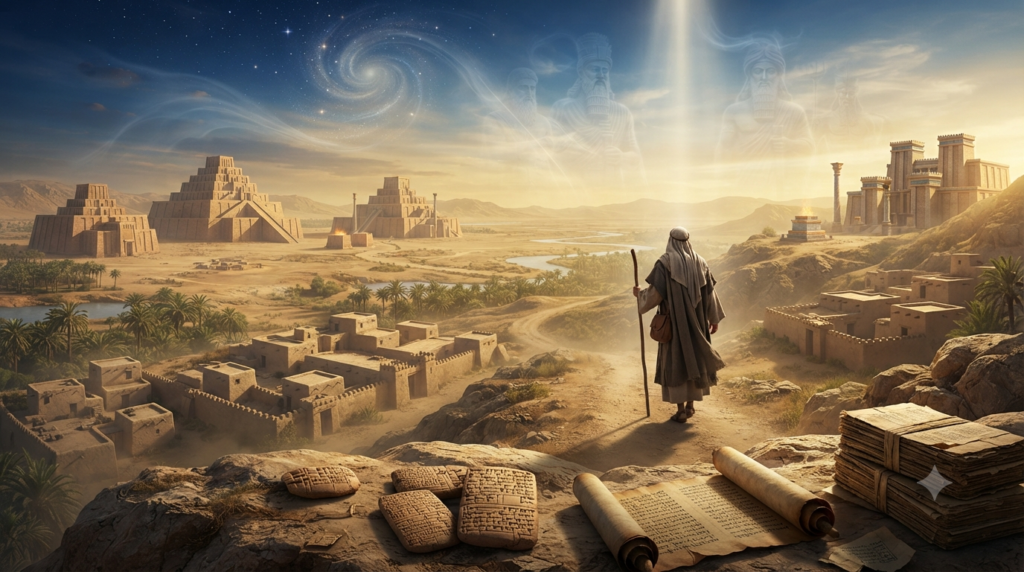
Anyone asking where did the idea of Abrahamic mythology originate from is asking a question rooted in comparative religion and historical scholarship, not a question about the truth or falsity of any particular faith. In academic study, the term “mythology” refers broadly to the narrative traditions through which cultures express their understanding of the sacred, the cosmos, and human history, and applying this framework to Judaism, Christianity, and Islam allows scholars to examine their shared historical and geographic roots without making theological judgments. Understanding where did the idea of Abrahamic mythology originate from means tracing these three living religious traditions back to a shared ancient context in the Near East, where their earliest narrative and historical foundations first took shape.
What “Abrahamic Mythology” Means in Comparative Religion
The term Abrahamic mythology, within the academic field of comparative religion, refers to the shared narrative and historical framework connecting Judaism, Christianity, and Islam, three major world religions that each trace elements of their tradition back to the patriarchal figure of Abraham. This term is used descriptively by scholars studying religious history and narrative structure, not as a claim about the factual accuracy of any religious belief, and understanding this distinction is essential before exploring where did the idea of Abrahamic mythology originate from in greater depth.
These three traditions are grouped together specifically because each incorporates Abraham as a foundational figure within its own religious narrative, despite developing distinct theological systems, practices, and historical trajectories over subsequent centuries. This shared reference point provides scholars with a useful comparative framework for examining how these traditions relate to one another historically, even as they diverged significantly in belief and practice.
Comparative religion as an academic discipline approaches Abrahamic mythology much as it approaches other major mythological and religious systems, examining shared narrative structures, historical development, and cultural context rather than adjudicating theological truth claims. This academic approach allows for meaningful historical analysis of Judaism, Christianity, and Islam alongside other world mythological traditions without requiring any judgment about their respective validity.
Understanding Abrahamic mythology through this comparative lens provides the necessary foundation for exploring where did the idea of Abrahamic mythology originate from, situating these three living religious traditions within a broader historical and geographic context shared by many ancient Near Eastern civilizations.
The Geographic and Historical Origins
The historical roots of Abrahamic mythology trace back to the ancient Near East, particularly the region known as the Fertile Crescent, encompassing parts of present-day Iraq, Syria, Israel, Palestine, and surrounding areas. This region served as the geographic and cultural backdrop for the earliest narratives that would eventually develop into the foundational texts of Judaism, and subsequently influence both Christianity and Islam.
The earliest layers of Hebrew tradition, forming the historical foundation from which Abrahamic mythology originates, developed over an extended period beginning roughly in the second millennium BCE, within a broader ancient Near Eastern context shared with neighboring civilizations. This historical setting placed the earliest Hebrew narratives in direct cultural contact with Mesopotamian, Canaanite, and other regional traditions that significantly influenced the surrounding narrative and religious landscape.
Canaanite religious practice and Mesopotamian mythological tradition, both well-documented through archaeological and textual evidence, provided important cultural context for the environment in which early Hebrew religious tradition developed. Scholars studying where did the idea of Abrahamic mythology originate from frequently point to these neighboring traditions as significant historical influences, evident in shared narrative motifs and regional cultural practices found throughout the ancient Near East.
This geographic and historical foundation situates Abrahamic mythology firmly within the broader tapestry of ancient Near Eastern civilization, reinforcing that its origins, like those of many major world mythological and religious systems, emerged from a specific historical and cultural environment shaped by centuries of regional interaction and exchange.
Abraham as the Shared Patriarchal Figure
Abraham serves as the central connecting figure across all three Abrahamic traditions, appearing in the Hebrew Bible, referenced within the New Testament, and honored within the Quran, though each tradition presents distinct narrative details and theological interpretations surrounding his life and significance. This shared reference point forms the basis for grouping these three religions under the comparative academic term Abrahamic mythology.
Within Jewish tradition, Abraham represents the founding patriarch through whom the covenant with God was first established, forming a foundational narrative element within the broader Hebrew Bible. Christianity incorporated this same patriarchal narrative while developing its own distinct theological framework, and Islam similarly honors Abraham, known as Ibrahim, as a significant prophetic figure within its own scriptural tradition, the Quran.
This common patriarchal figure explains precisely where did the idea of Abrahamic mythology originate from as an academic classification — not from any single unified original text, but from the shared narrative reference point these three distinct traditions independently developed and maintained across their respective scriptures and theological frameworks over centuries of separate historical development.
Recognizing Abraham’s role as this shared connecting figure provides essential context for understanding why scholars group these three otherwise theologically distinct religions together within comparative religious study, using the term Abrahamic mythology specifically to describe this shared narrative and historical foundation.
How the Three Traditions Diverged Over Time
Judaism developed as a distinct religious tradition centered around the covenant between God and the Israelite people, formalized through texts eventually compiled into the Hebrew Bible, including the Torah as its foundational component. This tradition established many of the earliest narrative and theological elements that would later become significant reference points for both Christianity and Islam in their own historical development.
Christianity emerged during the first century CE from within the context of Second Temple Judaism, developing distinct theological beliefs centered on the figure of Jesus while retaining significant continuity with earlier Hebrew scriptural tradition. This historical emergence from within Jewish religious context illustrates one clear example of how Abrahamic mythology, as a comparative category, encompasses traditions that developed through direct historical succession from one another.
Islam formed during the seventh century CE, incorporating and reinterpreting numerous figures and narratives from both Jewish and Christian tradition within its own distinct theological framework centered on the Quran and the prophethood of Muhammad. This later historical development further illustrates the layered, sequential nature of how the three Abrahamic traditions relate to one another across different historical periods.
This pattern of historical divergence — each tradition developing distinct theology while maintaining significant narrative continuity with what preceded it — represents a central element in understanding where did the idea of Abrahamic mythology originate from as a broader historical process rather than a single, isolated point of origin.
Shared Narrative and Mythological Elements
Judaism, Christianity, and Islam share several significant narrative elements beyond the figure of Abraham himself, including accounts of creation, a great flood narrative, and numerous shared prophetic figures who appear across all three traditions in varying theological contexts. These shared narrative structures form a significant part of what scholars examine when studying Abrahamic mythology comparatively.
Scholars of comparative mythology have long noted parallels between certain Hebrew Bible narratives, particularly the flood account, and earlier Mesopotamian texts such as the Epic of Gilgamesh, which contains a strikingly similar flood narrative predating the Hebrew Bible by many centuries. These parallels provide important historical context for understanding where did the idea of Abrahamic mythology originate from, situating certain narrative elements within a much older regional storytelling tradition.
This comparative approach to examining shared narrative motifs does not suggest that any single tradition simply copied another, but rather reflects how ancient Near Eastern cultures frequently shared and adapted common narrative structures within their own distinct religious and cultural frameworks. This pattern of shared regional narrative material appears consistently throughout ancient Near Eastern religious history, extending well beyond the traditions eventually classified as Abrahamic.
Examining these shared elements through comparative religious scholarship offers valuable historical insight without requiring any judgment about theological accuracy or originality. This academic approach treats shared narrative structures as evidence of historical and cultural connection within the ancient Near East, providing important context for understanding the deeper historical layers underlying Abrahamic mythology as a comparative category.
Why This Topic Matters in the Study of Comparative Mythology
Understanding where did the idea of Abrahamic mythology originate from holds significant academic value for scholars studying comparative religion, as it illuminates how three of the world’s largest living religious traditions share deep historical and narrative connections despite their distinct theological differences. This historical understanding enriches broader scholarly engagement with religious history as a connected, evolving field rather than a collection of entirely isolated traditions.
It remains essential to maintain a clear distinction between historical-comparative study and theological debate when examining this topic, as the academic classification of Abrahamic mythology addresses shared historical origin and narrative structure rather than making any claim about which, if any, theological interpretation is correct. This distinction ensures that comparative religious scholarship remains respectful and academically rigorous rather than devolving into value-laden comparison between living faith traditions.
This careful, neutral approach allows comparative mythology as a field to engage meaningfully with Abrahamic traditions using the same historical and narrative analysis applied to other major world mythological systems, situating Judaism, Christianity, and Islam within the broader academic study of ancient Near Eastern religious history.
Ultimately, understanding where did the idea of Abrahamic mythology originate from offers valuable historical perspective on how three major, still-practiced world religions share common ancient roots while having developed into distinct theological traditions over many centuries of independent historical development.
FAQ — Quick Answers About the Origins of Abrahamic Tradition
Where did the idea of Abrahamic mythology originate from?
Abrahamic mythology, as an academic term, originates from the shared historical and narrative roots of Judaism, Christianity, and Islam within the ancient Near East, particularly the Fertile Crescent region.
What does “Abrahamic” mean in this context?
“Abrahamic” refers to the shared reference to the patriarch Abraham found across Judaism, Christianity, and Islam, used by scholars as a comparative religious classification.
Is “mythology” used to suggest these religions are not true?
No. Within comparative religion, “mythology” is an academic term describing narrative religious traditions and does not imply any judgment about theological truth or accuracy.
How are Judaism, Christianity, and Islam historically connected?
These three traditions developed sequentially over time, with Christianity emerging from within first-century Judaism and Islam later incorporating and reinterpreting figures from both earlier traditions.
Did Abrahamic narratives borrow from earlier Mesopotamian mythology?
Scholars have identified narrative parallels, such as flood accounts, between the Hebrew Bible and earlier Mesopotamian texts, reflecting shared storytelling traditions common throughout the ancient Near East.
Conclusion
Anyone who sets out to answer where did the idea of Abrahamic mythology originate from finds a historical and comparative framework connecting Judaism, Christianity, and Islam through their shared reference to Abraham and their common roots within the ancient Near East. Rather than emerging from a single unified source, these three traditions developed sequentially, each shaped by its own historical context while maintaining significant narrative and historical continuity with what came before it.
This comparative academic approach, grounded in historical and narrative analysis rather than theological judgment, allows scholars to examine shared elements — from patriarchal figures to flood narratives — as evidence of a deeply interconnected regional history rather than as commentary on any tradition’s validity.
Ultimately, Abrahamic mythology, understood through careful historical and comparative study, illustrates how three of the world’s most significant living religious traditions share a common ancient origin while having developed into distinct, independently meaningful paths over centuries of historical evolution.

Orin Vale has spent the better part of two decades tracing the threads that connect the world’s oldest stories — from the halls of Asgard to the banks of the Nile, from Olympus to the jungles of the Maya. What began as a childhood fascination with flood myths and trickster gods grew into years of independent study across comparative mythology and ancient religion, always chasing the same question: what did these stories mean to the people who first told them? Orin writes for readers who want more than trivia — the ones looking for the beliefs, fears, and truths that myths were built to carry.