Anyone asking how did Zeus punish Prometheus arrives at one of Greek mythology’s most enduring and symbolically resonant tales of punishment: Prometheus was chained to a remote mountain, where an eagle sent by Zeus devoured his liver each day, only for the organ to regenerate overnight and restart the entire cycle again, creating a punishment specifically designed to continue indefinitely rather than reach any natural conclusion. This severe consequence directly followed Prometheus’s theft of fire from the gods, an act performed specifically to benefit humanity against Zeus’s explicit wishes. Understanding how did Zeus punish Prometheus requires examining both the original transgression that provoked this punishment and the specific, deliberately eternal nature of the suffering Zeus ultimately chose to inflict.
The Crime — Prometheus and the Theft of Fire
Prometheus, a Titan closely associated with foresight and intelligence, maintained a distinctly sympathetic relationship with humanity throughout Greek mythology, frequently acting on behalf of mortals even when doing so placed him in direct conflict with Zeus and the broader will of the Olympian gods.
This sympathy culminated in Prometheus’s most consequential act: stealing fire from the gods and delivering it directly to humanity, providing mortals with a transformative technology that Zeus had specifically intended to withhold, reflecting his broader concern regarding how much power and capability humanity should be permitted to possess.
This theft represented far more than a simple act of rebellion within the context of how did Zeus punish Prometheus, since fire symbolized civilization, technological progress, and humanity’s growing independence from complete divine control, making Prometheus’s action a direct challenge to the established hierarchy separating gods from mortals.
Understanding the genuine severity the ancient Greeks attached to this transgression provides essential context for how did Zeus punish Prometheus, since the punishment’s extraordinary severity directly reflected just how seriously Zeus regarded this specific challenge to divine authority and the established cosmic order.
The Punishment — Chained to Mount Caucasus
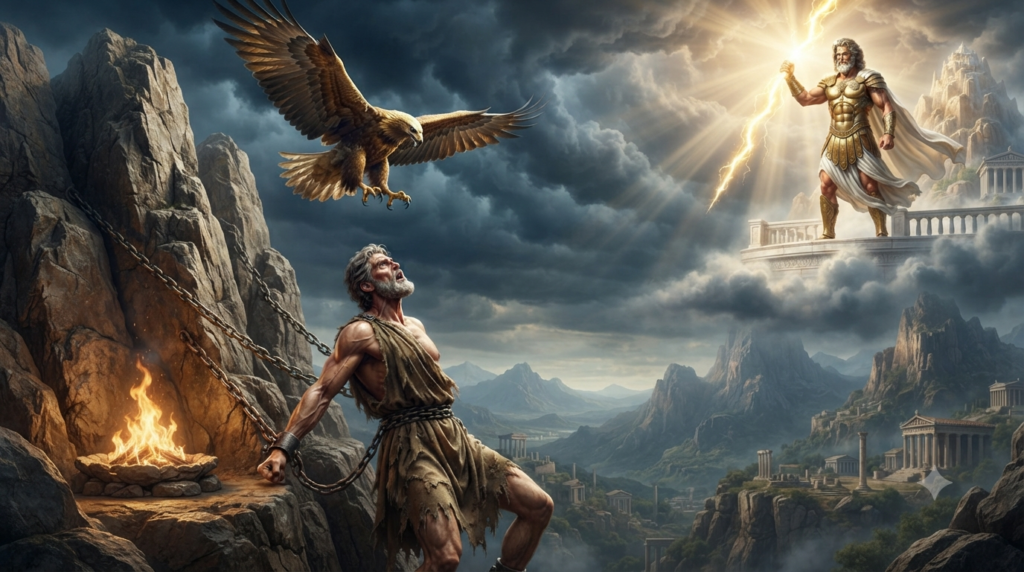
As direct punishment for stealing fire, Zeus ordered Prometheus bound with unbreakable chains to a remote location, generally identified as Mount Caucasus, a genuinely isolated and inhospitable location reflecting the deliberate severity Zeus intended for this particular punishment.
This chaining represented the first essential component of how did Zeus punish Prometheus, ensuring complete physical restraint and permanent immobility, removing any possibility of escape or rescue that might otherwise have allowed Prometheus to avoid the fuller consequences Zeus had specifically designed for him.
The remote, mountainous location further reinforced this punishment’s severity, isolating Prometheus not only physically through his chains, but geographically from any potential outside intervention, creating conditions specifically intended to ensure this punishment would continue entirely uninterrupted for an extended, indefinite period.
This combination of physical restraint and deliberate geographic isolation established the essential foundation for how did Zeus punish Prometheus, setting the stage for the additional, even more severe element of ongoing torment that would define this punishment’s genuinely eternal character.
The Eagle and the Eternal Cycle
Beyond simple chaining, Zeus specifically dispatched an eagle to visit Prometheus daily, tasked with devouring his liver as an additional, deliberately severe component central to how did Zeus punish Prometheus, transforming simple imprisonment into active, recurring physical torment.
Crucially, Prometheus’s liver regenerated fully each night, meaning the eagle’s daily visit could begin the same devastating process again each following day, creating a genuinely endless cycle of suffering rather than a punishment that might naturally diminish or conclude through the normal healing process over time.
This regenerative element proves absolutely central to understanding how did Zeus punish Prometheus, since this specific mechanism ensured the punishment’s severity never diminished across time, deliberately preventing any possibility of Prometheus’s suffering gradually lessening as his body might otherwise adapt or permanently heal from repeated injury.
This eternal cycle of injury and regeneration represents one of Greek mythology’s most vivid and symbolically powerful depictions of punishment, illustrating a suffering deliberately designed to continue indefinitely rather than following any natural, limited timeline toward eventual resolution or relief.
Why This Specific Punishment Was Chosen
Prometheus’s status as an immortal Titan proved essential to how did Zeus punish Prometheus, since this immortality allowed Zeus to design a genuinely sustainable, indefinite punishment, one that could theoretically continue forever without Prometheus’s death ever providing any natural escape from his ongoing suffering.
Ancient Greek medical and cultural understanding regarded the liver as a uniquely regenerative organ, a belief directly reflected within this myth’s specific punishment mechanism, demonstrating how ancient Greek anatomical understanding directly informed the specific symbolic and narrative details chosen for this particular mythological punishment.
Beyond its physical mechanics, this punishment carried significant symbolic weight regarding the consequences of challenging divine authority, using Prometheus’s endless suffering to reinforce broader mythological themes concerning the serious, lasting consequences awaiting anyone who directly defied Zeus’s established will and authority.
This combination of biological plausibility, given ancient understanding, and powerful symbolic meaning helps explain why this particular punishment became so central to how did Zeus punish Prometheus within Greek mythological tradition, rather than a simpler, more conventional form of divine retribution.
The End of Prometheus’s Suffering — Rescue by Heracles
Prometheus’s extended punishment eventually ended when Heracles, during his own mythological journeys, encountered the chained Titan and freed him by killing the eagle and breaking his chains, providing a significant resolution to the otherwise seemingly endless punishment central to how did Zeus punish Prometheus.
This rescue occurred within the broader context of Heracles’s own significant mythological journey, reflecting how Greek mythology frequently interconnected separate narratives, allowing one hero’s story to directly intersect with and ultimately resolve another significant mythological conflict involving different figures entirely.
Some ancient sources suggest Zeus permitted this eventual rescue, reflecting a degree of reconciliation or acceptance regarding Prometheus’s earlier transgression, though the specific details and motivations behind Zeus allowing this resolution vary somewhat across different ancient accounts addressing this particular conclusion.
This eventual rescue provides essential narrative closure to how did Zeus punish Prometheus, confirming that even this deliberately endless punishment ultimately concluded through external heroic intervention rather than continuing genuinely forever without any possibility of eventual resolution.
Sources — Where This Myth Comes From
The tragedy “Prometheus Bound,” traditionally attributed to the ancient Greek playwright Aeschylus, provides one of the most detailed and dramatically developed accounts addressing how did Zeus punish Prometheus, offering extensive dramatic exploration of Prometheus’s suffering and his complex relationship with Zeus throughout this significant ancient theatrical work.
Hesiod’s Theogony and Works and Days also reference this punishment, providing additional, somewhat earlier textual evidence supporting the core details of how did Zeus punish Prometheus, reinforcing the consistency of this myth’s essential elements across multiple significant ancient Greek literary sources.
These multiple independent sources addressing Prometheus’s punishment demonstrate the myth’s genuine significance and consistency within broader ancient Greek mythological and literary tradition, confirming that this story remained a stable, frequently referenced element throughout various periods of ancient Greek literary history.
This consistency across Hesiod’s earlier references and Aeschylus’s later dramatic treatment reinforces confidence in the core details surrounding how did Zeus punish Prometheus, demonstrating that this particular myth remained remarkably stable across the surviving ancient Greek textual tradition.
Why This Myth Still Resonates Today
Prometheus continues serving as a powerful symbol of sacrifice made on behalf of human progress, with his willingness to suffer severe, ongoing punishment specifically to benefit humanity resonating strongly within modern discussions regarding innovation, risk, and the genuine costs sometimes associated with advancing human knowledge and capability.
The adjective “promethean,” still used today to describe boldly innovative or defiantly creative endeavors, traces directly back to this myth, demonstrating how thoroughly the story of how did Zeus punish Prometheus has embedded itself within modern language and cultural reference well beyond its original ancient Greek context.
This continued cultural relevance reflects the genuinely compelling moral and symbolic dimensions present within this particular myth, exploring themes of sacrifice, defiance, and consequence that continue resonating with contemporary audiences regardless of their specific familiarity with ancient Greek mythology overall.
This lasting significance confirms that how did Zeus punish Prometheus remains a genuinely meaningful question for modern audiences, reflecting both scholarly interest in ancient source material and continued popular fascination with this particular myth’s powerful themes of sacrifice and consequence.
FAQ — Quick Answers About Prometheus’s Punishment
How did Zeus punish Prometheus?
Zeus chained Prometheus to a mountain and sent an eagle to devour his liver daily, with the organ regenerating overnight, creating an endless cycle of suffering.
Why did Zeus punish Prometheus?
Zeus punished Prometheus for stealing fire from the gods and giving it to humanity against Zeus’s explicit wishes.
Where was Prometheus chained?
Prometheus was chained to a remote location generally identified as Mount Caucasus.
Did Prometheus’s punishment ever end?
Yes, Heracles eventually freed Prometheus by killing the eagle and breaking his chains during his own mythological journeys.
Where does this myth come from?
This myth is detailed primarily in “Prometheus Bound,” attributed to Aeschylus, and referenced earlier in Hesiod’s Theogony and Works and Days.
Conclusion
Anyone who sets out to answer how did Zeus punish Prometheus finds a punishment defined by deliberate, sustained cruelty: chains binding him to a remote mountain and an eagle devouring his ever-regenerating liver in an endless daily cycle. This severe consequence directly followed his theft of fire, an act of sacrifice made specifically on humanity’s behalf.
This myth’s eventual resolution through Heracles’s intervention provides meaningful narrative closure, while the punishment’s deliberately eternal design throughout its duration reinforces just how seriously ancient Greek mythology treated direct challenges to Zeus’s established divine authority.
Ultimately, how did Zeus punish Prometheus endures as one of Greek mythology’s most powerful explorations of sacrifice and consequence, ensuring that Prometheus’s story continues resonating with audiences drawn to its enduring themes of defiance, suffering, and the genuine cost of advancing human progress.

Orin Vale has spent the better part of two decades tracing the threads that connect the world’s oldest stories — from the halls of Asgard to the banks of the Nile, from Olympus to the jungles of the Maya. What began as a childhood fascination with flood myths and trickster gods grew into years of independent study across comparative mythology and ancient religion, always chasing the same question: what did these stories mean to the people who first told them? Orin writes for readers who want more than trivia — the ones looking for the beliefs, fears, and truths that myths were built to carry.