Lleu Llaw Gyffes
Introduction
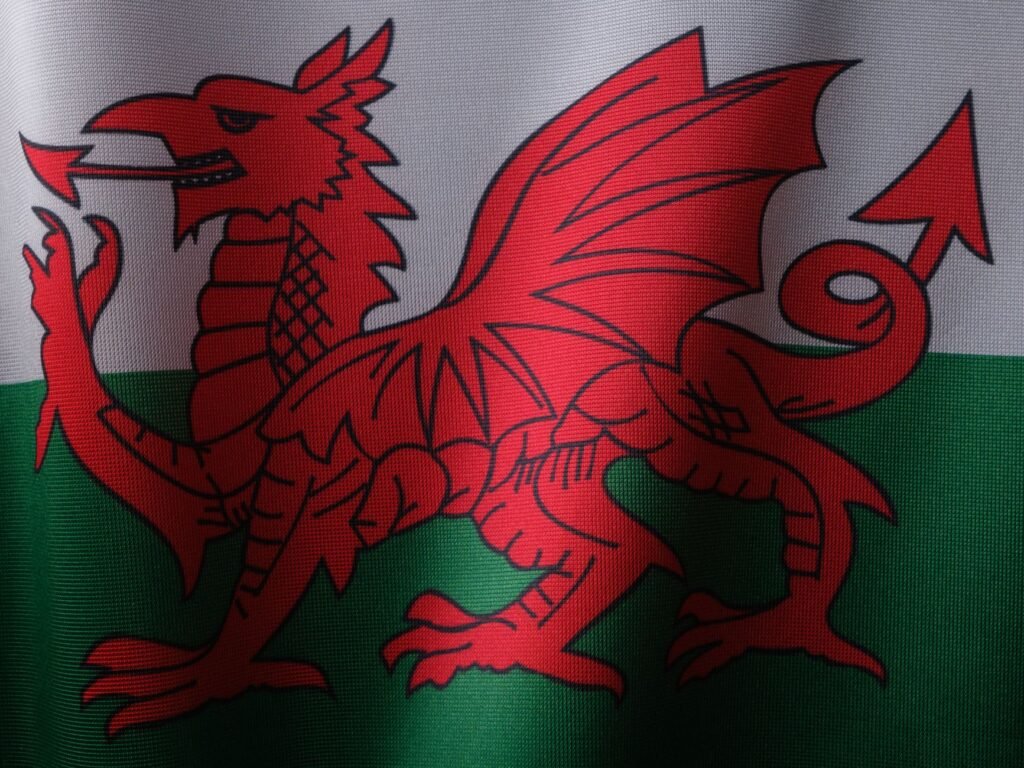
Lleu Llaw Gyffes is one of the most important figures in Welsh mythology, especially in the Fourth Branch of the Mabinogi, the medieval prose tale in which he appears as a central heroic and magical character. He is usually understood as a youth of extraordinary destiny whose life is shaped by enchantment, taboo, inheritance, and transformation. His story combines elements of Celtic kingship, heroic testing, and mythic sovereignty, making him one of the best-known figures in the literary tradition of medieval Wales.
Lleu Llaw Gyffes is often compared with other Indo-European divine or heroic figures because of his unusual birth, his fraught relationship with his mother, and his contest with a rival who tries repeatedly to destroy him. Although he is sometimes treated as a god-like figure in modern interpretation, the surviving texts present him primarily as a legendary hero within a medieval narrative framework.
Origin and Meaning
The name Lleu Llaw Gyffes is usually translated as “Lleu of the Skillful Hand” or “Lleu with the Steady/Clever Hand.” The meaning of the epithet Llaw Gyffes is not entirely certain, and translations vary slightly depending on interpretation.
Etymology
- Lleu may be related to older Celtic forms and is often connected by scholars with the Irish divine name Lugh, though the exact linguistic relationship is debated.
- Llaw means “hand” in Welsh.
- Gyffes is commonly understood as “skilled,” “steady,” “firm,” or “dexterous.”
The phrase therefore suggests a hero of exceptional ability, especially in practical or martial skill. In mythic literature, a “good hand” often implies competence, swiftness, mastery, and legitimacy as a ruler or champion.
Historical Origin
Lleu Llaw Gyffes belongs to the corpus of Welsh myth preserved in medieval manuscripts, especially the White Book of Rhydderch and the Red Book of Hergest. These manuscripts were written down in the 13th and 14th centuries, but the stories are much older in origin and likely reflect pre-Christian oral traditions.
Historical Context
The mythology surrounding Lleu emerged in the cultural world of early medieval Wales, where oral storytelling, aristocratic patronage, and learned literary composition overlapped. The tales now called the Mabinogi likely drew on older heroic and mythological material that had circulated long before their manuscript preservation.
Cultural Background
The Welsh narrative world reflects:
- a society organized around kinship and honor
- the importance of hospitality and compensation
- the significance of magical expertise
- kingship as a sacred and precarious office
- the interaction of human, supernatural, and animal worlds
Lleu’s story is especially notable for its concern with taboos and geis-like prohibitions, a recurring feature in Celtic myth. His fate depends on observing or violating conditions attached to his life, his name, and his power.
Religious and Mythic Context
The Fourth Branch appears to preserve fragments of older mythological structures, including:
- transformation and shape-shifting
- magical concealment and concealment of identity
- the struggle between legitimate heir and rival
- the symbolic importance of the mother’s role in dynastic control
Although the text is medieval and Christian in the sense that it was written down by Christian scribes, the underlying story is much older and preserves non-Christian mythic patterns.
Main Characteristics
Lleu Llaw Gyffes is characterized by a combination of fragility and exceptional destiny. He is not simply a warrior; he is a figure whose life is defined by strange conditions and ritualized threats.
Key Traits
- Giftedness and skill: His epithet suggests mastery and precision.
- Youthful vulnerability: He is repeatedly endangered by magic and betrayal.
- Royal legitimacy: His story is closely tied to succession and inheritance.
- Transformation: He undergoes one of the most famous metamorphoses in Welsh literature.
- Ambiguous status: He stands between hero, king, and possible remnant of a deity.
Identifying Features
One of Lleu’s defining moments occurs when he is struck by a spear cast by his rival, after which he is transformed into an eagle. This episode has made him one of the most distinctive figures in Celtic myth. He can only be restored through a complicated act of healing and magical intervention.
Family and Genealogy
Lleu’s family relationships are central to his story and to the politics of the Fourth Branch of the Mabinogi.
Parents
- Mother: Arianrhod, a powerful and difficult female figure whose actions shape Lleu’s destiny.
- Father: Gwydion, who is Arianrhod’s brother in the narrative tradition. The text treats the conception of Lleu as the result of magical deception and transformation.
This unusual genealogy is one of the most striking features of the tale. Gwydion and Arianrhod are siblings, and Lleu is born from a supernatural arrangement rather than an ordinary marriage.
Children
Lleu’s main known child in the tradition is:
- Gronw Pebr’s? No—Gronw is his rival, not his child.
- In some later genealogical traditions, Lleu is connected with descendants, but these are not central in the canonical tale and vary by source.
Because the best-known narrative focuses on his youth and succession, later descendants are less securely documented than his parents and spouse.
Spouse
- Blodeuwedd, a woman made from flowers by Gwydion and Math from broom, meadowsweet, and oak blossoms.
Their marriage is central to the myth. Blodeuwedd’s creation itself is extraordinary, and the marriage becomes the setting for betrayal and tragedy.
Rival
- Gronw Pebr is Lleu’s principal enemy and the lover of Blodeuwedd. He wounds Lleu with a spear and occupies a central place in the myth’s conflict structure.
Symbols
Lleu is associated with several symbolic motifs, though not all are formal cult symbols in the later religious sense.
Important Symbols
| Symbol | Meaning |
|---|---|
| Hand | Skill, mastery, legitimacy, practical power |
| Spear | Violence, danger, heroic conflict, fate |
| Eagle | Transformation, suffering, survival, elevated vision |
| Flowers | Artificial creation, beauty, impermanence, deception |
| Light / radiance | Suggested by the name’s possible links to a bright or shining figure |
Interpretive Significance
The hand epithet is especially important because it emphasizes technical competence rather than brute strength. This is appropriate for a figure whose success depends on precision, social skill, and the ability to overcome magical constraints.
Sacred Animals
Lleu is not surrounded by a widely attested animal cult in the surviving sources, but several animals are important in his story and symbolism.
The Eagle
The most famous animal association is the eagle into which Lleu is transformed after being wounded. This is a crucial mythic moment.
The eagle suggests:
- endurance after apparent death
- a high or sky-related dimension
- kingly or sovereign imagery
- the crossing of boundaries between human and animal states
Other Associated Animals
- Boar: Not central to Lleu himself, but common in Celtic heroic imagery and often present in the broader mythic environment.
- Horses: Important in Welsh heroic culture generally, though not uniquely tied to Lleu in the surviving text.
No definitive sacred-animal cult can be securely reconstructed for Lleu from the surviving sources alone.
Sacred Plants
Plants play a major role in the story of Blodeuwedd, and by extension in Lleu’s mythic world.
Flowers Used to Create Blodeuwedd
Blodeuwedd is made from blossoms by Gwydion and Math. The text specifies:
- broom
- meadowsweet
- oak blossoms
Different translations and interpretations may vary in botanical identification, but the plant imagery is consistent.
Symbolic Meaning
These plants represent:
- artifice and magical making
- beauty without natural lineage
- seasonal change
- fragility and transience
The floral composition of Blodeuwedd is essential to the story because it underscores her status as an engineered spouse, not a conventional human woman. This, in turn, heightens the tragedy of her betrayal and transformation.
Sacred Places
The story of Lleu is not centered on a single temple or cult site in the way some classical religions are. Instead, it is associated with locations within the mythic landscape of Wales.
Notable Places in the Narrative
- Ardudwy: The region where key events unfold, including Lleu’s concealment and later restoration.
- Caer Dathyl: Associated with Math and the royal center in the Fourth Branch.
- Gwydion’s journey across Wales: The narrative emphasizes movement between places of refuge, concealment, and conflict.
- The forest and hidden places: Important in the episode where Lleu cannot be killed in ordinary human circumstances.
Geographic and Mythic Function
These places function less as archaeological cult sites and more as narrative spaces where legitimacy, secrecy, and transformation occur. The landscape is a moral and magical terrain, not merely a backdrop.
Powers and Attributes
Lleu’s powers are not listed in a systematic mythological catalogue, but the narratives show that he possesses extraordinary capacities.
Main Powers and Attributes
- Exceptional skill
- Royal potential
- Resilience against magical attack
- Transformation and survival
- Restoration through healing magic
Domain of Influence
Lleu is not a deity of a single natural domain like sea, sun, or war in the surviving tales. Rather, he belongs to the overlapping domains of:
- sovereignty
- heroic youth
- magical ordeal
- lawful succession
- transformation and recovery
Some scholars have linked him to broader Indo-European patterns of a bright, youthful, skillful sovereign figure, but such interpretations remain scholarly reconstructions rather than explicit statements of the medieval text.
Main Myths
Lleu’s story is chiefly told in the Fourth Branch of the Mabinogi, and several episodes define his mythic identity.
1. The Conditions of His Birth
Lleu’s conception is tangled in magical deception and family conflict. Gwydion helps engineer the birth of a child by tricking Arianrhod. After the child is born, Arianrhod places curses or conditions on him, including that he will not receive a name or weapons unless she grants them.
This establishes the theme of imposed limitation that runs through Lleu’s life.
2. The Naming and Arming
Gwydion helps overcome Arianrhod’s restrictions by clever magical means. Lleu is eventually named and equipped, fulfilling the conditions of his social existence.
This episode highlights the importance of:
- public recognition
- lawful identity
- martial capability
- kinship legitimacy
3. The Creation of Blodeuwedd
Because Arianrhod prevents Lleu from obtaining a wife from mortal lineage, Gwydion and Math create Blodeuwedd from flowers. This is one of the most famous acts of artificial creation in Welsh mythology.
Blodeuwedd becomes Lleu’s wife, but the marriage is unstable from the beginning because it is shaped by magical manipulation rather than ordinary social bond.
4. Betrayal and the Impossible Wound
Blodeuwedd falls in love with Gronw Pebr. Together they plot Lleu’s death. Lleu can only be killed under extremely specific conditions, and through the breach of those conditions he is struck by a spear.
The wound causes him to transform into an eagle, a powerful image of suffering and survival.
5. Healing and Return
Gwydion searches for Lleu and finds him in eagle form, perched high and weakened. Through magical healing, the wounded eagle is restored to human form. The process involves gradual recovery and the transfer of nourishment, often described with ritual-like detail.
This is among the most memorable resurrection or recovery episodes in Welsh literature.
6. Revenge and Restoration of Order
Lleu eventually returns to confront the betrayal. Gronw is killed, and Blodeuwedd is transformed into an owl, condemned to nocturnal existence and detachment from human society.
The ending restores a kind of moral and dynastic order, though the story remains marked by loss and transformation.
Relationship with Other Mythological Figures
Lleu’s identity is inseparable from his relationships with several other figures in the Mabinogi.
Gwydion
Gwydion is both uncle and father-figure to Lleu. He plays a decisive role in Lleu’s conception, naming, arming, and restoration. Their relationship is protective, strategic, and deeply entangled with magical power.
Arianrhod
Arianrhod is Lleu’s mother and one of the most powerful women in Welsh myth. Her refusal to recognize him creates the central tension of his early life. She is not simply an antagonist; she is also a figure of sovereignty, mystery, and maternal resistance.
Math ap Mathonwy
Math is the ruler whose household frames much of the narrative. He supports the magical creation of Blodeuwedd and serves as a figure of authority within the tale.
Blodeuwedd
Blodeuwedd is Lleu’s wife and betrayer. Modern readers often view her as one of the most complex women in Celtic myth. She is both created object and autonomous agent, and her betrayal raises questions about agency, coercion, and identity.
Gronw Pebr
Gronw is Lleu’s rival and enemy. His role is crucial in the story’s logic of betrayal and vengeance. He represents the challenge to Lleu’s rightful position.
Worship and Cult
There is no securely attested historical cult of Lleu Llaw Gyffes comparable to the documented worship of some classical deities. The surviving evidence comes from literature, not from inscriptions, temples, or ritual manuals.
What Can Be Said with Confidence
- Lleu appears in medieval narrative sources, not in clear liturgical or archaeological evidence of organized worship.
- Some scholars have proposed that he preserves traces of an older deity or heroic cult.
- Such theories remain interpretive and cannot be proven with surviving evidence alone.
Medieval Reception
In medieval Wales, the tales containing Lleu were probably valued as elite literary traditions rather than as material for public worship. They preserved cultural memory, genealogy, and mythic identity.
Ancient Sources
The principal source for Lleu Llaw Gyffes is the Mabinogi, especially the Fourth Branch.
Major Primary Sources
- The Fourth Branch of the Mabinogi in the White Book of Rhydderch
- The Fourth Branch of the Mabinogi in the Red Book of Hergest
- Related Welsh genealogical and literary traditions that preserve the name Lleu or cognate forms
Classical Authors
No classical Greco-Roman author such as Homer, Hesiod, Apollodorus, Pausanias, or Ovid writes about Lleu directly. He is a figure of the British and Welsh mythic tradition, not the Greco-Roman mythological corpus.
Scholarly Caution
Because the sources are medieval manuscript witnesses to older oral material, it is important not to read the text as a straightforward historical record. It is literature shaped by long transmission.
Roman Equivalent
There is no direct Roman equivalent to Lleu Llaw Gyffes.
Comparative Notes
Scholars sometimes compare him to:
- Lugh in Irish tradition
- youthful divine or semi-divine heroes in Indo-European myth
- skillful sovereign figures associated with light, craft, and legitimacy
However, these are comparative analogies, not identifications. Roman religion and mythology do not provide a precise counterpart.
Influence on Modern Culture
Lleu Llaw Gyffes remains significant in modern scholarship, Welsh cultural identity, and literary studies.
Literature and Scholarship
- He is frequently discussed in studies of the Mabinogi.
- His story is central to interpretations of Celtic mythology, gender roles, and mythic sovereignty.
- Writers and poets interested in Welsh heritage have drawn on the Mabinogi’s imagery and themes.
Art and Popular Imagination
The figure of Blodeuwedd, and by extension Lleu’s story, has inspired modern artists more visibly than Lleu alone. However, Lleu’s transformation into an eagle and his recovery remain powerful mythic scenes often referenced in retellings and artistic adaptations.
Games, Television, and Film
Direct mainstream adaptations of Lleu are relatively limited compared with better-known pan-European mythic figures. Nonetheless:
- Welsh myth has influenced fantasy literature and role-playing settings.
- The Mabinogi has inspired stage, radio, and educational adaptations.
- Lleu sometimes appears in works that draw on Celtic myth as a source of symbolic material.
Cultural Significance
Lleu remains important as part of Welsh cultural memory and as a symbol of the richness of medieval Welsh narrative tradition.
Curiosities
- Lleu’s story includes one of the most famous flower-born women in European medieval literature: Blodeuwedd.
- His transformation into an eagle is one of the most striking metamorphoses in Welsh myth.
- The phrase “skillful hand” suggests that his greatness is not only martial but also practical and symbolic.
- The tale repeatedly emphasizes imposed conditions: naming, arming, marriage, and death all depend on complex rules.
- In modern interpretation, Lleu is sometimes treated as a surviving echo of a pre-Christian divine figure, though this remains debated.
- The Mabinogi’s version of Lleu is not a simple “solar god” or “war god”; his meaning is broader and less certain.
- His myth is a major example of how medieval Welsh literature preserved older narrative structures within a sophisticated prose style.
Frequently Asked Questions
Who is Lleu Llaw Gyffes?
Lleu Llaw Gyffes is a major hero in Welsh mythology, best known from the Fourth Branch of the Mabinogi. He is associated with skill, legitimacy, transformation, and eventual restoration after betrayal.
What does the name Lleu Llaw Gyffes mean?
The name is usually understood as “Lleu of the Skillful Hand” or a similar phrase. The exact translation of Gyffes varies slightly, but it implies dexterity, steadiness, or skill.
Is Lleu Llaw Gyffes a god?
The surviving texts present him as a mythic hero rather than explicitly as a god. Some scholars think he may preserve traits of an older divine figure, but this is a scholarly interpretation, not a confirmed historical fact.
Who are Lleu’s parents?
Lleu’s mother is Arianrhod, and his father is Gwydion, according to the story. Their relationship is unusual and magical, not conventional.
Who is Blodeuwedd?
Blodeuwedd is Lleu’s wife, created from flowers by Gwydion and Math. She later betrays Lleu with Gronw Pebr, becoming one of the most famous figures in Welsh mythology.
Why does Lleu turn into an eagle?
After being struck by a spear under special conditions, Lleu is transformed into an eagle. The episode symbolizes extreme suffering, survival, and mythic transformation.
Where does Lleu appear in literature?
His main appearance is in the Fourth Branch of the Mabinogi, preserved in medieval Welsh manuscripts.
Is there a Roman or Greek equivalent to Lleu?
No direct Roman equivalent is known. He is sometimes compared with Irish Lugh and other Indo-European heroic or divine figures, but these are comparative parallels rather than exact matches.
Conclusion
Lleu Llaw Gyffes is one of the central figures of Welsh mythology and an enduring emblem of the imaginative power of the Mabinogi. His story combines birth mystery, magical constraint, transformation, betrayal, and restoration in a narrative that has fascinated readers for centuries. Whether understood as a heroic prince, a mythic sovereign, or a surviving echo of an older divine tradition, Lleu stands at the heart of Welsh literary heritage.
His epithet, “the Skillful Hand,” captures the essence of his character: precision, legitimacy, and the ability to overcome adversity through transformation and return. As a mythic figure, Lleu continues to matter not only because of his ancient origins, but because his story reveals how medieval Welsh literature preserved deep symbolic patterns about identity, power, and renewal.

Orin Vale has spent the better part of two decades tracing the threads that connect the world’s oldest stories — from the halls of Asgard to the banks of the Nile, from Olympus to the jungles of the Maya. What began as a childhood fascination with flood myths and trickster gods grew into years of independent study across comparative mythology and ancient religion, always chasing the same question: what did these stories mean to the people who first told them? Orin writes for readers who want more than trivia — the ones looking for the beliefs, fears, and truths that myths were built to carry.