Introduction
Odysseus and the Cyclops is one of the best-known episodes in Greek mythology, preserved most famously in Homer’s Odyssey. The story tells how Odysseus, king of Ithaca, and his companions were trapped in the cave of the one-eyed giant Polyphemus and survived through cunning rather than force. Because it combines danger, intelligence, hospitality norms, divine intervention, and the consequences of pride, the episode has become central to later readings of the Odyssey and to the broader cultural image of Odysseus as the archetypal trickster-hero.
The encounter is important not only as a dramatic adventure, but also as a key mythic statement about xenia—the ancient Greek code of guest-friendship—and about the tension between civilization and savagery. It also explains, within the epic narrative, why Odysseus faces the hostility of Poseidon during the remainder of his journey home.
Origin and Meaning
The name Odysseus is traditionally associated in ancient and modern scholarship with Greek roots connected to “anger,” “pain,” or “hatred,” though the exact etymology remains debated and is not securely established. Ancient authors themselves did not provide a definitive linguistic explanation that is accepted today.
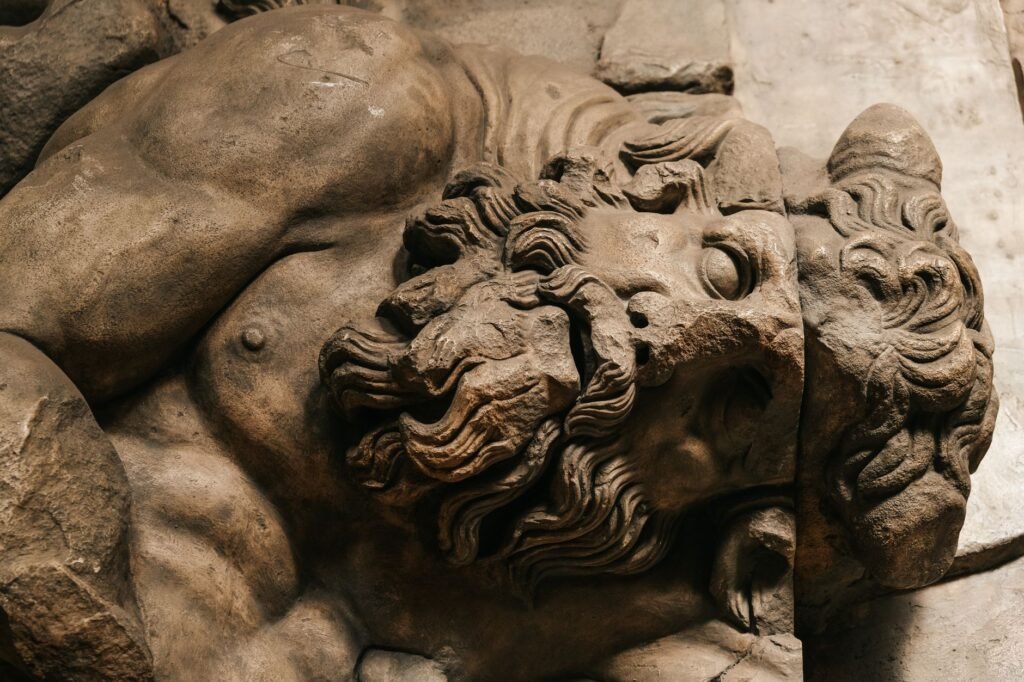
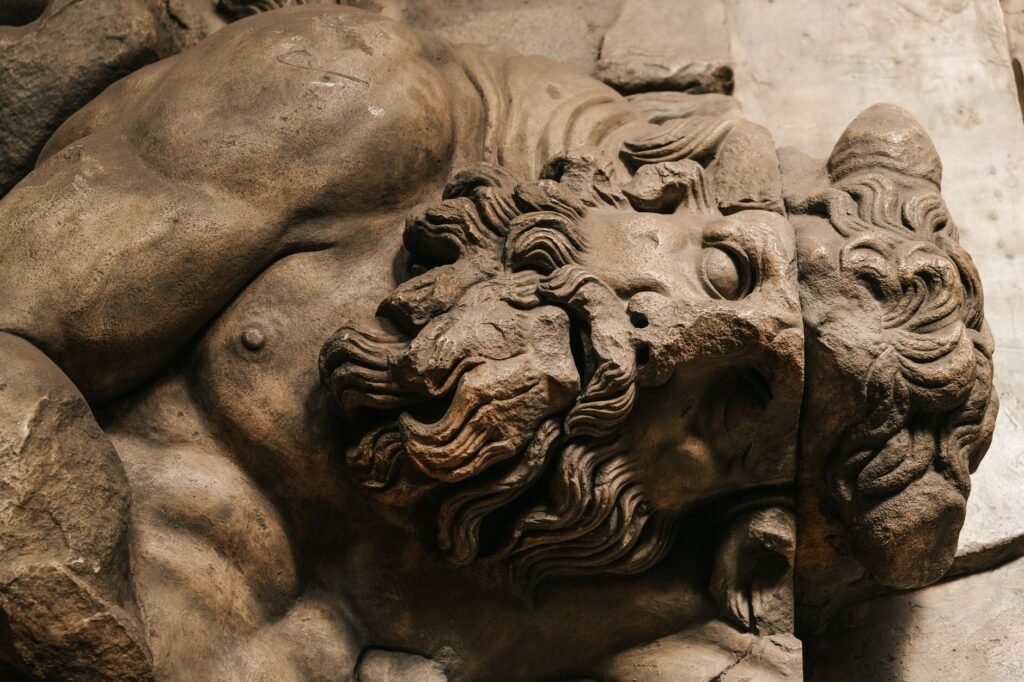
The term Cyclops comes from the Greek Kyklōps (Κύκλωψ), usually interpreted as “circle-eyed” or “round-eyed,” from kyklos (“circle”) and ops (“eye” or “face”). In later usage, “Cyclops” refers broadly to one-eyed giants, but in Greek literature the term can denote different beings depending on the author and period.
In the Homeric episode, the Cyclops is Polyphemus, whose name means “much-spoken-of” or “very famous” in common scholarly interpretation, though the precise etymology is also somewhat uncertain.
Historical Context
The story belongs to the world of ancient Greek epic poetry, likely shaped in oral tradition before being written down in the form known from Homer. The Odyssey reflects the values and anxieties of the archaic Greek world, especially:
- the importance of household order and hospitality,
- the dangers of the sea and foreign lands,
- the reputation of heroic intelligence,
- the role of divine power in human affairs.
The Cyclops episode occurs after the Trojan War, during Odysseus’s long return journey to Ithaca. In the epic structure, the encounter with Polyphemus serves several purposes:
- It marks a passage from war into wandering.
- It presents an extreme contrast between Greek social norms and monstrous otherness.
- It helps explain Odysseus’s long suffering by provoking Poseidon’s wrath.
The episode also reflects a central concern of Greek literature: the boundary between the human and the non-human. The Cyclops is not simply a foreigner; he is portrayed as outside the norms of agriculture, law, assembly, and hospitality.
Main Characteristics
Odysseus and the Cyclops are characterized in sharply contrasting ways.
Odysseus
Odysseus is defined by:
- intelligence and strategic thinking,
- verbal dexterity,
- adaptability,
- self-control, although not always consistently,
- a heroic identity based on mētis—resourceful cunning.
In the Cyclops episode, his intelligence is decisive. He uses a false name, devises a plan to blind the giant, and engineers an escape.
Polyphemus and the Cyclops
Polyphemus is characterized by:
- immense physical strength,
- solitary living,
- lack of agriculture and social order,
- rejection of hospitality,
- violence and cannibalism,
- dependence on sheep and goats.
In Homer, the Cyclopes live outside regular civic life. Polyphemus is especially notable for his isolation and for his refusal to recognize the authority of Zeus as protector of guests and supplicants.
Table: Key Contrasts in the Episode
| Odysseus | Polyphemus |
|---|---|
| Clever, strategic, verbally skilled | Strong, blunt, physically dominant |
| Represents Greek social norms | Represents anti-social isolation |
| Uses disguise and planning | Uses brute force |
| Relies on cooperation with companions | Lives alone |
| Escapes by intelligence | Defeated by deception |
Family and Genealogy
Because the phrase “Odysseus and the Cyclops” combines a hero and a monster, their genealogies are best treated separately.
Odysseus’s Family
Odysseus is the son of:
- Laertes, king of Ithaca,
- Anticleia, daughter of Autolycus.
His wife is:
- Penelope, famous for her fidelity and intelligence.
His son is:
- Telemachus.
In some traditions and later works, Odysseus has other relationships or descendants attributed to him, but these are not central to the Cyclops episode.
Polyphemus’s Family
In Homer’s Odyssey, Polyphemus is presented as a son of Poseidon, the sea god. This is crucial to the story because Poseidon’s paternity intensifies his later anger.
Other ancient traditions give different genealogies for the Cyclopes. Hesiod’s Cyclopes are different beings altogether: divine craftsmen associated with Zeus, distinct from Homer’s shepherd-like giants. Later mythological traditions also present various Cyclopes with differing parentage.
Important Note on Traditions
The Cyclops in Homer is not identical to all Cyclopes in Greek myth. Ancient sources distinguish:
- Homeric Cyclopes: savage, pastoral giants;
- Hesiodic Cyclopes: divine smiths;
- later, more generalized one-eyed giants in mythology and literature.
Symbols
The Odysseus and the Cyclops episode is associated with several symbolic objects and motifs.
The Olive Stake
The most famous symbol is the sharpened olive stake used to blind Polyphemus. Its meaning includes:
- intelligence overcoming raw force,
- transformation of an everyday object into a weapon,
- the use of civilization’s tools against barbarism.
The stake is made from olive wood, a tree strongly associated with Greek life and culture.
Wine
Odysseus gives Polyphemus strong wine before blinding him. Wine symbolizes:
- hospitality when properly shared,
- intoxication and vulnerability,
- the power of culture and craft over brute appetite.
The Cave
The cave symbolizes confinement, danger, and a place outside civilized order. It is a world apart from the palace, city, and farm.
Sheep
Polyphemus’s sheep are important because they become the means of escape. The flock also contrasts with the giant’s savage behavior: he is a herdsman, but not a host in the human sense.
Sacred Animals
No “sacred animals” in the strict religious sense belong specifically to Odysseus and the Cyclops episode, but certain animals are strongly associated with the story.
Sheep and Goats
These are Polyphemus’s principal animals. Their significance includes:
- pastoral life outside the city,
- the giant’s dependence on livestock,
- the means by which the Greeks escape under the bellies of the sheep.
Rams
The ram is especially important in the escape scene. Odysseus clings beneath the largest ram, which Polyphemus touches as it leaves the cave. This detail heightens the irony of the giant being deceived by the animal he trusts most.
The Sea
While not an animal, the sea is inseparable from the story. It is Poseidon’s domain and the medium through which Odysseus travels, suffers, and eventually becomes the target of the god’s anger.
Sacred Plants
No plant is universally sacred to the episode itself, but one plant is central.
The Olive Tree
The olive tree has broad symbolic importance in Greek culture and is directly relevant because the blinding stake is made from olive wood. In Greek civilization, the olive represents:
- peace and cultivation,
- economic and domestic life,
- endurance and utility.
In the Cyclops episode, an object derived from the olive tree becomes a tool of survival. This underscores the contrast between cultivated skill and primitive violence.
Sacred Places
The episode is connected to several places, both literal and symbolic.
The Cyclops’s Cave
This is the central setting of the myth. In Homer, the cave is located on the island of the Cyclopes, though later identifications vary widely. It is a place of:
- enclosure,
- danger,
- violation of hospitality,
- confrontation between civilization and isolation.
Ithaca
Odysseus’s home, Ithaca, represents the world he seeks to restore. It is not part of the episode’s immediate setting, but it defines the hero’s purpose.
Poseidon’s Realm
The sea is associated with Poseidon, whose anger shapes the consequences of the encounter. The myth ties the cave episode to Odysseus’s later wandering across the Mediterranean world.
Later Geographical Identifications
Ancient and modern traditions have proposed various real-world locations for the cave of Polyphemus, including places in Sicily. These identifications are later literary or interpretive associations rather than securely historical facts.
Powers and Attributes
Odysseus and the Cyclops are not deities, but the episode assigns them clear narrative “powers” and domains.
Odysseus’s Attributes
Odysseus’s defining capacities include:
- tactical intelligence,
- persuasive speech,
- disguise and deception,
- endurance,
- leadership under pressure.
His power is not supernatural in the strict sense. It is human intelligence raised to heroic scale.
Polyphemus’s Attributes
Polyphemus’s defining traits include:
- great physical strength,
- a destructive appetite,
- limited social intelligence,
- lack of respect for divine law,
- vulnerability to trickery.
Although monstrous, he is not powerless. He can crush men, block exits, and call for aid from his kin. His defeat depends on his underestimation of Odysseus.
Main Myths
The Cyclops episode is one of the most famous sections of the Odyssey and unfolds in a sequence of well-known events.
Arrival at the Island
Odysseus and his men arrive at the land of the Cyclopes after earlier adventures. They enter a cave stocked with food and animals. The men urge him to take supplies and leave, but Odysseus remains to meet the owner.
The Meeting with Polyphemus
Polyphemus returns, drives his flock into the cave, and blocks the entrance with a huge stone. He then asks who the strangers are, but instead of offering hospitality he eats two of Odysseus’s men.
The False Name
Odysseus says his name is “Nobody” or “No one” in many translations, based on the Greek pun Outis. This is one of the most famous wordplays in ancient literature.
When Polyphemus later cries for help, he says that “Nobody” is hurting him, so the other Cyclopes assume no one is attacking him and do not intervene.
The Wine and the Blinding
Odysseus offers wine to intoxicate Polyphemus. After the giant falls into drunken sleep, Odysseus and his men heat a wooden stake and drive it into the Cyclops’s eye, blinding him.
The Escape
The next morning Polyphemus opens the cave to let his sheep out, but blocks the exit so the Greeks cannot simply walk out. Odysseus has the men tie themselves under the sheep. They escape one by one as the giant feels the backs of the animals but not the hidden men.
The Final Taunt and Poseidon’s Curse
Once safely aboard ship, Odysseus reveals his true name and boasts of his victory. This act of pride is costly: Polyphemus prays to his father Poseidon for revenge, and the god becomes a major enemy for the rest of Odysseus’s journey.
Table: Major Stages of the Story
| Stage | Event | Meaning |
|---|---|---|
| Arrival | Greeks enter the cave | Test of hospitality and judgment |
| Capture | Polyphemus traps them | Human vulnerability |
| Deception | Odysseus uses “Nobody” | Language as weapon |
| Blinding | Stake pierces the eye | Intelligence defeats force |
| Escape | Men cling under sheep | Cleverness and timing |
| Boast | Odysseus reveals his name | Pride brings consequences |
| Curse | Poseidon intervenes | Long-term divine retribution |
Relationship with Other Mythological Figures
The story connects Odysseus and the Cyclops to several important figures.
Poseidon
Poseidon is the most important divine figure in this episode. Because Polyphemus is his son, the god responds angrily to Odysseus’s injury of the Cyclops. This hostility explains much of Odysseus’s later suffering at sea.
Athena
Although Athena is not central in the cave scene itself, she is Odysseus’s principal divine ally throughout the Odyssey. The Cyclops episode contrasts Athena’s support for intelligence and order with Poseidon’s destructive wrath.
Zeus
Zeus’s role is indirect but significant. The story implicitly invokes the divine code of hospitality under Zeus’s protection. Polyphemus violates that code by devouring guests rather than sheltering them.
The Other Cyclopes
The other Cyclopes in Homer are not fully individualized in this episode, but they respond to Polyphemus’s cries. Their refusal to help because of the “Nobody” trick adds an additional layer of comic irony.
The Greek Companions
Odysseus’s men are essential to the story. They are not passive background figures; they help carry out the blinding and escape. At the same time, some traditions and interpretations emphasize their caution, fear, and dependence on Odysseus’s leadership.
Worship and Cult
There is no known cult of Odysseus and the Cyclops as a paired mythic subject, nor evidence of ritual worship directed at the episode itself. However, the story is deeply connected to Greek religious and cultural values.
Hospitality as a Sacred Duty
The episode dramatizes xenia, the guest-host relationship protected by Zeus Xenios. In Greek thought, violating hospitality was not merely rude; it was impious.
Sacrificial and Domestic Imagery
The cave’s livestock, food stores, and wine evoke the world of offerings, feasting, and household order. Polyphemus perverts these social forms by consuming guests as food rather than sharing hospitality.
Literary, Not Cultic, Centrality
The episode’s importance lies mainly in literature, education, performance, and interpretation rather than ritual worship.
Ancient Sources
Several ancient authors preserve or reinterpret elements of the Cyclops tradition.
Homer
The principal source is Homer’s Odyssey, especially Book 9, where Odysseus narrates the adventure in the first person.
Hesiod
Hesiod’s Theogony describes a different kind of Cyclops: divine craftsmen, sons of Uranus and Gaia, associated with thunder and the forging of Zeus’s weapon. These are not the same as Homer’s Polyphemus, though later traditions sometimes blur the distinction.
Apollodorus
The Bibliotheca attributed to Apollodorus summarizes mythological material, including the adventures of Odysseus and other heroic cycles.
Euripides
Euripides wrote Cyclops, a satyr play that retells the Polyphemus story in a comic and theatrical form. It is the only complete satyr play that survives from antiquity.
Ovid
Ovid’s Metamorphoses and related works engage with Cyclops traditions, especially in later mythic and literary transformations. Ovid also contributes to the broader Roman reception of Greek myth.
Later Authors
Other authors, including Pausanias, Strabo, and various scholiasts, preserve local traditions, interpretive details, and geographic associations.
Roman Equivalent
There is no perfect Roman equivalent to the episode as a discrete myth, but the story was widely absorbed into Roman literature through the Latin tradition of Homeric adaptation.
Ulysses and Polyphemus
In Roman literature, Odysseus is called Ulysses. Roman poets, especially Virgil and Ovid, reused the figure of Ulysses as a model of cunning intelligence, sometimes admired and sometimes morally questioned.
Roman Adaptation
The Cyclops story entered Roman culture primarily as part of the broader reception of Greek epic. It was not translated into a separate Roman cult or native myth with the same structure, though Roman writers often treated it as a canonical episode of heroic literature.
Influence on Modern Culture
The story of Odysseus and the Cyclops has had a lasting influence on world culture.
Literature
The episode continues to inspire:
- retellings of the Odyssey,
- modern novels and poems,
- symbolic uses of “Cyclops” as a term for brute force,
- reinterpretations of Odysseus as a complex hero.
Art
Artists across centuries have depicted the blinding of Polyphemus, the escape under the sheep, and the giant’s cave. The scene remains a frequent subject in vase painting, sculpture, and later European painting.
Cinema and Television
Adaptations of the Odyssey in film and television often treat the Cyclops as one of the story’s most visually memorable moments. The one-eyed giant is especially suited to visual media.
Games and Popular Culture
The Cyclops appears in:
- video games,
- fantasy fiction,
- tabletop role-playing settings,
- graphic novels,
- children’s retellings.
In popular culture, “Cyclops” often serves as shorthand for a powerful, dangerous, and primitive monster, while Odysseus symbolizes intelligence and strategy.
Cultural and Psychological Interpretation
Modern readers often interpret the episode as a conflict between:
- reason and violence,
- civilization and wilderness,
- identity and anonymity,
- pride and survival.
Its continued popularity comes from the clarity of its dramatic structure and the universality of its themes.
Curiosities
- The “Nobody” trick is one of the most famous puns in ancient literature.
- Homer’s Cyclops is not the same as Hesiod’s Cyclopes, even though both are one-eyed beings in Greek tradition.
- The story is one of the clearest examples in Greek epic of metis, or clever intelligence, triumphing over brute force.
- Euripides transformed the episode into a satyr play, adding humor and theatrical parody.
- The blinding of Polyphemus is often read as a symbolic victory of human craft over monstrous appetite.
- Odysseus’s decision to reveal his name after escaping is often treated by readers as a fatal example of pride or the desire for kleos, heroic fame.
- The episode is one of the main reasons Poseidon becomes Odysseus’s enemy in the Odyssey.
Frequently Asked Questions
Who was the Cyclops in Odysseus’s story?
The Cyclops is Polyphemus, a giant with a single eye in the center of his forehead, encountered in Homer’s Odyssey.
Why did Odysseus blind the Cyclops?
Odysseus blinded Polyphemus to escape after the giant trapped him and ate some of his companions. The blinding was a strategic act of survival.
What does “Nobody” mean in the story?
Odysseus gave the name “Nobody” so that when Polyphemus cried for help, the other Cyclopes would think no one was attacking him.
Why is Poseidon angry at Odysseus?
Poseidon is angry because Polyphemus is his son. After being blinded, Polyphemus prays to Poseidon for revenge, and the god opposes Odysseus during his return journey.
Is Polyphemus the only Cyclops in Greek mythology?
No. Greek tradition includes different kinds of Cyclopes. Homer’s Polyphemus is one type, while Hesiod’s Cyclopes are divine craftsmen.
What does the story of Odysseus and the Cyclops teach?
It highlights the importance of intelligence, the sacred duty of hospitality, and the dangers of pride. It also contrasts civilization with savagery.
Where does the Cyclops live?
In Homer, Polyphemus lives in a cave on an island of Cyclopes. Ancient and modern traditions have proposed different geographic identifications, but the epic itself is not tied to one certain real-world location.
Conclusion
The myth of Odysseus and the Cyclops remains one of the most enduring episodes in Greek literature because it combines suspense, wit, and symbolic power. Through the confrontation with Polyphemus, Homer presents a dramatic test of human intelligence against overwhelming force, while also underscoring the sacred norms of hospitality and the consequences of arrogance. The episode’s impact extends far beyond antiquity, shaping later literature, art, and popular imagination. As part of the Odyssey, it helps define Odysseus as a hero whose greatest weapon is not strength, but ingenuity.

Orin Vale has spent the better part of two decades tracing the threads that connect the world’s oldest stories — from the halls of Asgard to the banks of the Nile, from Olympus to the jungles of the Maya. What began as a childhood fascination with flood myths and trickster gods grew into years of independent study across comparative mythology and ancient religion, always chasing the same question: what did these stories mean to the people who first told them? Orin writes for readers who want more than trivia — the ones looking for the beliefs, fears, and truths that myths were built to carry.