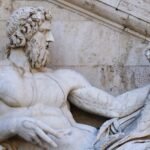
Prometheus and the Theft of Fire
Introduction

Prometheus and the theft of fire is one of the most enduring narratives in Greek mythology. It tells how the Titan Prometheus challenged the authority of Zeus by bringing fire to humankind, an act that symbolized not only technological progress but also knowledge, civilization, and defiance against divine power. The myth has shaped ancient Greek thought and later Western culture, influencing literature, philosophy, art, politics, and modern ideas about creativity, rebellion, and human advancement.
The story is more than a simple tale of punishment and disobedience. In ancient sources, Prometheus appears as a complex figure: a benefactor of humanity, a trickster, a deceiver of gods, and a sufferer whose eternal punishment became a central image of resistance and sacrifice. The theft of fire is therefore both a mythic event and a cultural symbol.
Origin and Meaning
The name Prometheus comes from the Greek Promētheus (Προμηθεύς), generally understood as meaning “forethought” or “one who thinks ahead.” This is traditionally contrasted with his brother Epimetheus, whose name means “afterthought” or “one who thinks afterward.” The contrast between the two names reflects their mythological roles: Prometheus acts with planning and strategic intelligence, while Epimetheus often acts too late.
The myth of Prometheus is of Greek origin, but some of its themes may preserve older Indo-European or Near Eastern patterns involving a culture hero, divine fire, and the boundary between gods and humans. However, the surviving story is distinctly shaped by Greek literary and religious traditions, especially those preserved in archaic and classical texts.
Historical Context
The myth of Prometheus and the theft of fire emerged in a world where fire had immense practical and symbolic importance. In ancient societies, fire was essential for cooking, warmth, metalworking, ritual sacrifice, and protection. It also separated human life from animal life and was often regarded as a divine or semi-divine gift.
In Greek religion, fire played a major role in sacrifice and domestic worship. Hearth fire in particular was associated with family continuity, civic order, and the goddess Hestia. The myth of Prometheus explains why humans possess this powerful but dangerous force and why it comes through a relationship of tension with the gods.
The story also reflects Greek ideas about:
- the limits of human power
- the role of divine justice
- the value of intelligence and cunning
- the cost of progress
- the tension between obedience and beneficial rebellion
Different ancient authors emphasize different aspects. In some versions, Prometheus is a wise protector of humanity. In others, he is a clever trickster who repeatedly outwits Zeus. The myth developed over time, becoming especially important in Hesiodic poetry and later in tragedy and philosophy.
Main Characteristics
Prometheus is usually identified by several key traits:
- Cunning intelligence: He is not a brute-force rebel but a strategic thinker.
- Sympathy for humankind: Many traditions present him as a protector and benefactor of mortals.
- Defiance of Zeus: He challenges divine authority, especially in matters affecting humans.
- Deceptive skill: He is associated with trickery, concealment, and negotiation.
- Endurance in suffering: His punishment becomes a defining feature of his myth.
Prometheus is not a god in the Olympian sense, nor a mortal human. He belongs to the generation of Titans, older divine beings associated with the pre-Olympian order. His position makes him a mediator between divine and human realms, but also a figure caught in conflict between them.
Family and Genealogy
Prometheus belongs to the line of the Titans.
| Relation | Name | Notes |
|---|---|---|
| Father | Iapetus | A Titan, usually one of the children of Uranus and Gaia |
| Mother | Clymene or Asia | Ancient sources vary on the identity of his mother |
| Brothers | Atlas, Menoetius, Epimetheus | Different roles in myth; Epimetheus is especially important in the story of Pandora |
| Wife | Not consistent across traditions | Some sources name Hesione or other figures, but traditions vary |
| Children | Deucalion is the best-known son in some traditions | Deucalion survives the flood and becomes a key ancestor figure in Greek myth |
The genealogy is not always consistent. Ancient sources differ about his consorts and descendants. Some traditions make him the father of Deucalion and sometimes other figures, while others focus almost entirely on his role as a divine benefactor rather than a family patriarch.
Symbols
Prometheus is associated with several symbolic objects and images:
- Fire: The central symbol of knowledge, technology, and divine theft.
- The torch: Common in art as the means by which Prometheus brings fire to humanity.
- The chain or rock: Symbols of punishment and resistance.
- The eagle: The bird that, in many versions, devours his liver daily.
- The bound Titan: A recurring visual image of suffering and endurance.
Fire itself carries layered meanings in the myth. It is not just physical flame but also the spark of civilization, craft, sacrifice, and intelligence. In later interpretations, fire can represent enlightenment, scientific discovery, or even revolutionary power.
Sacred Animals
Prometheus is not primarily associated with a sacred animal in the way that some deities are. However, several animals appear in the mythic cycle surrounding him:
- Eagle: The most important animal linked to Prometheus, sent by Zeus to torment him.
- Ox or sacrificial cattle: In the myth of the division at Mecone, Prometheus deceives Zeus over the portions of a sacrificed ox, establishing ritual precedence for humans.
- Horse: Not central to his own cult, but present in broader Greek sacrificial and mythic contexts.
The eagle is especially significant because it represents Zeus’s power and punishment. Its endless consumption of Prometheus’s liver becomes one of the most famous images in Greek mythology.
Sacred Plants
There is no universally recognized sacred plant uniquely associated with Prometheus. However, some symbolic connections can be noted cautiously:
- Oak: In broader Greek religion, the oak is often associated with Zeus and divine authority, which indirectly places Prometheus in opposition to it.
- Laurel: Associated more generally with divine favor and knowledge in Greek culture, but not specifically with Prometheus.
- Sacrificial herbs and plants: These belong to ritual contexts where Prometheus’s trick at the sacrifice of Mecone helps explain human sacrificial practice.
Because no ancient tradition consistently assigns Prometheus a specific sacred plant, this aspect remains limited compared with other mythological figures.
Sacred Places
Prometheus is associated with several places in myth and later tradition:
- Mecone: The site of the famous sacrificial deception in some accounts.
- Mount Caucasus: The most famous location of his punishment, where he is chained to a rock and tormented by the eagle.
- Athens: Later cultural associations with craftsmanship, fire, and intellectual life made Prometheus especially meaningful in an Athenian context.
- The sanctuary of Prometheus in the Academy: Ancient Athens had cultic associations with Prometheus, including a torch race connected to the city’s ritual life.
- Other regional cult sites: Local worship of Prometheus is attested in parts of Greece, though evidence is limited and not uniform.
Mount Caucasus is not a Greek mountain in the narrow geographic sense, but it became the emblematic place of cosmic punishment in the mythic imagination.
Powers and Attributes
Prometheus is not a god of a broad cosmic domain like Zeus or Poseidon. Instead, his influence lies in specific areas:
- Fire
- Craft and technology
- Human intelligence and skill
- Forethought and planning
- Protection of mortals
- Sacrificial knowledge
He is often interpreted as a culture hero, a figure who brings essential knowledge or tools to humanity. This may include fire in the literal sense, but also the arts of survival, invention, and social organization.
In some versions, Prometheus also possesses prophetic knowledge. This feature appears most strongly in later traditions and in texts such as Aeschylus’s Prometheus Bound, where he knows important secrets about Zeus’s future unless released.
Main Myths
The Division at Mecone
One of the earliest and most important myths involving Prometheus explains how humans and gods divide sacrificial offerings. Prometheus is said to have prepared two portions of an ox:
- one portion concealed edible meat under the unattractive stomach or hide
- the other portion made bones look appealing by covering them with fat
Zeus chooses the deceptive-looking portion, thereby establishing the ritual practice by which humans burn bones and fat for the gods while keeping meat for themselves.
This myth explains sacrificial custom and also presents Prometheus as a master of deceptive intelligence.
The Theft of Fire
The central myth says that after Zeus withheld fire from humans, Prometheus stole it and returned it to them. Ancient accounts differ on the method:
- some say he hid the fire in a fennel stalk
- others imply he carried it secretly from the gods
The gift of fire enables human civilization and marks a decisive turning point in the relationship between mortals and the divine. It is both a benefaction and a transgression.
Punishment by Zeus
As punishment, Zeus orders Prometheus to be bound to a rock, usually on Mount Caucasus. Each day an eagle comes to devour his liver, which regenerates overnight so the torment can repeat endlessly.
This punishment is among the most famous in mythology. Its horror lies not only in physical pain but in its endless repetition. In some later traditions, Heracles eventually frees Prometheus, but this liberation is not the central feature of the earliest versions.
Pandora and the Human Condition
Prometheus’s actions are also linked to the myth of Pandora. In Hesiod, Zeus punishes humanity not only by chaining Prometheus but also by creating Pandora, the first woman, who brings hardship to humankind through the opening of a jar or vessel containing evils.
This story forms part of a larger explanation of why life is difficult for humans despite divine gifts. Prometheus helps humanity, but Zeus ensures that the gift is accompanied by suffering.
Prometheus in Tragedy
Aeschylus’s Prometheus Bound presents Prometheus as a noble rebel who suffers for aiding humanity. In this work, he is associated with:
- fire
- technical knowledge
- medicine
- astronomy
- writing
- navigation
- metallurgy
- prophecy
This tragic portrayal strongly influenced later literature. It transforms the myth into a meditation on tyranny, justice, and progress.
Relationship with Other Mythological Figures
Prometheus is connected to many important mythological figures:
| Figure | Relationship to Prometheus | Significance |
|---|---|---|
| Zeus | Opponent and punisher | Represents divine sovereignty and order |
| Epimetheus | Brother | Often associated with poor judgment and Pandora |
| Pandora | Indirectly connected through Zeus’s punishment | Linked to the hardship of humanity |
| Heracles | Liberator in some traditions | Eventually frees Prometheus |
| Io | Fellow sufferer in Prometheus Bound | Their dialogue emphasizes shared pain |
| Atlas | Brother | Another Titan punished by Zeus |
| Deucalion | Son in some traditions | Survivor of the flood and ancestor figure |
The relationship with Zeus is the defining conflict. Prometheus is not merely a criminal in the mythic sense; he is a challenger to divine hierarchy. His sympathy for mortals places him on the side of human survival, but his intelligence makes him dangerous to Zeus’s authority.
Worship and Cult
Although Prometheus is best known from myth and literature, he also had cultic significance in ancient Greece, especially in Athens.
Ritual and Festival Associations
Prometheus was associated with torch races in Athens. These races were held in connection with the city’s ceremonial life and are often linked to the transmission of fire. The exact relationship between these rituals and the myth varies, but the association is strong.
He also had a connection to craftspeople, particularly metalworkers and those involved in technical arts, because fire was necessary for their work.
Offerings and Reverence
Evidence for formal worship of Prometheus is limited compared with major Olympian gods. Nevertheless, his presence in ritual life suggests that Greeks saw him not merely as a literary character but as a figure tied to the practical and sacred importance of fire.
Ancient Sources
Prometheus appears in a wide range of ancient texts. The main sources include:
- Hesiod, Theogony: Describes Prometheus, the sacrifice trick, and his punishment.
- Hesiod, Works and Days: Connects Prometheus with the creation of Pandora and human suffering.
- Aeschylus, Prometheus Bound: The most famous dramatic treatment of the myth.
- Apollodorus, Bibliotheca: Summarizes myths about Prometheus, including his lineage and deeds.
- Pausanias, Description of Greece: Preserves references to local cults and rituals.
- Ovid, Metamorphoses: Includes Prometheus in broader Roman literary tradition and creation narratives.
- Lucian and later authors: Rework the figure in satirical and philosophical contexts.
Because ancient sources vary, no single version can be treated as definitive. Hesiod and Aeschylus in particular differ in tone and emphasis: Hesiod presents a more didactic and sometimes unsympathetic view, while Aeschylus offers a heroic and tragic one.
Roman Equivalent
There is no exact Roman equivalent of Prometheus. The Romans generally adopted him directly under the Greek name Prometheus.
However, Roman literature absorbed and adapted the myth. Ovid, for example, refers to Prometheus in the context of human creation and the shaping of mankind. In Roman thought, the figure could symbolize ingenuity, artistic creation, or philosophical defiance, but he remained fundamentally Greek in origin and identity.
Influence on Modern Culture
Prometheus has had a profound influence on modern culture, especially as a symbol of human aspiration, invention, and resistance.
Literature
Prometheus appears in works by:
- Johann Wolfgang von Goethe
- Percy Bysshe Shelley
- Lord Byron
- Mary Shelley, whose Frankenstein is often read through a Promethean lens
- later poets and dramatists who used Prometheus as a symbol of rebellion and creativity
Philosophy and Political Thought
Prometheus became a figure for:
- the creative human intellect
- resistance to tyranny
- the moral ambiguity of progress
- the burden of knowledge and innovation
Science and Technology
The myth has often been used metaphorically in discussions of scientific discovery, industrial power, and the consequences of human mastery over nature.
Film, Television, and Popular Culture
Prometheus has appeared in:
- films and television series inspired by mythology
- fantasy novels and comics
- video games using Greek mythological characters
- modern retellings where fire, knowledge, or artificial creation echo the Promethean theme
The name itself is frequently used for projects, organizations, and works of art that wish to suggest innovation, boldness, or transgressive creativity.
Curiosities
- The punishment of Prometheus is one of the earliest and most famous examples of eternal torment in Western literature.
- The myth of the liver is distinctive because the liver was thought in ancient culture to be closely connected with life and emotion.
- The Greek word for fire in this context is not just practical fuel; it also suggests the civilizing spark of culture.
- Promethean has become a common adjective meaning bold, creative, and powerfully ambitious.
- The story has inspired interpretations ranging from religious allegory to modern science fiction.
- Some scholars view Prometheus as a culture hero, while others emphasize his role as a trickster. Ancient texts support both readings.
- In Aeschylus, Prometheus is linked not only to fire but also to a long list of human arts, making him a symbol of civilization itself.
Frequently Asked Questions
Who was Prometheus in Greek mythology?
Prometheus was a Titan known for helping humanity, especially by stealing fire from the gods and giving it to humans.
Why did Prometheus steal fire?
In the myth, he stole fire to benefit humankind after Zeus withheld it. The act represents both practical help and defiance of divine authority.
How was Prometheus punished?
Zeus had him bound to a rock, usually on Mount Caucasus, where an eagle ate his liver every day. The liver regenerated overnight, making the punishment endless.
What does fire symbolize in the myth?
Fire symbolizes knowledge, technology, civilization, creativity, and the power that distinguishes human life from animal life.
Is Prometheus a god or a Titan?
Prometheus is a Titan, part of the older divine generation that predates the Olympian gods.
Did Prometheus create humans?
Not in the most famous ancient accounts. Some later traditions and interpretations connect him with the creation or shaping of humans, but the core Greek myths focus on his role as benefactor and fire-bringer.
How is Prometheus connected to Pandora?
Prometheus’s trick and theft anger Zeus, who then creates Pandora as a punishment for humanity in Hesiod’s account.
Was Prometheus ever freed?
In some later myths, Heracles frees Prometheus from his punishment, but this is not part of the earliest version of the story.
Conclusion
Prometheus and the theft of fire remain among the most powerful myths in the classical tradition. The story combines explanations of ritual practice, reflections on civilization, and dramatic conflict between divine authority and human advancement. Through his gift of fire, Prometheus becomes a symbol of foresight, ingenuity, and compassion, while his punishment embodies the danger of challenging power.
Across ancient literature and modern culture, Prometheus has continued to represent the ambivalent nature of progress: fire warms, transforms, and enlightens, but it also burns, destroys, and provokes conflict. This enduring tension explains why the myth still resonates today as a profound meditation on knowledge, responsibility, and the human condition.

Orin Vale has spent the better part of two decades tracing the threads that connect the world’s oldest stories — from the halls of Asgard to the banks of the Nile, from Olympus to the jungles of the Maya. What began as a childhood fascination with flood myths and trickster gods grew into years of independent study across comparative mythology and ancient religion, always chasing the same question: what did these stories mean to the people who first told them? Orin writes for readers who want more than trivia — the ones looking for the beliefs, fears, and truths that myths were built to carry.