Pwyll and Rhiannon
Introduction
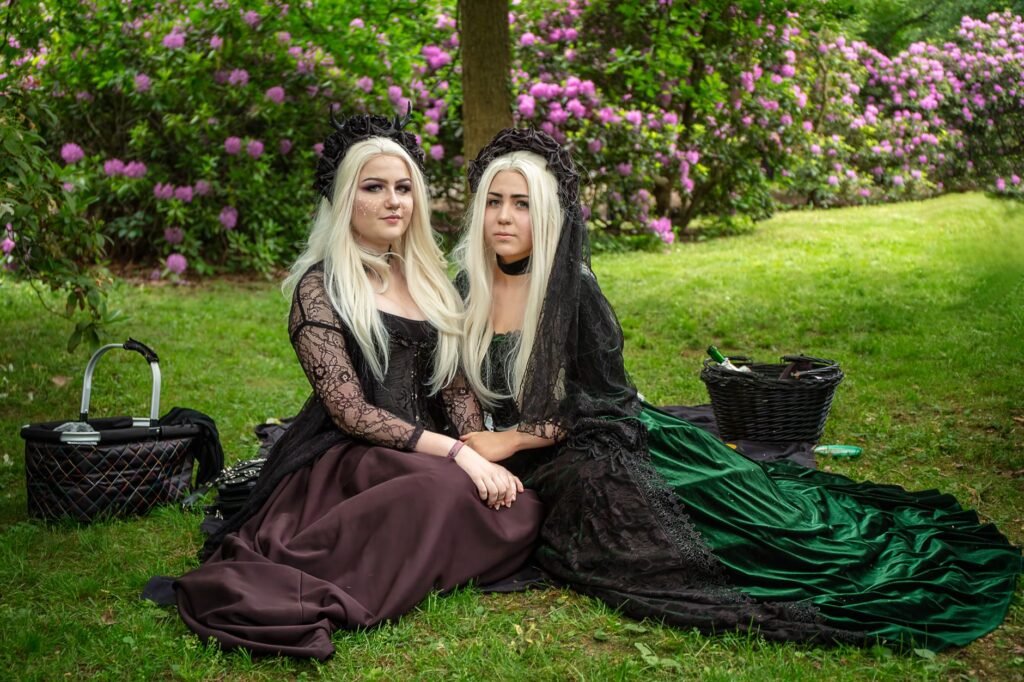
Pwyll and Rhiannon are central figures in Welsh mythology, best known from the First Branch of the Mabinogi, one of the foundational prose narratives of medieval Welsh literature. Their story combines romance, kingship, magic, injustice, hospitality, and the testing of identity. In the wider tradition of Celtic mythology, they are among the most memorable characters because their tale is at once deeply human and unmistakably supernatural.
Pwyll, prince of Dyfed, and Rhiannon, a noble otherworldly woman, embody themes that recur throughout early Welsh narrative: legitimate rule, the obligations of honor, the mysteries of the Otherworld, and the consequences of false accusation. Their story has become one of the best-known episodes in Welsh myth and literature, influencing modern retellings, scholarship, and popular interpretations of Celtic tradition.
Origin and Meaning
Pwyll
The name Pwyll is generally understood as the Welsh word for “wisdom,” “sense,” or “judgment,” though the exact etymology and semantic development are discussed differently by scholars. In mythological context, the name suits a ruler whose character is shaped by restraint, discernment, and tested leadership.
Pwyll is also identified in later Welsh genealogical tradition as a dynastic ancestor connected to the ruling house of Dyfed, though the literary figure in the Mabinogi is not straightforwardly historical.
Rhiannon
The name Rhiannon is usually linked by scholars to an earlier Brythonic or Celtic name form, often associated with a feminine figure of sovereignty or divine status. The exact derivation is not fully certain, but the name has long been connected with ideas of queenship, high status, and otherworldly dignity.
A popular modern association links Rhiannon with the historical and legendary Epona, a horse-associated goddess of the continental Celtic world, but this identification is not certain and should be treated cautiously. What can be said with confidence is that Rhiannon’s literary portrayal strongly reflects themes of sovereignty, enchantment, and independent authority.
Historical Context
Pwyll and Rhiannon belong to the medieval Welsh prose tradition preserved in the White Book of Rhydderch and the Red Book of Hergest, manuscripts compiled in the 13th and early 14th centuries, though the stories themselves are older in origin.
The Mabinogi emerged from a culture in which:
- oral storytelling remained influential,
- aristocratic values shaped literary narrative,
- kingship was tied to justice and hospitality,
- the boundary between the human world and the Otherworld was fluid.
These tales reflect a Welsh society influenced by Christian scribes and monastic learning, yet preserving older native traditions. The result is not “pre-Christian myth” in a pure form, but a medieval literary reworking of older material.
The story of Pwyll and Rhiannon also fits into a broader Celtic pattern in which a ruler encounters a supernatural woman whose favor is linked to rightful sovereignty. Such stories often emphasize that kingship must be earned through conduct, not inherited alone.
Main Characteristics
Pwyll
Pwyll is depicted as:
- a noble prince of Dyfed,
- courteous but initially overconfident,
- capable of restraint and fairness,
- tested through hospitality, loyalty, and patience,
- ultimately a legitimate ruler and husband.
He is not portrayed as a warrior-hero in the later heroic sense. Instead, his greatness lies in wise conduct and the ability to accept instruction from both human and supernatural sources.
Rhiannon
Rhiannon is described as:
- extraordinarily beautiful,
- dignified and self-possessed,
- associated with horses and swift movement,
- wise, commanding, and difficult to deceive,
- wrongfully accused yet patient and resilient.
She is one of the most distinctive women in medieval literature. Unlike passive romance figures, Rhiannon speaks for herself, sets conditions, and exercises agency. Her suffering in the story of her lost son is a major example of a noble woman enduring unjust punishment while retaining her dignity.
Family and Genealogy
The family relationships of Pwyll and Rhiannon are given within the narrative and in later Welsh tradition.
| Figure | Relationship | Notes |
|---|---|---|
| Pwyll | Prince of Dyfed | Husband of Rhiannon |
| Rhiannon | Wife of Pwyll | Noble woman from the Otherworld or a liminal realm |
| Pryderi | Son of Pwyll and Rhiannon | Central figure in the later branches of the Mabinogi |
| Manawydan | Later husband of Rhiannon | After Pwyll’s death, in the Third Branch |
| Arawn | Otherworld king and ally of Pwyll | Not family, but crucial to the plot |
Pwyll and Rhiannon as Parents
Their son Pryderi is one of the most important characters in the Mabinogi. His name, commonly associated with “anxiety,” “care,” or “concern,” reflects the unusual circumstances of his birth and disappearance. The child’s abduction, concealment, and eventual recovery are central to the moral and emotional arc of the First Branch.
Dynastic Significance
Later medieval Welsh genealogies treat Pwyll and his line as part of a royal ancestry connected to Dyfed. In literary terms, this ancestry legitimizes Pryderi’s later role as ruler and links the family to the sovereignty of the land.
Symbols
Pwyll and Rhiannon are associated with a number of symbolic elements, especially in the First Branch.
Key Symbols
- Horses: Rhiannon is strongly linked to horses, suggesting speed, nobility, and sovereignty.
- The Otherworld hunt: Pwyll’s encounter with the hunt marks a boundary-crossing event.
- Bags and punishment: Rhiannon’s humiliating penance with a horse-collar and carrying visitors symbolizes unjust shame imposed on the innocent.
- The mound or magical concealment: Pryderi’s disappearance and recovery involve enchantment and hidden space.
- Hospitality and feast: Kingship and legitimacy are often tested through the ability to host others properly.
Meaning of the Symbols
These symbols are not decorative details. They mark major themes in the story:
- rightful rule,
- the testing of character,
- the relation between human society and magical power,
- shame and restoration,
- the vulnerability of status.
Sacred Animals
Horses
The horse is the most prominent animal associated with Rhiannon. In the narrative, she appears as a rider on a magnificent pale horse, moving slowly enough that no human pursuit can overtake her. Her horses are central to her iconography.
The horse symbolizes:
- nobility,
- mobility,
- royal power,
- the boundary between worlds,
- fertility and sovereignty.
Hounds
Pwyll’s first encounter with Arawn occurs during a hunt involving supernatural hounds. The hounds are deeply significant in the story because Pwyll gains honor by correcting his mistake and refusing to exploit another man’s quarry.
In Celtic tradition more broadly, hunting dogs often appear as liminal or Otherworldly animals.
Sacred Plants
The First Branch does not center on a specific sacred plant in the way some mythological traditions do. There is no single plant uniquely and universally associated with Pwyll and Rhiannon in the medieval text.
That said, the mead-hall, orchard, and cultivated landscape are important indirectly because they reflect the civilizing space of kingship and hospitality. In modern interpretations, some readers associate Rhiannon with fertility and seasonal renewal, but such associations are interpretive rather than explicitly attested in the medieval source.
Sacred Places
Dyfed
Dyfed, in southwest Wales, is the kingdom over which Pwyll rules. In the narrative it functions both as a political setting and as a symbolic center of legitimate kingship.
The Otherworld Realm of Arawn
Pwyll’s initial adventure takes place in the realm of Arawn, king of Annwn, the Welsh Otherworld. The story presents this as a parallel kingdom rather than a distant heaven or hell. It has its own court, king, and social order.
Gorsedd Arberth
One of the most famous places in the First Branch is Gorsedd Arberth, a mound or ceremonial place in Dyfed where supernatural events occur. It is associated with marvels and with Rhiannon’s first appearance.
The Court and Hall
The royal hall is important as a setting for:
- feasts,
- legal and social obligations,
- public accusations,
- the testing of honor,
- the recognition of legitimacy.
The hall is not merely a building but a symbol of civil order.
Powers and Attributes
Pwyll and Rhiannon are not deities in a strict theological sense, but they possess qualities that resemble mythic and sovereign power.
Pwyll’s Attributes
- prudent leadership,
- hospitality,
- fairness,
- ability to honor agreements,
- endurance in trial,
- capacity to rule justly after learning humility.
Rhiannon’s Attributes
- command of speech,
- mysterious arrival and departure,
- sovereignty associated with horses,
- endurance under false accusation,
- maternal significance,
- control over her own marriage choice.
Domains of Influence
Their story suggests influence over:
- kingship,
- marriage alliances,
- justice and reputation,
- fertility and inheritance,
- relations between the human and Otherworldly domains.
Main Myths
The Story of Pwyll and Arawn
Pwyll’s story begins with a hunt. He inadvertently drives off Arawn’s hounds and allows his own dogs to feed on a stag. To make amends, he is invited into Arawn’s realm. There he agrees to exchange places with Arawn for a year and a day, ruling in Arawn’s stead and defeating Arawn’s rival Hafgan.
The arrangement tests Pwyll’s self-control, honor, and fidelity. He rules so effectively that his conduct strengthens the bond between the two kings. This episode is often read as a lesson in rightful governance and the ethics of exchange.
The First Appearance of Rhiannon
At Gorsedd Arberth, Pwyll sees a woman riding a pale horse, dressed in rich gold cloth but moving at a distance impossible to close. When he sends riders after her, they fail to catch up. Only when he calls out does she stop.
Rhiannon rebukes Pwyll for failing to speak sooner, and their conversation establishes her as the chooser rather than the chosen. She explains that she has come to marry him and that he must not pursue her by force. She later arranges the marriage through proper negotiation.
This scene is important because it reverses common courtship patterns: Rhiannon sets the conditions, and Pwyll must respond with patience and respect.
The Birth and Loss of Pryderi
After marriage, Pwyll and Rhiannon have a child. On the night the child is to be publicly named, the infant disappears while the women guarding him sleep. Fearful of punishment, the attendants smear blood on Rhiannon and accuse her of killing or eating the child.
Rhiannon is condemned to a humiliating penance. For years she must sit by the gate of the court, offer to carry visitors on her back like a horse, and tell her shame to newcomers.
Eventually the child is found and restored. He has not died but has been hidden by a supernatural force and later rescued by a noble household. He is renamed Pryderi.
This is one of the most powerful sections of the Mabinogi. It combines tragedy, false accusation, maternal suffering, and eventual restoration.
The Meaning of the Myths
The myths are often interpreted as dramatizing:
- the lawful basis of kingship,
- the danger of rash judgment,
- the dignity of endurance,
- the importance of public reputation,
- the link between sovereignty and the welfare of the land.
Relationship with Other Mythological Figures
Arawn
Arawn is Pwyll’s closest mythic ally in the First Branch. Their exchange of identities forms one of the most famous friendship motifs in Welsh literature. The relationship is based on honor and mutual obligation.
Hafgan
Hafgan is Arawn’s rival and the enemy Pwyll must defeat. He represents disorder or challenge within the Otherworldly kingship structure.
Pryderi
Pryderi becomes the continuation of the family line and a central figure in later branches of the Mabinogi. His relationship to both parents is essential to the narrative structure of the whole cycle.
Manawydan
Manawydan is Rhiannon’s second husband in the Third Branch. His relationship with Rhiannon extends the theme of endurance and companionship after loss.
Otherworld Women and Sovereignty Figures
Rhiannon belongs to a wider mythic pattern of women whose union with a ruler legitimizes sovereignty. This pattern appears in different forms across Celtic and Indo-European traditions, though each tradition develops it differently.
Worship and Cult
There is no secure evidence for a historical cult of Pwyll and Rhiannon as worshipped deities in the way that can sometimes be inferred for some ancient gods. They are best understood as literary mythological figures preserved in medieval Welsh tradition.
What Can Be Said with Confidence
- The tales were preserved and valued by learned Welsh storytellers and scribes.
- They likely draw on older oral material.
- Some elements may reflect pre-Christian mythic concepts, especially sovereignty motifs and Otherworld symbolism.
- Direct evidence of temples, priests, or formal ritual worship is lacking.
Later Cultural Reverence
In modern times, Rhiannon in particular has been adopted by neo-pagan, Druidic, feminist, and literary communities as a figure of sovereignty, endurance, and feminine power. These are later interpretations, not direct evidence of ancient worship.
Ancient Sources
The principal source for Pwyll and Rhiannon is the First Branch of the Mabinogi.
Major Primary Sources
| Source | Relevance |
|---|---|
| The Mabinogi (First Branch) | Main narrative of Pwyll and Rhiannon |
| White Book of Rhydderch | One of the principal manuscript witnesses |
| Red Book of Hergest | Another key manuscript witness |
| Later Welsh genealogies | Connect the figures to royal ancestry traditions |
Unlike Greek or Roman mythology, there are no equivalent classical authors such as Homer or Ovid for this subject. The story survives through medieval Welsh prose, not through ancient Mediterranean literary history.
Roman Equivalent
There is no direct Roman equivalent to Pwyll and Rhiannon.
Some comparative studies have noted thematic parallels between Rhiannon and Roman or Gallo-Roman horse goddesses, especially Epona, but this is not a one-to-one identification. Likewise, Pwyll’s role as a tested ruler has no exact Roman counterpart.
Therefore, it is best to say that:
- no secure Roman equivalent exists,
- some comparative scholars draw analogies with sovereignty deities and horse-associated figures,
- such comparisons remain interpretive rather than definitive.
Influence on Modern Culture
Pwyll and Rhiannon have had a notable impact on modern culture, especially through the revival of interest in Celtic literature.
Literature and Scholarship
The First Branch of the Mabinogi is widely studied in:
- medieval literature,
- Celtic studies,
- mythology,
- comparative religion,
- gender studies.
Rhiannon, in particular, has become an important figure in discussions of sovereignty, feminine agency, and the treatment of women in myth.
Music and Popular Culture
Rhiannon became widely known in global popular culture through Fleetwood Mac’s 1975 song “Rhiannon”, which helped introduce her name to audiences far beyond Wales. The song is not a retelling of the medieval tale, but it contributed significantly to modern recognition of the name.
Fiction, Games, and Fantasy
Elements of the Pwyll and Rhiannon story appear in:
- fantasy novels,
- tabletop and digital role-playing games,
- neo-mythological retellings,
- children’s adaptations of Celtic legend,
- artwork inspired by Welsh myth.
Modern Welsh Identity
The Mabinogi has also become a symbol of cultural heritage and Welsh literary identity. Pwyll and Rhiannon are among the figures most often used to represent the richness and antiquity of Welsh tradition.
Curiosities
- Rhiannon is sometimes called one of the most memorable women in all of medieval European literature.
- Her punishment is unusual: instead of death or imprisonment, she must serve as a living mount for visitors, a deeply symbolic humiliation.
- Pwyll’s success in the Otherworld depends not on force but on restraint and keeping faith with a promise.
- Pryderi appears across all four branches of the Mabinogi, making him one of the cycle’s structural links.
- The Mabinogi uses a style that is both economical and highly suggestive, leaving much room for interpretation.
- The name Rhiannon has become far more widely known in modern times than many other Welsh mythological names, partly because of music and contemporary fantasy literature.
- The story blends courtly realism with magical events in a way that makes it one of the most distinctive medieval narratives in Europe.
Frequently Asked Questions
Who are Pwyll and Rhiannon?
Pwyll is the prince of Dyfed, and Rhiannon is his supernatural or otherworldly wife in the First Branch of the Mabinogi. Their story is one of the most important in Welsh mythology.
Are Pwyll and Rhiannon gods?
They are not clearly presented as gods in the surviving text. They are mythological and literary figures, though Rhiannon in particular may preserve older sovereignty or divine motifs.
What is Rhiannon famous for?
Rhiannon is famous for her dignity, her horse association, her role as Pwyll’s chosen bride, and her unjust punishment after the disappearance of her son Pryderi.
What is Pwyll’s role in the story?
Pwyll’s role is that of a prince whose honor is tested. He must show restraint, fairness, and loyalty before he is fit to rule and marry Rhiannon.
Who is Pryderi?
Pryderi is the son of Pwyll and Rhiannon. He is one of the most important figures in the Mabinogi cycle and appears in multiple branches of the narrative.
Is there historical evidence that Pwyll and Rhiannon were worshipped?
No firm evidence survives for formal worship. They are known primarily from medieval literature, not from archaeological or documentary evidence of cult practice.
What is the significance of horses in Rhiannon’s story?
Horses symbolize sovereignty, nobility, and liminal movement between worlds. Rhiannon’s connection with horses is one of her defining features.
Why is the story of Pwyll and Rhiannon important?
It is important because it preserves some of the most sophisticated mythic storytelling in Welsh literature and offers insight into medieval ideas of kingship, justice, gender, and the Otherworld.
Conclusion
Pwyll and Rhiannon occupy a central place in Welsh myth and medieval literature. Their story in the First Branch of the Mabinogi is more than a romantic tale: it is a profound narrative about right rule, the dignity of the wronged, and the meeting point between the human world and the supernatural. Pwyll’s wisdom is tested through encounter and exchange, while Rhiannon’s sovereignty and endurance make her one of the great figures of European mythic literature.
Because their tale survives in medieval Welsh manuscripts rather than in classical antiquity, it preserves a distinctive vision of Celtic storytelling—one in which kingship is moral as well as political, and where a woman’s dignity can stand at the center of myth. Their legacy continues in scholarship, literature, music, and modern cultural imagination, ensuring that Pwyll and Rhiannon remain enduring symbols of Welsh narrative tradition.

Orin Vale has spent the better part of two decades tracing the threads that connect the world’s oldest stories — from the halls of Asgard to the banks of the Nile, from Olympus to the jungles of the Maya. What began as a childhood fascination with flood myths and trickster gods grew into years of independent study across comparative mythology and ancient religion, always chasing the same question: what did these stories mean to the people who first told them? Orin writes for readers who want more than trivia — the ones looking for the beliefs, fears, and truths that myths were built to carry.