Sacred Flame of Hestia
Introduction
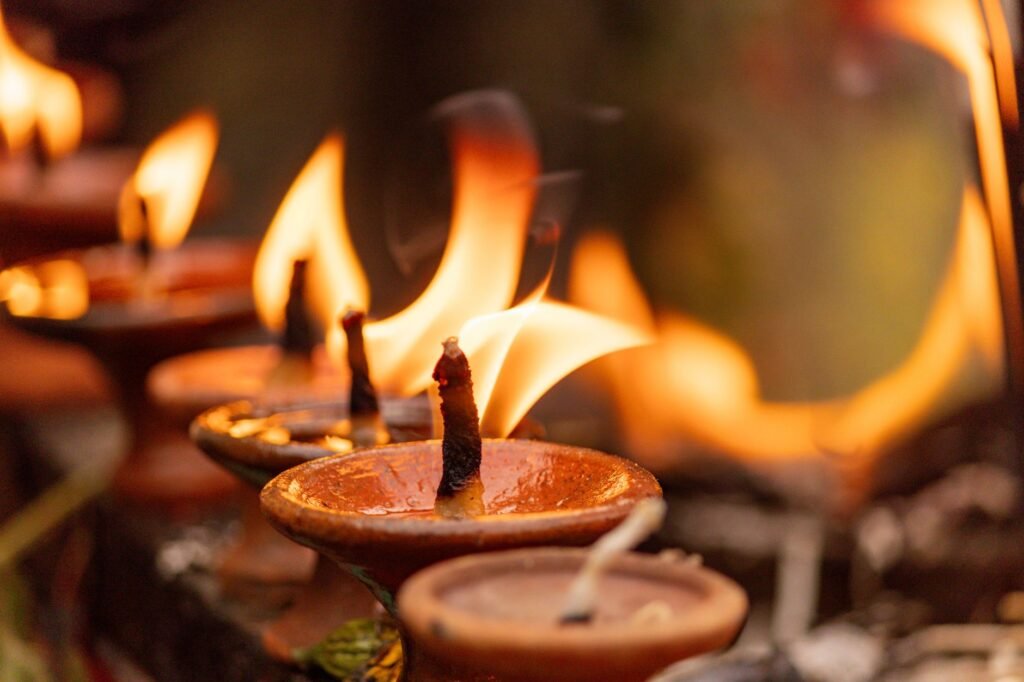
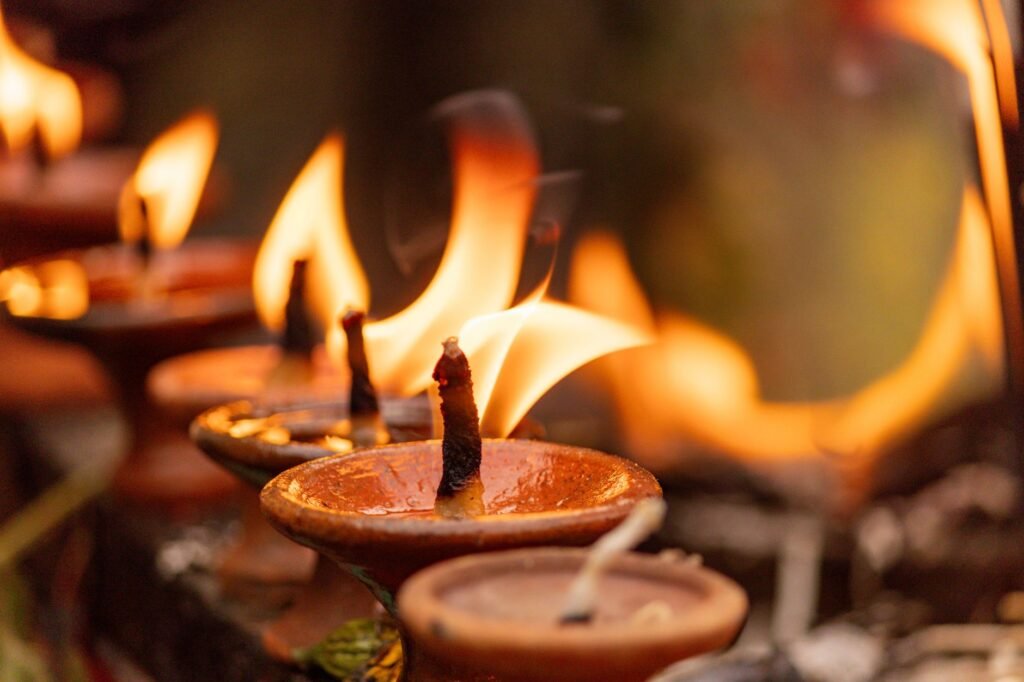
The Sacred Flame of Hestia was one of the most enduring and symbolically important elements in ancient Greek religion. Associated with Hestia, the goddess of the hearth, home, and domestic stability, this flame represented continuity, civic order, hospitality, and the presence of the divine within everyday life. In Greek thought, fire was not only useful but also sacred: it marked the center of the household, linked families to one another, and connected communities to the gods.
The sacred flame appears in both private and public contexts. In the home, the hearth fire honored Hestia and sustained family life. In the city, communal hearths and sacred fires stood at the center of civic identity, political continuity, and ritual life. Because of this, the Sacred Flame of Hestia became a powerful symbol of permanence in a world shaped by warfare, migration, and change.
Origin and Meaning
The name Hestia is traditionally understood as the Greek goddess’s own name rather than a title with a securely known etymology. Ancient and modern scholars have proposed different explanations, but its origin remains uncertain. In Greek religion, however, the meaning of Hestia was closely tied to the hearth itself.
The concept of the sacred flame did not refer to a single universal fire in all Greek cities, but rather to a class of ritual fires associated with Hestia. In both domestic and civic life, the hearth fire was treated as holy because it symbolized:
- the continuity of the family line,
- the stability of the household,
- the unity of the city-state,
- and the ever-present protection of the goddess.
The Greek word hestia also means “hearth” or “hearth-place,” which clearly connects the goddess with the physical and ritual center of the home. The sacred flame thus derived its meaning from the hearth as both a practical necessity and a religious center.
Historical Context
The worship of Hestia belongs to the broader religious life of ancient Greece, especially from the Archaic period onward, though hearth veneration is likely much older. In early Greek households, the central hearth was the place where cooking, warmth, sacrifice, and hospitality converged. It was natural that a goddess of the hearth would become associated with the safest, most stable part of domestic life.
Domestic religion
In many Greek homes, the hearth was the focal point of daily ritual. Offerings could be made there to Hestia at the beginning of meals, upon the arrival of guests, and in family ceremonies. The household fire was not merely functional; it was a sacred presence that marked the family as a religious unit.
Civic religion
Greek cities also maintained public hearths. In some poleis, especially Athens and other states with well-documented civic ritual, the public hearth stood in a building such as the prytaneion, where magistrates, honored guests, and civic ceremonies were centered. The sacred fire there symbolized the life of the state.
Colonial foundations
When Greek colonies were founded, a flame from the mother city’s public hearth could be carried to the new settlement. This practice symbolically linked the colony to its parent city, establishing religious and cultural continuity. In this way, the Sacred Flame of Hestia became a sign of origin and legitimacy.
Religious significance
Unlike many Greek deities, Hestia was comparatively quiet in myth but highly important in ritual practice. Her sacred flame belonged to the everyday religious structure of Greek life rather than to dramatic mythological narrative. This is one reason she could be considered one of the most omnipresent gods despite her limited mythic storytelling.
Main Characteristics
The Sacred Flame of Hestia is identified by several core characteristics:
- Perpetual presence: It was meant to remain continuously lit in significant ritual settings.
- Purity: The flame was associated with clean, orderly domestic life.
- Centrality: The hearth occupied the center of the home and the civic building.
- Continuity: It represented the survival of the family, the city, and tradition.
- Hospitality: Guests were welcomed through the hearth, which signaled civilized society.
- Divine presence: The flame was treated as a manifestation or sign of Hestia’s favor.
In religious terms, Hestia was often invoked at the beginning and end of sacrifices. This created a ritual frame: she was honored first and last, emphasizing the completeness and sanctity of the ceremony.
Family and Genealogy
Hestia is usually identified as one of the children of Cronus and Rhea. She belongs to the first generation of Olympian gods and is therefore a sister of:
- Zeus,
- Hera,
- Poseidon,
- Hades,
- and Demeter.
In the most familiar mythic tradition, Hestia is one of the virgin goddesses and does not have a husband or children. Her refusal of marriage is an important aspect of her character and reinforces her association with stability, self-containment, and the intact household rather than romantic union.
Relationship to the Olympian family
Hestia’s place in the divine family is notable because she is both a full Olympian and one of the least mythologized. In some traditions, she voluntarily yields her place among the Twelve Olympians to Dionysus, though accounts vary and the number of Olympians was not fixed in all ancient sources. This tradition reflects her self-effacing, peaceful role within the pantheon.
Symbols
The Sacred Flame of Hestia is associated with several symbols that express its religious meaning.
| Symbol | Meaning |
|---|---|
| Hearth fire | Domestic and civic center, divine presence |
| Flame | Continuity, purity, life, ritual order |
| Hearth altar | Sacral center of the household or state |
| Round hearth | Stability and enclosure |
| Vessel or lamp in some later depictions | Controlled sacred light |
Associated colors
Ancient sources do not provide a standardized color scheme for Hestia, but symbolic associations of the flame naturally include:
- red and gold, for fire and warmth,
- white, for purity and ritual cleanliness,
- earth tones, for the domestic and stable character of the hearth.
Meaning of the hearth
The hearth was not only a place for cooking and heating. It was the spiritual center of the home. In many Greek settings, the flame’s symbolism extended from the family table to public religious identity.
Sacred Animals
Unlike many gods, Hestia does not have a strongly fixed animal companion in the ancient record. This is an important point: there is no single universally attested sacred animal for the Sacred Flame of Hestia comparable to the owl of Athena or the eagle of Zeus.
That said, certain animals are sometimes connected with her broader symbolism through domestic life and sacrifice:
- Domestic cattle and sheep: commonly used in Greek sacrifice, including offerings involving the hearth.
- Pigs: often associated with household and agricultural fertility in Greek ritual more broadly.
- Dogs: occasionally linked in later interpretive traditions to household protection, though not as a primary ancient emblem of Hestia.
Because evidence is limited, any claim of a definitive sacred animal should be treated cautiously.
Sacred Plants
No plant is universally established as Hestia’s principal sacred plant in the same way that olive is associated with Athena or laurel with Apollo. However, plants connected to domestic nourishment, ritual offerings, and fire are relevant in a broader sense.
Possible associations
- Oak: in some Greek ritual contexts, wood was important to the maintenance of sacred fire, though oak is not uniquely Hestia’s plant.
- Barley and grain: used in offerings and linked to household sustenance.
- Vines and wine-related products: appear in sacrificial and domestic ritual settings, though more strongly associated with Dionysus and feasting than with Hestia herself.
- Garlands and wreaths: may decorate sacred spaces and altars, including hearth-centered shrines.
The ancient evidence does not support assigning Hestia a single canonical sacred plant. Her symbolism is centered more on fire and space than on botanical emblems.
Sacred Places
Hestia’s sacred flame was connected to places rather than to a single mythic shrine. The most important sacred locations include domestic and civic hearths.
The household hearth
The home hearth was the primary sacred place of Hestia. It was where family members gathered, where offerings were made, and where the household’s ritual identity was maintained.
The prytaneion
In many Greek cities, the prytaneion was the civic building containing the public hearth. This structure served as a center of government, hospitality, and public honor. Important guests and civic benefactors could be received there, reinforcing the link between Hestia and political legitimacy.
Delphi and Athens
Although Hestia was not centered at a single pan-Hellenic sanctuary in the way some other gods were, her presence was important in major religious centers. Ancient traditions sometimes connect public hearths and communal fire with the wider religious authority of the city-state and sanctuary.
Colonial hearths
When Greeks founded colonies in the Mediterranean and Black Sea regions, they often transplanted sacred fire from the metropolis. This practice transformed the flame into a portable sign of civic origin.
Powers and Attributes
The Sacred Flame of Hestia expressed Hestia’s powers and responsibilities in Greek religion.
Domains of influence
- The hearth
- The household
- Hospitality
- Domestic peace
- Civic unity
- Ritual order
- Continuity of the city and family
Attributes
Hestia is typically understood as:
- calm,
- stable,
- pure,
- modest,
- protective,
- and essential but unobtrusive.
Unlike deities associated with conflict, transformation, or spectacle, Hestia’s sacred flame represents what allows society to endure.
Ritual function
The flame structured sacred space. In sacrifice, Hestia’s fire marked the beginning and completion of religious action. In civic life, it symbolized the presence of the state and the legitimacy of authority.
Main Myths
Hestia is less prominent in narrative mythology than many other Olympians, and this relative silence is itself significant. The best-known traditions concerning her concern her role among the gods rather than elaborate adventures.
Birth and survival among the Olympians
Hestia is usually included among the children of Cronus and Rhea. Like her siblings, she was swallowed by Cronus and later restored after Zeus’ victory, according to the standard mythic cycle.
Virginity and refusal of marriage
One of the best-known myths about Hestia involves her rejection of marriage. Both Poseidon and Apollo are sometimes said to have sought her hand, but she refused and swore an oath of perpetual virginity before Zeus. This episode reinforces her status as the goddess of an undivided and stable hearth, not a divided household.
The first and last offering
In Greek ritual, Hestia was honored at the start and end of sacrifice. Though not a myth in the narrative sense, this recurring ritual pattern became one of the defining expressions of her sacred character.
The possible transfer of Olympic status
Later tradition suggests that Hestia may have given up her place among the Twelve Olympians to Dionysus. This is not uniformly attested in all ancient accounts, but it reflects the symbolic idea that Hestia’s role was foundational and continuous rather than politically dominant.
Relationship with Other Mythological Figures
Hestia’s relationships are often defined by contrast.
Zeus
Zeus, as ruler of gods and guarantor of social order, is Hestia’s brother and a complementary figure. If Zeus represents public sovereignty, Hestia represents the internal, domestic, and civic center that makes sovereignty sustainable.
Poseidon and Apollo
In some traditions, both gods seek Hestia in marriage. Her refusal marks her independence and ritual purity. The story also emphasizes that Hestia’s function is not sexual union but sacred stability.
Hermes
Hermes, god of movement, exchange, and boundaries, stands in interesting contrast to Hestia, who governs stillness and center. Later symbolic readings often pair them as opposites: Hermes at the threshold, Hestia at the hearth.
Demeter
Hestia and Demeter both relate to nourishment and survival, but in different ways. Demeter governs agriculture and grain; Hestia governs the home in which food is prepared and shared.
Dionysus
The tradition that Dionysus replaced Hestia among the Twelve Olympians places the two in a symbolic tension between order and ecstasy, domestic stability and release. However, this is a later interpretive framework rather than a universally fixed ancient doctrine.
Worship and Cult
Hestia was worshipped primarily through private household ritual and civic flame maintenance.
Household worship
Common forms of devotion included:
- offering the first and last portions of meals,
- pouring libations,
- keeping the hearth clean and ritually maintained,
- and invoking Hestia at the start of prayers or sacrifices.
The domestic hearth was the natural setting for these acts because it connected daily survival to religious duty.
Public cult
Public hearths in prytaneia and civic centers embodied the city’s communal identity. Officials could maintain the fire, and significant guests might be entertained in spaces associated with Hestia’s sacred presence.
Festivals and ritual patterns
There was no single universally dominant festival of Hestia comparable to some larger pan-Hellenic celebrations. Instead, Hestia’s worship was woven into ordinary religious practice. Her cult was therefore pervasive but often understated.
Hospitality and asylum
Because the hearth marked the home as a place of civilized order, it also carried implications for hospitality and protection. Guests welcomed by the hearth were under a sacred obligation of safety and respect.
Ancient Sources
Hestia appears in a range of ancient texts, though often in ritual or genealogical contexts rather than in extended mythic episodes.
Key classical sources
- Homeric Hymns: Hestia is addressed in hymnic language that emphasizes her role in the household and among the gods.
- Hesiod, Theogony: presents the genealogy of the Olympian gods and includes Hestia among the children of Cronus and Rhea.
- Apollodorus, Library: preserves mythological traditions about the Olympian family and divine relationships.
- Pausanias, Description of Greece: valuable for local cult practice and sacred sites.
- Ovid, Fasti: important for understanding Roman adaptation and the broader Mediterranean significance of hearth cult.
- Aristophanes and other dramatists: sometimes reflect Hestia’s cultural role indirectly through references to household and civic order.
Interpreting the sources
Ancient sources do not always present a unified picture. Some emphasize Hestia’s virginity, others her role in sacrifice, and still others her place among the Olympians. Because of this, modern reconstructions must be careful not to overstate certainty where the evidence is limited.
Roman Equivalent
Hestia’s Roman equivalent is Vesta. The correspondence is strong and well established.
Similarities between Hestia and Vesta
Both deities are associated with:
- the hearth,
- the domestic center,
- sacred fire,
- purity,
- and continuity of state and household.
Differences in cult emphasis
While Hestia was important in Greek domestic and civic life, Vesta’s cult in Rome became especially formalized and politically prominent. The Temple of Vesta in the Roman Forum and the Vestal Virgins gave Roman hearth religion a distinct public institutional form that was more elaborate than most Greek evidence for Hestia’s cult.
Still, the conceptual relationship is clear: both deities embody the sacred fire that sustains society.
Influence on Modern Culture
The Sacred Flame of Hestia continues to influence modern literature, art, and popular culture, especially in works drawing on Greek mythology.
Literature and scholarship
Modern retellings often portray Hestia as a quiet but powerful figure, a symbol of home, care, and resilience. Academic interest in her has also grown because she represents a major god whose importance lay more in ritual than in story.
Visual art
Artists have depicted Hestia with a lamp, torch, or hearth symbolism, though surviving ancient images are not as numerous as those of more dramatic Olympians.
Games and fantasy media
In modern games, novels, and fantasy settings inspired by Greek myth, Hestia is often associated with fire magic, sanctuary, or divine protection. These portrayals are modern reinterpretations rather than ancient beliefs.
Feminist and cultural readings
Some modern readers interpret Hestia as a figure of autonomy, domestic authority, and non-domestic power. While such readings are modern, they build on ancient traits: restraint, independence, and centrality without display.
Curiosities
- Hestia is often described as one of the least mythologized Olympians, yet one of the most ritually important.
- Her sacred fire was more a matter of practice than of dramatic story.
- She was commonly honored first and last in sacrifice, a unique ritual position.
- The hearth served as both a family altar and a political symbol.
- In some traditions, she may have given up her Olympian seat to Dionysus.
- Her cult helps explain why the home was treated as a religious space, not merely a private one.
- The Greek and Roman hearth goddesses, Hestia and Vesta, are closely related but not identical in historical cult development.
Frequently Asked Questions
What is the Sacred Flame of Hestia?
It is the sacred fire associated with Hestia, goddess of the hearth, representing domestic and civic continuity, purity, and divine presence.
Why was the hearth so important in ancient Greece?
The hearth was the center of the household for cooking, warmth, sacrifice, and family unity. It was also a religious center linked to Hestia.
Did Hestia have a temple?
Hestia was not usually centered on large temples in the way some gods were. Her worship focused on hearths, domestic spaces, and civic hearths such as those in the prytaneion.
Was Hestia worshipped differently from other gods?
Yes. Her worship was often quiet, continuous, and built into daily life rather than into dramatic myth or major public cult alone.
What is the Roman name for Hestia?
Her Roman counterpart is Vesta.
Did Hestia have children or a husband?
In the most common traditions, no. She is a virgin goddess and does not have a husband or children.
Why is Hestia important if she appears in few myths?
Her importance lies in ritual and symbolism. She represents the sacred center of home and city, making her fundamental to Greek religious life.
Conclusion
The Sacred Flame of Hestia stands as one of the clearest examples of how ancient religion wove divine meaning into ordinary life. Far from being a minor symbol, the hearth fire represented the stability of the household, the unity of the city, and the continuity of tradition. Hestia’s quiet presence, honored first and last in ritual, made her essential to both domestic worship and civic identity.
Although she appears in relatively few myths, her religious significance is profound. The Sacred Flame of Hestia reveals a central truth of Greek religion: what is most sacred is not always the loudest or most dramatic, but often the most enduring and necessary.

Orin Vale has spent the better part of two decades tracing the threads that connect the world’s oldest stories — from the halls of Asgard to the banks of the Nile, from Olympus to the jungles of the Maya. What began as a childhood fascination with flood myths and trickster gods grew into years of independent study across comparative mythology and ancient religion, always chasing the same question: what did these stories mean to the people who first told them? Orin writes for readers who want more than trivia — the ones looking for the beliefs, fears, and truths that myths were built to carry.