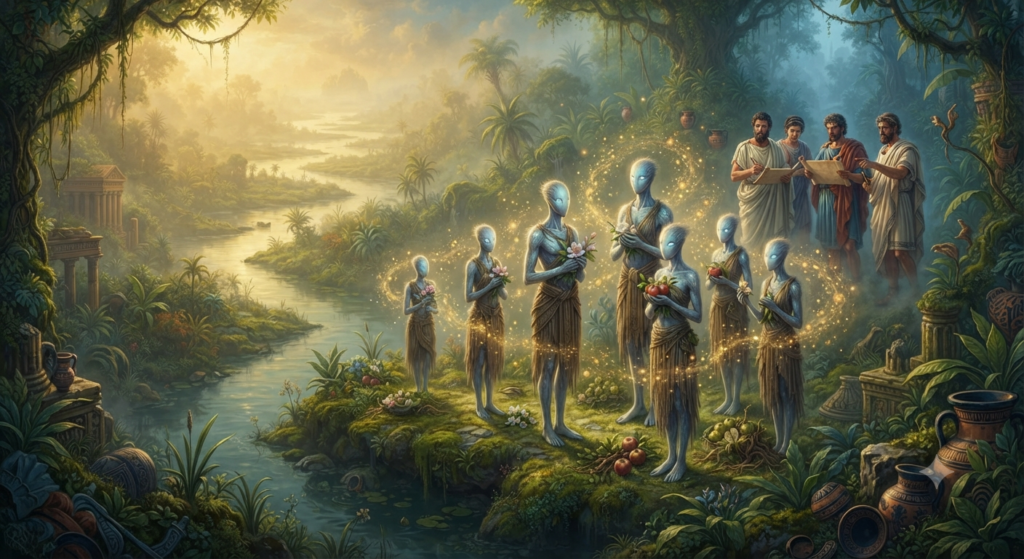
In the vast and imaginative geography of the ancient Greek world, beyond the borders of the known Mediterranean, lay lands inhabited by peoples of extraordinary and often bizarre characteristics. Among these legendary races, one tribe stands out for its uniquely passive and ethereal existence. The question of who are the Astomoi in Greek mythology? leads us to a fascinating intersection of ancient ethnography, mythology, and the human imagination, where the boundaries between observed reality and fantastical invention blur into a single, enduring legend. The Astomoi (also known as the Astomi) were a mythical race of people said to inhabit the remote regions of India, near the mouth of the Ganges River . Their most defining characteristic, from which their name derives, was their complete lack of a mouth. This absence of a mouth was not a deformity but a divine adaptation, as they had no need for food or drink, sustaining themselves entirely on the scent of fragrant flowers, roots, and wild apples . This article will serve as a definitive guide to the Astomoi, exploring their origins in ancient literature, their unique characteristics, their symbolic meaning, and their lasting legacy in the history of mythological and ethnographic thought.
Origins and Historical Background of the Astomoi
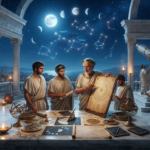
The origins of the Astomoi myth are rooted in the earliest Greek explorations of the Indian subcontinent and the accounts of travelers and historians who ventured into these distant lands. The primary source for the Astomoi is the Greek historian Megasthenes, who served as an ambassador to the court of the Mauryan emperor Chandragupta in Pataliputra around the turn of the 3rd century BCE . His lost work, the Indica, was a comprehensive account of India that served as the primary source for many later Greek and Roman writers. It was in this work that Megasthenes first described the Astomoi, locating them at the mouth of the river Ganges . His description of them as a hair-covered and mouthless tribe who lived off the scent of aromatic plants was a detailed and seemingly authoritative account that was repeated and embellished by later authors .
The Roman encyclopedist Pliny the Elder, writing in the 1st century CE, quoted Megasthenes in his Natural History, further cementing the Astomoi in the Western imagination . Pliny’s work was widely read and influential, and his inclusion of the Astomoi gave them a place in the canon of natural history for centuries to come . The historical importance of the Astomoi lies in their role as a case study for the ancient Greek and Roman understanding of the world. They were a part of the broader fascination with India, a land that was believed to be the source of incredible wealth, strange animals, and peoples with peculiar customs. The Astomoi, along with other legendary tribes like the Pygmies and the Sciritae, represented the exotic “other” that lived at the edges of the known world .
The Mythological Role of the Astomoi
The primary mythological role of the Astomoi was to embody the concept of the “other,” a people who lived according to principles fundamentally different from those of the Greeks and Romans. Their complete lack of a mouth and their ability to sustain themselves on scent alone placed them in a category beyond the normal human condition. They were not simply a curious people; they were a marvel of nature, a testament to the diversity and wonder of the world.
The Astomoi also served as a moral and philosophical counterpoint to the perceived excesses of Greek and Roman civilization. Their simple, ethereal diet and their passive, peaceful nature stood in stark contrast to the often violent and gluttonous habits of the ancient world . They represented a kind of idealized existence, a life free from the constant struggle for food and the attendant ills of society. The Astomoi were, in a sense, the original “breatharians,” a people who had transcended the basic human need for sustenance. Their myth was a testament to the power of the imagination to conceive of a world where the ordinary rules of survival did not apply.
Characteristics and Customs of the Astomoi
The Astomoi were defined by a set of remarkable characteristics that set them apart from all other known peoples.
Physical Appearance
The Astomoi were described as having rough and hairy bodies . This hairiness was often interpreted as a sign of their wild, untamed nature, connecting them to the animal kingdom and the primitive state of humanity. Their most distinctive feature, however, was their complete lack of a mouth . According to the sources, they had no mouth at all, but merely small orifices through which they breathed .
Diet and Sustenance
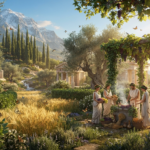
The Astomoi had no need for food or drink . They sustained themselves entirely on the scent of aromatic plants. They would carry with them on their journeys roots, flowers, and wild apples, the perfumes of which provided them with all the nourishment they required . This ethereal diet was the source of their name and the core of their legend. The idea that a human being could live on smell alone was a profound challenge to the ancient understanding of biology and physiology.
Vulnerability and Death
Despite their remarkable adaptation, the Astomoi were not invulnerable. They were extremely sensitive to strong or foul odors. According to the ancient sources, if they were exposed to a strong or unpleasant smell, they could die . This vulnerability highlights the delicate balance of their existence and the fragility of their unique lifestyle.
Location
The Astomoi were consistently located in India, near the mouth of the Ganges River . This remote and exotic location was typical of the legendary tribes of the ancient world, who were always placed at the edges of the known map. The Ganges was a river of immense significance to the Greeks, both as a geographical landmark and as a symbol of the vastness and mystery of the East.
Symbols and Meaning
The symbols associated with the Astomoi are intrinsically tied to their physical characteristics and their unique way of life.
- The Mouthless Face: The most powerful symbol of the Astomoi is their lack of a mouth. This represents the rejection of the most basic human need, the act of consumption. It symbolizes a state of purity and transcendence, a life free from the constant desire for food .
- The Scent of Flowers and Apples: The fragrant plants on which the Astomoi subsisted symbolize the ethereal, non-material nature of their existence. They represent the idea of sustenance derived not from the earth, but from the air itself .
- The Ganges River: The location of the Astomoi at the mouth of the Ganges symbolizes the remoteness and exoticism of their world. The river was a boundary between the known and the unknown, and the Astomoi were among the people who dwelled beyond that boundary .
Powers and Characteristics
The “powers” of the Astomoi were not magical abilities, but rather extraordinary biological adaptations that allowed them to survive in a unique way. Their primary “power” was their ability to live entirely on scent. This was not a supernatural feat, but a natural one, albeit one that defied the normal laws of biology .
Their characteristics were defined by their passive and peaceful nature. They were not a warlike people; they had no need for weapons or armies. Their existence was one of contemplation and simplicity, a life in harmony with the natural world . Their susceptibility to strong smells was a weakness that reinforced their fragile and ethereal nature.
Ancient Sources
The Astomoi are mentioned in several key ancient sources, each building upon the accounts of earlier writers.
- Megasthenes’ Indica (c. 300 BCE): The foundational text for the Greek understanding of India. His account of the Astomoi was the primary source for all later authors .
- Pliny the Elder’s Natural History (c. 77 CE): The Roman encyclopedist who quoted Megasthenes and provided a detailed description of the Astomoi .
- Strabo’s Geography (c. 1st century CE): The Greek geographer who mentions the Astomoi in his comprehensive survey of the known world.
- Pseudo-Apollodorus’ Bibliotheca (c. 1st-2nd century CE): A later compendium of myths that includes a mention of the Astomoi .
- Solinus’ De Mirabilibus Mundi (c. 3rd century CE): A Roman writer who included the Astomoi in his collection of marvels .
Artistic Representations
The Astomoi are not a common subject in surviving ancient Greek or Roman art. Unlike the gods and heroes of mythology, they were a legendary people rather than a series of individual figures, making them more difficult to depict in narrative art. However, they would have been included in the general iconography of India that sometimes appeared in Roman mosaics and other decorative arts. The lack of specific artistic representations, however, only underscores the Astomoi’s status as a people whose identity was defined more by their conceptual characteristics than by any particular iconography.
Cultural Influence and Historical Legacy
The influence of the Astomoi extends far beyond the ancient world. Their story has been a source of fascination for writers, historians, and travelers for centuries.
- Geography and Ethnography: The Astomoi served as a model for the “other” in ancient thought. They represented the exotic, the blessed, and the peculiar peoples who lived at the edge of the known world. Their story was a testament to the power of the human imagination to conceive of worlds beyond the ordinary .
- Travel Literature: The story of the Astomoi appears in the works of later travelers and explorers, who attempted to identify them with real historical populations. A 1912 article in the journal Nature, for instance, examines the “mouthless Indians of Megasthenes,” attempting to explain the origin of the myth as a misunderstanding of the phenomenon of high-altitude sickness .
- Modern Fantasy and Gaming: The Astomoi have been adapted into modern fantasy and role-playing games, such as Dungeons & Dragons and Pathfinder, where they are depicted as a playable race of telepathic, mouthless beings who sense the world through their minds . This demonstrates the enduring appeal of the ancient legend and its ability to inspire new forms of storytelling.
Frequently Asked Questions About Who are the Astomoi in Greek mythology?
What is the origin of the Astomoi myth?
The Astomoi were first described by the Greek historian Megasthenes in his Indica, which detailed the peoples and customs of India around 300 BCE. His account was later quoted and popularized by the Roman writer Pliny the Elder .
What did the Astomoi look like?
The Astomoi were described as having rough and hairy bodies . Their most distinctive feature was their complete lack of a mouth . They had no need for a mouth, as they did not eat or drink.
How did the Astomoi survive without eating?
The Astomoi sustained themselves entirely on the scent of fragrant plants. They would carry roots, flowers, and wild apples with them, and the mere smell of these items provided them with all the nourishment they needed .
Where were the Astomoi believed to live?
The Astomoi were consistently located in India, near the mouth of the Ganges River . This remote and exotic location was typical of the legendary tribes of the ancient world.
What is the meaning of the name Astomoi?
The name “Astomoi” comes from the Greek word *a-* (without) and stoma (mouth). It directly translates to “mouthless ones,” which is a reference to their most defining characteristic .
Are the Astomoi mentioned in any other ancient sources?
Yes, besides Megasthenes and Pliny, the Astomoi are also mentioned by Strabo, Pseudo-Apollodorus, and Solinus, among others .
What killed the Astomoi?
The Astomoi were extremely sensitive to strong or unpleasant odors. According to the ancient sources, exposure to a foul smell could kill them .
Conclusion
The Astomoi of Greek mythology are a testament to the power of the human imagination and the ancient Greek fascination with the exotic peoples of the world. They represent a unique intersection of mythology, early ethnography, and the human desire to understand the unknown. The question of who are the Astomoi in Greek mythology? leads to a remarkable people, a tribe of mouthless Indians who lived on the scent of flowers and apples, a people who were both a marvel and a philosophical statement. Their story, originating with the Greek ambassador Megasthenes and passed down through the works of Pliny and others, has endured for millennia. Their legacy is a cautionary tale about the nature of knowledge and the power of myth to shape our understanding of the world.

Orin Vale has spent the better part of two decades tracing the threads that connect the world’s oldest stories — from the halls of Asgard to the banks of the Nile, from Olympus to the jungles of the Maya. What began as a childhood fascination with flood myths and trickster gods grew into years of independent study across comparative mythology and ancient religion, always chasing the same question: what did these stories mean to the people who first told them? Orin writes for readers who want more than trivia — the ones looking for the beliefs, fears, and truths that myths were built to carry.