The Wooing of Emer
Introduction
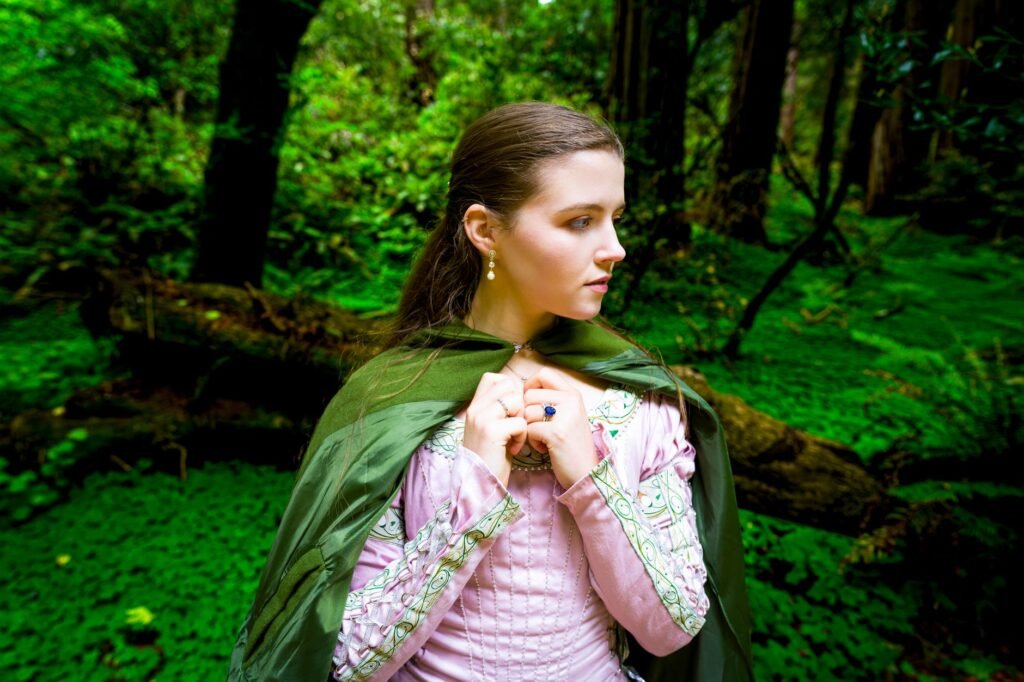
The Wooing of Emer is one of the best-known tales in the Irish mythological and early literary tradition. It belongs to the Ulster Cycle, a body of heroic narratives centered on the warriors of Ulster and especially on the hero Cú Chulainn. The story recounts how Cú Chulainn seeks to win the hand of Emer, the daughter of Forgall Monach, and how the courtship is shaped by trials, social expectations, martial training, and tragic consequences.
Although the tale is primarily a love story, it is also an important cultural document. It reflects early Irish ideas about kingship, heroic reputation, marriage, fosterage, honor, and female agency. It also illustrates how prose tales in medieval Ireland often preserved older mythic motifs while being reshaped by scribes and poets working in a Christian monastic environment.
Origin and Meaning
The title The Wooing of Emer is an English rendering of the Irish tale usually known as Tochmarc Emire. In Old Irish, tochmarc means “wooing” or “courtship,” and Emer is the name of the heroine. The word therefore denotes a formal pursuit of marriage, not merely romantic attraction.
The story survives in medieval Irish manuscript tradition. Like many early Irish tales, it likely drew on older oral material before being written down. Scholars generally place its surviving textual forms in the Middle Irish period, though the narrative may preserve much earlier traditions. Different manuscript versions vary in detail, especially in chronology and episode order, which is typical of early Irish saga literature.
Historical Context
The tale belongs to the Ulster Cycle, which is associated with the pre-Christian heroic world of Ulster, though the texts themselves were recorded in Christian Ireland centuries later. The setting is legendary rather than historically verifiable. Nevertheless, the story offers valuable insight into early Irish society.
Cultural background
The tale reflects several features of early Irish culture:
- Fosterage and training: young nobles were often educated outside their birth families.
- Marriage as alliance: courtship involved negotiation between kin groups.
- Heroic competition: excellence in combat, poetry, and judgment enhanced social standing.
- Brehon law ideals: legal and social norms shaped proper conduct in marriage and honor.
- Female discernment: women in Irish literature can speak with intelligence and authority, and Emer is a notable example.
The world of the tale is not a simple reflection of everyday life. It is a stylized heroic society, blending legal custom, mythic exaggeration, and literary artistry.
Main Characteristics
The Wooing of Emer is distinguished by several major features.
1. Courtship as ordeal
Cú Chulainn does not merely ask for Emer’s hand. He must prove himself worthy through feats of skill, endurance, and prestige. The narrative turns courtship into a test of identity and status.
2. Emer’s intelligence and will
Emer is not a passive figure. She understands social expectations, assesses Cú Chulainn’s worth, and speaks with wit and firmness. In many retellings, she is one of the most memorable women in Irish heroic literature.
3. The tension between love and destiny
The tale links romantic desire with heroic fate. Cú Chulainn’s future as a warrior is already extraordinary, and his relationship with Emer is bound up with his larger mythic role.
4. Blend of comedy, drama, and tragedy
The narrative contains sharp dialogue, irony, and challenges, but it also belongs to the tragic arc of Cú Chulainn’s life. The marriage is not a simple happy ending; it is part of a broader cycle of heroic sorrow.
Family and Genealogy
The tale is deeply embedded in the genealogical world of the Ulster Cycle.
| Figure | Relationship | Notes |
|---|---|---|
| Cú Chulainn | Hero seeking Emer’s hand | Son of Deichtine in most traditions; famed warrior of Ulster |
| Emer | Intended bride of Cú Chulainn | Daughter of Forgall Monach |
| Forgall Monach | Emer’s father | A nobleman who resists the match |
| Conchobar mac Nessa | King of Ulster | Political and heroic authority in the Ulster Cycle |
| Scáthach | Warrior woman and trainer | Gives Cú Chulainn martial instruction in some versions |
| Aífe | Warrior rival and mother of Cú Chulainn’s son | Connected to episodes surrounding Cú Chulainn’s training |
Children and descendants
In the wider Ulster tradition, Cú Chulainn is sometimes associated with Conlaí/Connla, his son by Aífe in later episodes. Emer is usually portrayed as his wife, though the exact sequence of relationships varies across texts and traditions. Medieval Irish narrative often preserves multiple, sometimes inconsistent, family structures.
Spousal relationship
Emer is generally presented as the principal wife of Cú Chulainn in the saga tradition. However, early Irish literature can be fluid regarding marital status, and some texts focus more on alliances and unions than on a single fixed domestic model.
Symbols
The tale does not have a formal cultic symbolism like a temple religion, but it uses recurrent heroic symbols.
Important symbolic elements
| Symbol | Meaning |
|---|---|
| Weapons | Martial status, honor, and readiness for heroic action |
| Chariot | Nobility, speed, and warrior rank |
| Garments and women’s attire | Social identity, propriety, and marriageability |
| Trials and riddles | Worth, intelligence, and recognition |
| Fortresses and halls | Kinship power, social order, and political authority |
The most important symbolic contrast in the tale is between martial excellence and social legitimacy. Cú Chulainn may be unmatched in combat, but he must still secure acceptance within the human and kinship order.
Sacred Animals
There are no uniquely “sacred animals” in the strict religious sense associated specifically with The Wooing of Emer, but the wider Ulster Cycle gives animals strong symbolic importance.
Commonly associated animals in the tradition
- Horses: linked to nobility, travel, and warrior power.
- Hounds: associated with Cú Chulainn himself, whose name means “Hound of Culann.”
- Cattle: central to early Irish wealth, status, and conflict.
The tale’s heroic society is one in which animals often function as markers of rank and value. Cattle raiding, in particular, is a recurring feature of Ulster Cycle narratives, though not always central in this specific story.
Sacred Plants
No plant is uniquely central to The Wooing of Emer, and the tale does not preserve a botanical cult. However, Irish mythological literature often uses plants symbolically.
Possible broader associations
- Hazel: in Irish tradition, often connected with wisdom.
- Rowan: sometimes associated with protection.
- Apple trees: linked more broadly with otherworldly abundance in Irish and Celtic lore.
These associations belong to the larger mythic landscape rather than to this tale alone. It is important not to overstate plant symbolism where the sources do not clearly support it.
Sacred Places
The story moves through a number of important locations in the heroic geography of Ireland and neighboring lands.
Key locations
| Place | Significance |
|---|---|
| Ulster | Main cultural setting of the saga cycle |
| Emain Macha | Royal center of Ulster tradition |
| The Hill of Tara | Sometimes relevant in broader Irish legendary geography |
| Scáthach’s land | A distant training place associated with heroic instruction |
| Forgall’s domain | The stronghold where Emer is guarded from Cú Chulainn |
Emain Macha
Emain Macha is one of the most important sites in the Ulster Cycle. It serves as the royal center of the Ulstermen and anchors many heroic narratives, including those involving Cú Chulainn.
The land of Scáthach
In versions of the story that connect the wooing with Cú Chulainn’s martial training, the hero travels to the overseas or otherworldly realm of Scáthach, the warrior woman who trains him. This space represents disciplined transformation and the forging of heroic identity.
Powers and Attributes
Because The Wooing of Emer is a narrative rather than a deity cult or magical being, it is more accurate to speak of thematic powers and qualities.
Emer’s attributes
Emer is often associated with:
- intelligence
- verbal wit
- discernment
- composure
- loyalty
- noble dignity
Cú Chulainn’s attributes
Cú Chulainn is associated with:
- extraordinary martial skill
- youth and ferocity
- courage
- speed and supernatural strength
- fame and fatal greatness
Thematic powers in the story
The tale explores social and psychological powers such as:
- the power of reputation
- the authority of kinship
- the force of poetic speech
- the binding weight of promises
- the discipline required to become a hero
Main Myths
The tale is not isolated. It connects to several major mythic episodes in the Ulster Cycle.
Cú Chulainn seeks Emer
The central story tells how Cú Chulainn courts Emer, who has many suitors because of her beauty, intelligence, and noble birth. Her father, Forgall Monach, opposes the match and seeks to delay or prevent it.
The test of worthiness
Emer demands that Cú Chulainn prove himself worthy. In many versions, she describes the qualities expected in an ideal husband, including courage, generosity, and skill. This speech is often cited as evidence of the tale’s literary sophistication and its portrayal of an idealized heroic marriage.
The training overseas
One strand of the narrative connects the wooing with Cú Chulainn’s journey to Scáthach, the formidable warrior woman who instructs him in combat. In some versions, he must first attain full warrior status before he can win Emer.
Forgall’s resistance and downfall
Emer’s father, Forgall Monach, tries to block the marriage, sometimes by setting impossible conditions or encouraging delay. The hero ultimately overcomes these obstacles. In some retellings, Forgall’s opposition leads to his death, usually through Cú Chulainn’s violent intervention.
Marriage after ordeal
The union of Cú Chulainn and Emer is part of the heroic order, but it is never entirely domestic or peaceful. Their marriage belongs to a world in which love, warfare, and public reputation remain inseparable.
Relationship with Other Mythological Figures
Conchobar mac Nessa
As king of Ulster, Conchobar is part of the social and political framework of the tale. He often appears as the ruler whose court forms the backdrop of heroic life.
Scáthach
Scáthach is central in versions of the story that emphasize Cú Chulainn’s training. She represents female mastery in warfare, contrasting with Emer’s role as bride and judge of character.
Aífe
Aífe is another warrior woman linked to Cú Chulainn’s development. She is not the central figure of this tale, but she belongs to the same narrative network of heroic formation.
Forgall Monach
Forgall is not simply a hostile father. He embodies resistance to Cú Chulainn’s claim and the social difficulty of marriage across competing interests.
Other suitors
Emer is often said to have many suitors, though the surviving texts vary in how they describe them. Their presence highlights her status and the competitive nature of marriage in heroic society.
Worship and Cult
There is no evidence of a cult or worship centered specifically on The Wooing of Emer. It is a literary tale, not a figure of devotional religion. However, the story likely reflects older social practices and inherited heroic traditions.
Possible ritual and social background
The tale may echo:
- formal courtship customs
- bridewealth expectations
- kin-group negotiation
- fosterage arrangements
- public declarations of status
Literary rather than cultic importance
Its significance lies in literature, oral tradition, and cultural memory. Like many early Irish sagas, it preserved ideals of conduct and identity rather than serving as an object of worship.
Ancient Sources
The principal source is the medieval Irish tale Tochmarc Emire itself, preserved in manuscript tradition. Because the story belongs to the native Irish saga corpus, it does not come from Greek or Roman classical authors such as Homer or Ovid.
Related Irish sources and parallels
The broader Ulster Cycle includes texts such as:
- Táin Bó Cúailnge
- Serglige Con Culainn
- Aided Óenfhir Aífe
- other Cú Chulainn narratives
These texts help situate the wooing story within the larger literary world of medieval Irish heroic storytelling.
Textual caution
Different manuscripts and recensions may present variant episode sequences or emphases. For that reason, modern summaries of the tale should be read as reconstructions of a tradition rather than as a single fixed version.
Roman Equivalent
There is no direct Roman equivalent to The Wooing of Emer. The tale belongs to Irish heroic legend, not to Greco-Roman myth. However, in broad comparative terms, it can be compared with stories in which a hero must prove worthiness to win a bride.
Any comparison with Roman narrative should remain limited. The cultural frameworks are different, especially in their concepts of kingship, kinship, and heroic law. The story is best understood on its own Irish terms.
Influence on Modern Culture
The Wooing of Emer continues to attract attention from scholars, translators, artists, and readers interested in Irish myth.
Literary influence
The tale contributes to modern understanding of:
- Irish heroic romance
- early women’s speech in literature
- the figure of Cú Chulainn
- medieval Irish narrative style
Modern retellings and scholarship
The story appears in:
- academic studies of Celtic mythology
- translations and anthologies of Irish sagas
- adapted retellings for general audiences
- discussions of Emer as a strong literary heroine
Broader cultural presence
While less widely known than the Táin Bó Cúailnge, the tale influences:
- Irish mythology collections
- historical fiction inspired by the Ulster Cycle
- educational materials on Celtic literature
- artistic interpretations of Cú Chulainn and Emer
Its value in modern culture lies partly in its depiction of a woman who speaks with intelligence and authority in a heroic world often dominated by male violence.
Curiosities
- Emer is often remembered as one of the most articulate women in early Irish literature.
- The title “wooing” in the English version is more formal and socially loaded than modern romantic courtship.
- The tale is part of a literary tradition in which marriage, diplomacy, and martial reputation are closely connected.
- Cú Chulainn’s courtship is not a gentle romance; it is bound up with testing, travel, and violence.
- Some versions emphasize Emer’s list-like description of the ideal husband, which has been widely noted by scholars for its clarity and realism.
- The story offers a rare glimpse into how early Irish literature could combine heroic exaggeration with social observation.
- Like many saga texts, it survives in manuscript copies that reflect the work of Christian scribes preserving older pagan-era traditions.
Frequently Asked Questions
What is The Wooing of Emer?
The Wooing of Emer is an early Irish tale about the hero Cú Chulainn’s courtship of Emer, daughter of Forgall Monach. It belongs to the Ulster Cycle.
Why is the story important?
It is important because it combines myth, heroic literature, and social history. It also presents Emer as an intelligent and active female character in a medieval Irish saga.
Is The Wooing of Emer a myth or a historical account?
It is a mythological and literary narrative, not a historical record. It reflects legendary heroic culture rather than verifiable events.
Who is Emer?
Emer is the daughter of Forgall Monach and the woman sought by Cú Chulainn. She is known for her wit, dignity, and judgment.
Who is Cú Chulainn in the story?
Cú Chulainn is the central Ulster hero and the suitor of Emer. He is famed for his superhuman martial prowess and tragic destiny.
Does the tale have different versions?
Yes. As with many early Irish narratives, surviving manuscripts show variation in details, sequence, and emphasis.
What is the main theme of the story?
The main theme is the relationship between love, honor, and heroic worth. The tale shows that marriage in heroic society is also a matter of social recognition and proof.
Is there a Roman version of the tale?
No direct Roman equivalent exists. The story belongs specifically to Irish mythological tradition.
Conclusion
The Wooing of Emer is a major work of early Irish literature and one of the most revealing tales in the Ulster Cycle. It is far more than a romance: it is a narrative about status, law, gender, heroism, and the difficult path from youthful prowess to social legitimacy. Through Emer’s intelligence and Cú Chulainn’s trials, the story captures the values and tensions of the heroic world imagined by medieval Irish tradition.
Its lasting importance lies in its literary richness and cultural depth. For modern readers, it offers both a compelling narrative and a window into the ideals, anxieties, and imaginative power of early Irish saga literature.

Orin Vale has spent the better part of two decades tracing the threads that connect the world’s oldest stories — from the halls of Asgard to the banks of the Nile, from Olympus to the jungles of the Maya. What began as a childhood fascination with flood myths and trickster gods grew into years of independent study across comparative mythology and ancient religion, always chasing the same question: what did these stories mean to the people who first told them? Orin writes for readers who want more than trivia — the ones looking for the beliefs, fears, and truths that myths were built to carry.