Anyone asking what are the weaknesses of Zeus quickly discovers that Greek mythology never portrayed its supreme ruler as truly infallible or all-powerful, instead documenting clear, consistent limits to both his power and his character across numerous significant myths. Despite his position as king of the gods, Zeus faced genuine physical threats, encountered cosmic forces beyond his control, and displayed recurring character flaws that produced real, lasting consequences throughout Greek mythological tradition. Understanding what are the weaknesses of Zeus requires examining these limitations across three distinct categories: physical and power-based vulnerabilities, restrictions on his broader authority, and genuine flaws in his personal character and conduct.
Physical and Power-Based Vulnerabilities
Typhon represents perhaps the clearest example relevant to what are the weaknesses of Zeus, as this monstrous adversary genuinely threatened to overthrow him following his earlier victory over the Titans, with several ancient sources describing moments when Zeus appeared close to actual defeat during their dramatic confrontation.
This near-defeat demonstrates that Zeus’s power, while ultimately sufficient to secure victory, was not automatically overwhelming against every possible adversary, reinforcing that genuine physical vulnerability remained a meaningful concern even for the supreme ruler of the Olympian gods throughout certain significant mythological confrontations.
Even during the Titanomachy itself, Zeus required significant assistance from freed allies, including the Cyclopes and Hecatoncheires, to ultimately achieve victory over Cronus and the Titans, illustrating that what are the weaknesses of Zeus includes a genuine reliance on alliance and cooperation rather than purely individual, unassisted strength alone.
This pattern reinforces that Zeus’s iconic thunderbolt, while genuinely powerful, never functioned as an automatic guarantee of victory in every circumstance, confirming that meaningful physical and power-based vulnerability remained a consistent, documented element throughout several of Greek mythology’s most significant confrontations involving Zeus directly.
Limits of Zeus’s Authority
The episode involving Nyx within Homer’s Iliad offers a particularly striking example relevant to what are the weaknesses of Zeus, as he deliberately avoided confronting this primordial goddess despite his genuine anger toward her son Hypnos, revealing a clear, acknowledged limit to his otherwise extensive divine authority.
This restraint demonstrates that certain primordial cosmic forces, predating even the Titans, existed largely outside Zeus’s conventional sphere of dominance, reinforcing that his authority, while extensive throughout the Olympian order specifically, did not extend uniformly across every significant force within the broader Greek cosmological structure.
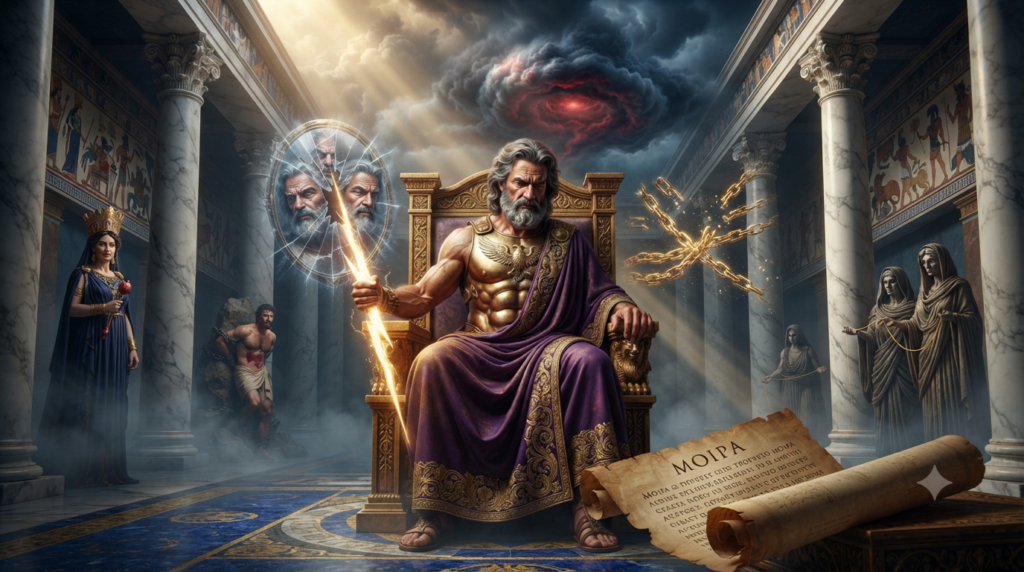
Zeus’s relationship with Fate and the Moirai similarly illustrates important limits relevant to what are the weaknesses of Zeus, as even the king of the gods generally operated within broader cosmic principles governing destiny that he did not fully or independently control, reflecting genuine structural limits within Greek cosmological hierarchy.
Recognizing these authority limitations significantly complicates any oversimplified image of Zeus as an essentially unchallenged, absolute ruler, confirming that what are the weaknesses of Zeus meaningfully includes these documented boundaries on his broader cosmic authority throughout Greek mythological tradition.
Character Flaws — Impulsivity and Infidelity
Zeus’s extensive, well-documented pattern of infidelity represents a significant and recurring answer to what are the weaknesses of Zeus, reflecting genuine impulsivity and lack of self-restraint rather than simply isolated incidents, given how consistently this pattern appears throughout numerous separate myths and narrative traditions.
This recurring behavior produced significant lasting consequences, particularly through his ongoing conflict with Hera, whose jealousy and retribution against his lovers and children created persistent narrative tension throughout Greek mythology, directly resulting from this specific character weakness rather than external circumstance alone.
Zeus’s frequent reliance on transformation and deception specifically to pursue these various affairs further reinforces this particular weakness, suggesting a genuine pattern of impulsive behavior requiring active concealment, rather than conduct he could openly acknowledge or control without resorting to elaborate disguise.
This consistent pattern across numerous separate myths confirms that what are the weaknesses of Zeus meaningfully includes genuine character flaws around impulsivity and self-control, distinguishing these documented weaknesses from simple external threats or cosmic limitations alone.
Susceptibility to Deception and Manipulation
The myth of Metis offers a particularly striking example relevant to what are the weaknesses of Zeus, as fear of a specific prophecy drove him to swallow his own wife whole, revealing genuine vulnerability to prophetic anxiety significant enough to provoke such an extreme, dramatic preemptive action on his part.
Beyond this specific episode, various myths describe Hera successfully manipulating or deceiving Zeus to achieve her own particular goals, including the episode involving Hypnos discussed previously, demonstrating that Zeus remained genuinely susceptible to manipulation despite his otherwise significant divine authority and power.
This susceptibility reveals an important dimension relevant to what are the weaknesses of Zeus, showing that his considerable power did not necessarily translate into equivalent wisdom or resistance against strategic manipulation from other significant figures, including his own wife, throughout numerous documented mythological episodes.
Recognizing this pattern of susceptibility to deception adds important nuance to what are the weaknesses of Zeus, confirming that even the supreme ruler of the Olympian gods could be genuinely outmaneuvered through cunning and strategy rather than remaining perpetually immune to manipulation from other significant mythological figures.
Why These Weaknesses Matter in Greek Mythology
Documenting what are the weaknesses of Zeus reveals that Greek mythology consistently avoided portraying its supreme deity as a simplistic, flawless figure of absolute power, instead crafting a genuinely complex character whose limitations added significant depth and narrative interest throughout numerous mythological traditions.
These documented weaknesses served important narrative functions, creating genuine tension, meaningful consequence, and authentic dramatic possibility throughout Greek mythology, since a completely invulnerable, flawless Zeus would have significantly limited the genuine narrative stakes present throughout many of mythology’s most significant and memorable stories.
This pattern of documented weakness also reflects broader Greek cultural values regarding power and hubris, using Zeus’s own limitations to reinforce important thematic ideas about the dangers of excessive pride and the genuine limits facing even the most powerful figures within the broader Greek cosmological order.
Understanding what are the weaknesses of Zeus, therefore, enriches broader appreciation of Greek mythology’s genuine narrative sophistication, revealing a supreme deity whose documented flaws and limitations made him a considerably more compelling, three-dimensional figure than a purely idealized, invulnerable ruler could ever have been.
FAQ — Quick Answers About Zeus’s Weaknesses
What are the weaknesses of Zeus?
Zeus’s weaknesses include physical vulnerability to Typhon, limits on his authority over primordial forces like Nyx, and character flaws such as infidelity and susceptibility to deception.
Did Zeus ever nearly lose a major battle?
Yes, several ancient sources describe Zeus coming close to defeat during his battle against Typhon before ultimately winning with his thunderbolt.
Was Zeus afraid of anything?
Yes, Zeus avoided confronting Nyx, the primordial goddess of Night, deliberately restraining his anger rather than risk offending her.
What character flaw is Zeus most known for?
Zeus is most consistently associated with infidelity and impulsivity, a pattern that produced significant ongoing conflict with Hera throughout Greek mythology.
Could Zeus be deceived or manipulated?
Yes, myths involving Metis and Hera demonstrate that Zeus remained genuinely susceptible to deception and manipulation despite his considerable power.
Conclusion
Anyone who sets out to answer what are the weaknesses of Zeus discovers a supreme deity whose power, while considerable, was never portrayed as absolute or unchallenged throughout Greek mythology. From his near-defeat against Typhon to his deliberate restraint before Nyx and his recurring struggles with impulsivity and deception, Zeus’s limitations appear consistently across numerous significant myths.
These documented weaknesses, far from diminishing his mythological significance, added genuine depth and narrative complexity to his character, reinforcing broader Greek cultural themes regarding the limits of power and the consequences of unchecked impulsivity even for the most authoritative figures.
Ultimately, what are the weaknesses of Zeus reveals a genuinely nuanced portrait of Greek mythology’s central deity, confirming that even the king of the gods remained subject to meaningful vulnerability, authority limits, and character flaws throughout the broader tradition that shaped his enduring mythological legacy.

Orin Vale has spent the better part of two decades tracing the threads that connect the world’s oldest stories — from the halls of Asgard to the banks of the Nile, from Olympus to the jungles of the Maya. What began as a childhood fascination with flood myths and trickster gods grew into years of independent study across comparative mythology and ancient religion, always chasing the same question: what did these stories mean to the people who first told them? Orin writes for readers who want more than trivia — the ones looking for the beliefs, fears, and truths that myths were built to carry.