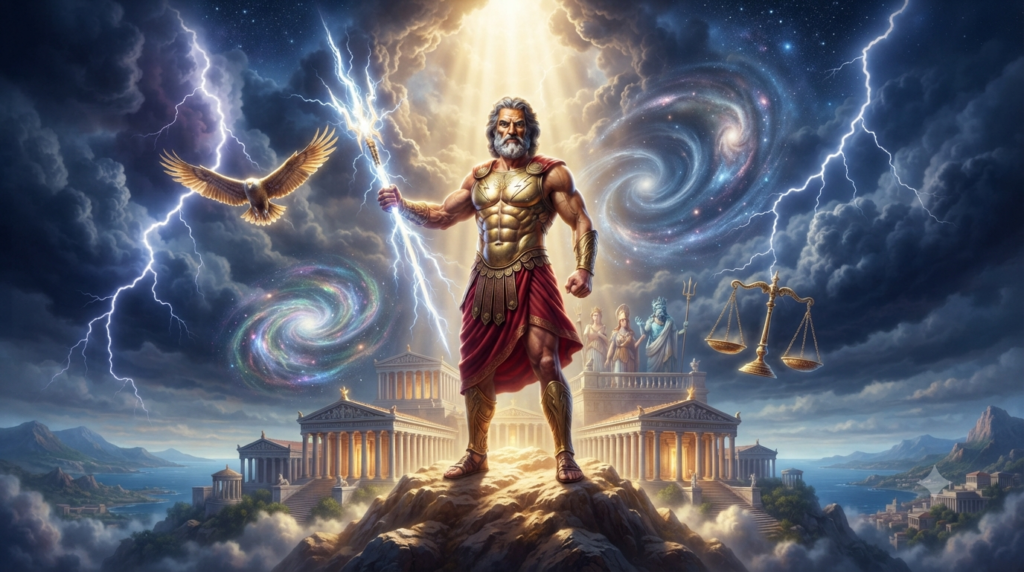
Anyone asking what is the power of Zeus discovers a supreme deity whose abilities extended across multiple significant domains within Greek mythology, spanning direct control over the sky and storms, remarkable shapeshifting capability, and ultimate authority over both gods and mortals alike. As king of the Olympian gods, Zeus’s power represented far more than simple physical strength, encompassing cosmic authority, supreme judgment, and symbolic significance that positioned him at the very center of Greek religious and mythological tradition. Understanding what is the power of Zeus requires examining each of these distinct dimensions individually, revealing a genuinely comprehensive portrait of the abilities that established and maintained his position as ruler of the Greek pantheon.
Control Over the Sky and Storms
Zeus’s most iconic power involved direct command over thunder and lightning, symbolized specifically through his signature thunderbolt, representing the clearest and most immediately recognizable answer to what is the power of Zeus throughout Greek mythological tradition and artistic depiction alike.
This thunderbolt was forged specifically for Zeus by the Cyclopes during the Titanomachy, providing the decisive weapon that ultimately secured his victory over Cronus and the Titans, establishing this particular weapon as inseparably connected to both his identity and his demonstrated capacity for overwhelming cosmic power.
Beyond the thunderbolt itself, Zeus maintained broader command over weather and atmospheric phenomena generally, reflecting his fundamental domain as ruler of the sky within the broader division of cosmic authority established among himself, Poseidon, and Hades following their shared victory over the previous generation of divine rulers.
This comprehensive control over the sky and storms remains central to what is the power of Zeus, establishing him as a deity whose authority extended directly over one of the most immediately observable and consequential aspects of the natural world throughout ancient Greek religious and cultural understanding.
Shapeshifting and Transformation
Zeus possessed a remarkable capacity for shapeshifting, transforming into various forms including a bull, a swan, and golden rain, among numerous other guises, representing a significant and frequently demonstrated dimension relevant to what is the power of Zeus throughout numerous separate mythological narratives.
This transformative ability served multiple strategic purposes across different myths, sometimes facilitating approach to a specific individual and sometimes enabling concealment from Hera’s notice, demonstrating that this particular power extended beyond simple novelty into genuinely functional, narratively significant application throughout Greek mythology.
The variety and creativity evident across Zeus’s numerous documented transformations reinforces the sheer range encompassed within what is the power of Zeus, illustrating an ability considerably more versatile and adaptable than raw physical strength or elemental control alone could fully capture.
This shapeshifting capacity adds important nuance to understanding what is the power of Zeus, confirming that his abilities extended into genuine physical transformation and adaptability, distinguishing him from deities whose power remained confined to a single, fixed form or more narrowly defined elemental domain.
Supreme Authority Over Gods and Mortals
Zeus held ultimate judicial authority among the Olympian gods, serving as the final arbiter in disputes and maintaining broader cosmic order, representing a crucial, less physically dramatic but equally significant dimension relevant to what is the power of Zeus throughout Greek mythological and religious tradition.
This authority extended specifically into protecting sacred customs such as hospitality, reflected through his role as Zeus Xenios, along with broader oversight regarding oaths, justice, and appropriate conduct among both gods and mortals, reinforcing the genuinely comprehensive scope encompassed within what is the power of Zeus.
While this authority remained extensive throughout the Olympian order specifically, certain documented limits existed, particularly regarding primordial cosmic forces and the broader structure of fate itself, adding important nuance to what is the power of Zeus without diminishing the genuine, substantial scope of his authority within his primary domain.
This combination of judicial authority and protective oversight demonstrates that what is the power of Zeus extended significantly beyond physical or elemental control into genuine governance and moral authority throughout the broader structure of Greek mythological and religious tradition.
Immortality and Physical Power
As an immortal deity, Zeus remained permanently free from death and the physical deterioration facing mortal beings, representing a foundational, essential component of what is the power of Zeus shared broadly among the Olympian gods yet remaining fundamentally significant to his overall capability and enduring authority.
Zeus demonstrated substantial physical strength and combat capability throughout significant mythological confrontations, including the extended Titanomachy and his dramatic battle against Typhon, confirming that considerable raw physical power remained an important, demonstrated component relevant to what is the power of Zeus beyond his more symbolic or authoritative dimensions.
This physical capability proved essential during sustained conflicts requiring genuine endurance and strength, reinforcing that what is the power of Zeus included meaningful combat capability rather than relying exclusively on symbolic authority or elemental command during moments of genuine, extended cosmic conflict.
This combination of permanent immortality and substantial physical strength provides essential grounding for what is the power of Zeus, confirming that his abilities encompassed genuine physical capability alongside his more symbolic, authoritative, and elemental dimensions throughout Greek mythological tradition.
Symbolic and Religious Power
Beyond his mythological narrative abilities, Zeus held tremendous symbolic and religious significance throughout ancient Greek culture, with temples, rituals, and sacred sites such as Olympia specifically dedicated to his worship, reflecting a crucial cultural dimension relevant to what is the power of Zeus beyond purely narrative or combat-based capability.
This religious significance reinforced his authority through active cultural practice, ensuring that what is the power of Zeus extended into genuine lived religious experience for ancient Greek communities, rather than remaining confined purely to mythological storytelling disconnected from actual religious observance and practice.
Zeus’s continued cultural influence, evident through lasting symbols like the thunderbolt and eagle, further demonstrates the enduring symbolic dimension relevant to what is the power of Zeus, confirming that his significance extended well beyond ancient religious practice into broader, lasting cultural and artistic representation.
This symbolic and religious dimension completes a genuinely comprehensive picture of what is the power of Zeus, confirming that his significance encompassed active cultural and religious authority alongside his more narratively dramatic mythological abilities throughout ancient Greek tradition.
How Zeus’s Power Compares to Other Gods
Zeus’s power, while extensive, existed alongside comparable authority held by his brothers Poseidon and Hades within their own specific domains of the sea and underworld respectively, illustrating an important structural context relevant to fully understanding what is the power of Zeus within the broader Olympian hierarchy.
This division of authority among the three brothers following their shared victory in the Titanomachy reinforces that what is the power of Zeus, while positioned at the top of the broader Olympian structure, operated within a system of distributed rather than entirely singular cosmic authority among these three significant ruling deities.
Despite this shared structural context, Zeus maintained overall supreme authority among the gods specifically, distinguishing his broader governance role from Poseidon and Hades’s more domain-specific authority, reinforcing that what is the power of Zeus included this additional, overarching dimension beyond simple domain control alone.
Recognizing this comparative context provides essential final nuance for what is the power of Zeus, confirming that while his power remained genuinely extensive and ultimately supreme among the gods, it existed within a structured, comparative framework rather than representing entirely unlimited, singular cosmic authority.
FAQ — Quick Answers About Zeus’s Powers
What is the power of Zeus?
Zeus’s powers include control over thunder and storms, shapeshifting ability, supreme authority over gods and mortals, immortality, and significant physical strength.
What is Zeus’s most famous power?
Zeus’s most famous power is his control over thunder and lightning, symbolized by his iconic thunderbolt, forged for him by the Cyclopes.
Can Zeus transform into different forms?
Yes, Zeus frequently transformed into various forms, including a bull, a swan, and golden rain, often for strategic purposes throughout Greek mythology.
Is Zeus’s power greater than Poseidon’s or Hades’s?
Zeus holds overall supreme authority among the gods, while Poseidon and Hades maintain comparable authority specifically within their own domains.
Does Zeus have any limits to his power?
Yes, certain primordial forces and aspects of fate exist somewhat beyond Zeus’s direct control, though his authority remains extensive throughout the Olympian order.
Conclusion
Anyone who sets out to answer what is the power of Zeus discovers a genuinely comprehensive range of abilities, spanning control over the sky and storms, remarkable shapeshifting capability, supreme judicial authority, immortality, and significant physical strength. Together, these dimensions established and maintained his position as ruler of the Greek pantheon.
Beyond these narrative and physical capabilities, Zeus’s lasting symbolic and religious significance throughout ancient Greek culture reinforces that his power extended into genuine lived religious practice, ensuring his continued cultural relevance well beyond mythological storytelling alone.
Ultimately, what is the power of Zeus reveals a deity whose authority, while genuinely extensive, existed within a structured, comparative framework alongside his brothers, confirming that his supremacy reflected both remarkable individual capability and his broader position atop the Olympian order.

Orin Vale has spent the better part of two decades tracing the threads that connect the world’s oldest stories — from the halls of Asgard to the banks of the Nile, from Olympus to the jungles of the Maya. What began as a childhood fascination with flood myths and trickster gods grew into years of independent study across comparative mythology and ancient religion, always chasing the same question: what did these stories mean to the people who first told them? Orin writes for readers who want more than trivia — the ones looking for the beliefs, fears, and truths that myths were built to carry.