Anyone asking what is ambrosia in Greek mythology encounters a substance closely tied to divinity itself, consumed by the gods of Mount Olympus and consistently associated with immortality and eternal youth throughout ancient Greek religious and literary tradition. Ambrosia in Greek mythology represents far more than simple divine food; it functions as a symbolic marker separating the immortal gods from mortal humanity, reinforcing the fundamental boundary between divine and human existence that runs throughout Greek mythological thought. Understanding what is ambrosia in Greek mythology requires examining both its specific mythological function and its close, sometimes ambiguous relationship to nectar, the other substance frequently associated with divine sustenance among the Greek gods.
Ambrosia as the Food of the Gods
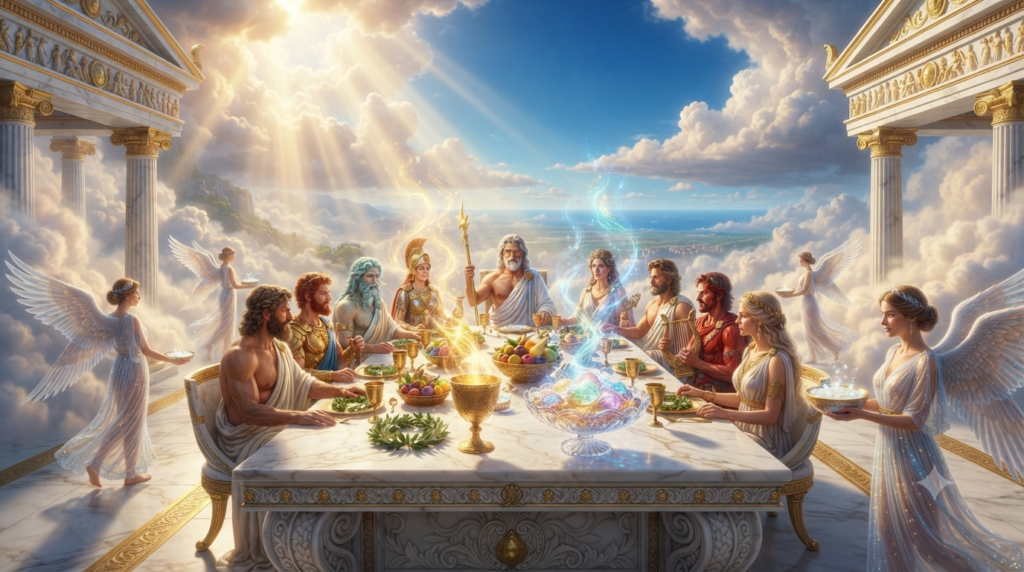
Ambrosia is consistently described within Greek mythology as the food consumed by the gods on Mount Olympus, distinguishing their divine sustenance clearly from the ordinary food consumed by mortal humans throughout the ancient Greek world. This fundamental distinction reinforces one of the central answers to what is ambrosia in Greek mythology: a substance specifically reserved for divine consumption, unavailable under normal circumstances to mortal beings.
The primary function most consistently attributed to ambrosia within Greek mythological sources involves the maintenance or granting of immortality and eternal youth, positioning this substance as directly responsible for sustaining the gods’ unchanging, deathless nature throughout the passage of time within Greek cosmology and religious understanding.
This distinction between mortal and divine food reflects a broader pattern within Greek mythology, in which the gods’ fundamentally different nature from humanity was reinforced through numerous symbolic markers, including specialized food, blood referred to as ichor rather than ordinary human blood, and various other distinguishing characteristics separating divine from mortal existence.
Understanding ambrosia as specifically divine sustenance provides essential foundation for exploring what is ambrosia in Greek mythology more deeply, establishing this substance not merely as food in a literal sense, but as a powerful symbolic marker of the fundamental boundary separating gods from mortals throughout Greek mythological and religious tradition.
Ambrosia vs. Nectar — Is There a Difference?
A common distinction found within discussions of Greek mythology treats ambrosia as a solid food consumed by the gods, while nectar represents the corresponding divine beverage, together forming the complete dietary sustenance associated with life on Mount Olympus among the Greek gods.
However, ancient Greek sources themselves do not always maintain this clean distinction consistently, with certain classical texts using the terms ambrosia and nectar somewhat interchangeably or describing their specific forms and functions differently depending on the particular source and historical period being examined.
This ambiguity regarding what is ambrosia in Greek mythology, specifically regarding its exact form and its precise relationship to nectar, likely reflects the broader oral storytelling tradition underlying much of Greek mythology, in which specific details could vary somewhat between different regions, time periods, and individual storytellers across the ancient Greek world.
Rather than representing a flaw or inconsistency requiring resolution, this variation in ancient sources illustrates the genuinely fluid nature of orally transmitted mythology generally, reminding modern readers that ancient Greek mythological tradition was never a single, perfectly standardized text but rather a living, evolving body of interconnected stories and beliefs.
The Power of Ambrosia — Immortality and Beyond
The most consistently attributed power of ambrosia within Greek mythology involves granting or maintaining immortality, positioning this divine substance as directly responsible for the gods’ eternal, unaging existence throughout the passage of time within Greek cosmological understanding.
Beyond its role in sustaining ongoing divine immortality, certain Greek myths describe ambrosia being used specifically to protect, heal, or preserve particular individuals or their remains, illustrating a somewhat broader application of this substance’s power beyond simple ongoing dietary sustenance for the gods themselves.
Notable examples include mythological accounts describing ambrosia used to preserve or protect the bodies of significant mortal figures following death, such as certain heroes closely connected to the gods, demonstrating that this substance’s power extended into specific protective or preservative functions beyond straightforward immortality granted through regular consumption.
This distinction between ambrosia’s role in maintaining ongoing immortality for the gods versus its more specific, situational use for healing or preservation in certain myths adds meaningful nuance to what is ambrosia in Greek mythology, illustrating that this substance’s mythological function was not entirely uniform across every narrative context in which it appeared.
Who Could Access Ambrosia
Ambrosia remained primarily and overwhelmingly reserved for the gods themselves within Greek mythology, reinforcing its role as a specific marker of divine status rather than a substance generally available or accessible to ordinary mortal humans under typical circumstances throughout Greek mythological tradition.
Certain exceptional mortals did receive access to ambrosia within specific mythological narratives, representing rare and significant instances in which this normally exclusive divine substance crossed the fundamental boundary separating gods from humanity, always within carefully specific and mythologically significant circumstances.
Tantalus stands as one of the most significant examples of a mortal granted access to ambrosia, having been invited to dine among the gods on Mount Olympus before ultimately betraying this extraordinary privilege, an act of betrayal directly connected to the severe eternal punishment for which he became notorious within Greek mythological tradition.
This connection between ambrosia and Tantalus illustrates how thoroughly access to divine food functioned as a marker of extraordinary, carefully guarded privilege within Greek mythology, reinforcing that any mortal access to ambrosia represented a significant exception requiring careful narrative justification rather than a routine or freely available occurrence.
Etymology and Symbolic Meaning
The word ambrosia derives from ancient Greek roots generally understood to mean “not mortal” or “immortal,” directly reflecting this substance’s core mythological association with deathlessness and divine, unaging existence throughout Greek religious and literary tradition.
This etymological connection reinforces why is ambrosia in Greek mythology consistently understood as fundamentally tied to immortality specifically, since the very word used to describe this substance carries this meaning embedded directly within its linguistic origin and structure.
The English word “ambrosial,” still used today to describe something exceptionally delicious or delightful, traces its origins directly back to this ancient Greek mythological concept, demonstrating how thoroughly ambrosia’s association with extraordinary, superior quality has persisted within modern language long after its original mythological context.
Beyond its literal function, ambrosia carries broader symbolic significance within Greek mythology, representing the fundamental, carefully maintained boundary between divine and mortal existence, a boundary that appears repeatedly throughout Greek mythological narrative as a central organizing principle within the broader cosmological structure of Greek religious thought.
Why Ambrosia Still Captures Interest Today
Modern interest in ambrosia continues partly through its surviving linguistic legacy, particularly through the continued use of “ambrosial” to describe exceptionally pleasing food or experiences, demonstrating how thoroughly this ancient mythological concept has embedded itself within contemporary English vocabulary and everyday language use.
The concept of ambrosia has also influenced various modern culinary references and product names, drawing on the substance’s mythological association with extraordinary, superior quality to convey similar positive qualities within entirely secular, modern commercial or culinary contexts far removed from ancient Greek religious practice.
This continued cultural relevance demonstrates that what is ambrosia in Greek mythology remains a genuinely engaging question for contemporary audiences, reflecting broader ongoing interest in Greek mythology generally while also illustrating this specific concept’s unique linguistic and cultural staying power beyond its original mythological context.
Ultimately, ambrosia’s continued relevance confirms that even relatively specific mythological concepts, rather than only major gods or dramatic narratives, can leave a lasting and genuinely meaningful mark on modern language and culture well beyond their original ancient Greek religious and literary context.
FAQ — Quick Answers About Ambrosia in Greek Mythology
What is ambrosia in Greek mythology?
Ambrosia is the food of the gods in Greek mythology, closely associated with granting or maintaining immortality and eternal youth for the Olympian deities.
What is the difference between ambrosia and nectar?
Ambrosia is often described as the gods’ solid food while nectar is their drink, though ancient sources sometimes use the terms somewhat interchangeably.
Could mortals ever eat ambrosia?
Rarely. Certain exceptional mortals, such as Tantalus, were granted access to ambrosia, though this privilege was extremely uncommon within Greek mythology.
Where does the word “ambrosia” come from?
The word ambrosia derives from ancient Greek roots meaning “not mortal” or “immortal,” directly reflecting its mythological association with deathlessness.
Is the word “ambrosial” related to Greek mythology?
Yes, the modern word “ambrosial,” meaning exceptionally delicious, traces its origin directly to this ancient Greek mythological concept of divine food.
Conclusion
Anyone who sets out to answer what is ambrosia in Greek mythology finds a substance defined primarily by its close connection to immortality, reserved almost exclusively for the gods of Mount Olympus and symbolically reinforcing the fundamental boundary separating divine from mortal existence. Its relationship to nectar, though sometimes ambiguous across ancient sources, further reinforces its role within the broader dietary and symbolic structure of divine life in Greek mythology.
Rare mortal access to ambrosia, most notably through the myth of Tantalus, illustrates just how carefully guarded this privilege remained, reinforcing ambrosia’s significance as far more than simple food within the broader Greek mythological framework governing divine and mortal relationships.
Ultimately, ambrosia endures in Greek mythology not merely as a mythological detail, but as a lasting symbol of divinity itself, one whose linguistic legacy continues shaping how modern language describes anything considered exceptionally delightful or extraordinary today.

Orin Vale has spent the better part of two decades tracing the threads that connect the world’s oldest stories — from the halls of Asgard to the banks of the Nile, from Olympus to the jungles of the Maya. What began as a childhood fascination with flood myths and trickster gods grew into years of independent study across comparative mythology and ancient religion, always chasing the same question: what did these stories mean to the people who first told them? Orin writes for readers who want more than trivia — the ones looking for the beliefs, fears, and truths that myths were built to carry.