Anyone asking where the ka and ba reunite in Egyptian mythology arrives at a specific, meaningful answer: the tomb, where the preserved body of the deceased served as the essential meeting point for these two distinct components of the Egyptian soul. This reunion, believed to occur repeatedly, particularly during the night, formed a central concept within ancient Egyptian understanding of death and the afterlife, directly connected to the broader practice of mummification and the elaborate funerary rituals ancient Egyptians developed to support this ongoing spiritual process. Understanding where the ka and ba reunite in Egyptian mythology requires first understanding what these two elements actually represented individually before examining why their continued reunion mattered so significantly within ancient Egyptian religious belief.
Understanding the Ka
The ka represented a person’s vital life force or spiritual double, created alongside the individual at the moment of birth and understood as an essential component of human existence throughout ancient Egyptian religious belief, distinct from the physical body itself yet inseparably connected to a person’s continued existence.
Following death, the ka required ongoing symbolic sustenance, typically provided through food and drink offerings left at the tomb by surviving family members or dedicated funerary priests, reflecting the ancient Egyptian belief that the ka continued needing nourishment even after the physical body had ceased functioning entirely.
The ka remained closely tied to the physical body and the tomb itself, generally understood as residing primarily within this specific physical location rather than traveling freely between different realms, distinguishing its function significantly from the more mobile spiritual component discussed in the following section relevant to where the ka and ba reunite in Egyptian mythology.
This connection between the ka and the physical tomb explains why ancient Egyptian funerary practice placed such significant emphasis on tomb construction, preservation, and ongoing offerings, since properly maintaining the ka’s physical anchor point remained essential for supporting the deceased’s continued spiritual existence within Egyptian religious understanding.
Understanding the Ba
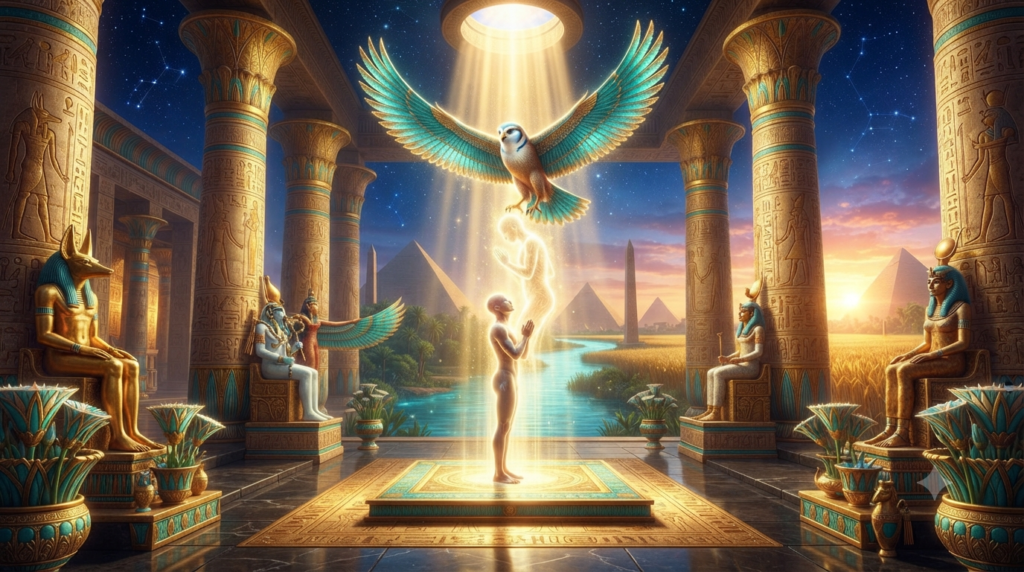
The ba represented a distinctly different aspect of the Egyptian soul, generally associated with an individual’s personality, character, and unique identity rather than the more generalized life force represented by the ka discussed previously. Ancient Egyptian art frequently depicted the ba as a bird with a human head, symbolizing its capacity for movement and travel.
Unlike the ka, the ba possessed the ability to leave the tomb entirely, traveling between the world of the living and the Duat, the Egyptian underworld, during its ongoing existence following the individual’s death. This mobility distinguished the ba significantly from the more stationary ka, establishing a fundamental difference relevant to where the ka and ba reunite in Egyptian mythology.
The ba’s capacity for movement allowed it to experience aspects of continued existence unavailable to the more fixed ka, including the ability to revisit familiar places from the individual’s mortal life or participate in the broader journey through the Duat previously described within ancient Egyptian conceptions of the afterlife and judgment process.
Understanding the ba as a distinctly mobile, personality-focused aspect of the soul, compared to the more fixed, life-force-oriented ka, provides essential context for understanding precisely where the ka and ba reunite in Egyptian mythology, since this reunion specifically required the mobile ba returning to the stationary ka at a particular location.
Why Ka and Ba Needed to Reunite
Following death, the ka and ba naturally separated from one another, existing as distinct components requiring periodic reunion rather than remaining permanently combined as they had during the individual’s mortal lifetime, according to ancient Egyptian religious understanding of the soul’s structure and function after death.
This separation created an ongoing spiritual necessity within ancient Egyptian belief, as regular reunion between the ka and ba remained essential for supporting the deceased individual’s continued spiritual survival and wellbeing within the afterlife, rather than representing a one-time event completed immediately following death.
Failure to maintain this necessary reunion carried serious consequences within ancient Egyptian religious belief, potentially resulting in what might be understood as a form of “second death,” representing genuine spiritual annihilation and the permanent loss of continued existence within the afterlife for the individual involved.
This significant risk explains why ancient Egyptians invested such substantial effort into supporting the ongoing reunion between ka and ba, reinforcing why where the ka and ba reunite in Egyptian mythology represented far more than abstract theological curiosity, instead reflecting genuinely urgent religious and practical concern for ancient Egyptian society.
Where the Reunion Takes Place
The tomb itself served as the essential physical location where the ka and ba reunited, with the ba believed to return to the preserved, mummified body specifically during the night, rejoining the ka that remained anchored to this particular physical location throughout the ongoing afterlife process.
The mummified body played an absolutely essential role in enabling this reunion, functioning as the necessary physical anchor point that allowed the traveling ba to successfully locate and rejoin the ka upon its return to the tomb, explaining why proper mummification remained so critically important within ancient Egyptian funerary practice.
This understanding of where the ka and ba reunite in Egyptian mythology directly explains the extraordinary care ancient Egyptians invested in body preservation, tomb construction, and protective funerary rituals, since any deterioration or destruction of the physical body risked permanently disrupting this essential, ongoing spiritual reunion process.
Elaborate funerary rituals, including specific prayers, protective spells, and carefully maintained tomb offerings, further supported this critical reunion process, reflecting the comprehensive religious and practical infrastructure ancient Egyptians developed specifically to ensure successful, ongoing reunion between these two essential components of the human soul.
The Result of Reunion — Becoming an Akh
Successful, ongoing reunion between the ka and ba resulted in the formation of the akh, representing a transfigured, glorified spirit believed to achieve a more complete and stable form of existence within the Egyptian afterlife compared to either the ka or ba functioning separately without regular reunion.
The akh occupied a distinct position within Egyptian afterlife belief, generally understood as representing successful transition into a more permanent, stable spiritual existence achieved specifically through the ongoing, successful reunion process central to where the ka and ba reunite in Egyptian mythology as previously described.
This transformation into an akh connected directly to the broader judgment process occurring within the Duat, in which successful navigation of divine judgment, combined with the ongoing physical and spiritual support enabling ka-ba reunion, together contributed toward achieving this more complete, stable afterlife existence within ancient Egyptian religious belief.
Understanding the akh as the ultimate result of successful ka-ba reunion reinforces why this reunion process mattered so significantly within ancient Egyptian religious thought, representing not merely a technical spiritual requirement, but the essential pathway toward achieving genuine, lasting spiritual completion within the broader Egyptian afterlife system.
Why This Concept Mattered in Ancient Egyptian Religion
Understanding where the ka and ba reunite in Egyptian mythology illuminates why ancient Egyptian funerary practice placed such extraordinary emphasis on mummification, tomb construction, and ongoing ritual offerings, since these practices directly supported the essential, continuing reunion process central to successful afterlife existence within Egyptian religious belief.
This concept also reveals the sophisticated, multi-component understanding of the human soul present within ancient Egyptian religious thought, distinguishing this tradition from simpler conceptions of a single, unified soul found within certain other ancient and modern religious traditions worldwide.
Recognizing the importance of ka-ba reunion provides valuable context for understanding the broader internal logic underlying ancient Egyptian religious practice regarding death and the afterlife, connecting specific funerary customs directly to deeper theological beliefs regarding the soul’s structure and ongoing needs following physical death.
This understanding reinforces why where the ka and ba reunite in Egyptian mythology represents genuinely significant religious and cultural knowledge, offering essential insight into how ancient Egyptians understood the fundamental relationship between physical preservation, ritual practice, and continued spiritual existence within their broader religious worldview.
FAQ — Quick Answers About Ka, Ba, and Their Reunion
Where do the ka and ba reunite in Egyptian mythology?
The ka and ba reunite at the tomb, where the ba returns to the mummified body, particularly at night, to rejoin the ka anchored there.
What is the ka in Egyptian mythology?
The ka is a person’s vital life force or spiritual double, created at birth and requiring ongoing symbolic nourishment after death.
What is the ba in Egyptian mythology?
The ba represents an individual’s personality and identity, often depicted as a bird with a human head capable of traveling beyond the tomb.
What happens if the ka and ba fail to reunite?
Failure to reunite risked a form of “second death,” representing permanent spiritual loss within ancient Egyptian religious belief.
What is an akh?
The akh is the transfigured, glorified spirit resulting from successful, ongoing reunion between the ka and ba within Egyptian afterlife belief.
Conclusion
Anyone who sets out to answer where the ka and ba reunite in Egyptian mythology arrives at the tomb itself, where the preserved, mummified body served as the essential anchor point allowing the traveling ba to rejoin the more stationary ka. This ongoing reunion, far from a minor theological detail, represented an essential, continuously necessary process for the deceased’s spiritual survival.
Understanding the ka as life force and the ba as personal identity reveals the sophisticated, multi-component structure ancient Egyptians attributed to the human soul, while the resulting akh represents the successful culmination of this reunion process into a more complete, stable afterlife existence.
Ultimately, where the ka and ba reunite in Egyptian mythology explains much of the extraordinary care ancient Egyptians devoted to mummification and tomb preservation, revealing a religious system in which physical and spiritual continuity remained inseparably, essentially connected.

Orin Vale has spent the better part of two decades tracing the threads that connect the world’s oldest stories — from the halls of Asgard to the banks of the Nile, from Olympus to the jungles of the Maya. What began as a childhood fascination with flood myths and trickster gods grew into years of independent study across comparative mythology and ancient religion, always chasing the same question: what did these stories mean to the people who first told them? Orin writes for readers who want more than trivia — the ones looking for the beliefs, fears, and truths that myths were built to carry.