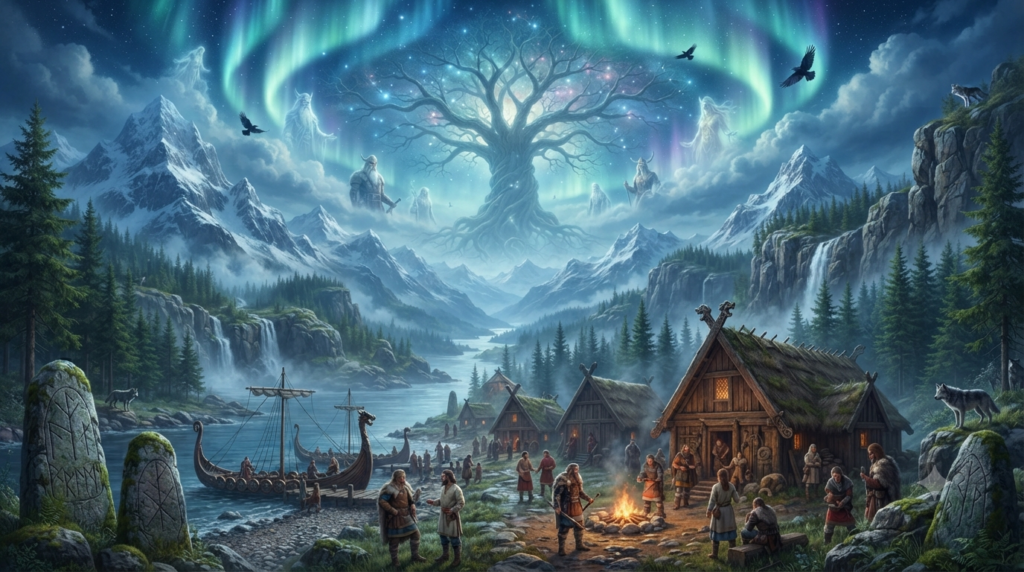
Anyone asking where is Norse mythology from arrives at a clear geographic and historical answer: Scandinavia, the region encompassing present-day Norway, Sweden, and Denmark, during the centuries before Christianity replaced the older Germanic religious traditions of the region. Norse mythology developed as the belief system of pre-Christian Scandinavian peoples, later spreading through the expansion of Viking Age settlement and trade routes. Understanding where is Norse mythology from requires examining not only its geographic roots but also the historical period in which it flourished and the specific written sources that ultimately preserved these myths for future generations.
The Geographic Origins of Norse Mythology
Norse mythology originated in Scandinavia, a region historically comprising present-day Norway, Sweden, and Denmark, where Germanic-speaking peoples developed a shared religious and mythological tradition centered on gods such as Odin, Thor, and Freyja. This geographic core remains the most direct answer to where is Norse mythology from, as the fundamental structure of the pantheon, cosmology, and major myths took shape specifically within this Scandinavian cultural sphere.
During the Viking Age, roughly spanning from the late eighth century to the mid-eleventh century, Norse mythology and the broader culture surrounding it expanded well beyond mainland Scandinavia through extensive seafaring, trade, and settlement. Iceland became particularly significant during this period, as Norse settlers carried their religious and mythological traditions there, where they would later play a crucial role in preserving these myths through written texts.
Viking expansion also brought Norse mythological influence into parts of the British Isles, Greenland, and even limited contact with North America, though the core mythological tradition remained rooted in its original Scandinavian context throughout this period of geographic spread. This distinction matters when addressing where is Norse mythology from, since expansion through Viking settlement represents dissemination of an already-established tradition rather than its point of origin.
It is also worth distinguishing Norse mythology specifically from the broader category of Germanic mythology, which encompasses related but distinct traditions among continental Germanic peoples outside Scandinavia. While these traditions share common linguistic and cultural roots, Norse mythology refers specifically to the Scandinavian branch of this broader Germanic religious heritage, reinforcing Scandinavia as the precise geographic answer to where is Norse mythology from.
The Historical Period — Pre-Christian Scandinavia
Norse mythology developed as part of a broader pre-Christian Germanic religious tradition that predates the Viking Age itself, with roots extending back centuries before the more widely recognized period of Norse expansion and exploration. This earlier religious foundation gradually evolved into the more specifically Scandinavian mythological system associated with figures like Odin, Thor, and the broader pantheon of Aesir and Vanir gods.
The Viking Age, spanning approximately from 793 to 1066 CE, represents the period during which Norse mythology reached its most widely recognized cultural expression, coinciding with extensive Scandinavian seafaring, trade, warfare, and settlement across Northern Europe. This era remains central to any discussion of where is Norse mythology from, as it represents the historical high point during which these beliefs were most actively practiced and transmitted across Scandinavian society.
The gradual Christianization of Scandinavia, occurring across the tenth and eleventh centuries at varying paces depending on the specific region, marked a significant transformation for Norse mythology, shifting it from an actively practiced religious system toward a body of cultural and literary tradition. This transition proved crucial for how these myths were eventually recorded, as later writers approached Norse mythology from a position of cultural memory rather than active religious practice.
Understanding this historical arc — from pre-Viking Germanic roots through the Viking Age itself and into the Christianization period — provides essential context for where is Norse mythology from, illustrating that these myths emerged from a specific, evolving historical process rather than a single fixed moment or unchanging tradition throughout Scandinavian history.
How Norse Mythology Was Preserved — Oral Tradition and Written Sources
Norse mythology existed primarily as an oral tradition for centuries before being committed to writing, passed down through poems, sagas, and storytelling practices central to Scandinavian culture during the pre-Christian and early Viking periods. This oral transmission means that the myths as ultimately recorded represent a later written snapshot of a much older and more fluid storytelling tradition.
The Poetic Edda stands as one of the most significant written sources for Norse mythology, consisting of a collection of anonymous poems preserved primarily in Iceland and believed to reflect much older oral material. These poems provide some of the earliest and most direct written access to Norse mythological narratives, making the Poetic Edda essential to understanding where is Norse mythology from in terms of its surviving textual record.
The Prose Edda, compiled by the Icelandic scholar and politician Snorri Sturluson in the thirteenth century, represents another foundational source, offering a more structured and explanatory account of Norse mythology written from a Christian perspective looking back on pagan tradition. Despite being composed after Scandinavia’s conversion to Christianity, the Prose Edda remains an invaluable resource for understanding the mythological framework Sturluson sought to preserve and explain for later audiences.
Iceland’s central role in preserving Norse mythology through these written sources stems largely from its relative geographic isolation and its strong cultural tradition of saga writing, which encouraged the systematic recording of both historical and mythological material. This makes Iceland a crucial location in the broader story of where is Norse mythology from, not as the point of religious origin, but as the essential site of its written preservation for future generations.
Language and Cultural Context
Norse mythology was originally recorded and transmitted in Old Norse, the language spoken throughout Scandinavia and Iceland during the Viking Age and the centuries surrounding it. This linguistic context remains important when discussing where is Norse mythology from, as the surviving texts, including the Poetic Edda and Prose Edda, were composed in this specific historical form of the Scandinavian language rather than in later Scandinavian dialects.
The mythology itself remained deeply intertwined with broader Viking cultural values, including warfare, seafaring, honor, and an acceptance of fate as an inescapable force governing both mortal and divine lives. These cultural themes appear consistently throughout Norse mythological narratives, reflecting the lived experience and worldview of the Scandinavian societies from which these myths originally emerged.
The division of the Norse pantheon into two distinct groups, the Aesir and the Vanir, may reflect deeper historical or cultural processes within early Scandinavian society, potentially representing the mythological memory of a merger between different tribal or regional religious traditions. While scholars continue to debate the precise historical basis for this divine division, it offers an intriguing layer of context for anyone exploring where is Norse mythology from at a deeper cultural level.
This close relationship between Norse mythology and the broader Viking cultural context reinforces that these myths cannot be fully separated from the historical society that produced them. Understanding the language, values, and social structures of Viking Age Scandinavia provides essential grounding for appreciating why Norse mythology developed the particular themes and narrative patterns that continue to define it today.
Why the Origins of Norse Mythology Matter
Understanding the specific Scandinavian and Viking Age origins of Norse mythology helps explain many of its most recurring themes, including harsh natural environments, the constant presence of conflict, and an underlying acceptance of fate and eventual doom, as embodied in the myth of Ragnarök. These themes reflect the genuine historical conditions of Viking Age Scandinavia, reinforcing that Norse mythology emerged directly from the lived experience of the societies that created it.
Recognizing where is Norse mythology from also helps distinguish the original historical and literary tradition from many modern popular adaptations, which sometimes simplify or significantly alter the source material found in the Poetic Edda and Prose Edda. While contemporary games, films, and literature have introduced Norse mythology to wide global audiences, these adaptations often diverge considerably from the original Scandinavian sources preserved through centuries of oral and written tradition.
This distinction between original source material and modern reinterpretation matters particularly for readers seeking a deeper, more historically grounded understanding of Norse mythology rather than a purely entertainment-driven introduction. Engaging directly with the geographic and historical origins of these myths offers a richer appreciation of their genuine cultural significance within Viking Age Scandinavian society.
Ultimately, understanding where is Norse mythology from provides essential context for appreciating why these myths took the specific shape they did, rooted firmly in the geography, history, language, and cultural values of pre-Christian Scandinavia. This foundation remains essential for anyone seeking to engage seriously with Norse mythology beyond its modern popular representations.
FAQ — Quick Answers About the Origins of Norse Mythology
Where is Norse mythology from?
Norse mythology originates from Scandinavia, specifically the regions of present-day Norway, Sweden, and Denmark, developing among pre-Christian Germanic-speaking peoples.
When did Norse mythology develop?
Norse mythology developed over centuries, reaching its most widely recognized form during the Viking Age, roughly between 793 and 1066 CE.
What are the main written sources for Norse mythology?
The two primary written sources for Norse mythology are the Poetic Edda, a collection of anonymous poems, and the Prose Edda, compiled by Snorri Sturluson in the thirteenth century.
Why was Iceland important to Norse mythology?
Iceland played a central role in preserving Norse mythology through its strong tradition of saga writing and relative isolation, which helped protect these myths from being lost after Christianization.
Is Norse mythology the same as Germanic mythology?
Norse mythology is a specific branch of the broader Germanic mythological tradition, referring specifically to the Scandinavian expression of these shared religious roots.
Conclusion
Anyone who sets out to answer where is Norse mythology from arrives at pre-Christian Scandinavia, a region whose Germanic-speaking peoples developed a rich mythological tradition later carried across Northern Europe through Viking Age expansion. From its early roots in Germanic paganism to its flourishing during the Viking Age and its eventual preservation through Icelandic written sources, Norse mythology reflects a specific and well-documented historical journey.
The Poetic Edda and Prose Edda remain essential to understanding how these myths survived the transition from oral tradition to written record, particularly through Iceland’s crucial role in documenting a belief system already fading under the pressures of Christianization. This preservation ensured that Norse mythology remained accessible long after its original religious practice had ended.
Ultimately, Norse mythology comes from a specific place and time — Viking Age Scandinavia — shaped by its language, geography, and cultural values, and preserved through the deliberate efforts of later writers who recognized the enduring significance of these ancient Scandinavian myths.

Orin Vale has spent the better part of two decades tracing the threads that connect the world’s oldest stories — from the halls of Asgard to the banks of the Nile, from Olympus to the jungles of the Maya. What began as a childhood fascination with flood myths and trickster gods grew into years of independent study across comparative mythology and ancient religion, always chasing the same question: what did these stories mean to the people who first told them? Orin writes for readers who want more than trivia — the ones looking for the beliefs, fears, and truths that myths were built to carry.