Ancient Greek pottery occupied a genuinely essential place within daily life, economic exchange, and artistic expression throughout the classical world, making it unsurprising that this significant craft developed its own distinctive layer of religious belief and superstition. Anyone asking who are the Greek gods/spirits associated with kilns and pottery will discover a fascinating dual tradition: the goddess Athena serving as general patroness of the craft, alongside five specifically named, considerably more obscure spirits whom potters genuinely feared could destroy their work during the vulnerable firing process.
This combination of major Olympian patronage and specialized, occupation-specific spirits reveals something genuinely valuable about how ancient Greek religious belief operated at the everyday, practical level of ordinary craftspeople, distinct from the grand mythological narratives typically associated with the major gods. Pottery, given its economic importance and the genuine technical risk involved in successfully firing clay vessels, developed its own intimate religious tradition addressing these specific professional anxieties.
This occupational mythology survives today primarily through a genuinely curious ancient poem specifically dedicated to addressing potters’ concerns, invoking both divine blessing and, when circumstances demanded it, targeted supernatural retribution against dishonest patrons who might otherwise cheat a working potter out of fair payment. This poem provides remarkable insight into the specific, practical concerns shaping religious belief within one particular ancient Greek trade.
What follows examines Athena’s broader role as patroness of the potter’s craft, the ancient poem specifically documenting this occupational mythology, the five named spirits capable of destroying a kiln’s contents, the genuine practical anxieties these spirits addressed, and how this ancient tradition continues finding occasional reference among contemporary potters today.
Athena, Patroness of the Potter’s Craft
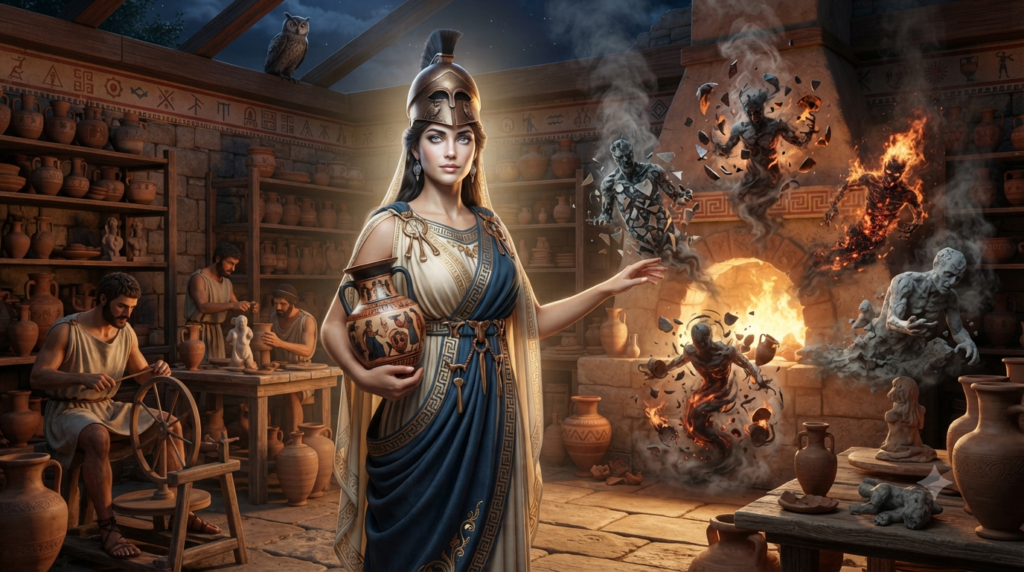
Athena held broad recognition throughout ancient Greek religious tradition as patroness of craft and skilled technical work more generally, a domain naturally extending to encompass pottery given the genuine skill and precision required to successfully create fired ceramic vessels. This connection positioned Athena as the primary, legitimate divine authority potters would naturally invoke when seeking success in their demanding, technically challenging craft.
This specific pottery-related aspect of Athena’s broader domain appears explicitly within ancient sources documenting occupational religious practice, with potters specifically calling upon her protective presence directly over the kiln itself during the crucial firing process. This invocation reflects genuine practical concern, since the firing stage represented the single most vulnerable and unpredictable moment within the entire pottery-making process, where months of careful craftsmanship could be destroyed within hours through improper firing conditions.
Athena’s broader association with technical skill and craftsmanship throughout Greek mythology made her a natural choice for this specific protective role, since her patronage already extended across numerous other significant crafts and skilled trades throughout ancient Greek society. This established pattern of Athena’s protection over skilled work more broadly reinforced her specific significance within pottery-related religious practice as well.
This foundational patronage provides essential context for who are the Greek gods/spirits associated with kilns and pottery, establishing Athena as the primary, legitimate divine figure potters could appeal to for genuine success, before examining the considerably more unusual and specifically threatening spirits that potters simultaneously needed to guard against during this same vulnerable firing process.
The Ancient Poem “The Kiln” (Kaminos)
The primary surviving source documenting this occupational mythology is a genuinely distinctive twenty-three line hexameter poem known as “The Kiln,” or alternatively “The Potters,” preserved among a collection of works historically attributed to Homer, specifically appearing as the fourteenth entry within his collected Epigrams. Some ancient sources alternatively attributed this same poem to Hesiod instead, though modern scholarship does not consider it authentic work by either celebrated poet.
Scholarly analysis suggests this poem was likely composed sometime during the sixth or fifth century BCE, originally forming part of a now-lost work specifically focused on Homer’s biographical tradition rather than existing as an independent literary composition from its earliest origins. This dating places the poem’s composition considerably later than Homer’s own traditional dates, reinforcing modern scholarly skepticism regarding its authentic attribution to either major poet.
The poem’s actual content follows a genuinely distinctive structure, presenting itself as a direct address from a traveling poet specifically to a group of unnamed potters, offering to sing a blessing invoking Athena’s protection over their kiln in exchange for appropriate payment for this service. This transactional framing gives the poem a genuinely practical, occupational character distinct from more typical mythological or heroic poetry from this same broader period.
Understanding this specific literary source provides essential context for who are the Greek gods/spirits associated with kilns and pottery, establishing the poem itself as the primary vehicle through which this otherwise obscure occupational mythology survived into the modern era, preserving genuine insight into ancient potters’ specific religious concerns and practices.
The Daimones Keramikoi: Five Spirits of Kiln Disaster
Should the potters addressed within this ancient poem prove dishonest and refuse the promised payment, the poet specifically threatens to abandon his blessing invocation of Athena entirely, instead calling upon five distinctly named malevolent spirits collectively known as the Daimones Keramikoi, each representing a specific type of catastrophic kiln failure that could devastate a potter’s entire livelihood in a single ruined firing.
The first of these spirits, Syntribos, specifically represented the shattering or crushing destruction of pottery, while Smaragos embodied a related but distinct smashing catastrophe capable of similarly devastating an entire kiln’s contents. Asbetos, whose name relates to unquenchable fire, specifically represented the danger of charring or scorching pottery through excessive, uncontrolled heat during the firing process.
Sabaktes rounded out this destructive quintet by embodying general destruction and breakage more broadly, while Omodamos represented perhaps the most technically specific disaster: pottery that emerged from the kiln essentially raw or underbaked, having failed to properly harden despite the firing process, rendering the affected pieces genuinely useless despite the potter’s invested time and material.
This specific naming of five distinct kiln-related disasters provides the clearest and most historically significant answer to who are the Greek gods/spirits associated with kilns and pottery, revealing a genuinely sophisticated occupational mythology that identified and personified the specific, technically distinct ways a pottery firing could catastrophically fail.
Why Potters Feared These Spirits
The genuine technical risk inherent in ancient pottery firing helps explain why potters developed such specific, personified explanations for the various ways this crucial process might fail despite their best craftsmanship and preparation. Firing clay vessels required maintaining precise, consistent heat over an extended period without modern temperature-monitoring technology, making genuine failure a constant, realistic professional concern regardless of a potter’s individual skill level.
This combination of significant financial investment, extended labor, and genuine technical unpredictability created exactly the kind of professional anxiety that ancient religious and superstitious practice frequently addressed through personified spirits or targeted divine appeals. By giving specific names and characteristics to different failure modes, potters could conceptually organize and address their professional fears through familiar religious and ritual frameworks rather than facing this uncertainty as purely random, inexplicable misfortune.
This pattern of occupation-specific spirits and protective deities appears elsewhere throughout ancient Greek religious tradition as well, reflecting a broader cultural tendency to develop specialized religious practices addressing the particular concerns and vulnerabilities characteristic of specific trades and crafts, distinct from the broader mythological narratives associated with the major Olympian gods.
This genuine practical foundation adds important depth to who are the Greek gods/spirits associated with kilns and pottery, confirming that these five named spirits emerged from authentic occupational concerns rather than existing as purely abstract or decorative mythological additions, directly addressing the real technical anxieties ancient potters faced with every single kiln firing they attempted.
The Legacy of the Kiln Daimones Today
Remarkably, this ancient occupational mythology continues finding genuine reference among contemporary potters and ceramic artists, some of whom specifically invoke or reference these same five named spirits when discussing the ongoing risks and uncertainties inherent in kiln firing, even within modern, technologically advanced ceramic studios equipped with precise temperature controls unavailable to ancient practitioners.
This modern continuity has produced a genuinely charming contemporary tradition among some ceramic artists: crafting small “kiln gods,” figures made from spare or unused clay and placed near or upon the kiln during firing as a good luck charm specifically inspired by this ancient poem and its named spirits. This practice demonstrates how ancient occupational mythology can find renewed relevance even within contemporary craft communities operating under genuinely different technical circumstances.
This lasting cultural resonance suggests that despite dramatic technological advancement in ceramic firing techniques since antiquity, something genuine about the underlying uncertainty and vulnerability inherent in the firing process continues resonating with contemporary practitioners, who apparently still appreciate having some framework, however playful or symbolic, for acknowledging this persistent professional risk.
This modern legacy provides a compelling final dimension to who are the Greek gods/spirits associated with kilns and pottery, confirming that this genuinely obscure piece of ancient occupational mythology has achieved a remarkable, if niche, form of ongoing cultural relevance extending well beyond its original ancient Greek context into contemporary ceramic practice today.
Frequently Asked Questions
What is “The Kiln” poem?
“The Kiln” is an ancient twenty-three line hexameter poem, historically attributed to Homer or Hesiod though not considered authentic to either by modern scholars, invoking Athena’s blessing over a pottery kiln while threatening five destructive spirits if the potters fail to pay the poet.
What are the names of the five kiln-destroying spirits?
The five spirits, collectively known as the Daimones Keramikoi, are Syntribos, Smaragos, Asbetos, Sabaktes, and Omodamos, each representing a different specific type of catastrophic kiln failure.
Who was the patron goddess of pottery?
Athena served as the primary patron goddess potters invoked for successful kiln firings, reflecting her broader domain over craft and skilled technical work throughout Greek mythology.
Conclusion
Ancient Greek pottery developed a genuinely distinctive occupational mythology combining Athena’s broader protective patronage with five specifically named spirits, the Daimones Keramikoi, representing the particular technical disasters potters genuinely feared during the vulnerable kiln firing process. This intimate, practically grounded religious tradition, preserved through the curious ancient poem “The Kiln,” offers a remarkable window into how ordinary ancient craftspeople addressed their specific professional anxieties through personified spirits and targeted divine appeal, a tradition that continues finding occasional, charming reference among contemporary ceramic artists today.

Orin Vale has spent the better part of two decades tracing the threads that connect the world’s oldest stories — from the halls of Asgard to the banks of the Nile, from Olympus to the jungles of the Maya. What began as a childhood fascination with flood myths and trickster gods grew into years of independent study across comparative mythology and ancient religion, always chasing the same question: what did these stories mean to the people who first told them? Orin writes for readers who want more than trivia — the ones looking for the beliefs, fears, and truths that myths were built to carry.