Anyone asking who did Zeus cheat on Hera with is looking for a genuine reference guide to the specific goddesses, nymphs, and mortal women, along with at least one significant male figure, involved in Zeus’s most consistently documented mythological affairs. Rather than attempting an impossible exact count, this guide focuses directly on who did Zeus cheat on Hera with by name, organizing these significant unions and their resulting offspring into a clear, factual reference covering both widely known and lesser-discussed figures throughout Greek mythology.
Major Affairs Already Covered — A Quick Recap
Among the most significant figures relevant to who did Zeus cheat on Hera with, Leto stands out as the mother of Apollo and Artemis, representing one of the most consequential unions given her children’s major status among the Olympian gods themselves.
Alcmene, a mortal woman, gave birth to Heracles following her union with Zeus, while Europa, Danae, and Leda each experienced unions involving Zeus’s characteristic use of transformation, resulting respectively in Minos, Perseus, and Helen of Troy among other significant offspring central to Greek heroic mythology.
Io, transformed into a heifer specifically to help conceal her from Hera’s notice, represents another significant figure relevant to who did Zeus cheat on Hera with, illustrating the lengths to which these mythological unions sometimes required active concealment from Hera’s watchful jealousy.
These six figures represent some of the most extensively documented unions within Greek mythology, each explored in greater narrative detail elsewhere, though understanding who did Zeus cheat on Hera with benefits significantly from examining additional, somewhat less prominently discussed figures as well.
Additional Notable Lovers
Semele, a mortal woman, became the mother of Dionysus following her union with Zeus, though her story took a tragic turn when she was ultimately destroyed after glimpsing Zeus’s true divine form, a detail that adds significant narrative weight to her place among those relevant to who did Zeus cheat on Hera with specifically.
Callisto, a nymph transformed into a bear following her union with Zeus, became the mother of Arcas, with her subsequent transformation frequently attributed to Hera’s jealousy, reinforcing the recurring pattern of consequence facing many figures connected to who did Zeus cheat on Hera with throughout Greek mythology.
Maia, one of the Titan Atlas’s daughters, became the mother of Hermes following her union with Zeus, while Antiope gave birth to the twins Amphion and Zethus, and Taygete, associated with the constellation Pleiades, represents another figure connected to Zeus within broader Greek astronomical and mythological tradition.
These additional figures significantly expand any complete answer to who did Zeus cheat on Hera with, demonstrating that Zeus’s documented unions extended considerably beyond the handful of most widely recognized affairs into a broader network of goddesses, nymphs, and mortal women throughout Greek mythological tradition.
Ganymede — A Notable Exception
Among those relevant to who did Zeus cheat on Hera with, Ganymede stands out as the most significant male figure involved in a union with Zeus, representing a notable exception to the otherwise consistently female figures typically discussed in relation to this broader mythological pattern.
According to Greek mythology, Zeus, taken by Ganymede’s exceptional beauty, brought him to Mount Olympus specifically to serve as cupbearer to the gods, granting him a position of considerable honor within the divine household despite the unusual circumstances surrounding his arrival among the Olympians.
This account receives somewhat different narrative treatment compared to Zeus’s unions with mortal and divine women, often framed with less emphasis on subsequent offspring or transformation, and instead focusing specifically on Ganymede’s elevated status following his arrival among the gods on Olympus.
Including Ganymede within any complete answer to who did Zeus cheat on Hera with ensures accurate representation of the full scope of figures documented within ancient sources, rather than presenting an incomplete picture limited exclusively to Zeus’s female partners throughout Greek mythology.
A Pattern Across These Unions
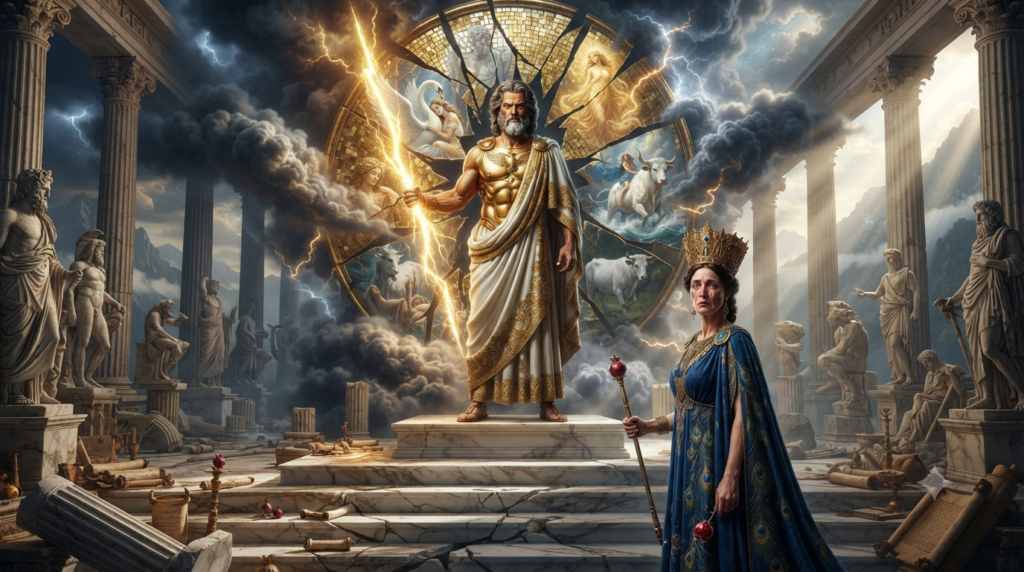
A recurring pattern among many figures relevant to who did Zeus cheat on Hera with involves Zeus’s frequent use of transformation or disguise, whether becoming a bull for Europa, golden rain for Danae, or a swan for Leda, reflecting a consistent mythological strategy across numerous separate unions throughout Greek mythology.
This pattern of transformation served various narrative purposes across different myths, sometimes facilitating approach to a reluctant or unaware partner and sometimes specifically enabling concealment from Hera’s notice, reinforcing transformation’s central role in understanding who did Zeus cheat on Hera with as a broader mythological phenomenon.
Beyond individual narrative details, these unions collectively served an important genealogical function within ancient Greek culture, with numerous significant heroes, cities, and ruling families tracing their lineage directly back to one of these documented affairs, reinforcing why who did Zeus cheat on Hera with remained such an extensively preserved element throughout Greek mythological tradition.
This combination of consistent narrative technique and significant genealogical function demonstrates that these unions functioned as far more than isolated stories, instead forming an interconnected genealogical network linking Zeus directly to much of Greek mythology’s broader cast of significant heroes and legendary figures.
FAQ — Quick Answers About Zeus’s Lovers
Who did Zeus cheat on Hera with?
Zeus’s documented affairs include Leto, Alcmene, Europa, Danae, Leda, Io, Semele, Callisto, Maia, Antiope, Taygete, and Ganymede, among other figures across Greek mythology.
Who is the mother of Dionysus?
Semele, a mortal woman, became the mother of Dionysus following her union with Zeus, though she was later destroyed after seeing his true form.
Was Ganymede one of Zeus’s lovers?
Yes, Ganymede represents the most significant male figure connected to Zeus, brought to Olympus to serve as cupbearer to the gods.
Why did Zeus often transform himself during these affairs?
Zeus frequently used transformation, such as becoming a bull or swan, either to approach a partner or to help conceal the union from Hera.
Why were these unions so significant in Greek mythology?
These unions served an important genealogical function, connecting numerous Greek heroes, cities, and ruling families directly to Zeus’s divine lineage.
Conclusion
Anyone who sets out to answer who did Zeus cheat on Hera with encounters an extensive, well-documented list spanning goddesses, nymphs, mortal women, and at least one significant male figure, each connected to major figures and lineages throughout Greek mythology. From Leto and Alcmene to Semele, Callisto, and Ganymede, these unions collectively shaped much of Greek mythology’s broader heroic and divine landscape.
Recognizing the recurring pattern of transformation across these unions, along with their significant genealogical function within ancient Greek culture, provides essential context for understanding why these affairs remained so consistently documented and preserved throughout Greek mythological tradition.
Ultimately, who did Zeus cheat on Hera with finds its most complete answer not in any single name, but in recognizing the extensive, interconnected network of unions that helped shape much of Greek mythology’s broader genealogical and narrative structure.

Orin Vale has spent the better part of two decades tracing the threads that connect the world’s oldest stories — from the halls of Asgard to the banks of the Nile, from Olympus to the jungles of the Maya. What began as a childhood fascination with flood myths and trickster gods grew into years of independent study across comparative mythology and ancient religion, always chasing the same question: what did these stories mean to the people who first told them? Orin writes for readers who want more than trivia — the ones looking for the beliefs, fears, and truths that myths were built to carry.