…reach of cities and civilization. Unlike the Olympian gods who ruled from the heights of Mount Olympus, Pan belonged to the forests, the mountainsides, and the quiet pastures of Arcadia, where he was worshipped as a protector of shepherds and a spirit of the wilderness itself.
Depicted with the legs and horns of a goat and the torso of a man, Pan embodies a duality that runs through much of Greek mythology: the tension between instinct and reason, wilderness and order. This hybrid form set him apart from nearly every other deity in the Greek pantheon, marking him as something older and closer to nature than the polished gods of Olympus.
To understand who Pan is in Greek mythology is to understand a figure tied not to the grand narratives of gods and heroes, but to the everyday rhythms of rural life — the bleating of goats, the rustle of reeds along a riverbank, and the sudden, inexplicable fear that could seize a traveler alone in the woods. That fear, in fact, would come to bear his name.
The Origins and Birth of Pan
The origins of Pan in Greek mythology are older and more tangled than those of most Olympian deities, reflecting his status as a god rooted in the countryside rather than in the ordered halls of Olympus. The most widely accepted account names Hermes as his father, with a nymph — most often identified as Dryope or Penelope of Arcadia — as his mother. This parentage is significant: Hermes himself was a god of boundaries, travel, and wild places, and passing these associations to his son reinforced Pan’s identity as a spirit of untamed nature from the very moment of his birth.
According to legend, Pan was born already bearded, horned, and goat-legged, a form so startling that his mother reportedly fled in fear at the sight of her own child. Hermes, however, is said to have delighted in his son’s unusual appearance, wrapping him in a hare’s skin and carrying him up to Olympus to present him to the other gods. There, rather than provoking horror, Pan’s wild form amused the Olympians — the god Dionysus in particular is said to have welcomed him warmly, recognizing in Pan a kindred spirit of instinct and revelry.
Arcadia, a rugged and mountainous region in the central Peloponnese, is consistently identified as Pan’s birthplace and spiritual home. This detail matters for understanding who Pan is in Greek mythology, since Arcadia itself became a byword for pastoral simplicity and untouched wilderness in the ancient imagination. Shepherds in this region regarded Pan not as a distant, abstract deity but as a local presence woven into daily rural life — a god who might be encountered napping in a cave at midday or heard playing music somewhere beyond the next ridge.
Some later variations of the myth complicate this straightforward genealogy, with certain sources naming other figures as Pan’s parents or suggesting an even more ancient, pre-Olympian origin tied to primal fertility spirits worshipped before the classical Greek pantheon took shape. This ambiguity is not a flaw in the tradition but a reflection of Pan’s character: a god who resists neat categorization, existing at the edges of Greek religious life much as he existed at the physical edges of Greek civilization, in the forests and hills beyond the polis.
Physical Appearance: Why Pan Has Goat Legs and Horns
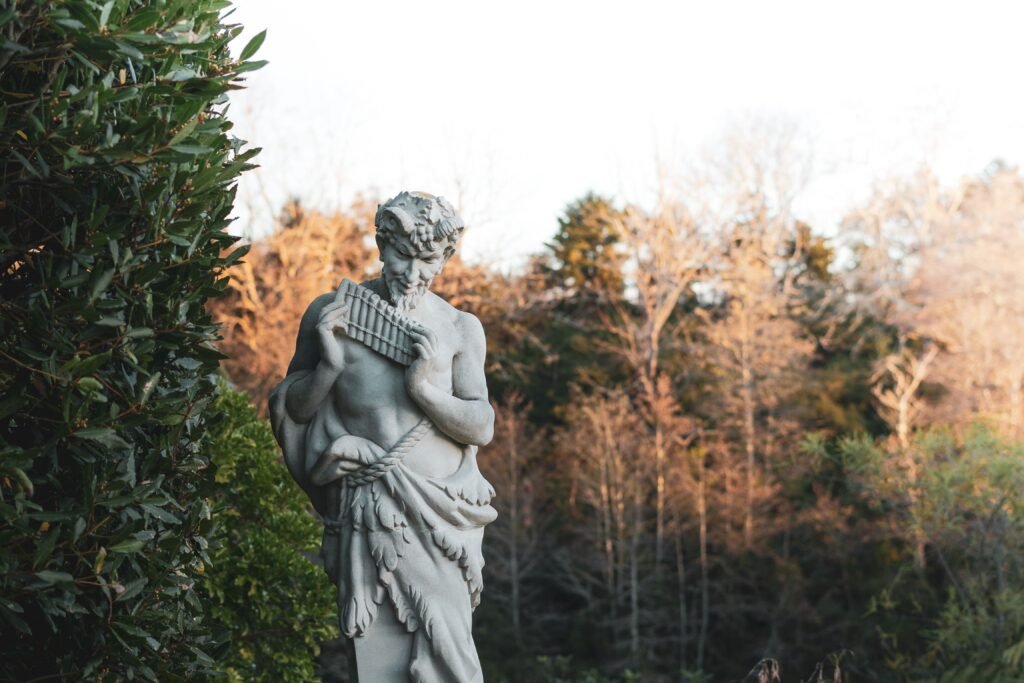
Pan’s physical form is among the most distinctive in all of Greek mythology, and it is central to understanding his role within the pantheon. He is consistently portrayed with the upper body of a man and the lower body of a goat, complete with cloven hooves, a tail, and a coat of coarse hair covering his legs. Two curved horns rise from his head, and his face is often rendered with sharp, angular features that suggest cunning and wildness in equal measure. This hybrid anatomy places Pan in close visual kinship with satyrs, the goat-legged woodland companions of Dionysus, though Pan predates and stands apart from them as an individual deity rather than a member of a collective group.
The symbolism behind this goat-like form is deliberate and layered. In ancient Greek thought, goats were closely associated with untamed terrain, sure-footed movement across difficult mountain landscapes, and an almost instinctive, appetite-driven nature. By merging human intellect with animal instinct, Pan’s body became a visual argument about the natural world itself — a reminder that civilization and wilderness were not entirely separate but existed in constant, uneasy proximity. His form suggested that beneath the rational order of Greek society lay forces that were older, more physical, and less governable.
This appearance also set Pan visually and thematically apart from the Olympian gods, who were almost always depicted in idealized human form, radiating symmetry and composure. Pan’s asymmetry — his horns, his hooves, his unruly hair — marked him as belonging to a different category of divine being entirely, closer to the primal nature spirits and daimones of the Greek countryside than to the polished residents of Mount Olympus. Ancient artists frequently emphasized this contrast deliberately, placing Pan in rustic scenes among rocks, caves, and thickets rather than temples or palaces.
Later Greek and Roman art occasionally softened Pan’s features, particularly during periods when pastoral imagery became fashionable in poetry and visual culture, portraying him as a more youthful, mischievous figure rather than a purely feral one. Even so, the goat legs and horns remained non-negotiable elements of his identity across nearly every surviving depiction, from ancient pottery to later Renaissance interpretations. This visual consistency is one of the clearest signals, even today, of who Pan is in Greek mythology: a god defined as much by his body as by his myths.
What Is Pan the God Of? Domains and Powers
Pan’s divine authority centers on the wild, uncultivated aspects of the natural world — mountains, forests, caves, and the rugged pastureland that lay beyond the reach of Greek agricultural settlements. He was understood as the presiding spirit of these liminal spaces, a god whose presence could be felt in the sudden stillness of a forest clearing or the echo of wind moving through rocky hills. Ancient shepherds and goatherds regarded him as an ever-present force governing the landscapes where they spent their working lives, making him one of the most functionally important deities to rural communities, even if he never held a formal temple in most major cities.
Closely tied to this domain over wilderness was Pan’s role as protector of shepherds and their flocks. He was believed to influence the fertility and safety of goats and sheep, and shepherds would leave offerings at rustic shrines in hopes of securing his favor for healthy herds and successful breeding seasons. This agricultural and pastoral dimension of Pan’s power reflects the practical, everyday concerns of the people who worshipped him — concerns quite different from the grand cosmic dramas associated with gods like Zeus or Poseidon.
Music forms another essential pillar of Pan’s identity, most famously through his association with the panpipes, or syrinx, a set of reed pipes bound together and played by blowing across their open ends. Pan was credited as the inventor of this instrument, and his skill in playing it was said to be unmatched, capable of stirring both delight and unease in those who heard it drifting from the hillsides. This musical dimension linked Pan not only to nature but to a distinctly untamed form of artistic expression, one rooted in instinct rather than the more formal, structured music associated with gods like Apollo.
Finally, Pan carried strong associations with fertility and untamed sexual energy, themes that appear repeatedly throughout his mythology. He was frequently depicted pursuing nymphs through the countryside, and his presence was linked to the fertility of the land itself, not merely of livestock. Taken together, these overlapping domains — wilderness, pastoral life, music, and fertility — reveal why understanding what Pan is the god of requires looking beyond a single title. He functioned as a comprehensive embodiment of untamed nature in all its productive and unpredictable forms.
The Myth of Pan and Syrinx
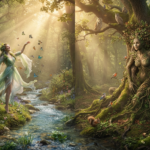
One of the most enduring stories explaining Pan’s connection to music involves the nymph Syrinx, a follower of the goddess Artemis known for her devotion to chastity. According to the myth, Pan encountered Syrinx in the Arcadian wilderness and was immediately overcome with desire, pursuing her relentlessly through the forests and along riverbanks. Syrinx, determined to preserve her independence and avoid Pan’s advances, fled in terror, her pursuit becoming one of the more dramatic chase sequences in Greek mythology.
As Pan closed in near the banks of a river, Syrinx found herself trapped, with no path of escape remaining. In desperation, she called upon the river nymphs for aid, and in response, she was transformed into a cluster of hollow reeds growing along the water’s edge. When Pan finally reached the spot, expecting to seize the nymph, he found only the whispering reeds swaying in the wind, forever beyond his grasp.
Rather than abandoning the encounter entirely, Pan is said to have cut several of the reeds and bound them together in different lengths, creating the instrument that would come to bear Syrinx’s name — the syrinx, or panpipes. Each time he played the instrument, the sound was said to carry an echo of longing, transforming a moment of loss into an enduring form of musical expression. This origin story gave the panpipes a layer of emotional depth beyond their simple construction, tying the instrument permanently to themes of desire, pursuit, and transformation.
The myth of Pan and Syrinx reflects broader patterns found throughout Greek mythology, in which pursuit and transformation serve as vehicles for explaining the origins of natural phenomena or cultural practices. In Pan’s case, the story does more than account for the invention of a musical instrument; it reinforces his character as a god whose desires often went unfulfilled, whose presence in the wild was as much about longing and solitude as it was about power. This emotional undercurrent distinguishes Pan from more triumphant Olympian figures and adds nuance to who Pan is in Greek mythology beyond his rustic, comedic surface.
Pan and Echo
The myth of Pan and Echo offers another lens into the god’s recurring pattern of unreciprocated desire, further deepening the emotional complexity behind his wild exterior. Echo, in most versions of the tale, was a nymph renowned for her voice, whether through song or conversation, and she became the object of Pan’s affection much as Syrinx had before her. Pan pursued Echo through the same rugged Arcadian landscapes he called home, hoping to win her over through persistence rather than charm.
Echo, however, did not return Pan’s feelings, and various versions of the myth diverge in explaining why. In some tellings, she was already devoted to another figure or bound by circumstances beyond her control, most notably in stories that connect her fate to the beautiful youth Narcissus, who famously rejected her advances and left her to waste away until only her voice remained. In versions where Pan’s desire intersects with this narrative, his rejection by Echo is portrayed as a source of genuine sorrow rather than a mere plot device.
In several accounts, Pan’s frustration and heartbreak over Echo’s rejection took a darker turn, with some traditions claiming he incited a group of shepherds or maenads into a frenzy that led to Echo’s destruction, her body scattered across the earth while her voice alone survived, condemned to repeat only the final words spoken by others. Whether read as tragedy or cautionary tale, this myth reinforces a recurring theme in Pan’s mythology: his immense power over the wild landscape did not extend to mastery over love or desire.
This pattern, repeated across multiple myths involving Pan, Syrinx, and Echo, paints a more textured portrait of the god than his comedic, rustic image might initially suggest. Far from a simple woodland trickster, Pan emerges in these stories as a figure defined by longing, isolation, and the emotional wildness that mirrors the physical wilderness he governs — a nuance essential to any complete answer to who Pan is in Greek mythology.
The Origin of the Word “Panic”
Few connections between Greek mythology and modern language are as direct and well-documented as the link between Pan and the word “panic.” The term traces its roots to the ancient Greek word “panikon,” meaning “pertaining to Pan,” and it emerged from the belief that Pan possessed the ability to inspire sudden, overwhelming fear in travelers, soldiers, and anyone who ventured too deep into wild, unfamiliar terrain without proper reverence for the god who ruled it.
According to ancient sources, this fear was not merely psychological but almost supernatural in nature, striking without clear cause and spreading rapidly among groups, much like the confusion that can overtake a crowd or an army under sudden pressure. One of the most cited examples involves the Battle of Marathon in 490 BCE, where Pan was credited with striking terror into the invading Persian forces, contributing to their disorganized retreat and the unexpected Greek victory. This event is said to have significantly boosted Pan’s religious standing throughout Greece, transforming him from a regional Arcadian deity into a figure honored more broadly for his role in a pivotal military triumph.
The Athenians, in gratitude for this perceived intervention, established a cult site for Pan in a cave on the northern slope of the Acropolis, an honor that marked a significant expansion of his worship beyond his rural origins. This shift illustrates how deeply intertwined Pan’s mythology became with real historical events and civic identity, moving him from the margins of Greek religious life toward more central recognition, even as he retained his fundamentally wild, untamed character.
The endurance of “panic” as a term in modern English and many other languages stands as a rare and striking example of a single ancient deity leaving a permanent linguistic imprint on how people describe an entire category of human emotion. Every time the word is used today, it carries a faint echo of Pan’s ancient reputation as a god capable of inducing sudden, irrational terror — a linguistic legacy that few other figures in Greek mythology can claim with such directness and specificity.
Worship of Pan in Ancient Greece
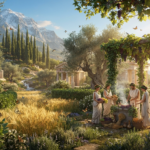
Worship of Pan in ancient Greece began in Arcadia, where his cult held its deepest and most consistent roots among shepherds, goatherds, and rural communities dependent on the health of their flocks. Unlike the grand marble temples dedicated to gods like Athena or Apollo, Pan’s shrines were typically modest and closely tied to the natural landscape itself, often consisting of caves, grottoes, or simple open-air altars set among rocks and trees. This rustic style of worship reflected Pan’s own character as a god embedded within nature rather than elevated above it.
Rituals dedicated to Pan frequently involved offerings tied directly to pastoral life, including milk, honey, and occasionally the sacrifice of goats, an animal intimately connected to his own physical form. Worshippers sought his favor not through elaborate civic ceremonies but through more intimate, localized practices meant to ensure fertility among their herds, protection while traveling through wild terrain, and general goodwill from a deity known for his unpredictable moods. Farmers and herders in particular treated Pan with a mixture of respect and caution, aware that his blessings and his capacity to inspire fear existed side by side.
The expansion of Pan’s worship into Athens following the Battle of Marathon marked a significant turning point in his religious status. The cave shrine established beneath the Acropolis introduced Pan to a broader, more urban audience, and his cult gradually spread to other regions of Greece over the following centuries. Despite this expansion, Pan never achieved the same level of centralized, state-sponsored worship as the major Olympian gods, remaining instead a deity whose devotion was strongest at the local and personal level rather than through large-scale public religion.
This pattern of worship reinforces an important aspect of who Pan is in Greek mythology: a god whose religious significance was measured less by monumental architecture and more by his felt presence in everyday rural experience. For a shepherd standing alone on an Arcadian hillside, Pan was not a distant abstraction discussed in philosophical texts but an immediate, tangible force believed to shape the safety and prosperity of daily life.
Pan vs. Faunus: Greek and Roman Parallels
When Roman culture absorbed and reinterpreted much of Greek mythology, Pan found his closest counterpart in the Roman deity Faunus, a god similarly associated with forests, wild fields, and the protection of shepherds and their flocks. Faunus shared many of Pan’s core attributes, including a general association with rustic, untamed landscapes and a protective role over agricultural and pastoral communities, making the comparison between the two gods a natural one for ancient audiences familiar with both traditions.
Despite these similarities, important distinctions separate Pan from Faunus in terms of characterization and cultural role. Faunus was often portrayed with a somewhat gentler, more benevolent temperament in Roman sources, frequently associated with prophecy and oracular pronouncements delivered through rustling leaves or whispered dreams. Pan, by contrast, retained a more chaotic, physically wild edge throughout Greek mythology, with his goat-legged form and unpredictable moods emphasized far more consistently than any prophetic function.
Roman writers and artists sometimes blended the two figures directly, using the name Faunus and the imagery of Pan almost interchangeably, particularly in later literary and artistic works influenced by Hellenistic Greek culture. This blending reflects a broader pattern common throughout Greco-Roman religious syncretism, in which local Italian deities absorbed characteristics of their Greek counterparts as trade, conquest, and cultural exchange brought the two civilizations into closer contact over several centuries.
Understanding this parallel between Pan and Faunus adds valuable context to who Pan is in Greek mythology by situating him within a broader Mediterranean tradition of nature deities who governed the wild spaces beyond human settlement. Both figures point to a shared cultural instinct across ancient civilizations: the need to personify and honor the untamed forces of the natural world through a distinct, approachable divine figure rather than leaving such forces unexplained.
Symbolism and Legacy of Pan in Culture
Pan’s symbolism extends far beyond ancient Greek religion, securing him a lasting place in Western art, literature, and cultural imagination long after the formal worship of Greek gods faded. During the Renaissance and later periods, artists frequently returned to Pan as a subject, drawn to his visual distinctiveness and the rich symbolic tension he embodied between civilization and wilderness, reason and instinct, order and chaos. His image appeared repeatedly in paintings, sculptures, and decorative arts throughout Europe, often used to evoke pastoral nostalgia or untamed natural beauty.
Literary tradition similarly kept Pan alive as a potent symbol well beyond antiquity. Poets and writers across centuries invoked Pan as shorthand for wild nature itself, using his image to explore themes of freedom, primal instinct, and the tension between the natural world and increasingly industrialized human society. The phrase “the Great God Pan is dead,” rooted in an ancient account describing the announcement of Pan’s death during the reign of the Roman emperor Tiberius, became a recurring literary motif symbolizing the decline of paganism and the broader loss of humanity’s intimate connection to nature.
Pan’s influence extended into music and popular culture as well, with his image and mythology inspiring countless artistic works exploring themes of wildness, sensuality, and the boundary between human civilization and untamed instinct. His hybrid form, in particular, proved a durable template for later depictions of nature spirits, woodland deities, and even certain interpretations of more unsettling folkloric figures, illustrating how deeply his visual identity embedded itself in the broader cultural imagination.
Ultimately, Pan’s enduring legacy demonstrates that his significance extends well beyond his original religious context in ancient Greece. He persists today as a powerful symbol of untamed nature and instinctual freedom, a reminder that even in a highly urbanized, technological world, there remains a cultural fascination with the wild, unpredictable forces that Pan once represented for the shepherds and travelers of ancient Arcadia.
FAQ: Common Questions About Pan in Greek Mythology
Is Pan a good or evil god in Greek mythology?
Pan is not portrayed as purely good or evil but rather as a morally ambiguous force of nature, capable of both benevolence toward shepherds and unpredictable, sometimes frightening behavior toward travelers and nymphs he pursued.
Why does Pan have goat legs?
Pan’s goat legs symbolize his deep connection to wild, untamed landscapes and his role as a nature deity distinct from the more civilized, human-formed Olympian gods, emphasizing instinct and rustic power over order and reason.
What is Pan’s Roman equivalent?
Pan’s closest Roman counterpart is Faunus, a similarly rustic god of forests, fields, and shepherds, though Faunus was often depicted with a gentler temperament and stronger associations with prophecy.
What does “the Great God Pan is dead” mean?
This phrase originates from an ancient account describing an announcement of Pan’s death during the reign of Tiberius, and it later became a widely used literary symbol for the decline of paganism and humanity’s fading connection to nature.
Conclusion
Understanding who Pan is in Greek mythology means looking beyond a single myth or attribute and recognizing him as a comprehensive symbol of untamed nature itself. From his unusual birth in the hills of Arcadia to his lasting influence on language through the word “panic,” Pan occupies a unique position within the Greek pantheon, one defined by wilderness, instinct, music, and a persistent tension between civilization and the natural world. His myths, his worship, and his enduring cultural legacy together offer a rich and multifaceted answer to a question that continues to draw curiosity even thousands of years after his cult first took root among the shepherds of ancient Greece.

Orin Vale has spent the better part of two decades tracing the threads that connect the world’s oldest stories — from the halls of Asgard to the banks of the Nile, from Olympus to the jungles of the Maya. What began as a childhood fascination with flood myths and trickster gods grew into years of independent study across comparative mythology and ancient religion, always chasing the same question: what did these stories mean to the people who first told them? Orin writes for readers who want more than trivia — the ones looking for the beliefs, fears, and truths that myths were built to carry.