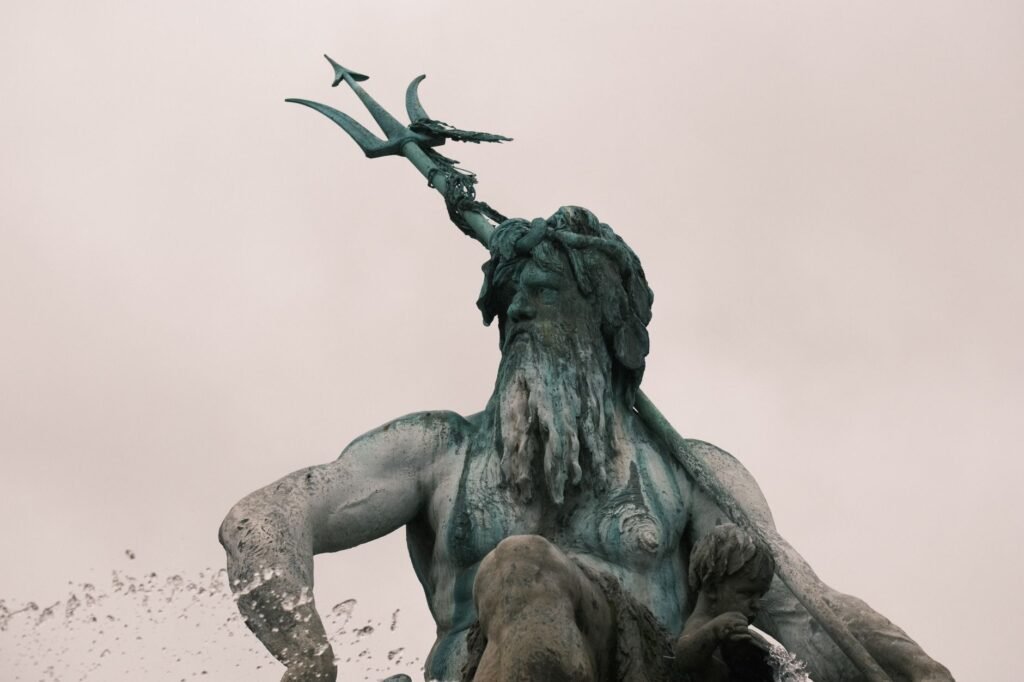
Who Is Poseidon in Greek Mythology?
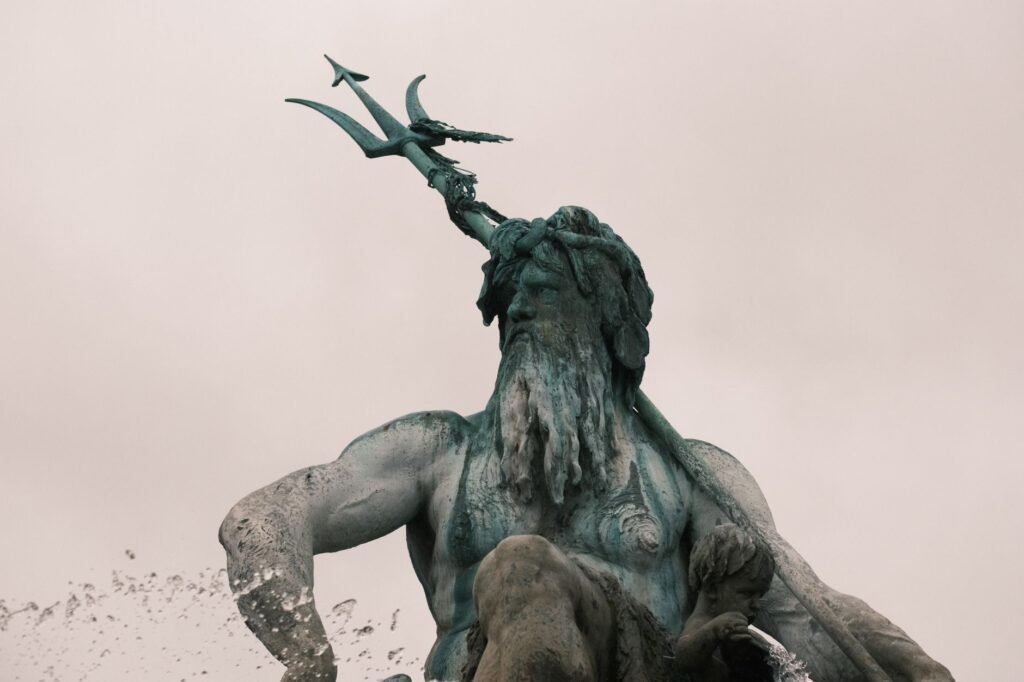
Poseidon is one of the most powerful and recognizable gods in ancient Greek mythology. Known primarily as the god of the sea, he also ruled over earthquakes, storms, horses, and many forms of natural force. When people ask, who is Poseidon in Greek mythology, the answer goes far beyond “sea god.” Poseidon was a major Olympian deity, feared for his temper, honored for his power, and deeply connected to both the natural world and human life.
In Greek stories, Poseidon could be generous and protective, but he could also be violent, jealous, and unforgiving. His myths reveal how the ancient Greeks understood the sea: beautiful and life-giving, yet dangerous and unpredictable.
Poseidon’s Place Among the Olympian Gods
Poseidon was the son of the Titans Cronus and Rhea. His siblings included some of the most important figures in Greek mythology:
- Zeus, king of the gods
- Hades, ruler of the underworld
- Hera, goddess of marriage
- Demeter, goddess of agriculture
- Hestia, goddess of the hearth
According to myth, Cronus swallowed his children because he feared one of them would overthrow him. Zeus eventually escaped this fate and later forced Cronus to release his siblings. After the Titans were defeated, the three brothers—Zeus, Poseidon, and Hades—divided the universe among themselves.
Zeus received the sky, Hades received the underworld, and Poseidon received the sea. Although Zeus was considered the ruler of the gods, Poseidon remained one of the most powerful beings in the Greek pantheon.
God of the Sea
Poseidon’s main domain was the ocean. Ancient Greece was a seafaring culture, so the sea was central to trade, travel, fishing, and survival. Sailors prayed to Poseidon for safe journeys and calm waters. If angered, however, he could create storms, shipwrecks, and deadly waves.
Poseidon was often shown carrying a trident, a three-pronged spear that symbolized his authority over the waters. With it, he could stir the sea, break rocks, create springs, and unleash destruction.
His connection to the sea made him both respected and feared. To the Greeks, Poseidon represented the unpredictable power of nature—something humans depended on but could never fully control.
Poseidon as Earth-Shaker
Poseidon was not only the god of the sea. He was also known as the “Earth-Shaker” because he was believed to cause earthquakes. This title shows how ancient people explained terrifying natural disasters through divine action.
When the ground trembled, the Greeks imagined Poseidon striking the earth with his trident. His power extended beneath the surface of the world, linking him to deep, mysterious forces.
This aspect of Poseidon made him especially important in regions where earthquakes were common. Temples and offerings were sometimes dedicated to him in hopes of preventing disaster.
Poseidon and Horses
Another important part of Poseidon’s identity is his connection to horses. In some myths, he created the first horse, and he was worshipped as a god of horse breeding and racing.
This connection may seem surprising for a sea god, but horses were symbols of speed, strength, and noble power. The crashing of waves was often compared to galloping horses, and Poseidon was sometimes imagined riding a chariot pulled by magnificent sea horses.
Because of this, Poseidon was associated not only with sailors but also with warriors, kings, and athletes.
Famous Myths About Poseidon
Poseidon appears in many Greek myths, often as a powerful force shaping the lives of gods and mortals.
The Contest for Athens
One of the most famous stories involving Poseidon is his contest with Athena for the patronage of Athens. Both gods wanted the city to honor them. Poseidon struck the ground with his trident and produced a spring, though in many versions the water was salty. Athena offered the olive tree, which provided food, oil, and wood.
The people chose Athena’s gift, and the city became Athens. Poseidon was angry at losing, showing his pride and quick temper.
Poseidon and Odysseus
Poseidon plays a major role in Homer’s Odyssey. After Odysseus blinds the Cyclops Polyphemus, who was Poseidon’s son, the sea god becomes his enemy. Poseidon delays Odysseus’s journey home for years, sending storms and obstacles against him.
This myth highlights Poseidon’s vengeful nature. It also shows how dangerous it was, in Greek belief, to offend a god.
The Walls of Troy
In another myth, Poseidon helped build the walls of Troy alongside Apollo. When the Trojan king refused to pay them for their work, Poseidon became an enemy of Troy. This story connects him to the larger cycle of myths surrounding the Trojan War.
Poseidon’s Personality and Symbols
Poseidon’s personality was complex. He was powerful, proud, emotional, and often unpredictable. Like the sea itself, he could be calm one moment and violent the next.
Common symbols of Poseidon include:
- The trident
- The horse
- The dolphin
- The bull
- Waves and storms
- Sea creatures
He was often depicted as a strong, bearded man, similar in appearance to Zeus, but usually associated with the ocean and holding his trident.
Worship of Poseidon in Ancient Greece
Poseidon was worshipped throughout the Greek world, especially in coastal cities and islands. Sailors, fishermen, and travelers made offerings to him before voyages. He also had important temples, including the famous Temple of Poseidon at Cape Sounion, overlooking the Aegean Sea.
Festivals and athletic contests were held in his honor. The Isthmian Games, one of the major athletic competitions of ancient Greece, were dedicated to Poseidon.
His worship reflected the importance of the sea to Greek life. For a people surrounded by water, Poseidon was not a distant mythological figure but a divine power affecting daily survival.
Why Poseidon Still Matters
Poseidon remains one of the best-known figures from Greek mythology because he represents forces that are still awe-inspiring today. Oceans, storms, earthquakes, and untamed nature continue to remind people of power beyond human control.
So, who is Poseidon in Greek mythology? He is the god of the sea, the Earth-Shaker, the creator and protector of horses, and one of the great Olympian gods. His myths reveal both the beauty and danger of the natural world, making him one of the most enduring and fascinating gods of ancient Greece.

Orin Vale has spent the better part of two decades tracing the threads that connect the world’s oldest stories — from the halls of Asgard to the banks of the Nile, from Olympus to the jungles of the Maya. What began as a childhood fascination with flood myths and trickster gods grew into years of independent study across comparative mythology and ancient religion, always chasing the same question: what did these stories mean to the people who first told them? Orin writes for readers who want more than trivia — the ones looking for the beliefs, fears, and truths that myths were built to carry.